Artwork
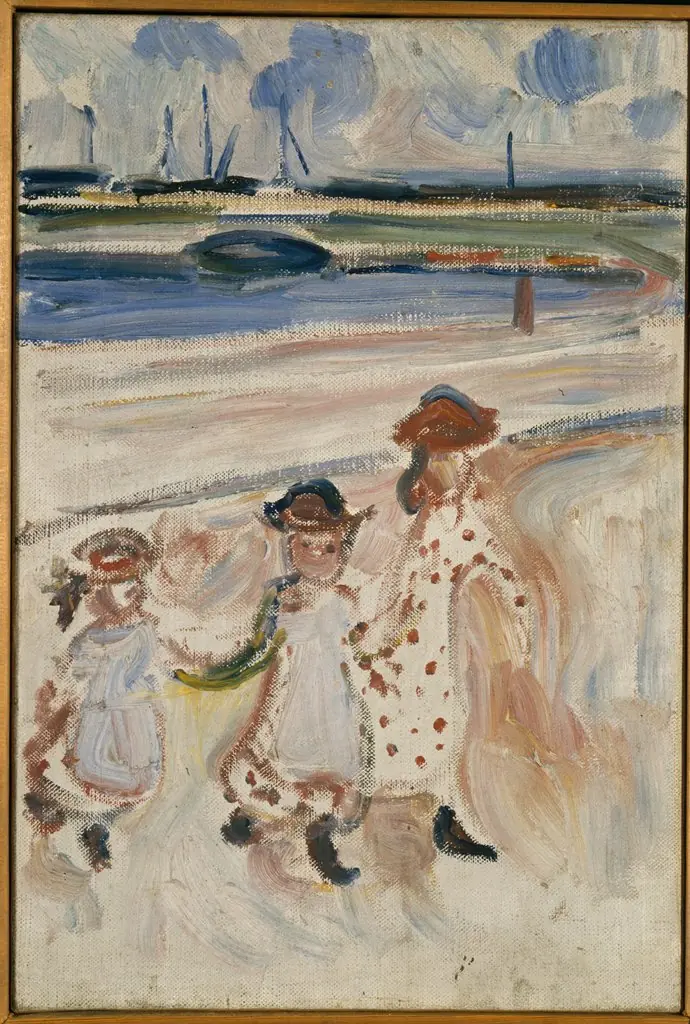
Women and Children in Warnemünde
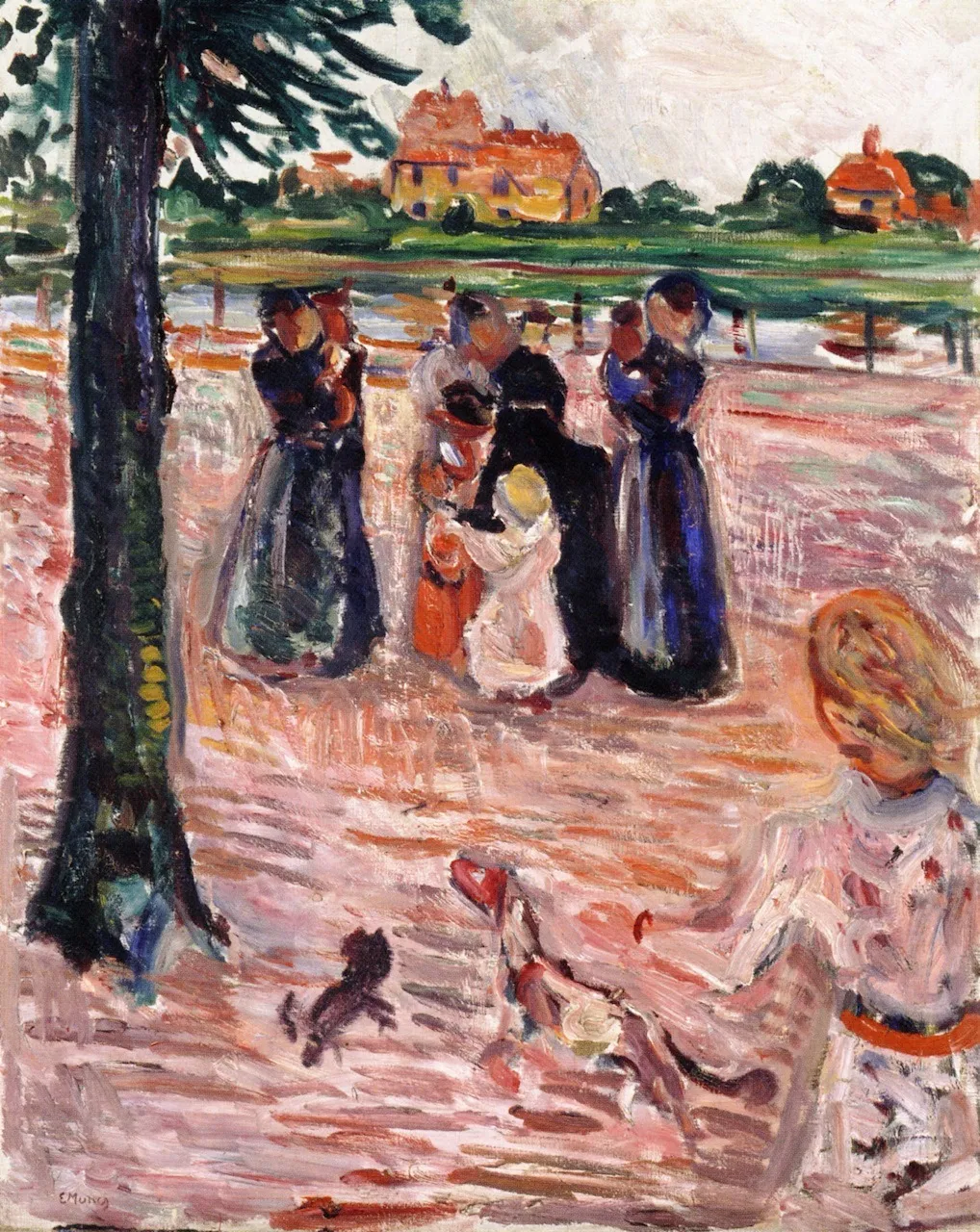
Women and Children in Warnemünde is an oil painting by the Post-Impressionist artist Edvard Munch. It dates from 1907 and is held in the collection of the Munch Museum.
About this work
Overview
Women and Children in Warnemünde is a 1907 oil painting by Edvard Munch, capturing a momentary scene of everyday life in the coastal town of Warnemünde.
Subject & Meaning
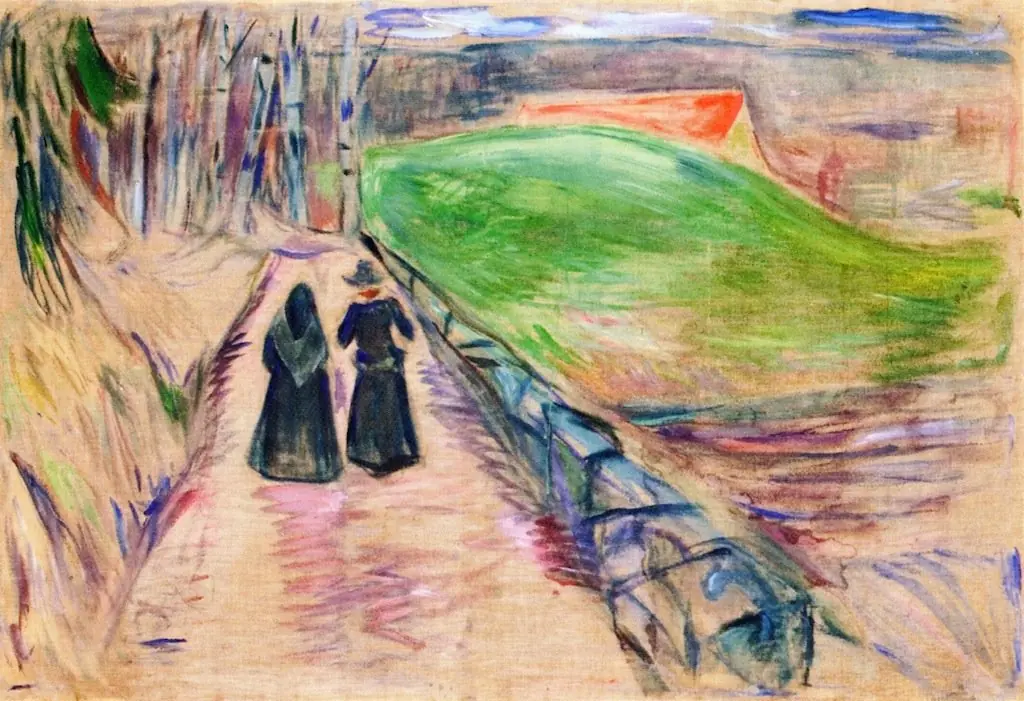
The painting depicts a group of five figures on a sandy beach: three women, two children, and a dog. The composition conveys a sense of quiet, observed intimacy, characteristic of Munch's exploration of psychological and emotional nuances, influenced by his tumultuous upbringing.
Technique & Style
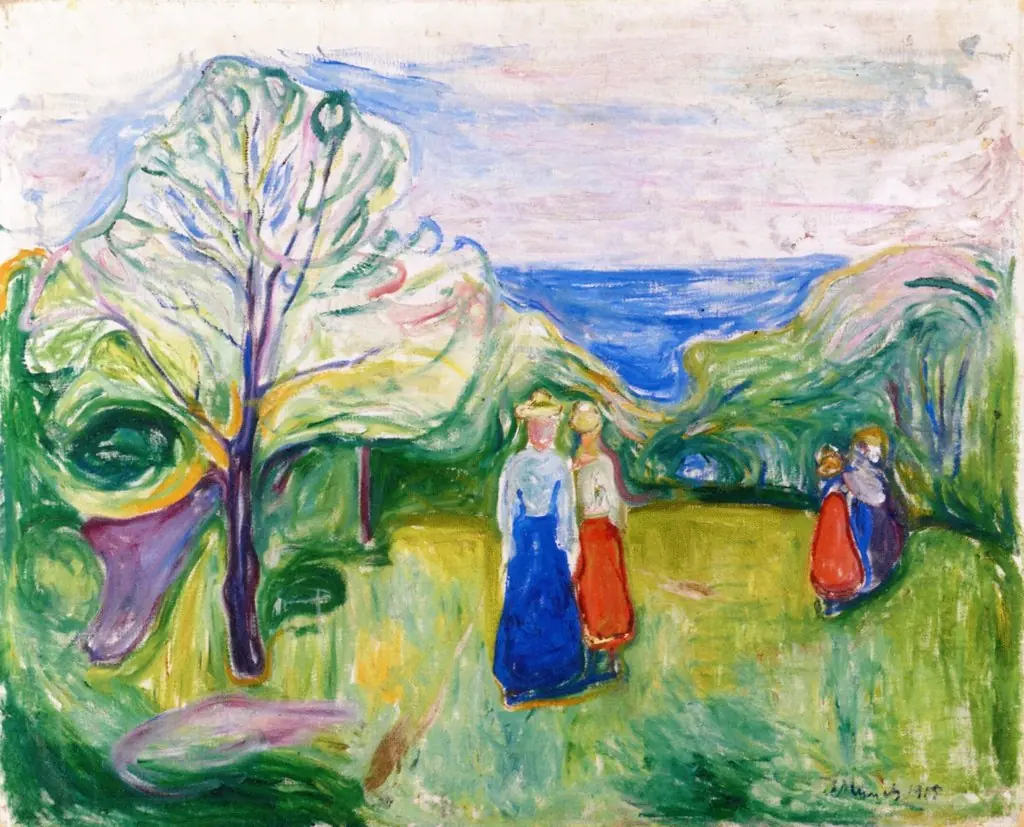
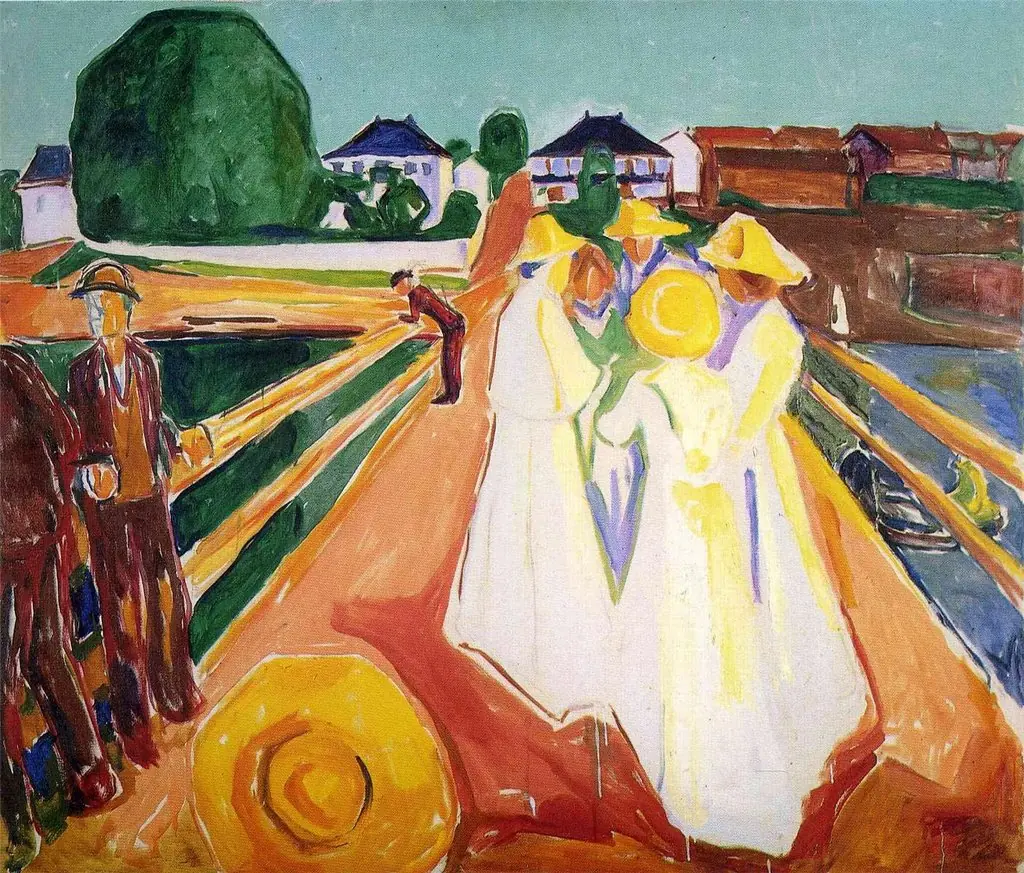
Executed in thick, rough brushstrokes, the painting exemplifies post-impressionist tendencies, with vibrant colors—notably bright pink sand and dark, contrasting dresses—achieving a dynamic, almost spontaneous effect, akin to the impasto technique.
History & Provenance
Created in 1907, the work is part of the Munch Museum's collection, reflecting the artist's significant contribution to the museum's holdings.
Context
Warnemünde, a German coastal town, serves as the backdrop, offering a unique blend of natural and built environments, contrasting the serene beach scene with the elevated houses and a tall tree.
Legacy
While not explicitly revolutionary, 'Women and Children in Warnemünde' contributes to Munch's broader oeuvre, showcasing his capacity to balance the mundane with profound emotional undercurrents, characteristic of his artistic legacy.
Artist & collection
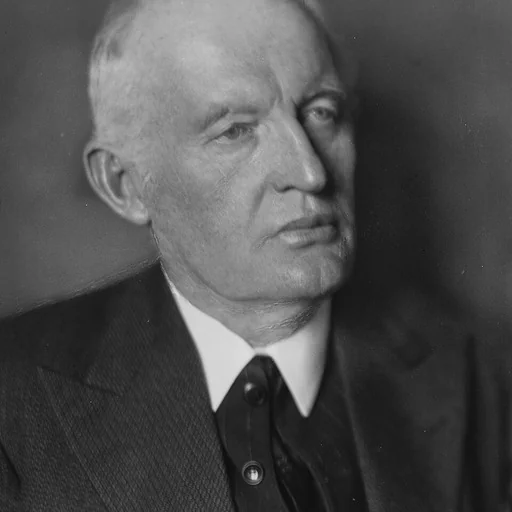
Artist
Edvard Munch ( MUUNK; Norwegian: ; 12 December 1863 – 23 January 1944) was a Norwegian painter.