Artwork
Bathing Man
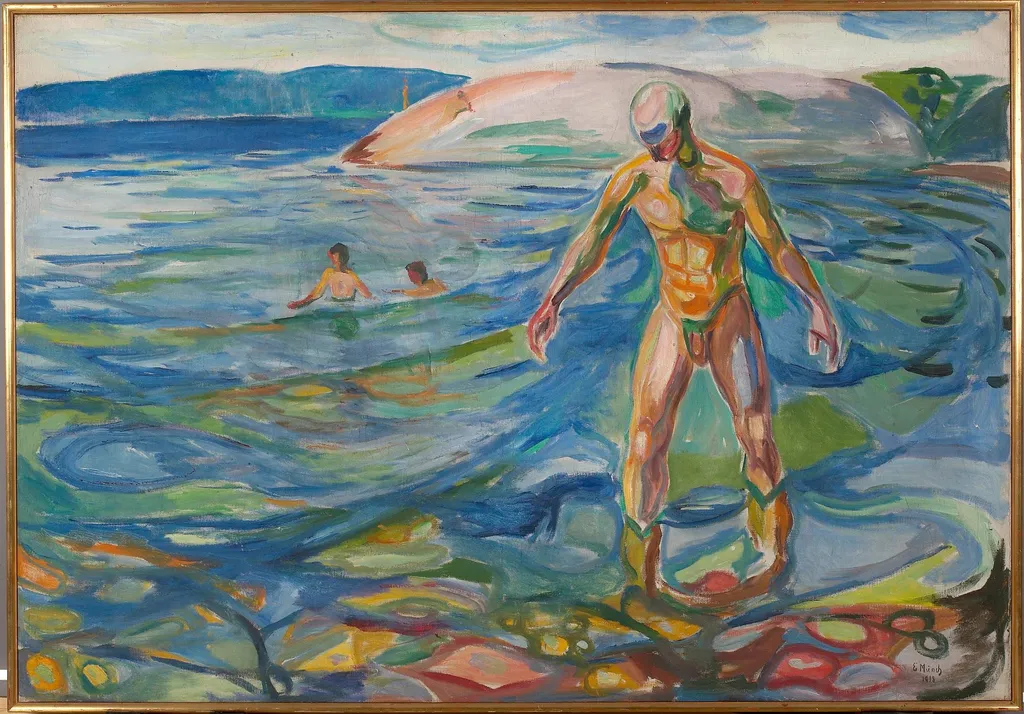
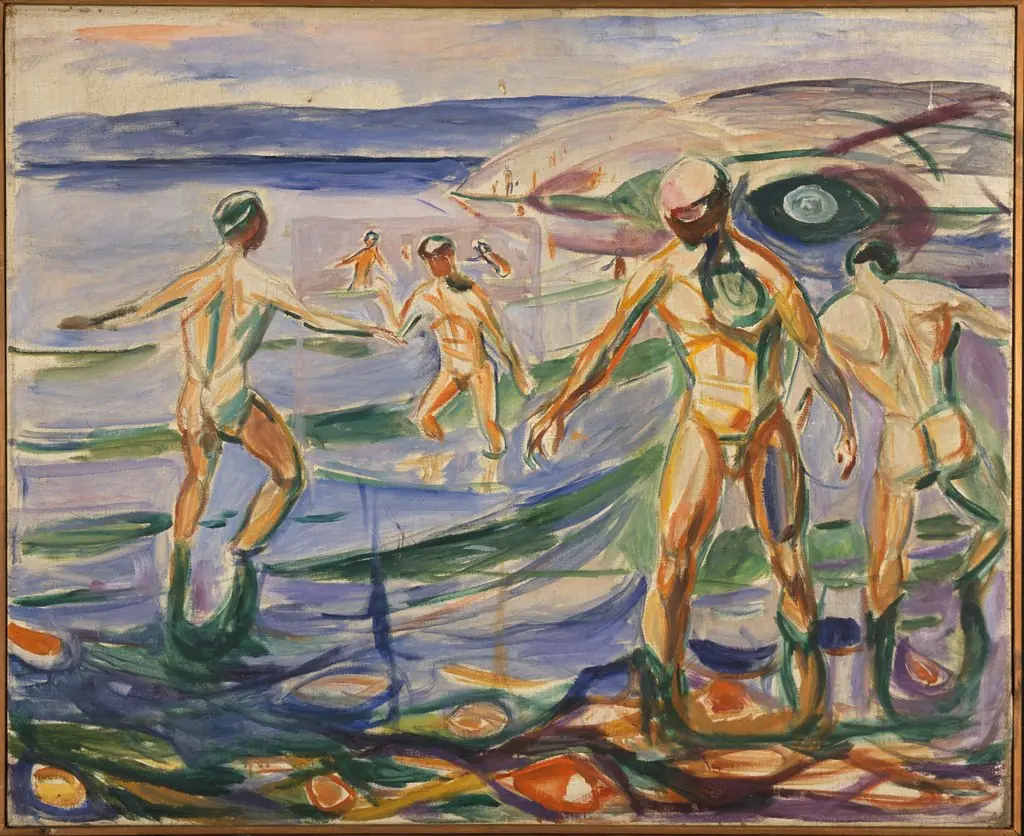
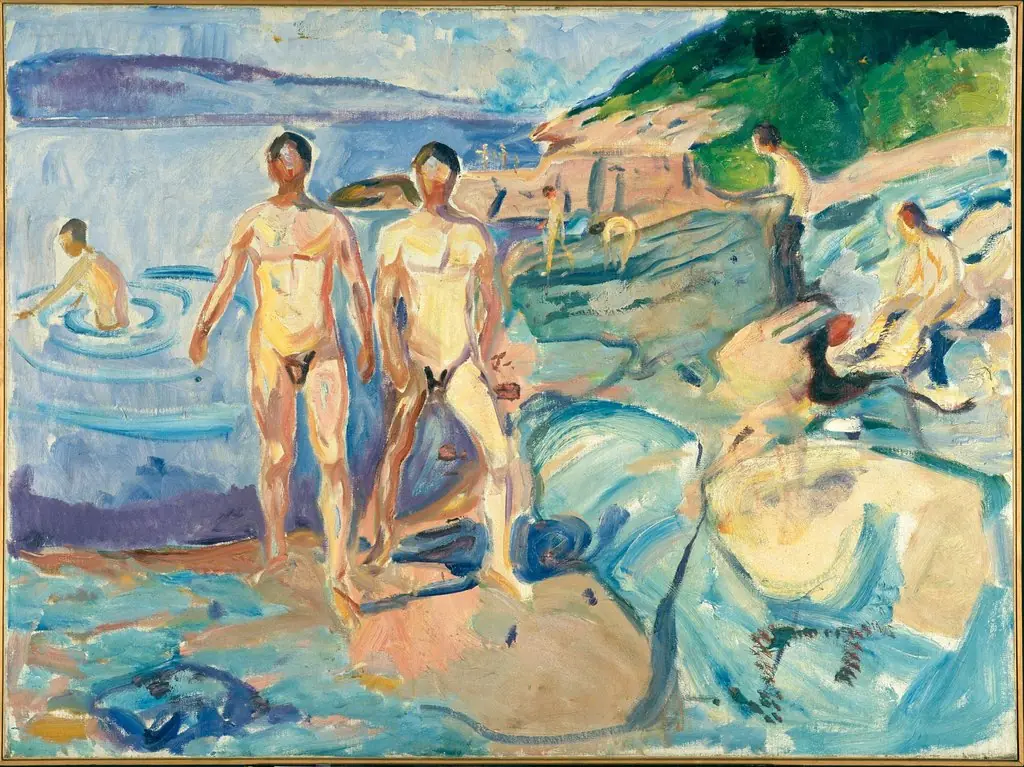
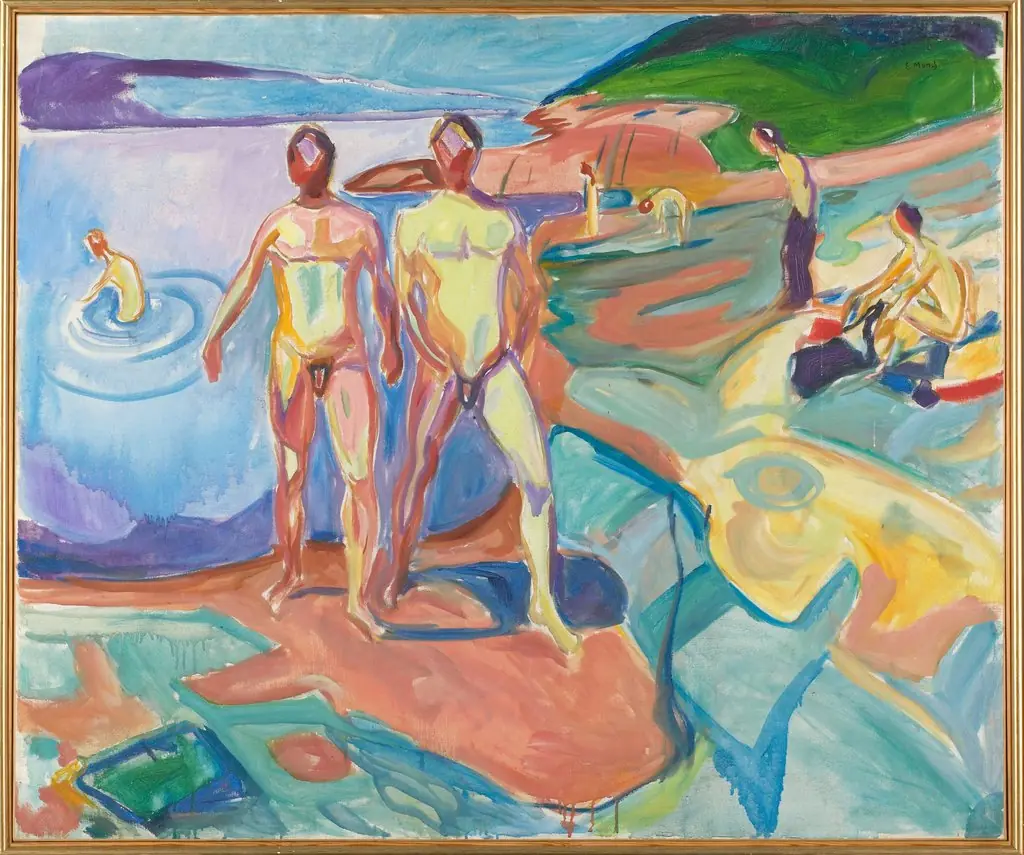
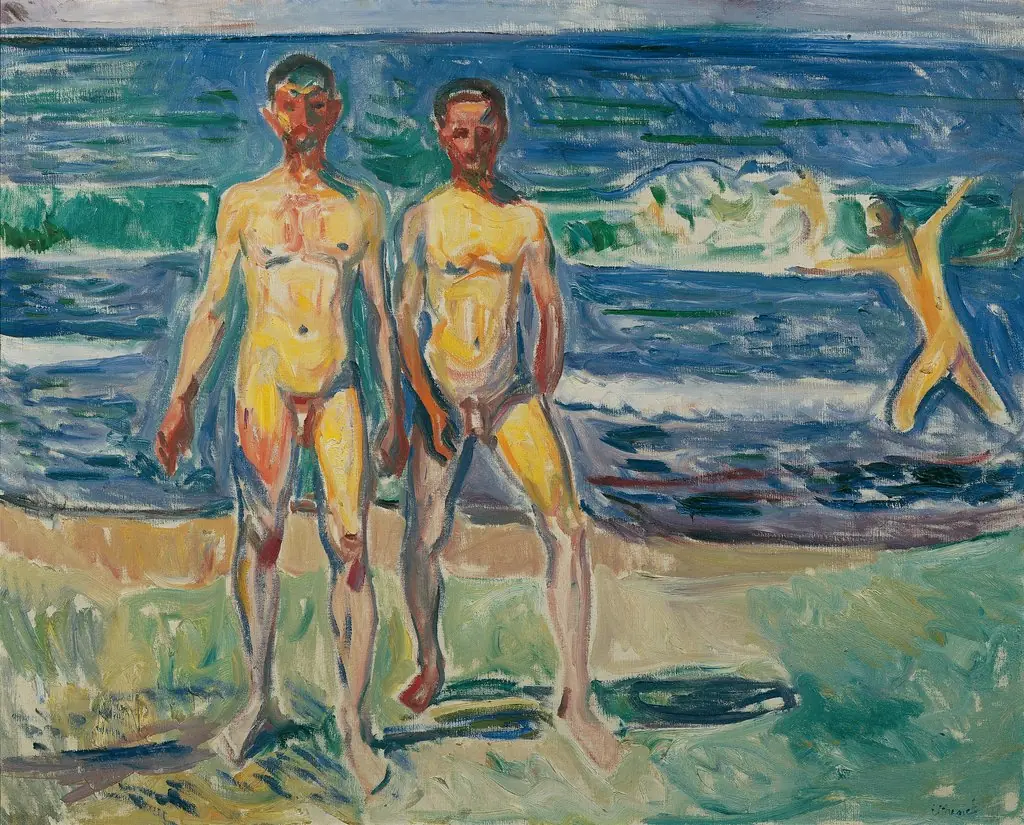
Bathing Man is an oil painting by the Post-Impressionist artist Edvard Munch. It dates from 1918 and is held in the collection of the Munch Museum.
About this work
Overview
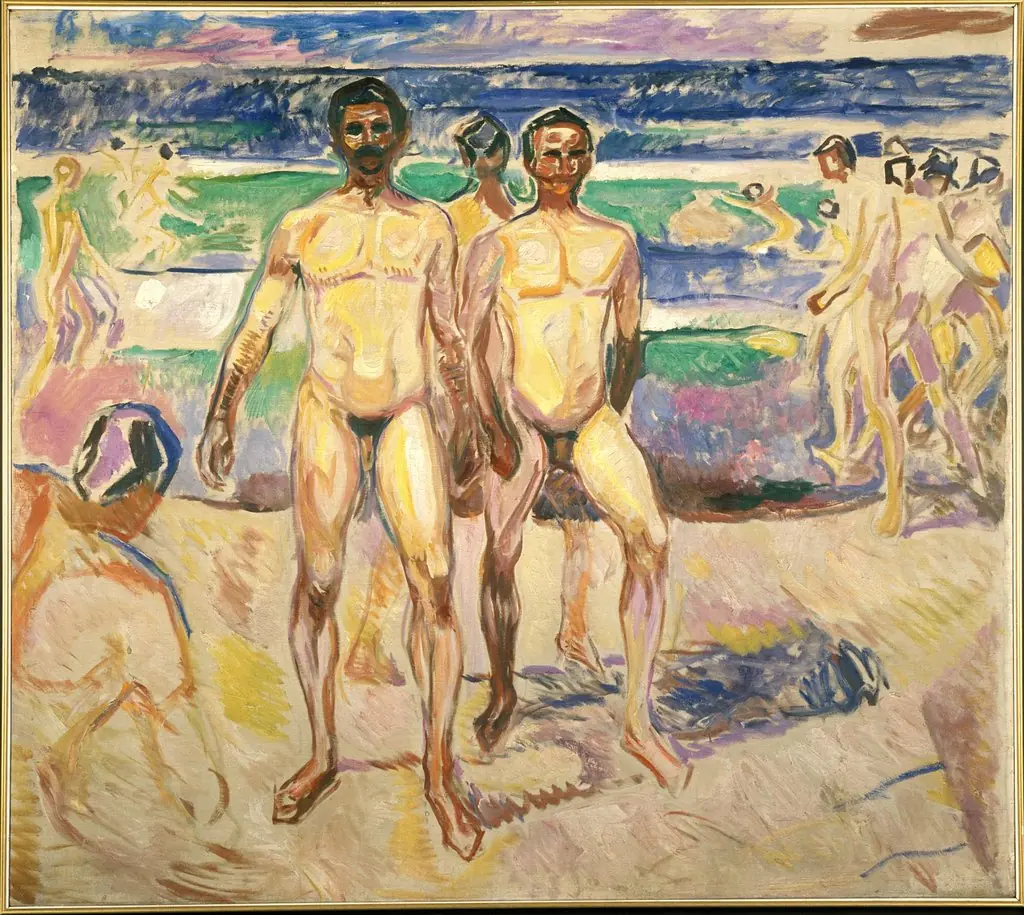
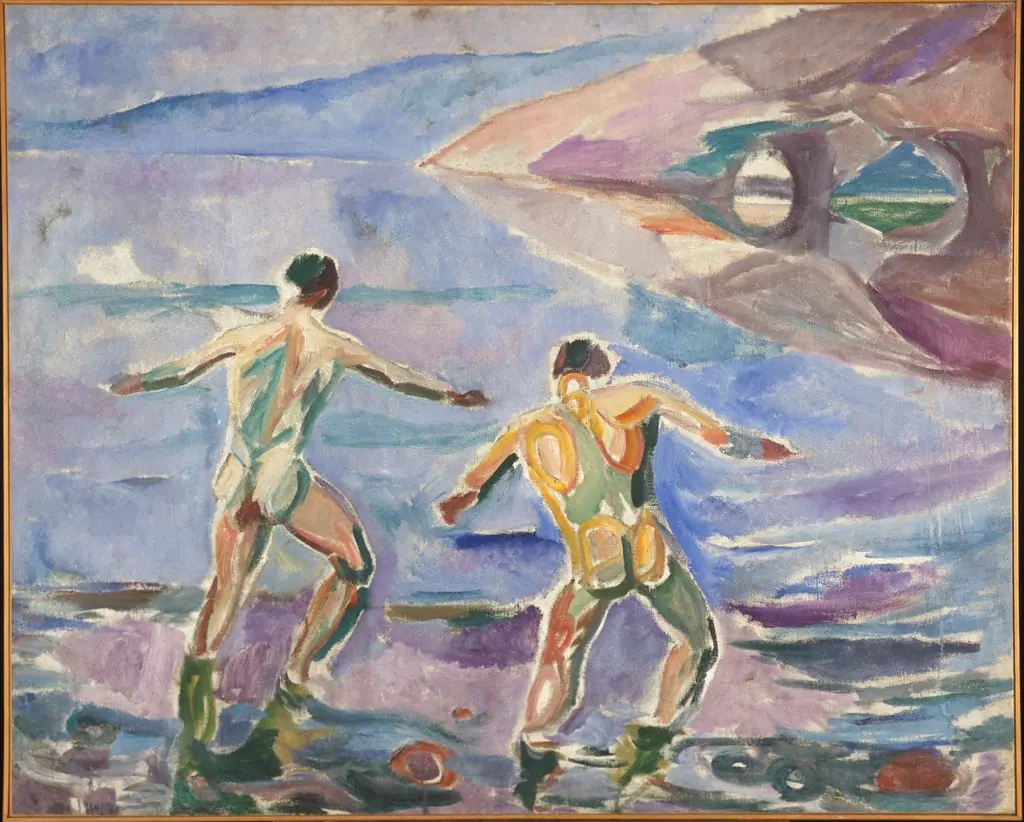
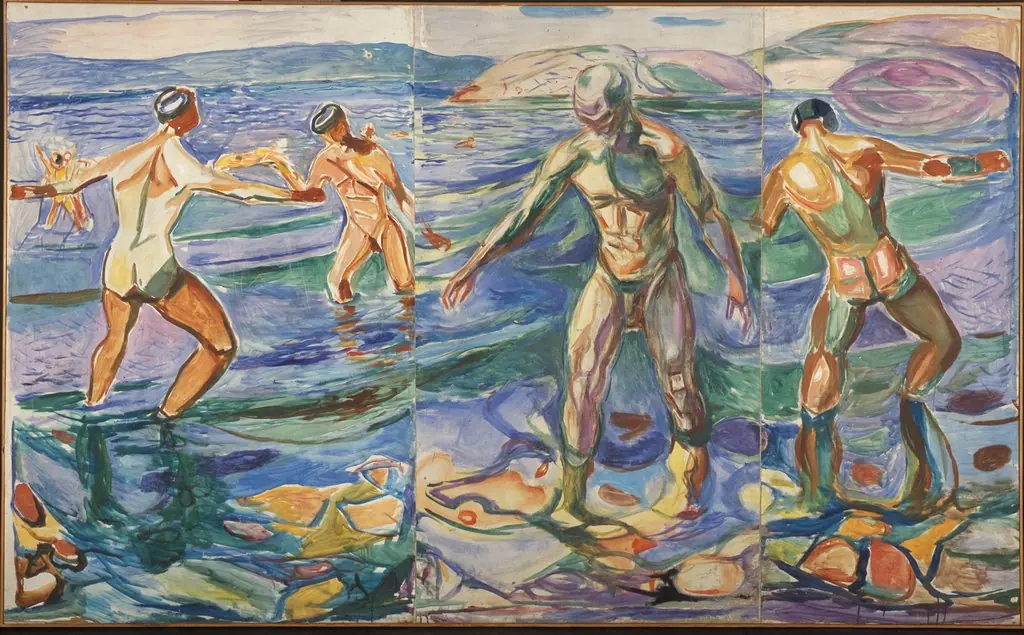
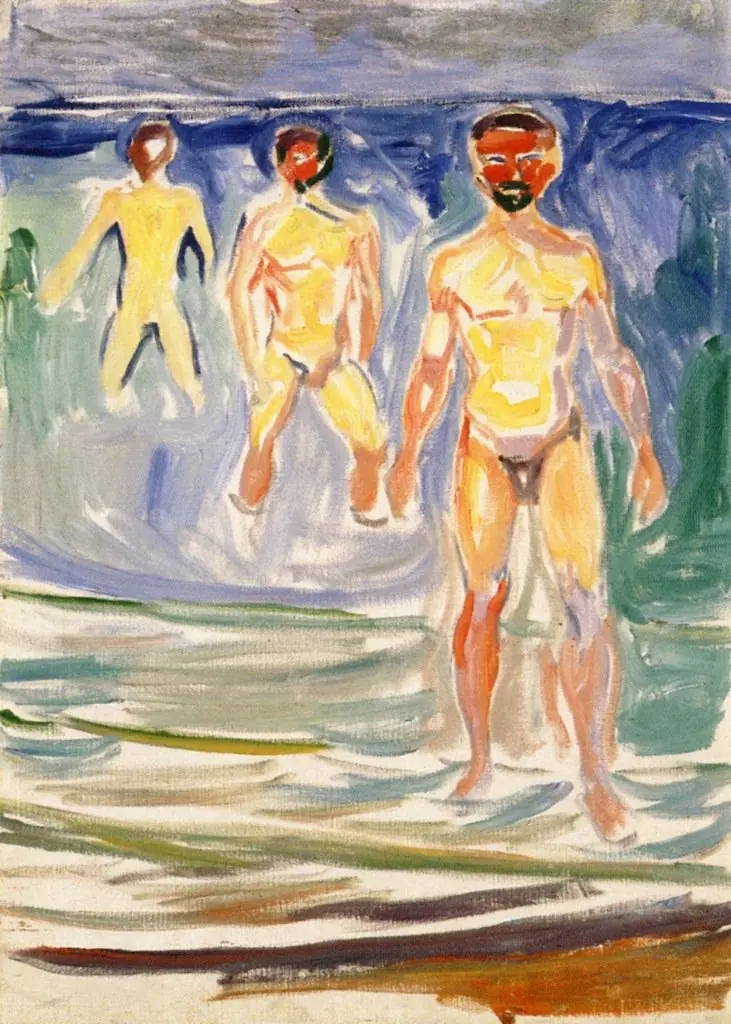
Created in 1918, *Bathing Man* is an oil painting by Norwegian artist Edvard Munch. The work is part of the collection of the Munch Museum in Oslo and exemplifies Munch’s turn toward post‑impressionist concerns, where color and form serve emotional expression rather than strict representation.
Subject & Meaning
The canvas presents a solitary male figure standing waist‑deep in water, arms relaxed at his sides, dressed in a simple swimsuit and cap. Behind him, two swimmers glide and a distant hill with trees recedes, suggesting a public bathing scene while the isolated pose invites contemplation of the body’s relationship to nature and solitude.
Technique & Style
Munch employs bold, gestural brushwork and a vivid palette of blues, greens, yellows, and reds. The figure’s musculature is rendered with simplified planes, emphasizing movement over anatomical detail. The handling of light on water and the flattened background reflect the post‑impressionist emphasis on expressive color and structural abstraction.
History & Provenance
The painting entered the holdings of the Munch Museum, the principal repository for the artist’s oeuvre. It was produced after Munch’s formal training at the Royal School of Art and Design in Kristiania (now Oslo), a period that shaped his focus on psychological depth in visual art.
Context
*Bathing Man* emerges from a period when Munch, whose early life was marked by illness and personal loss, was exploring themes of vulnerability and the human psyche. The work aligns with his broader interest in depicting ordinary scenes—such as bathing—that become sites for exploring inner emotional states.
Artist & collection
Artist
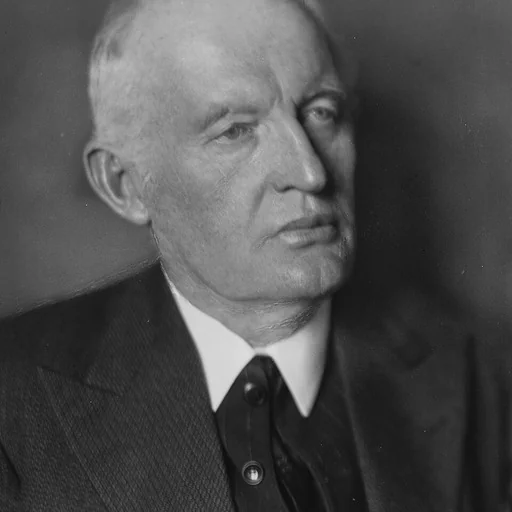
Edvard Munch ( MUUNK; Norwegian: ; 12 December 1863 – 23 January 1944) was a Norwegian painter.