Artwork
Chemistry
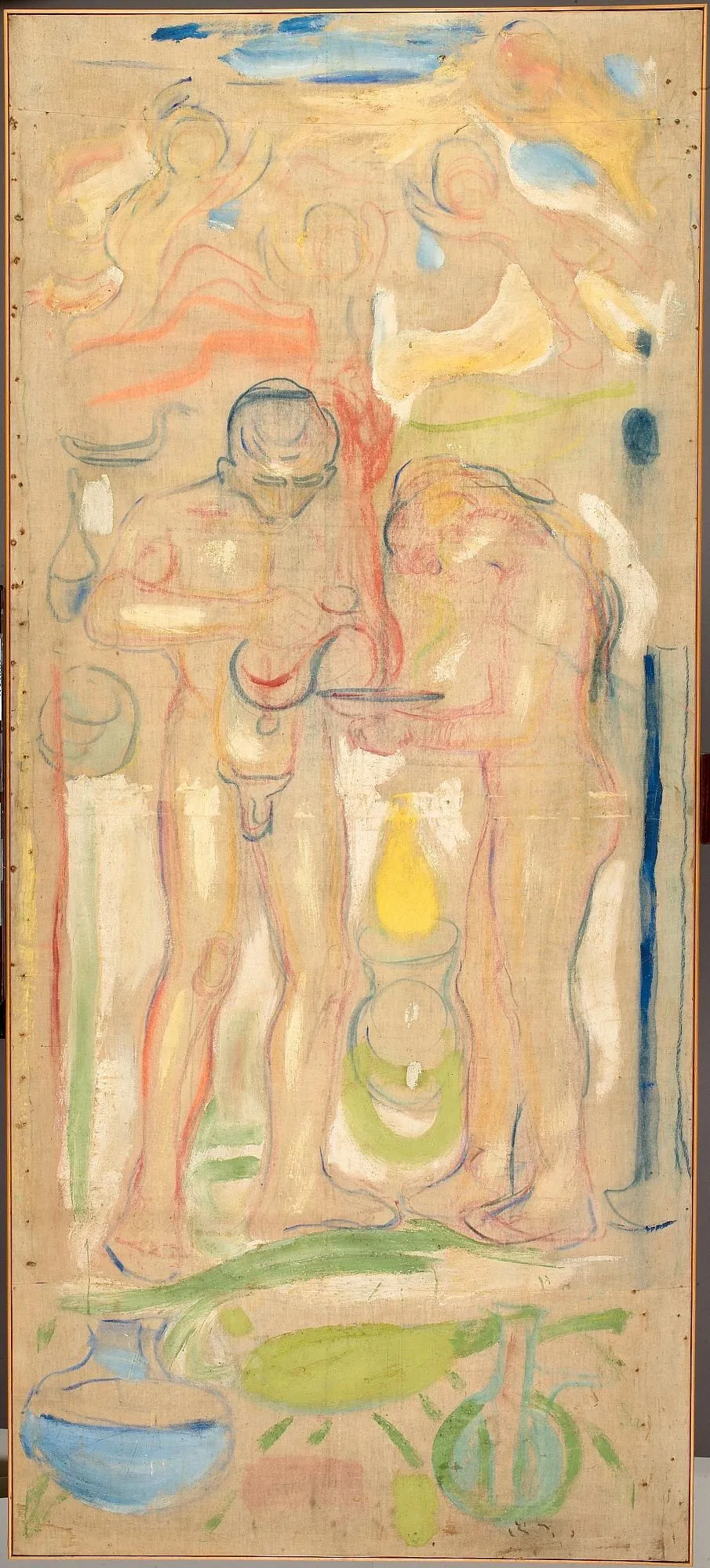
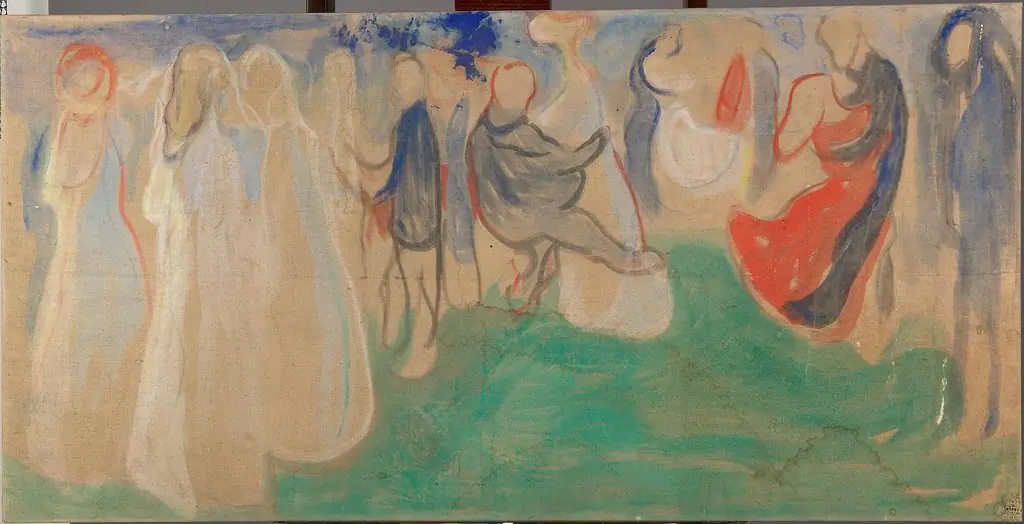
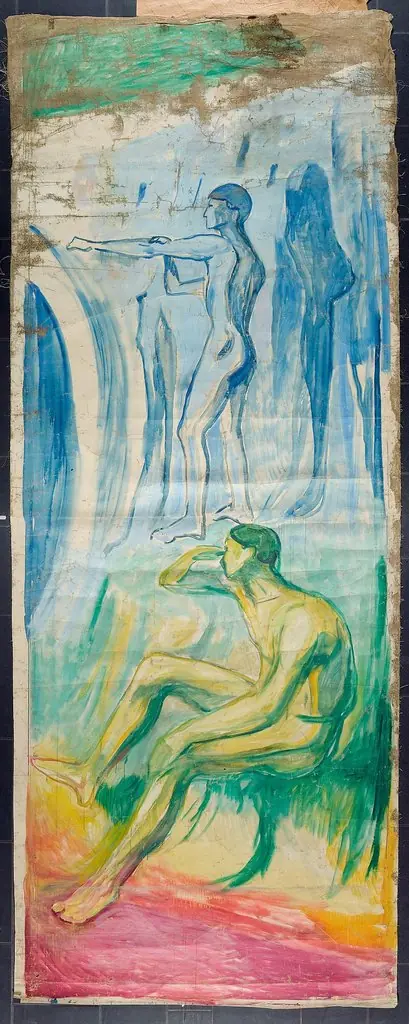
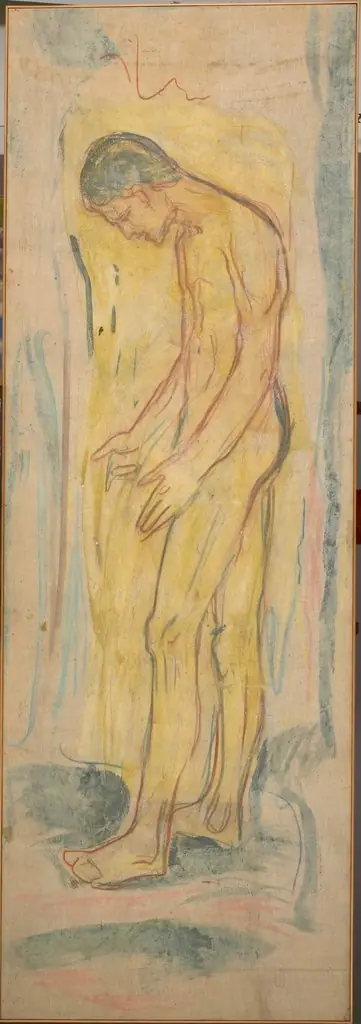
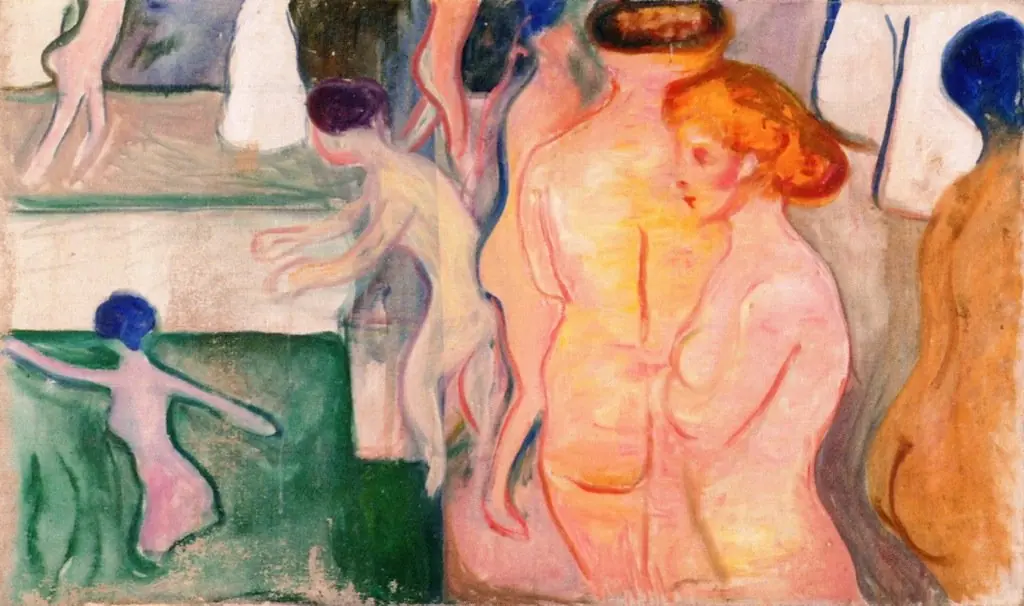
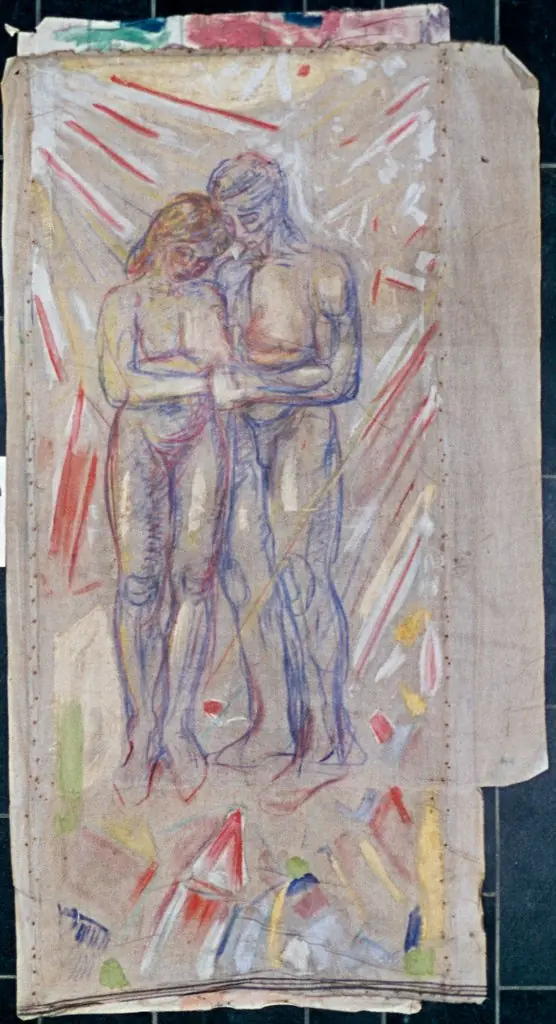
Chemistry is an oil painting by the Post-Impressionist artist Edvard Munch. It dates from 1910 and is held in the collection of the Munch Museum.
About this work
Overview
Chemistry, a 1910 wax crayon painting by Edvard Munch, depicts two nude figures—a man and a woman—standing together against a vibrant, multicolored background. The man holds a round, unspecified object, while the woman stands with her arms at her sides.
Subject & Meaning
The painting's subject, while seemingly straightforward, embodies Munch's post-impressionist focus on emotional and psychological depth. The figures' nudity and the man's held object may symbolize intimacy, vulnerability, or an unspoken dynamic, characteristic of Munch's exploration of inner states.
Technique & Style
Executed in wax crayon, Chemistry exhibits Munch's expressive, loose style, marked by bold lines, simplified forms, and a palette dominated by red, blue, and yellow. This approach conveys a sense of energy and movement, aligning with post-impressionist principles.
History & Provenance
Created during Munch's mature period, Chemistry reflects influences from his time at the Royal School of Art and Design in Kristiania and the philosophical impact of nihilist writer Hans Jæger. The work is currently part of the Munch Museum's collection.
Context
Chemistry sits within Munch's broader oeuvre, which often explored themes of human emotion, mortality, and the psyche, reflecting both personal experiences and the intellectual currents of his time.
Legacy
As part of Munch's post-impressionist output, Chemistry contributes to the broader legacy of expressive, psychologically charged art, influencing subsequent movements in European modernism.
Artist & collection
Artist
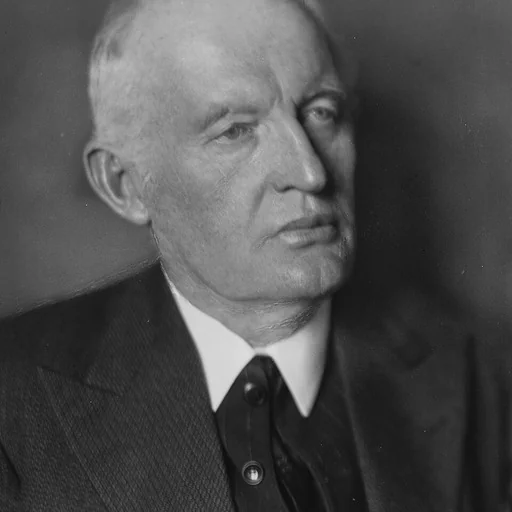
Edvard Munch ( MUUNK; Norwegian: ; 12 December 1863 – 23 January 1944) was a Norwegian painter.