Artwork
Death Chamber
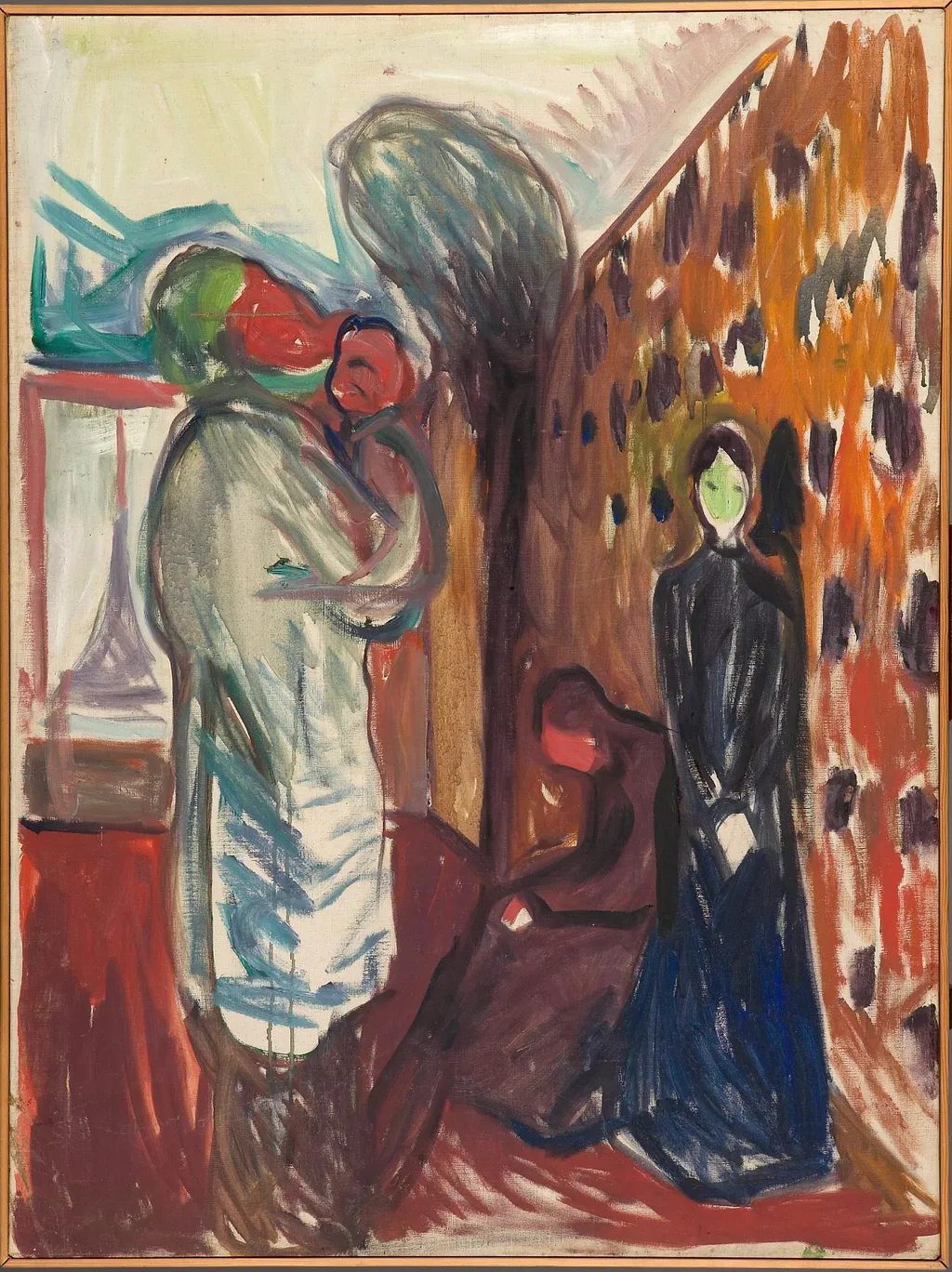
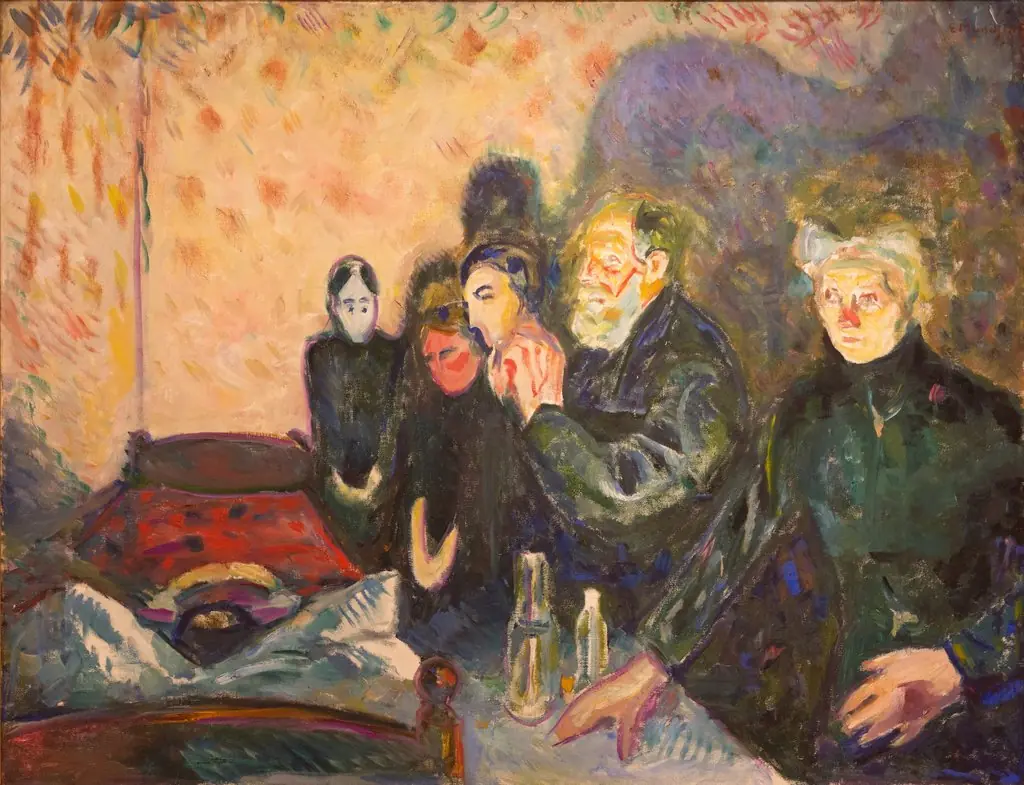
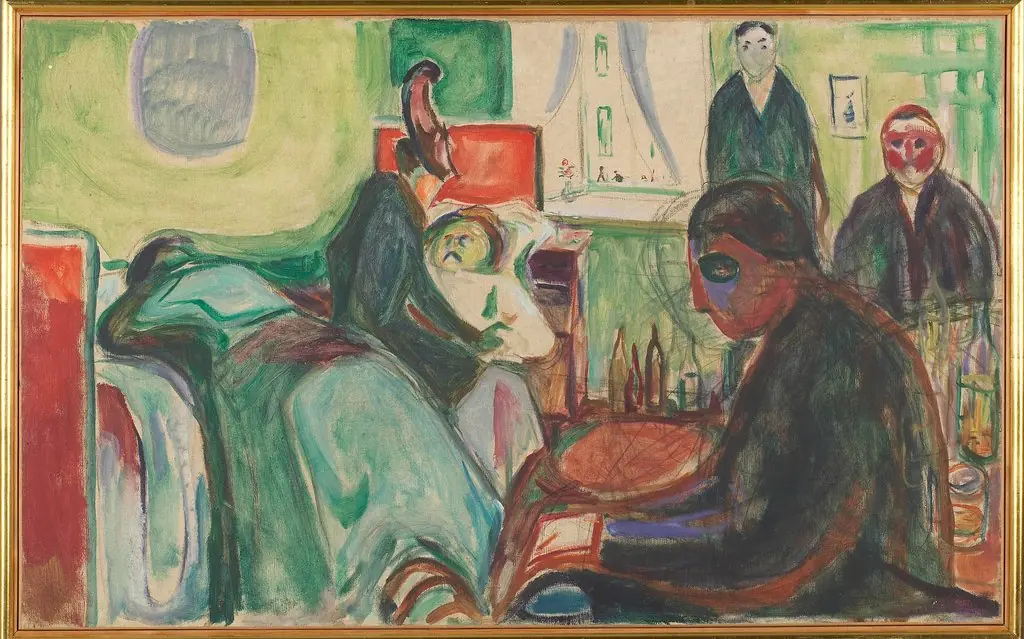
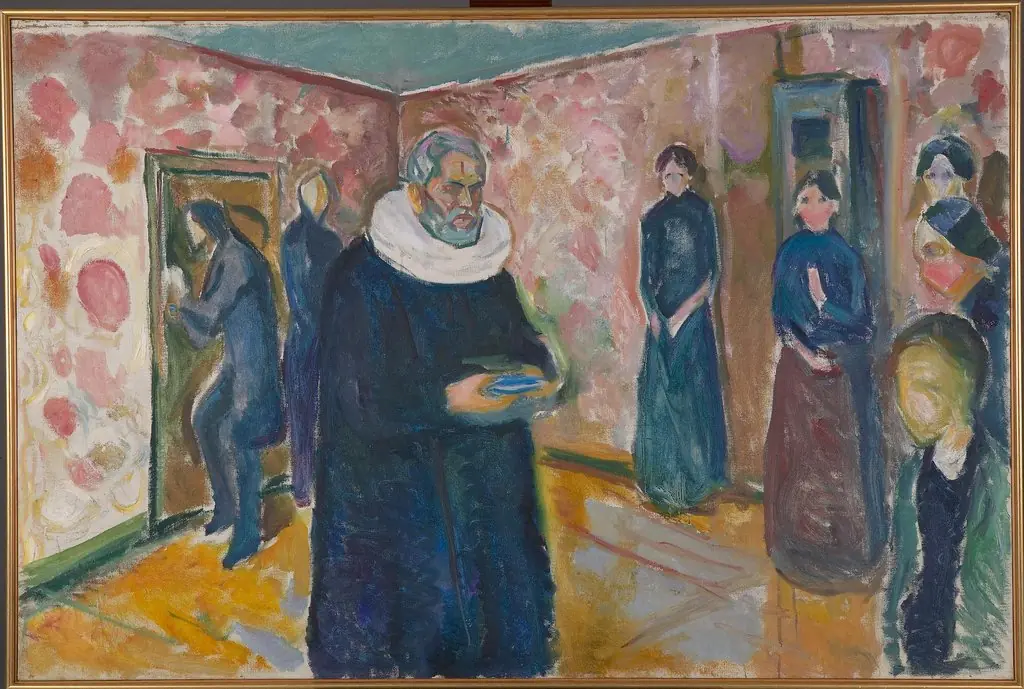
Death Chamber is an oil painting by the Post-Impressionist artist Edvard Munch. It dates from 1915 and is held in the collection of the Munch Museum.
About this work
Overview
The composition centers on a figure in a white coat standing beside a bed, observing a prone form.
Painted in 1915, *Death Chamber* is an oil-on-canvas work by Norwegian artist Edvard Munch. It captures a quiet, intimate moment of mortality within a dimly lit interior. The composition centers on a figure in a white coat standing beside a bed, observing a prone form. Munch’s use of restrained color and loose brushwork conveys emotional weight without overt drama, aligning with his lifelong focus on psychological states over narrative detail.
Subject & Meaning
The scene depicts a moment of death or imminent loss, with no clear identification of the figures. The man in the coat may be a physician or a grieving relative; the figure on the bed is passive, enveloped in stillness. Munch, who experienced multiple family deaths in childhood, often returned to themes of mortality. Here, the absence of tears or outcry suggests a quiet resignation, emphasizing the solitude inherent in dying and the weight of witnessing it.
Technique & Style
Munch employed loose, visible brushstrokes and a muted palette dominated by grays, browns, and muted ochres to evoke emotional tension. The lighting is uneven, casting deep shadows that obscure details and heighten the sense of isolation. Forms are simplified, with little attention to anatomical precision—instead, gesture and atmosphere take precedence. This approach reflects his move away from naturalism toward expressive abstraction, rooted in Symbolist and post-Impressionist ideals.
History & Provenance
Created in 1915, the painting remained in Munch’s personal collection until his death in 1944. It was subsequently transferred to the Munch Museum in Oslo, established to preserve and display his oeuvre. The work has not been widely exhibited abroad, maintaining a presence primarily within Norwegian institutional contexts. Its preservation reflects Munch’s own desire to control the legacy of his most personal subjects.
Context
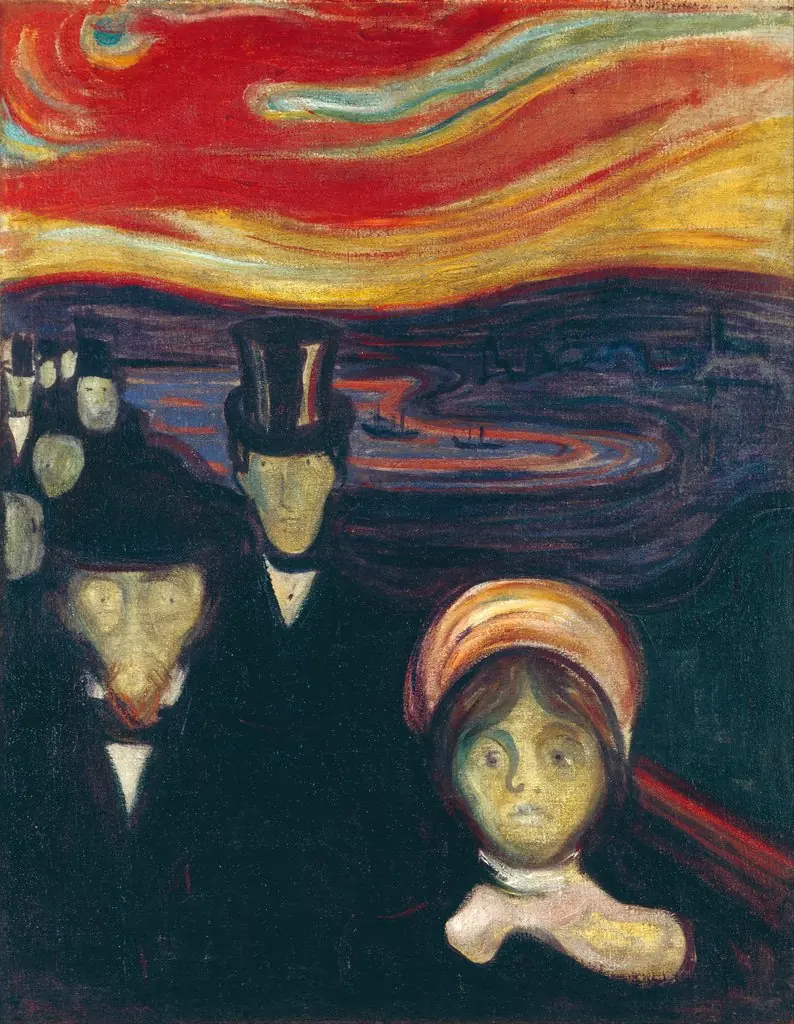
Munch painted *Death Chamber* during a period of reflection following decades of personal grief and societal upheaval, including the Spanish flu pandemic. His earlier works, like *The Scream*, had already established his preoccupation with anxiety and mortality. This later piece continues that trajectory but with greater restraint, suggesting a matured engagement with loss—not as spectacle, but as an inevitable, quiet presence in human life.
Legacy
Though less known than his symbolic works, *Death Chamber* exemplifies Munch’s enduring commitment to portraying inner experience through visual form. It influenced later generations of expressionist artists who sought to convey psychological truth over external realism. The painting remains a quiet testament to his belief that art could bear witness to the most private and universal of human moments: the approach of death.
Artist & collection
Artist
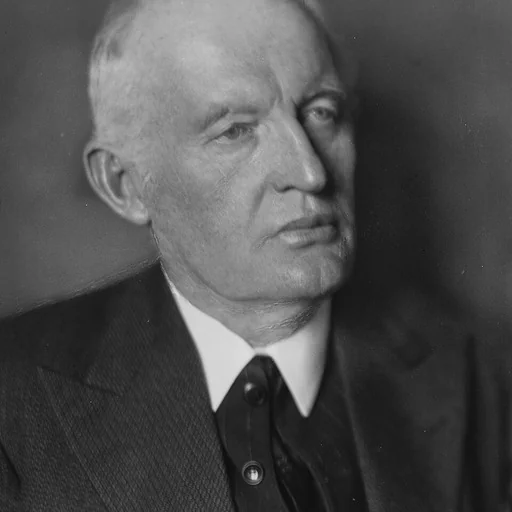
Edvard Munch ( MUUNK; Norwegian: ; 12 December 1863 – 23 January 1944) was a Norwegian painter.