Artwork
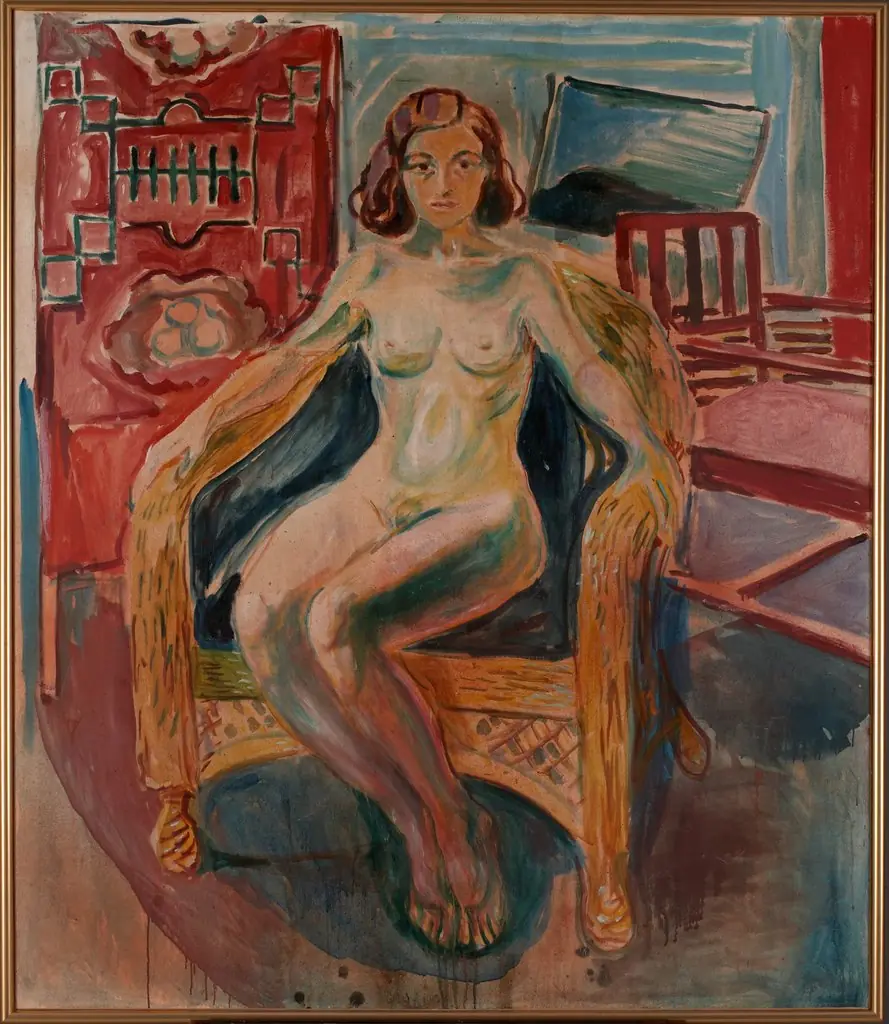
Model by the Wicker Chair
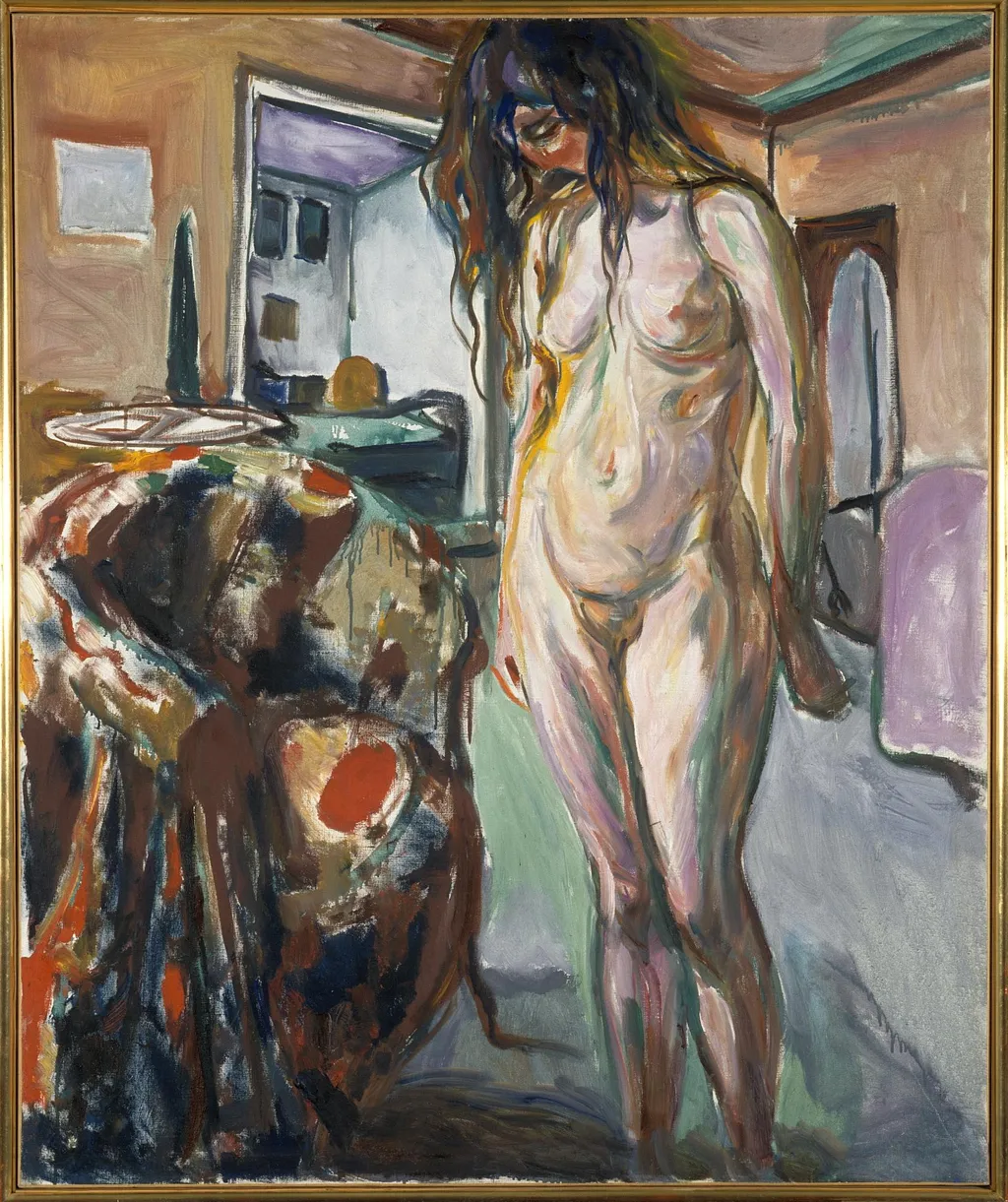
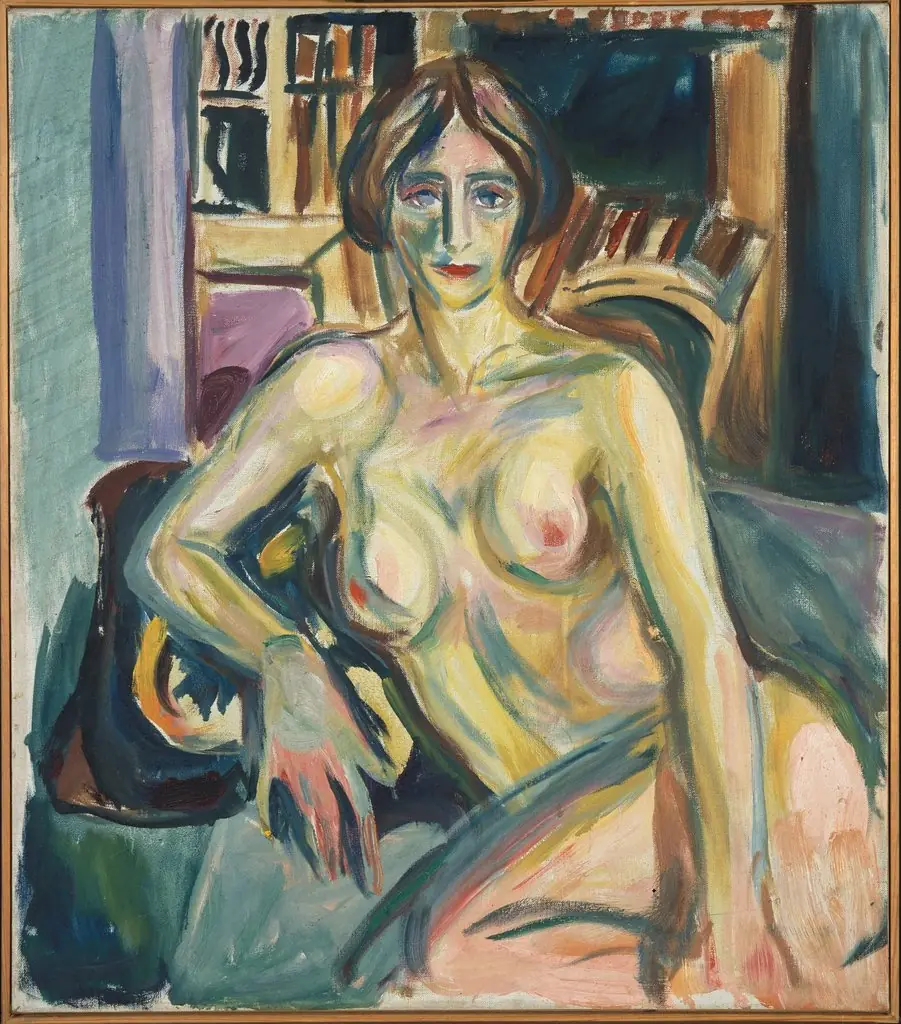
Model by the Wicker Chair is an oil painting by the Post-Impressionist artist Edvard Munch. It dates from 1919 and is held in the collection of the Munch Museum.
About this work
Overview
The piece reflects Munch’s sustained interest in psychological presence over narrative detail, aligning with his broader post-impressionist tendencies.
Painted in 1919, *Model by the Wicker Chair* is an oil on canvas work by Norwegian artist Edvard Munch. It portrays his frequent model, Annie Fjeldbu, in a quiet interior setting. The piece reflects Munch’s sustained interest in psychological presence over narrative detail, aligning with his broader post-impressionist tendencies. Its intimate scale and restrained palette emphasize mood over spectacle, characteristic of his mature style.
Subject & Meaning
Annie Fjeldbu stands alone in a modest room, her gaze lowered, body still yet charged with quiet tension. The absence of direct eye contact and the solitude of the setting suggest introspection or emotional withdrawal. The wicker chair, table, and mirror frame her without interaction, reinforcing a sense of isolation. Munch often used models not as portraits but as vessels for exploring inner states, and here, the figure becomes a silent witness to private unease.
Technique & Style
Munch applied oil paint with loose, fluid brushwork, particularly in the woman’s dress and hair, where pigment flows in rhythmic, unrefined strokes. The furnishings and walls are rendered with soft, blended tones—beiges and browns—creating a muted, enveloping atmosphere. Subtle contrasts in light suggest a single source, casting gentle shadows without dramatic chiaroscuro. The surface retains a tactile quality, with areas of impasto adding texture without overwhelming the composition.
History & Provenance
The painting has remained within the Munch Museum’s collection since its creation, part of the artist’s personal archive donated by his estate. It was not exhibited widely during Munch’s lifetime, reflecting its private, intimate character. Its preservation there underscores its role as a study in psychological observation rather than a public statement, consistent with Munch’s practice of retaining works that resonated personally.
Context
Created in the aftermath of World War I and during Munch’s period of relative stability in Norway, the painting diverges from his earlier, more overtly anxious themes. Yet it retains his preoccupation with solitude and emotional weight. The domestic setting reflects a shift toward quieter subjects, though the psychological undercurrents remain. Contemporary Norwegian art of the time often embraced realism; Munch’s approach, by contrast, prioritized internal experience over external accuracy.
Legacy
*Model by the Wicker Chair* exemplifies Munch’s late-period refinement of emotional expression through understated means. It influenced later Nordic artists who sought to convey psychological depth in domestic scenes without theatricality. Though less known than *The Scream*, the work stands as a quiet testament to his enduring focus on the human condition—rendered not through grand gestures, but through stillness, gaze, and the weight of space.
Artist & collection
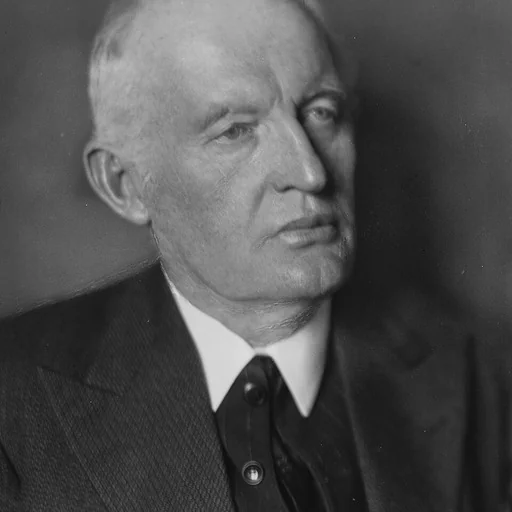
Artist
Edvard Munch ( MUUNK; Norwegian: ; 12 December 1863 – 23 January 1944) was a Norwegian painter.