Artwork
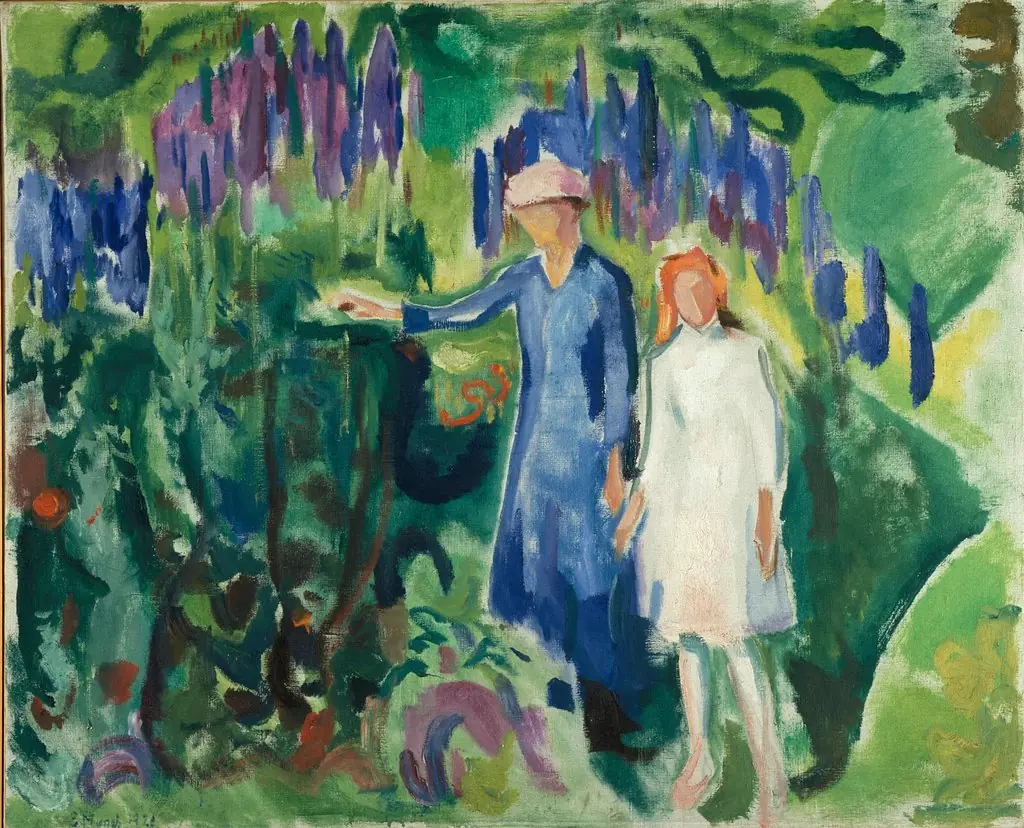
Mother and Daughter in the Garden
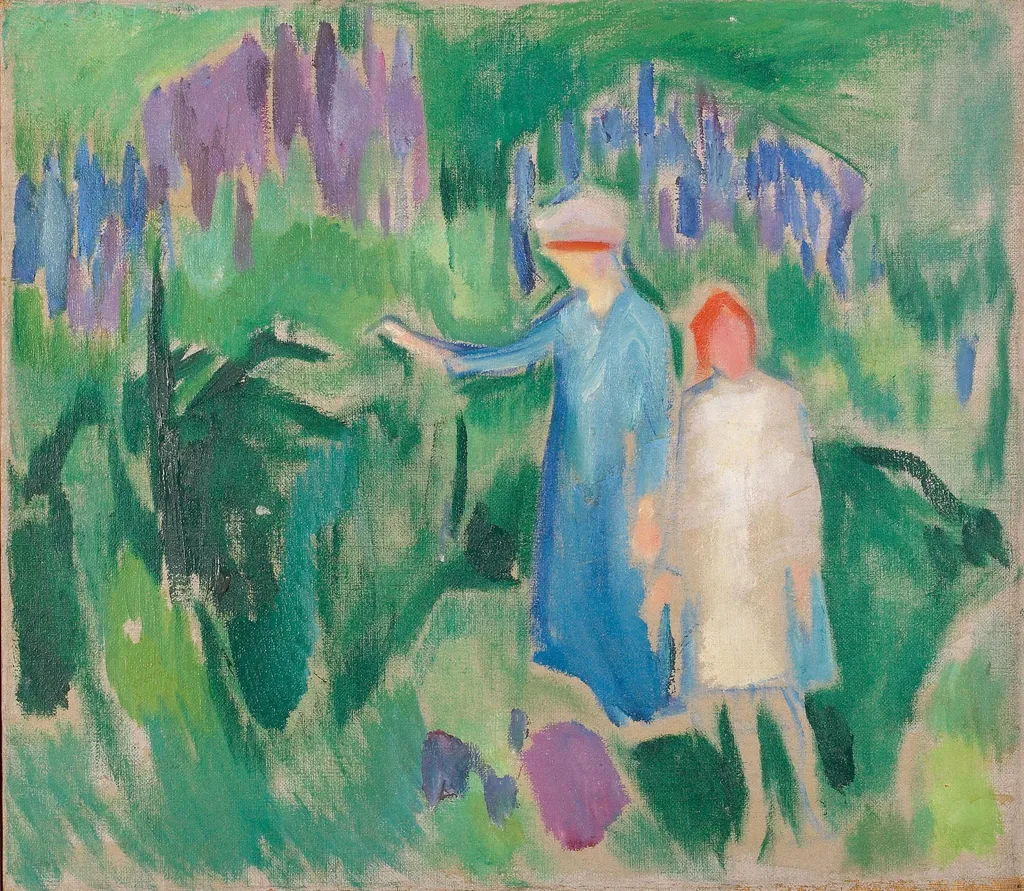
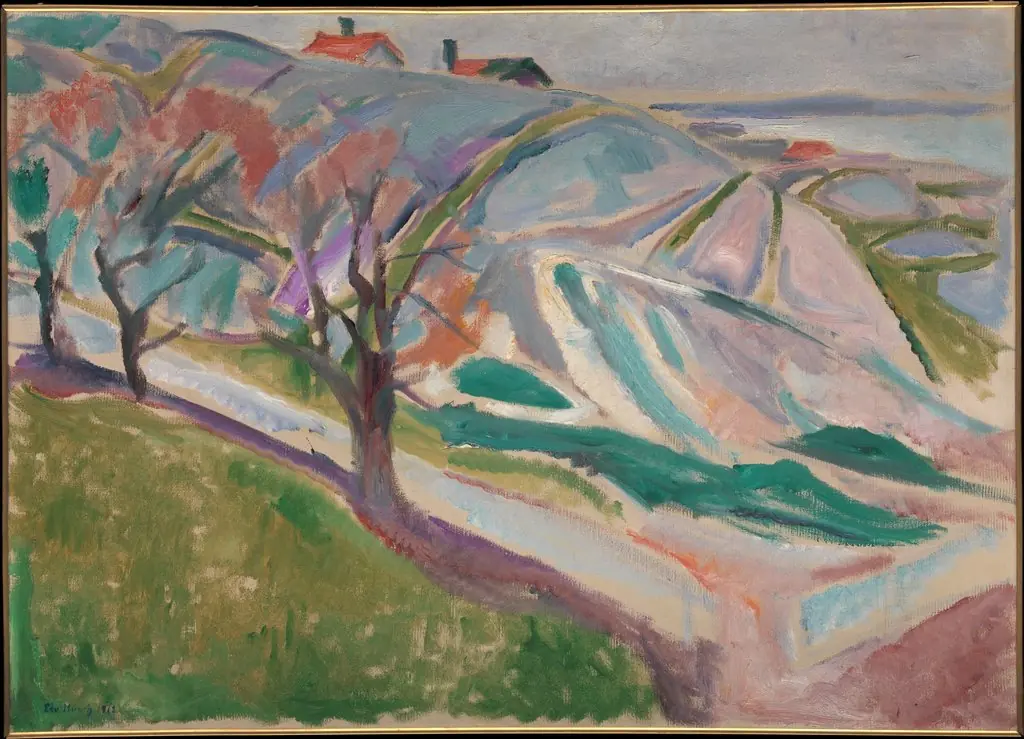
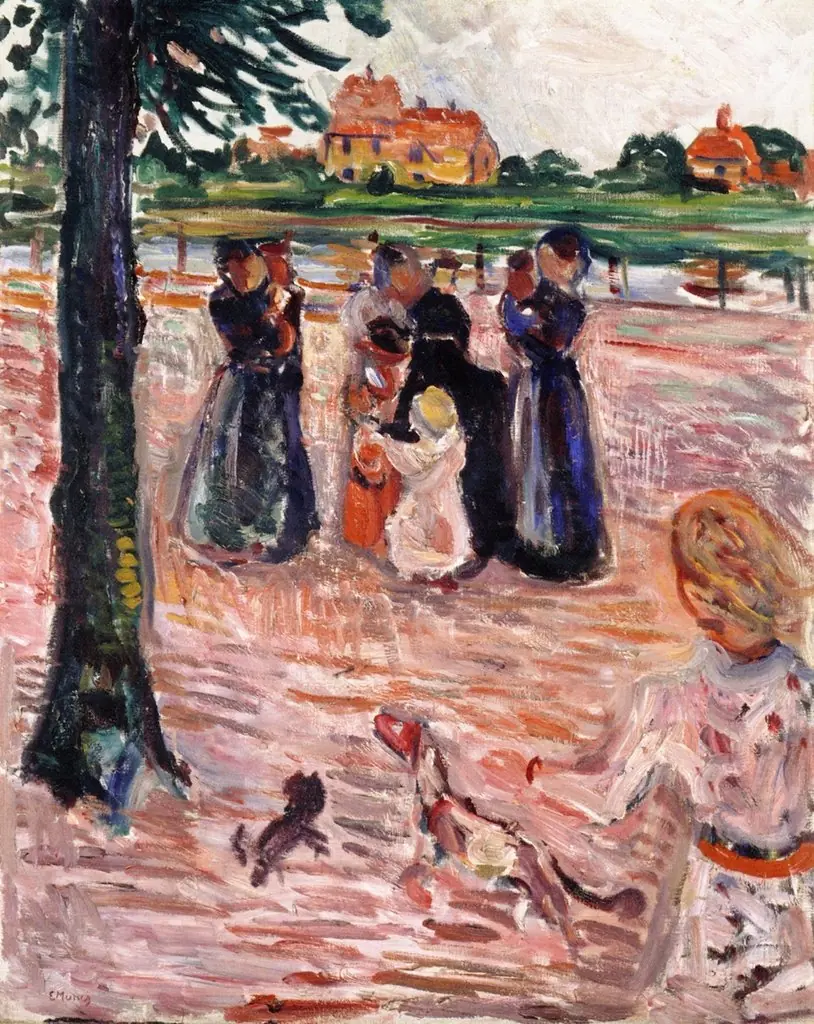
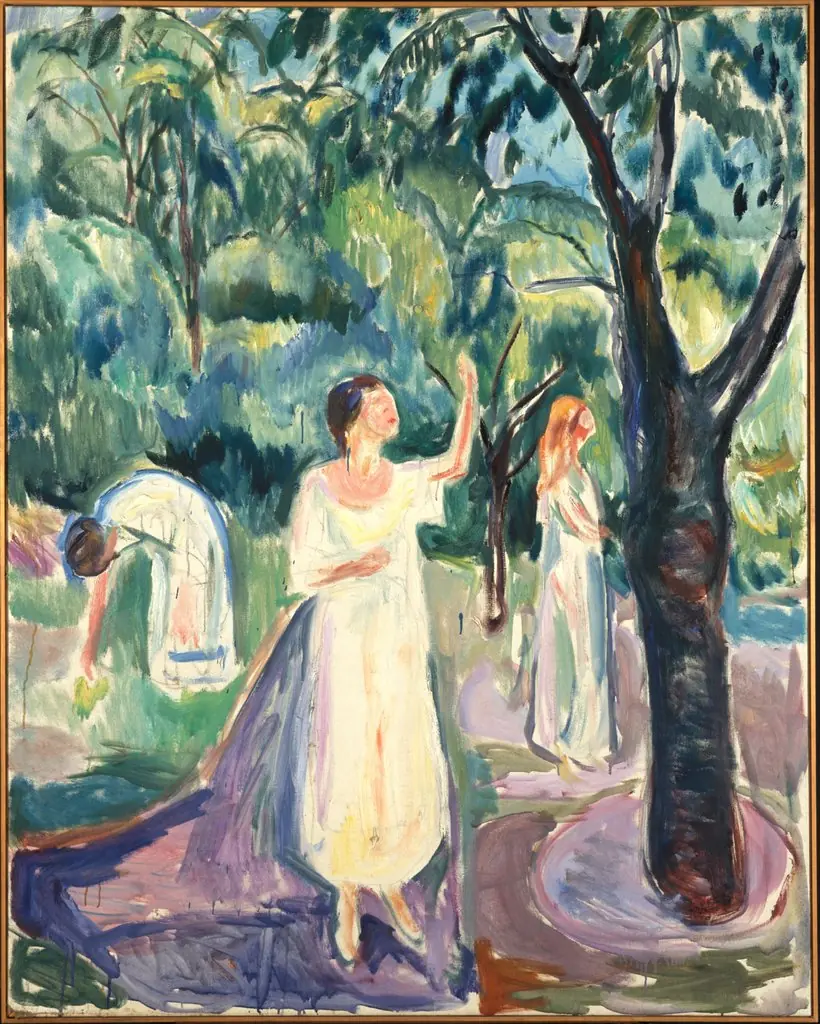
Mother and Daughter in the Garden is an oil painting by the Post-Impressionist artist Edvard Munch. It dates from 1920 and is held in the collection of the Munch Museum.
About this work
Overview
Painted in 1920, *Mother and Daughter in the Garden* is an oil on canvas work by Norwegian artist Edvard Munch.
Painted in 1920, *Mother and Daughter in the Garden* is an oil on canvas work by Norwegian artist Edvard Munch. It reflects his sustained interest in intimate human relationships and emotional atmosphere, rendered through a personal visual language that diverges from strict realism. The painting resides in the Munch Museum in Oslo, where it is part of a broader collection documenting his lifelong exploration of psychological depth in everyday scenes.
Subject & Meaning
The painting portrays a mother and her young daughter standing together in a garden, their postures suggesting quiet companionship. There is no narrative action—only presence. The absence of facial detail invites contemplation rather than identification, emphasizing emotional resonance over individual identity. The scene evokes themes of care, continuity, and the quiet passage of time, recurring motifs in Munch’s later work.
Technique & Style
Munch employed thick, deliberate brushwork to build texture in the foliage and fabric, creating a tactile surface that enhances the painting’s emotional weight. Color is used expressively: cool blues and greens dominate, anchoring the figures in a calm, enclosed space. The daughter’s white dress acts as a subtle focal point, contrasting gently with the saturated greens and purples of the garden, reinforcing a sense of stillness and purity.
History & Provenance
Created during Munch’s mature period, the painting emerged after decades of personal loss and artistic experimentation. It entered the Munch Museum’s collection following the artist’s death in 1944, as part of his bequest of nearly 1,100 paintings and thousands of prints and drawings. Its preservation there ensures its place within the comprehensive record of his evolving vision.
Context
In the 1920s, Munch moved away from the intense symbolism of his earlier works like *The Scream*, turning toward quieter, more domestic subjects. This shift coincided with his increasing focus on nature and familial bonds, possibly influenced by his own aging and reflections on mortality. The garden setting, common in his late oeuvre, served as a metaphor for growth, memory, and resilience.
Legacy
*Mother and Daughter in the Garden* exemplifies Munch’s later ability to convey profound emotion through simplicity. While less widely known than his expressionist icons, the work remains significant for its restraint and sensitivity. It illustrates how his artistic concerns evolved without losing psychological intensity, influencing later generations interested in the emotional potential of everyday moments.
Artist & collection

Artist
Edvard Munch ( MUUNK; Norwegian: ; 12 December 1863 – 23 January 1944) was a Norwegian painter.