Artwork
Ploughing Horses
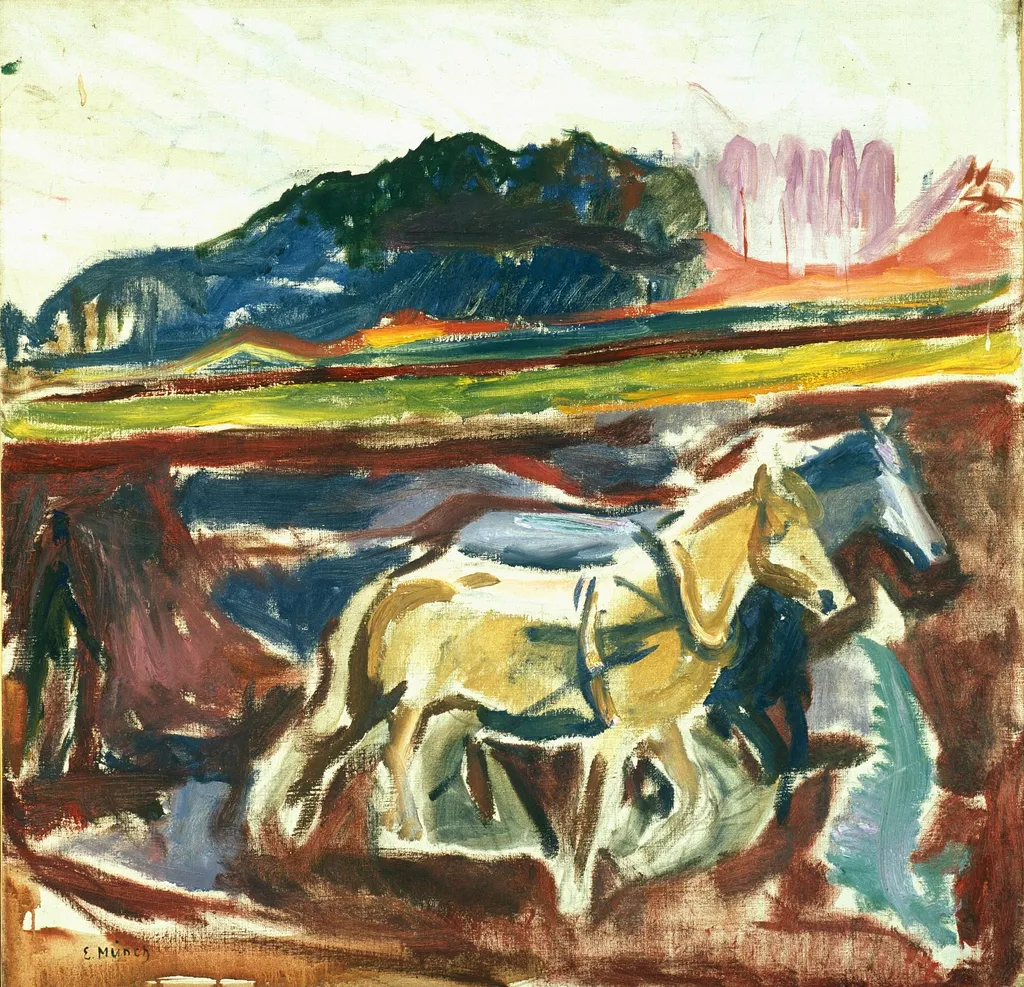
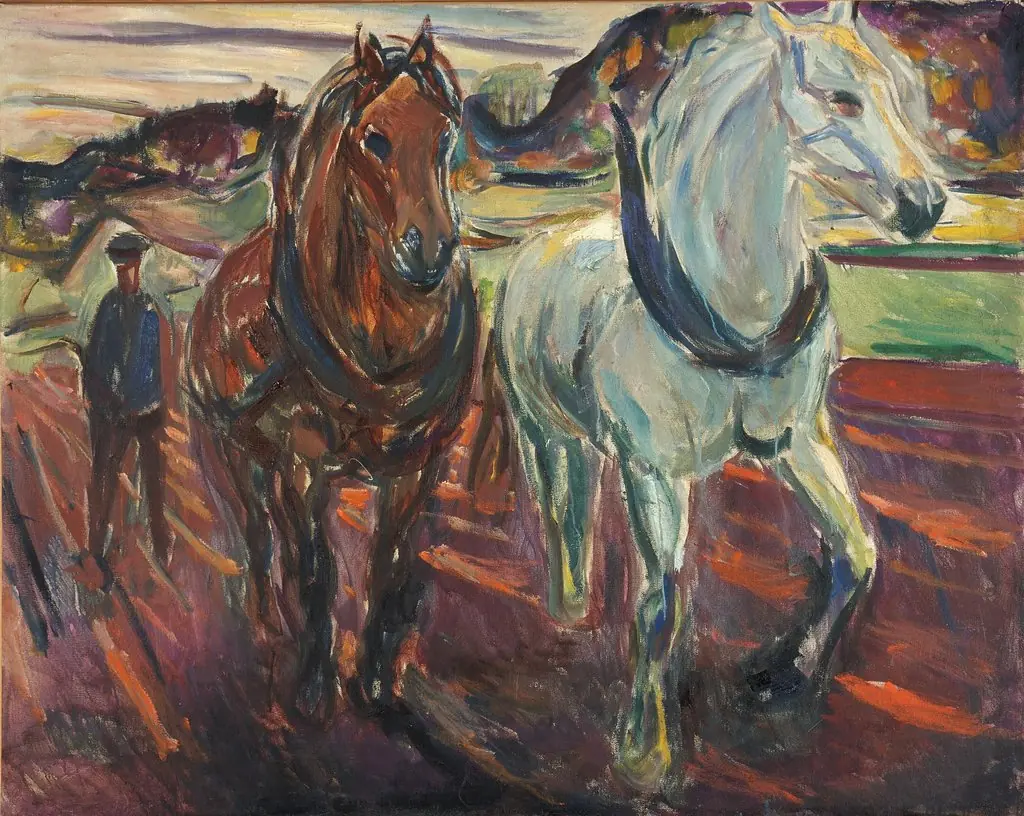
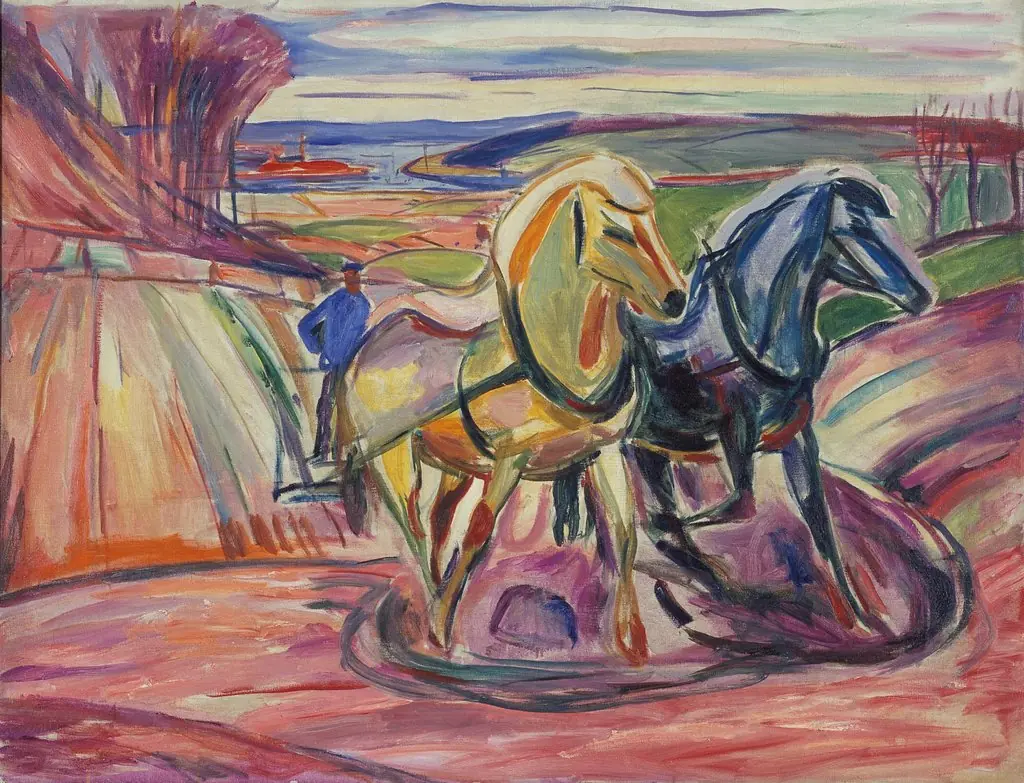
Ploughing Horses is an oil painting by the Post-Impressionist artist Edvard Munch. It dates from 1916 and is held in the collection of the Munch Museum.
About this work
Overview
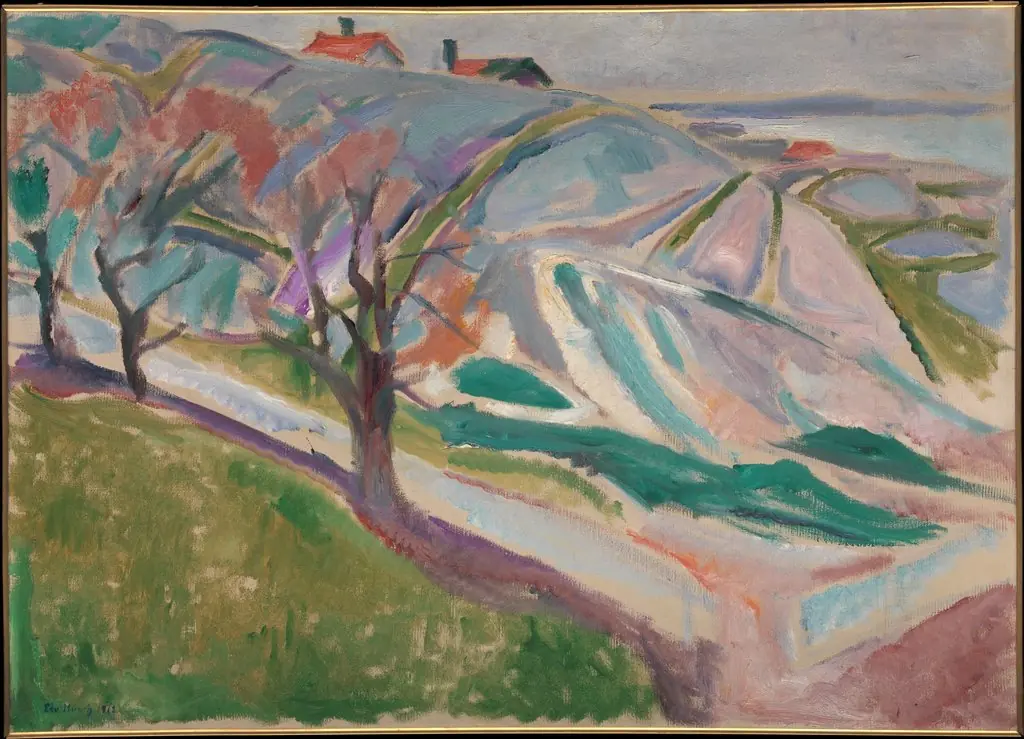
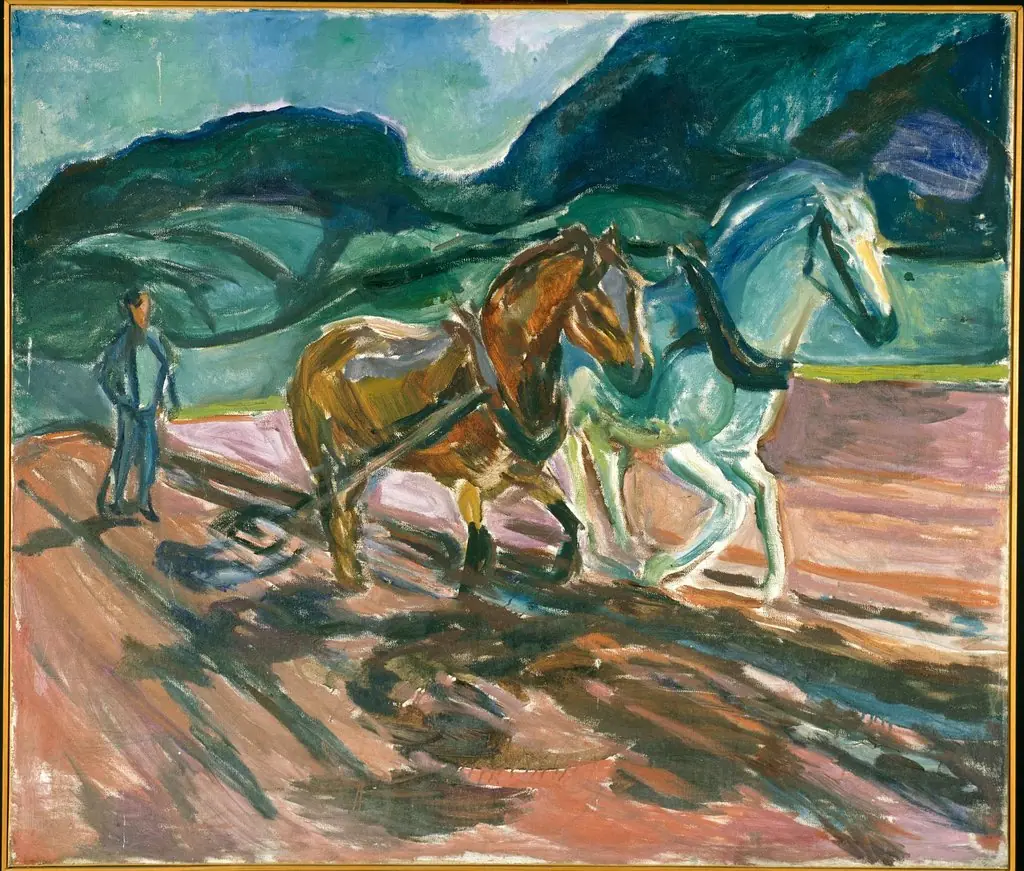
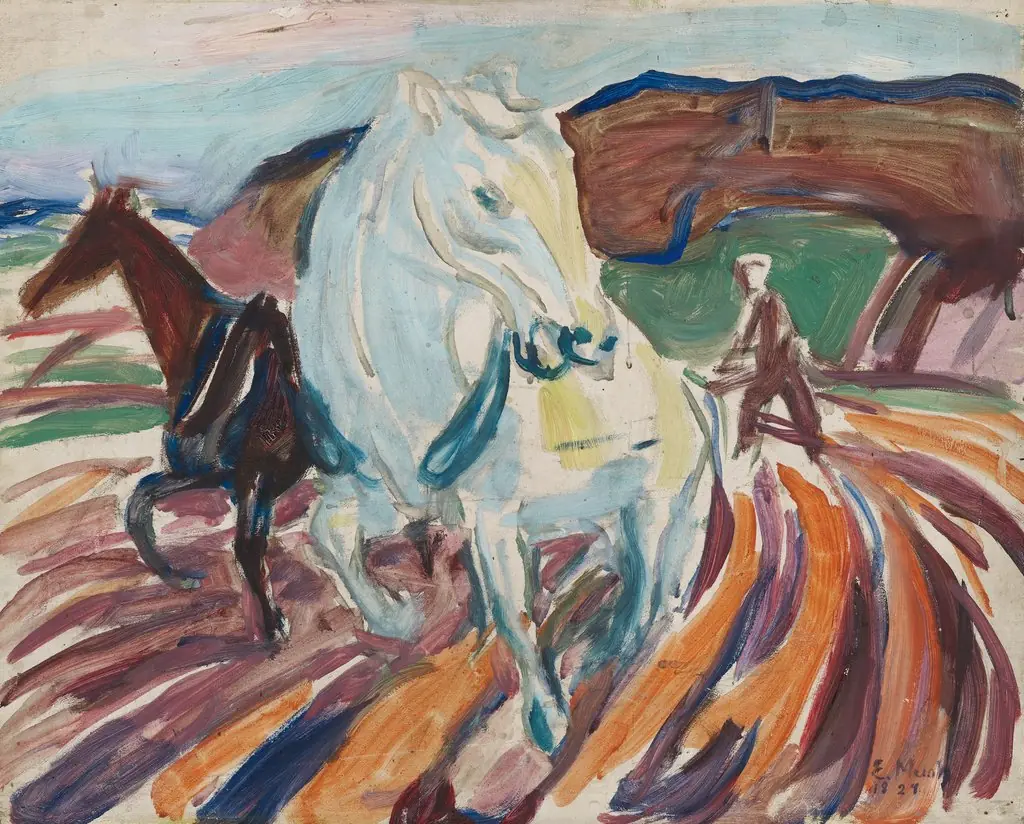
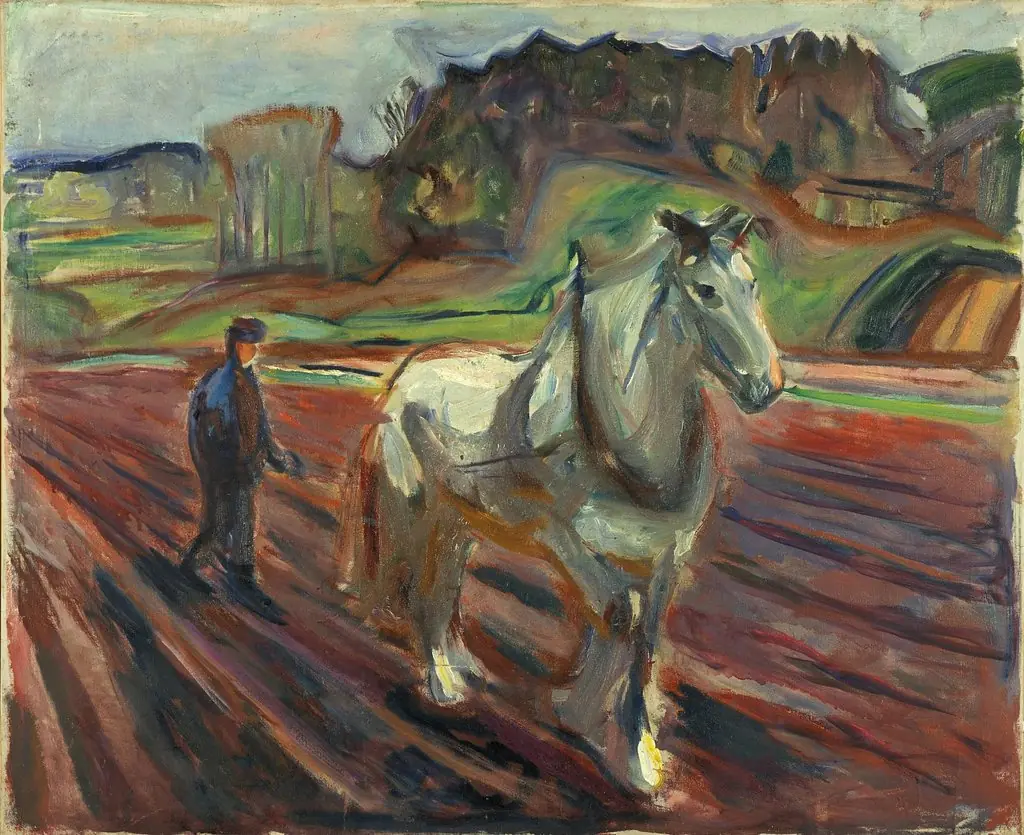
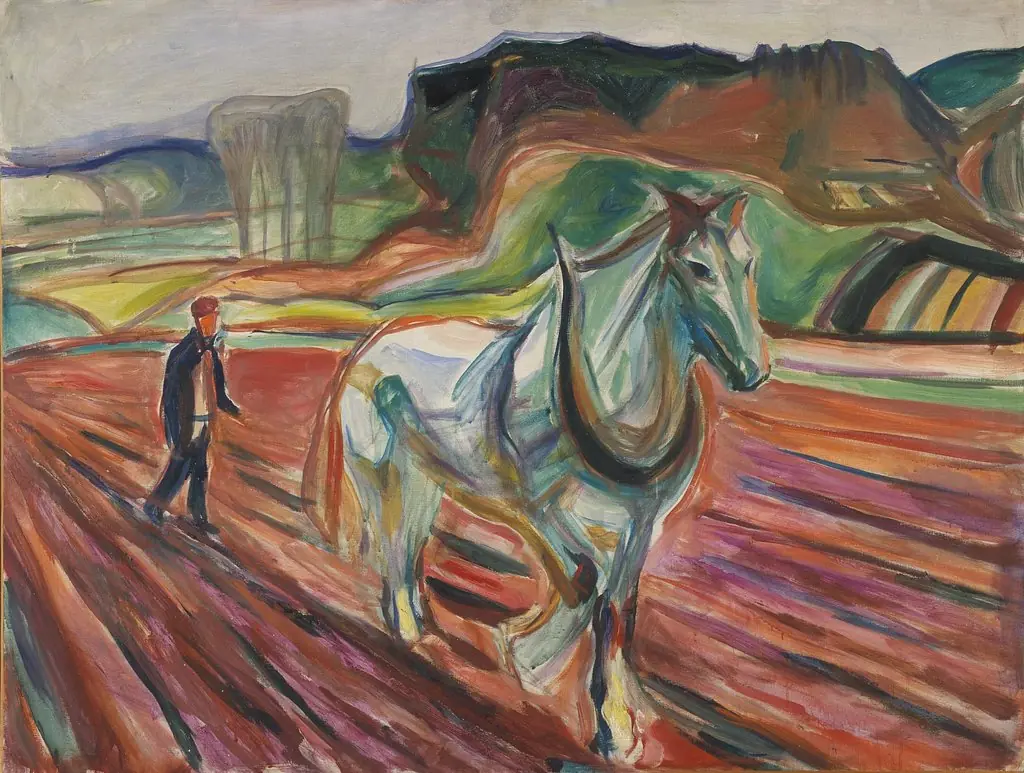
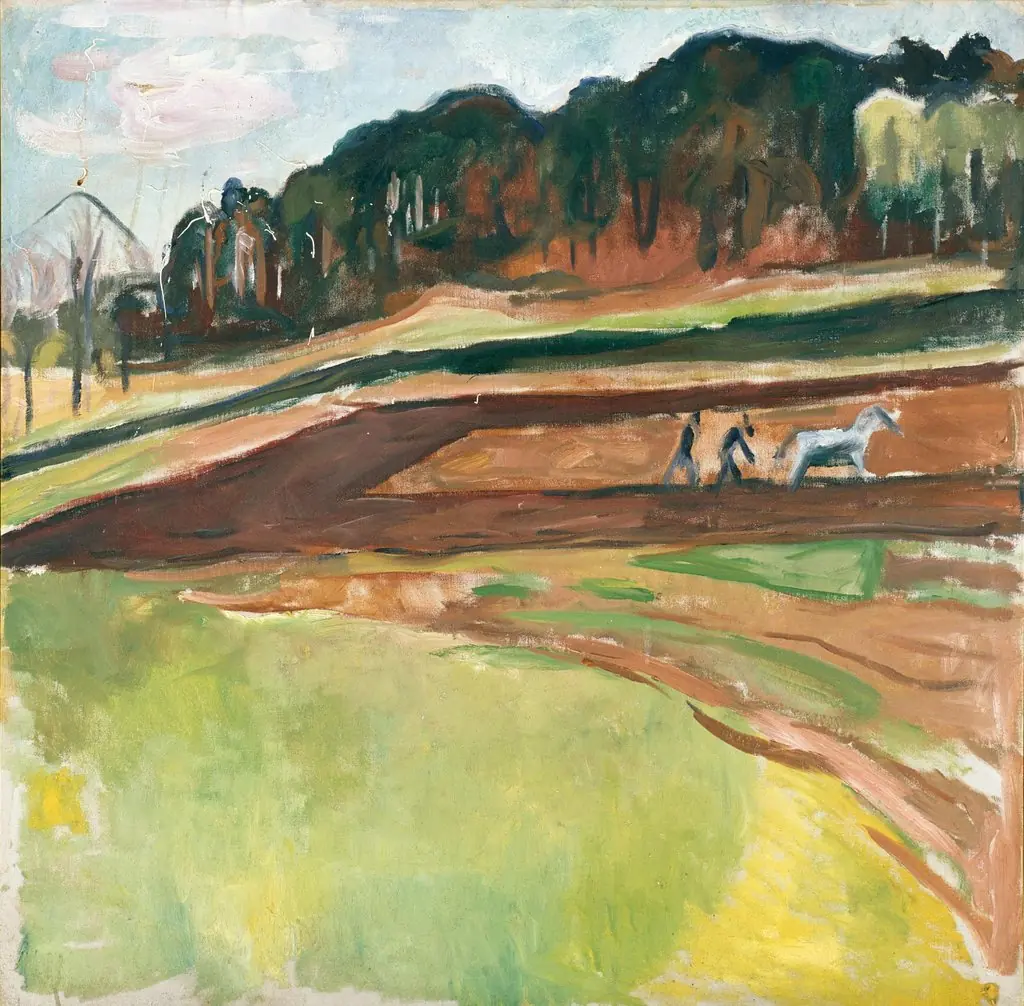
Created in 1916, *Ploughing Horses* is an oil painting by Norwegian artist Edvard Munch. The work belongs to the collection of the Munch Museum in Oslo. It presents a rural scene in which two horses draw a plow across a field, set against a muted landscape of hills and trees rendered in earthy greens, yellows and browns.
Subject & Meaning
The composition focuses on the physical labor of agriculture, emphasizing the partnership between the animals and the land. By portraying the horses in motion, Munch hints at the relentless rhythm of work and the underlying tension between human effort and natural forces, themes that echo his broader interest in human psychology and existential struggle.
Technique & Style
Munch applies thick, expressive brushstrokes that give the surface a textured, almost tactile quality. The palette is restrained, dominated by browns, muted greens and ochres, yet the vigorous handling of paint conveys a sense of kinetic energy. The style aligns with post‑impressionist tendencies, combining representational subject matter with a heightened emotional tone.
History & Provenance
The painting was produced during a period when Munch was reflecting on personal loss and illness, experiences that informed much of his output. After its creation, the work entered the holdings of the Munch Museum, where it remains part of the permanent collection, accessible to scholars and the public alike.
Own this work as a print
Artist & collection
Artist
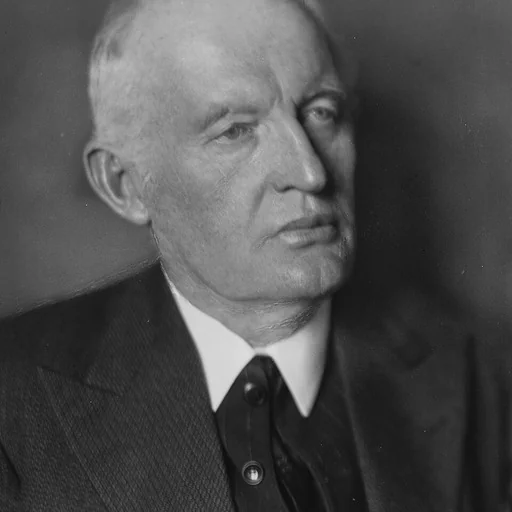
Edvard Munch ( MUUNK; Norwegian: ; 12 December 1863 – 23 January 1944) was a Norwegian painter.