Artwork
Still Life with Tomatoes, Leek and Casseroles
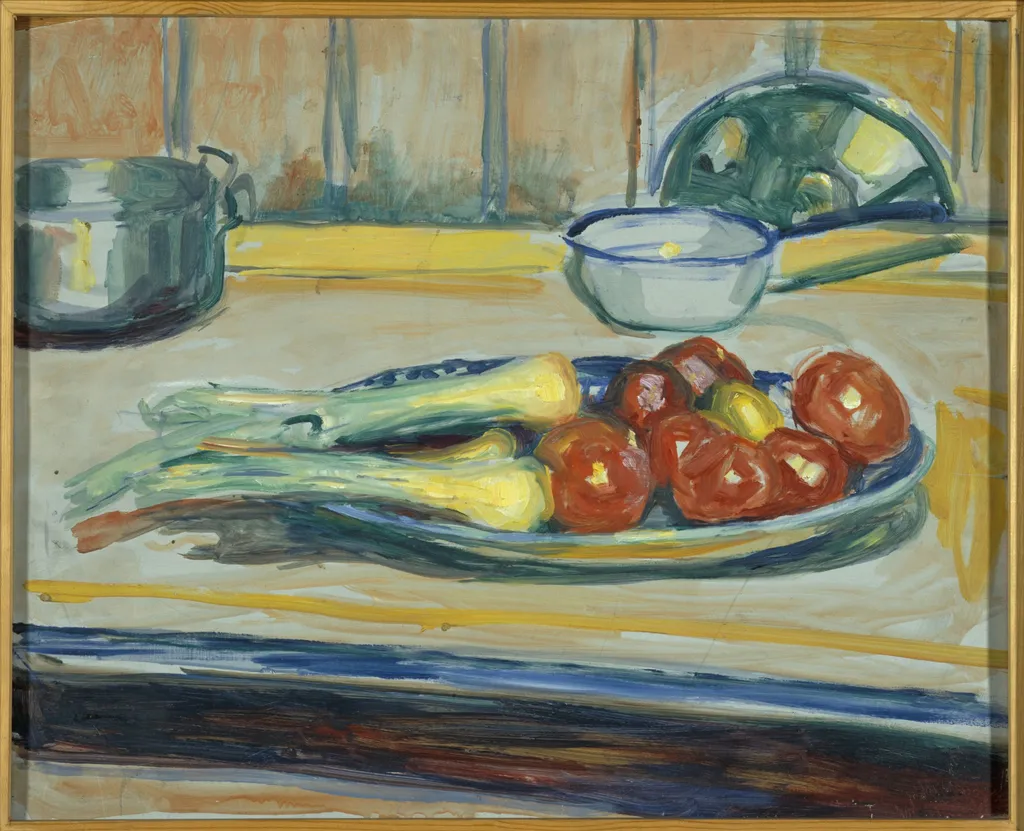
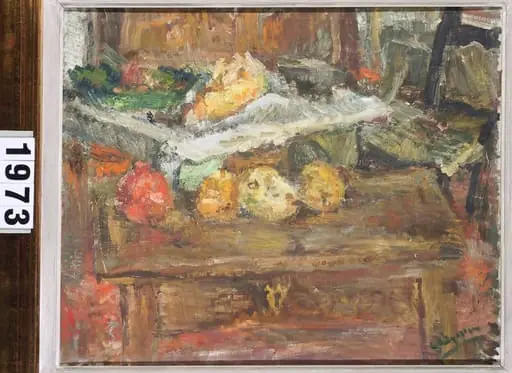
Still Life with Tomatoes, Leek and Casseroles is an oil painting by the Post-Impressionist artist Edvard Munch. It dates from 1926 and is held in the collection of the Munch Museum.
About this work
Overview
The composition is simple, grounded in domestic objects, and rendered with deliberate, tactile brushwork that emphasizes material presence over narrative.
Painted in 1926, this oil-on-canvas still life by Edvard Munch presents a quiet arrangement of tomatoes, leeks, and two ceramic vessels. Unlike his more emotionally charged portraits, this work reflects a subdued, contemplative phase in his career. The composition is simple, grounded in domestic objects, and rendered with deliberate, tactile brushwork that emphasizes material presence over narrative.
Subject & Meaning
The arrangement of everyday kitchen items—tomatoes, leeks, and casseroles—suggests a moment of stillness in domestic life. There is no overt symbolism or dramatic tension; instead, the objects are observed with quiet attention. The painting may reflect Munch’s interest in routine and the quiet dignity of ordinary things, particularly in his later years when he withdrew from public life.
Technique & Style
Munch applied oil paint with visible, rhythmic strokes that build texture and volume without fine detail. The warm tones—ochres, burnt oranges, and deep browns—create a cohesive, earthy atmosphere. The background’s vertical lines suggest a wooden wall or fence, framing the objects without distraction. The style leans toward post-impressionism, prioritizing emotional resonance over realism.
History & Provenance
Created during Munch’s later period, the painting entered the collection of the Munch Museum in Oslo, which holds the largest assembly of his works. It was likely kept in his personal studio before being donated or acquired by the museum after his death in 1944. Its provenance reflects Munch’s own careful curation of his artistic legacy.
Context
By 1926, Munch had moved away from the psychological intensity of his earlier works. He lived in relative seclusion at his estate in Ekely, focusing on landscapes and still lifes. This shift coincided with a broader interest in nature, routine, and the physical world, possibly influenced by his aging and a desire for stability after decades of personal turmoil.
Legacy
This still life contributes to the understanding of Munch’s artistic evolution, revealing a quieter, more introspective side often overshadowed by his expressionist icons. It demonstrates his continued engagement with form and color, even as he distanced himself from the themes of anxiety and alienation that defined his earlier career.
Artist & collection
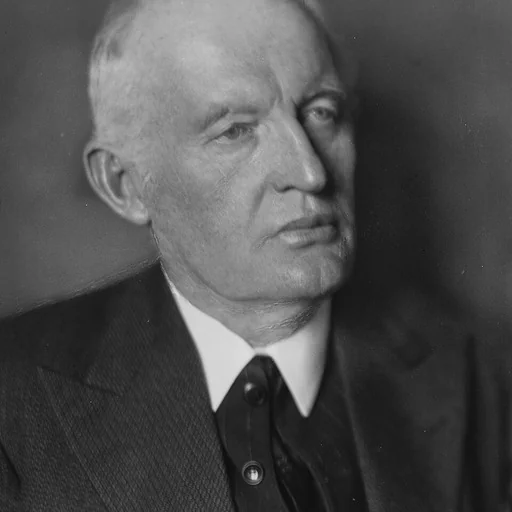
Artist
Edvard Munch ( MUUNK; Norwegian: ; 12 December 1863 – 23 January 1944) was a Norwegian painter.