Artwork
Tête-à-tête
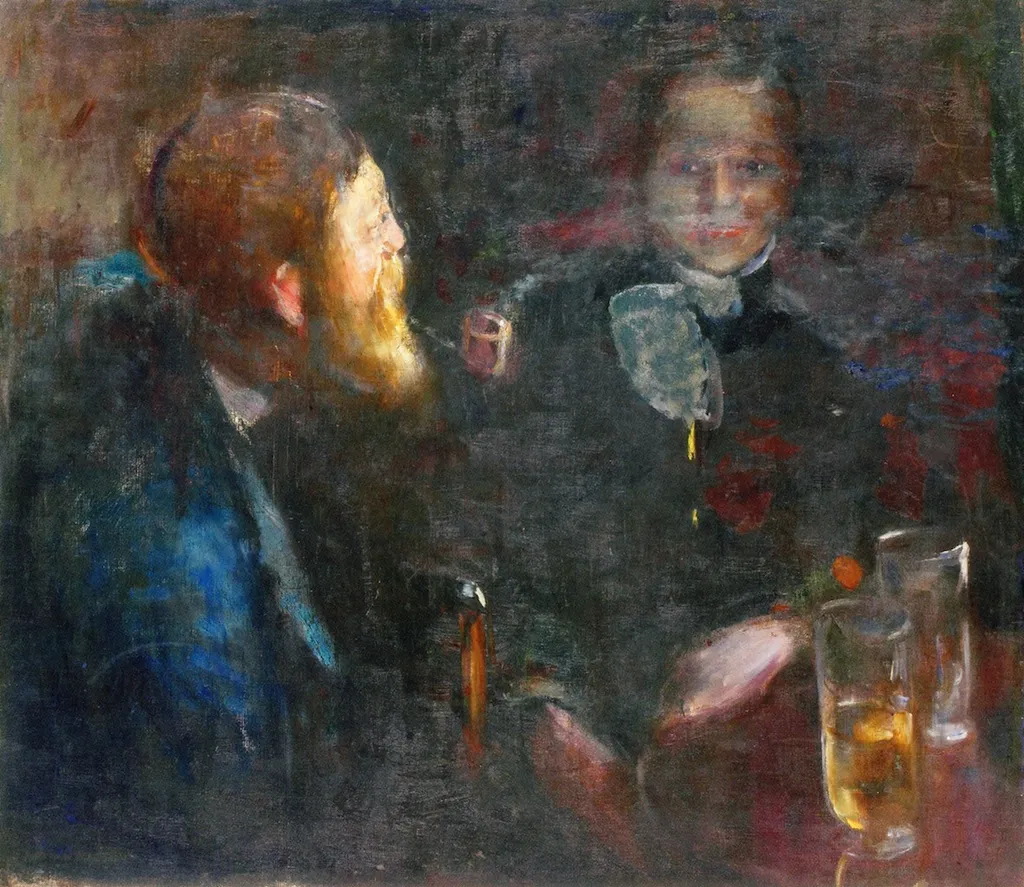
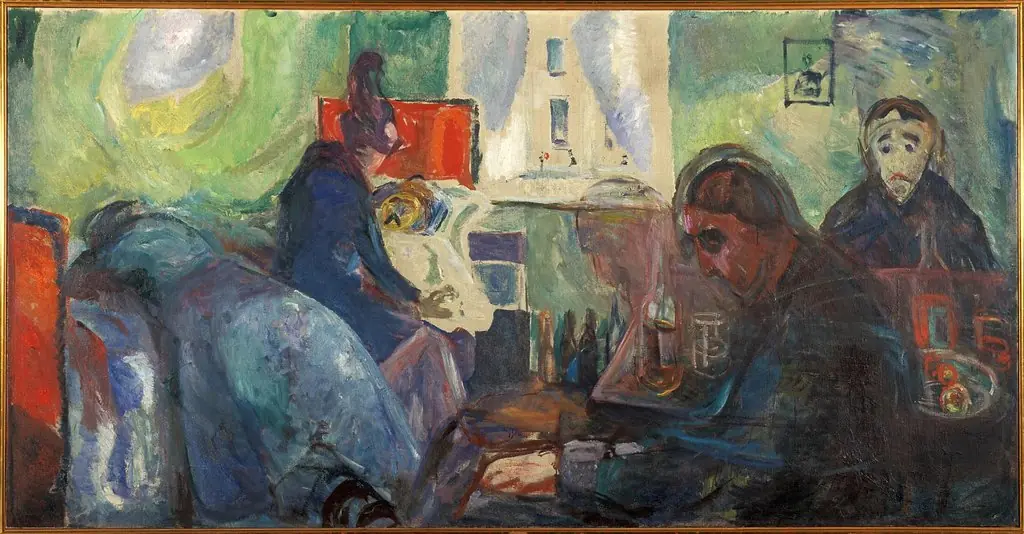
Tête-à-tête is an oil painting by the Post-Impressionist artist Edvard Munch. It dates from 1893 and is held in the collection of the Munch Museum.
About this work
Overview
Created in 1893, *Tête-à-tête* is an oil painting by Norwegian artist Edvard Munch. The work shows two men seated at a small table, engaged in quiet conversation. A single light source from the left illuminates their faces, while the surrounding space recedes into shadow, giving the scene a focused, intimate atmosphere.
Subject & Meaning
The figures are identified as Karl Jensen‑Hjell and an unnamed companion. Their poised posture and the modest glass placed before them suggest a moment of personal exchange rather than a public performance. The composition invites contemplation of private dialogue, reflecting Munch’s interest in the inner emotional lives of his subjects.
Technique & Style
Munch employs chiaroscuro to heighten the contrast between illuminated faces and the enveloping darkness, a hallmark of his post‑impressionist approach.
Munch employs chiaroscuro to heighten the contrast between illuminated faces and the enveloping darkness, a hallmark of his post‑impressionist approach. The brushwork is relatively restrained, emphasizing the contours of the men’s clothing—a dark jacket, a coat with a white shirt and bow tie—and the subtle gleam of the glass. This treatment underscores psychological tension through visual restraint.
History & Provenance
The painting entered the collection of the Munch Museum in Oslo, where it remains on display. Its creation coincided with Munch’s formative years at the Royal School of Art and Design in Kristiania and his association with contemporary radical thinkers, influences that shaped his early explorations of mood and perception.
Context
*Tête-à-tête* belongs to Munch’s early period, preceding his more famous expressionist works. At the time, he was absorbing post‑impressionist ideas and engaging with the nihilist circle around Hans Jæger, which encouraged a focus on personal experience and existential themes. The work reflects this intellectual climate through its subdued narrative and emphasis on interiority.
Artist & collection
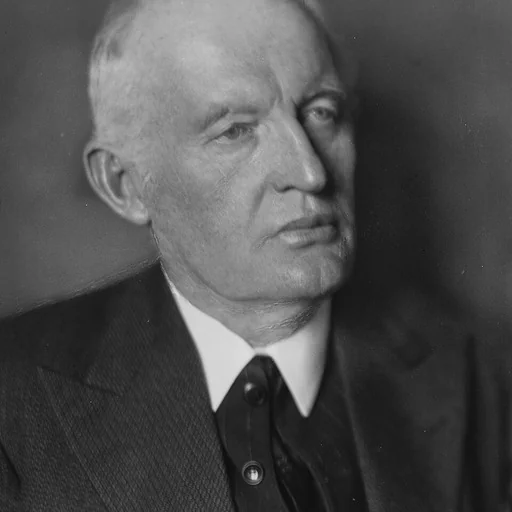
Artist
Edvard Munch ( MUUNK; Norwegian: ; 12 December 1863 – 23 January 1944) was a Norwegian painter.

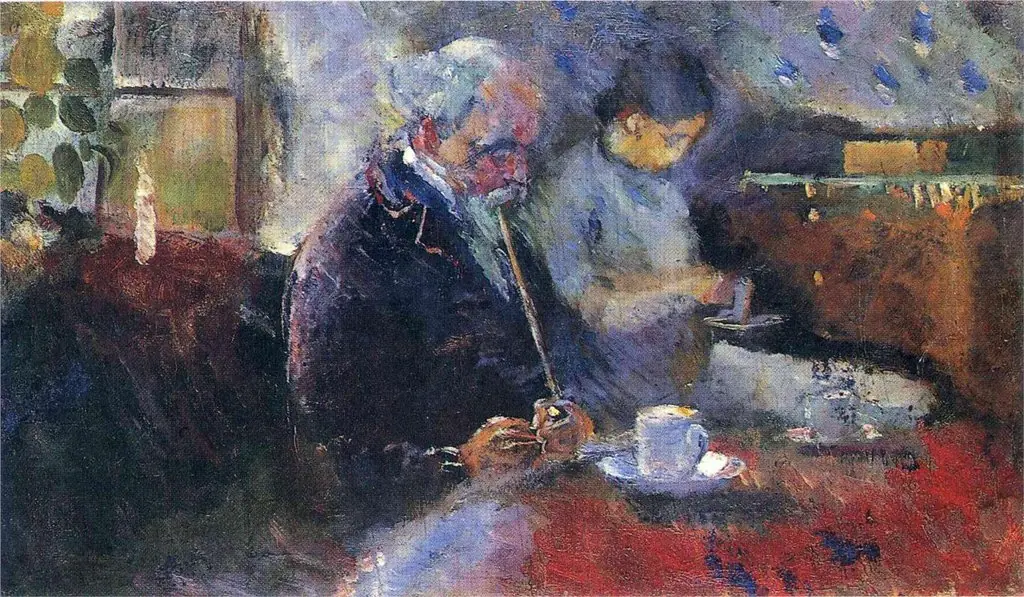 At the Coffee Table
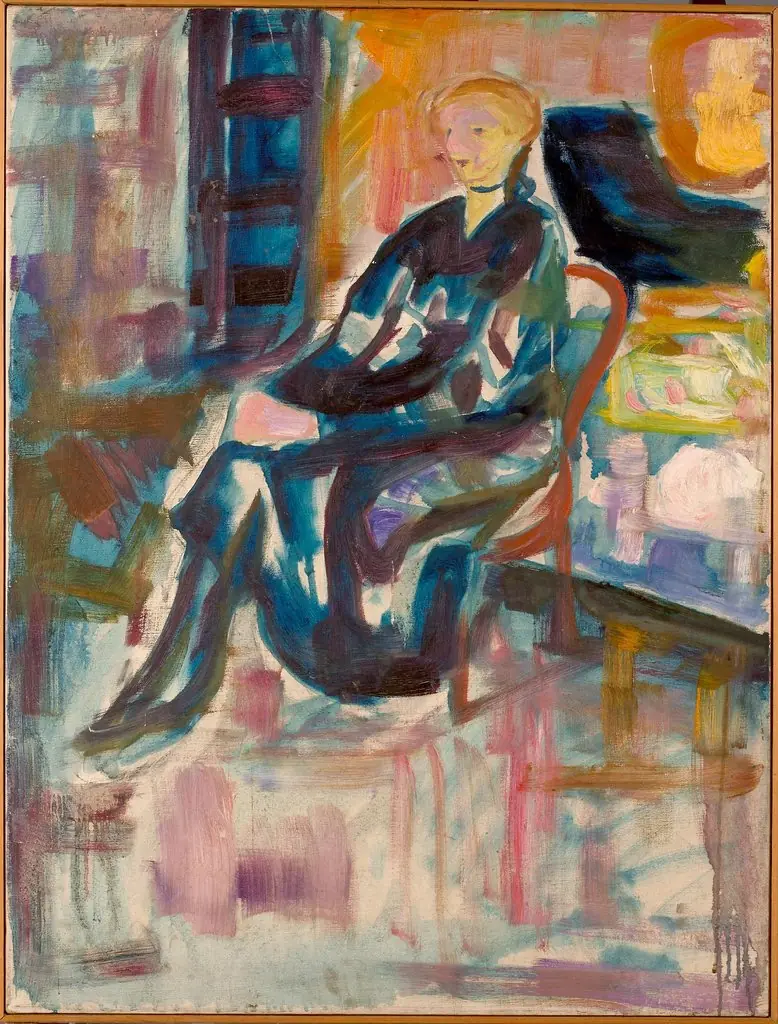 Seated Young Woman
 Țărani la masă
 At Supper
 Five Portraits. Study for painting in Thielska Galleriet, Stockholm
 Costume Scene
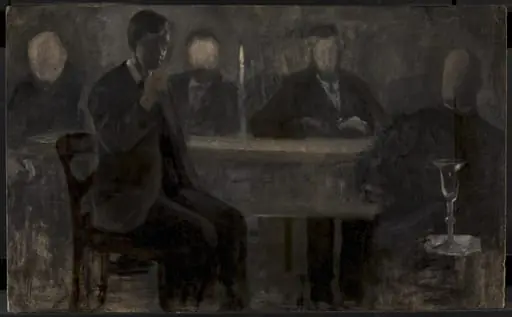 Five Portraits. Study for painting in Thielska Galleriet, Stockholm
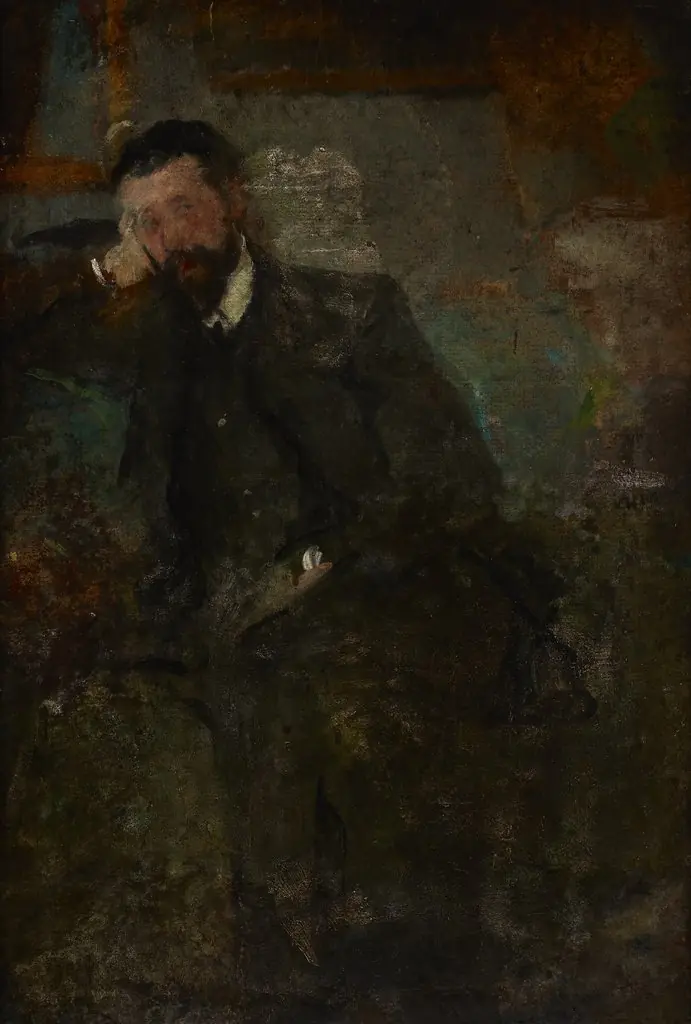 Portrait of a Man – two-sided painting
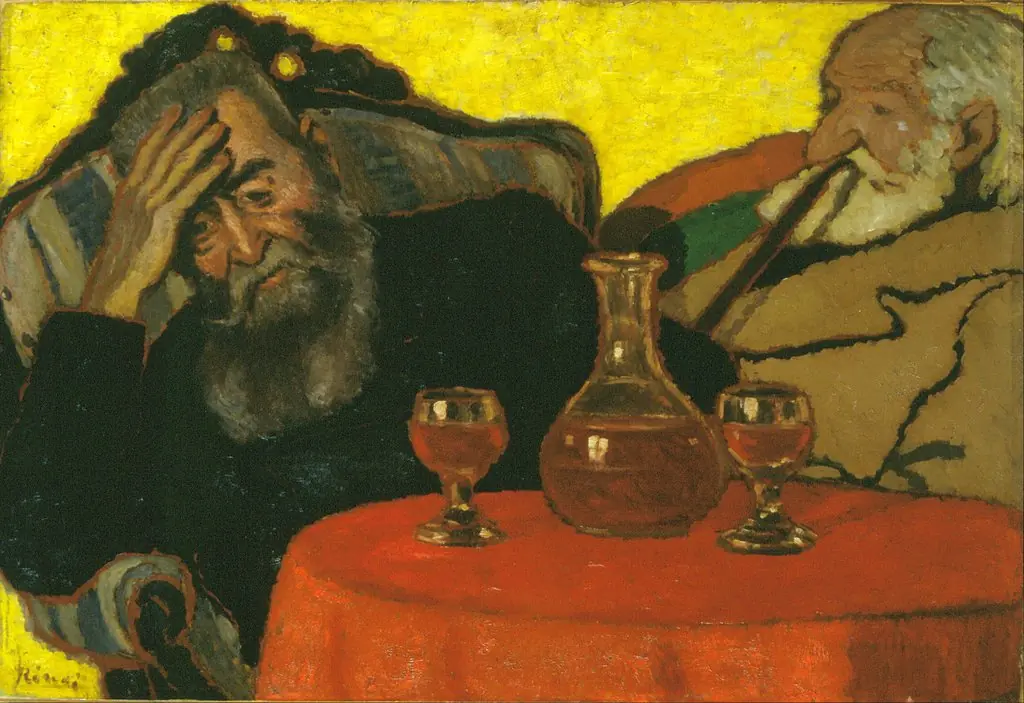 My Father and Piacsek, with Red Wine
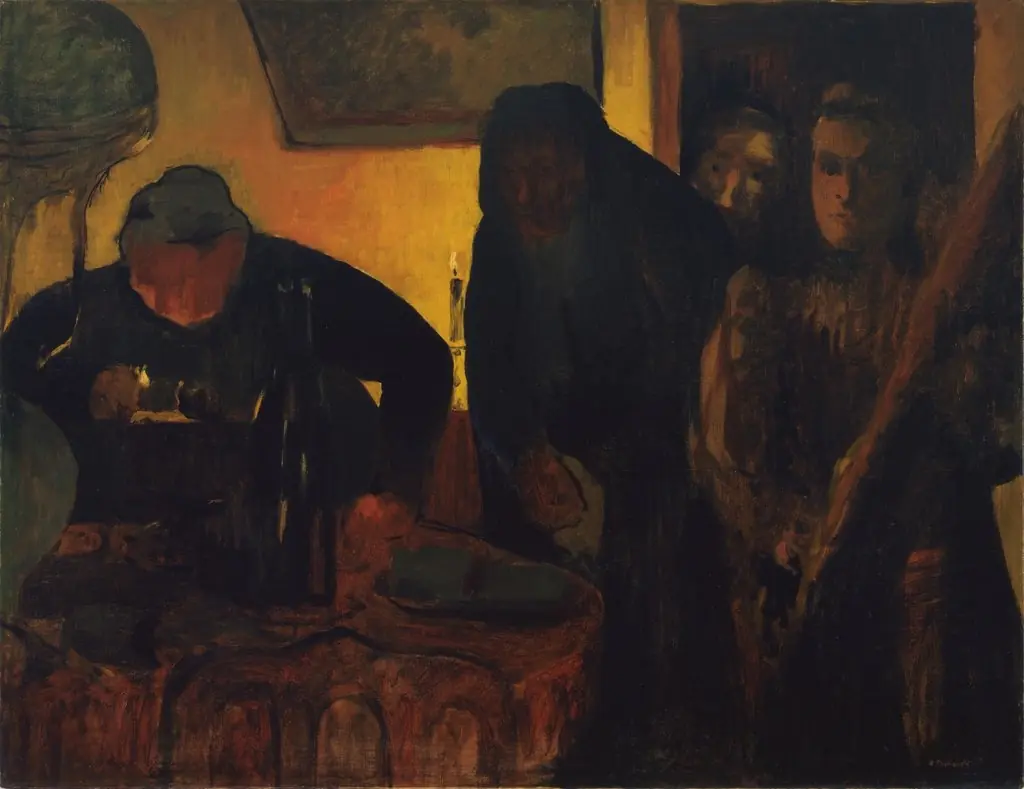 Dinnertime
 The Death of the Bohemian