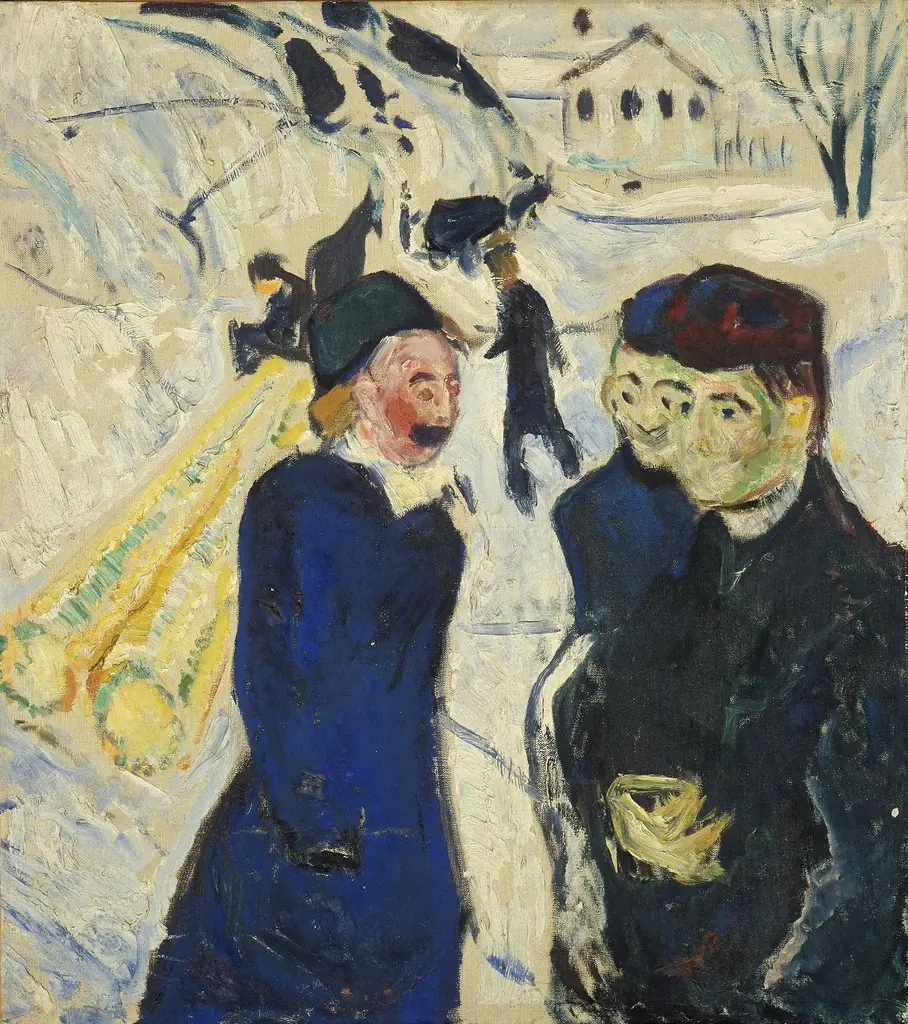
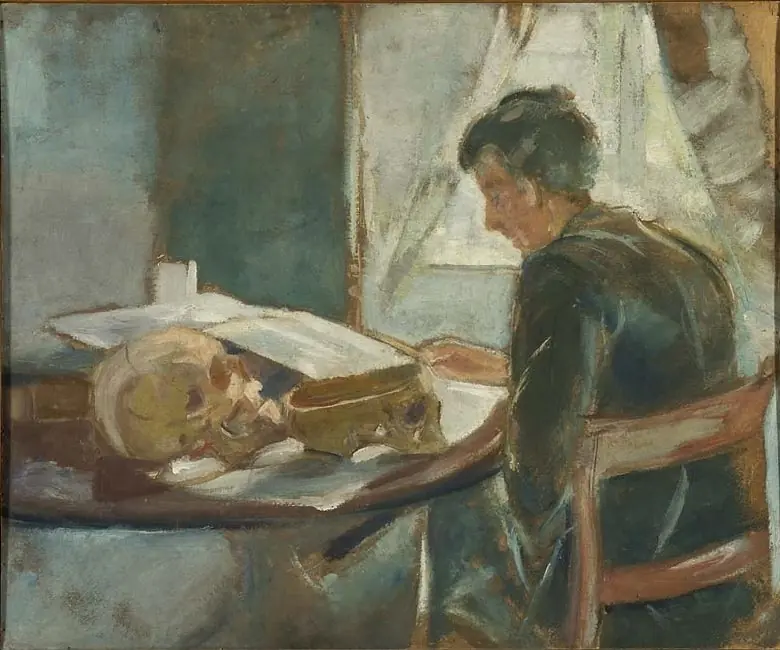
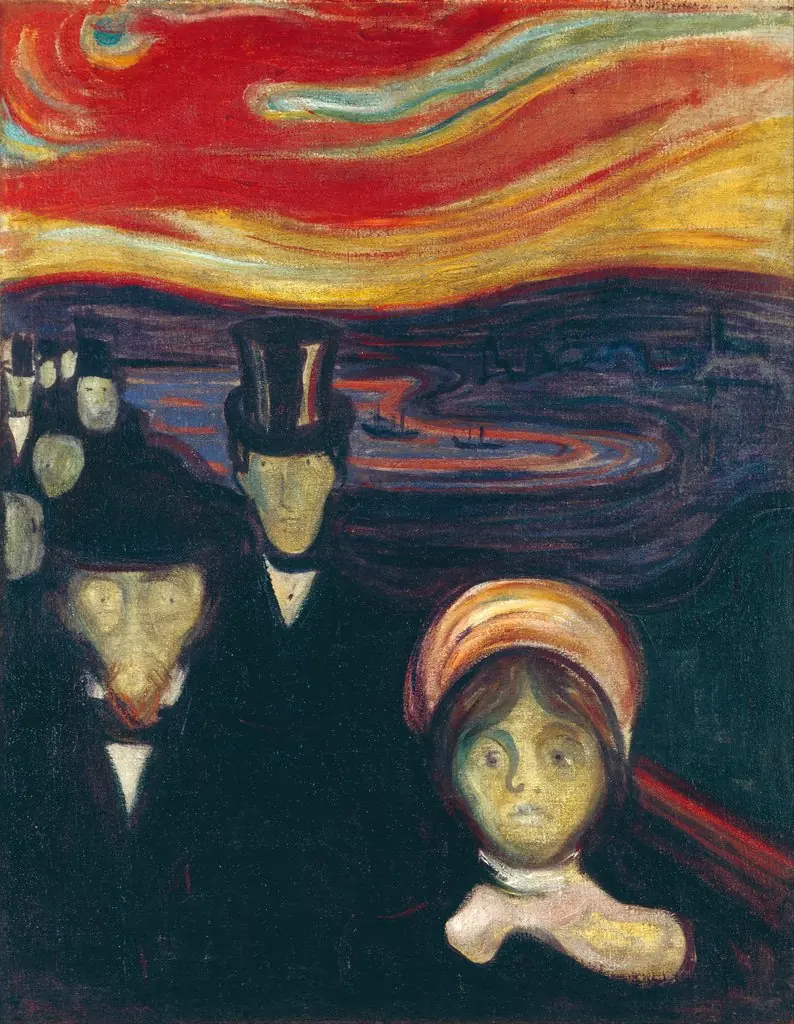
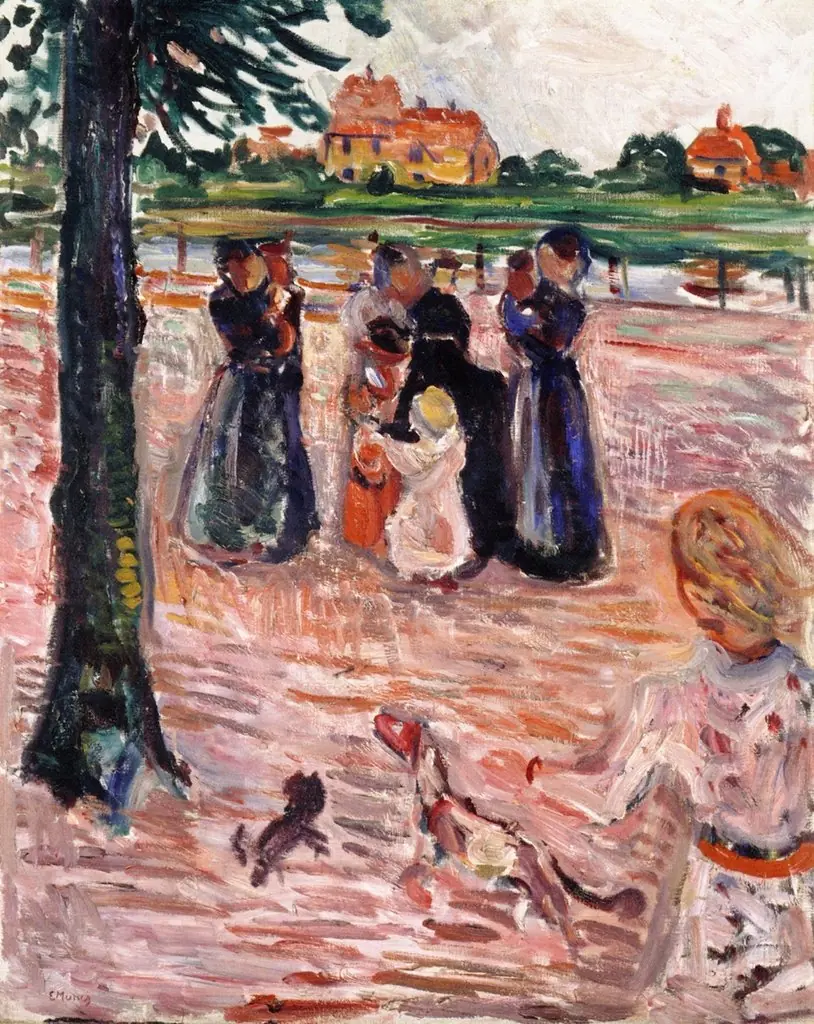
Artwork
The Apple Tree
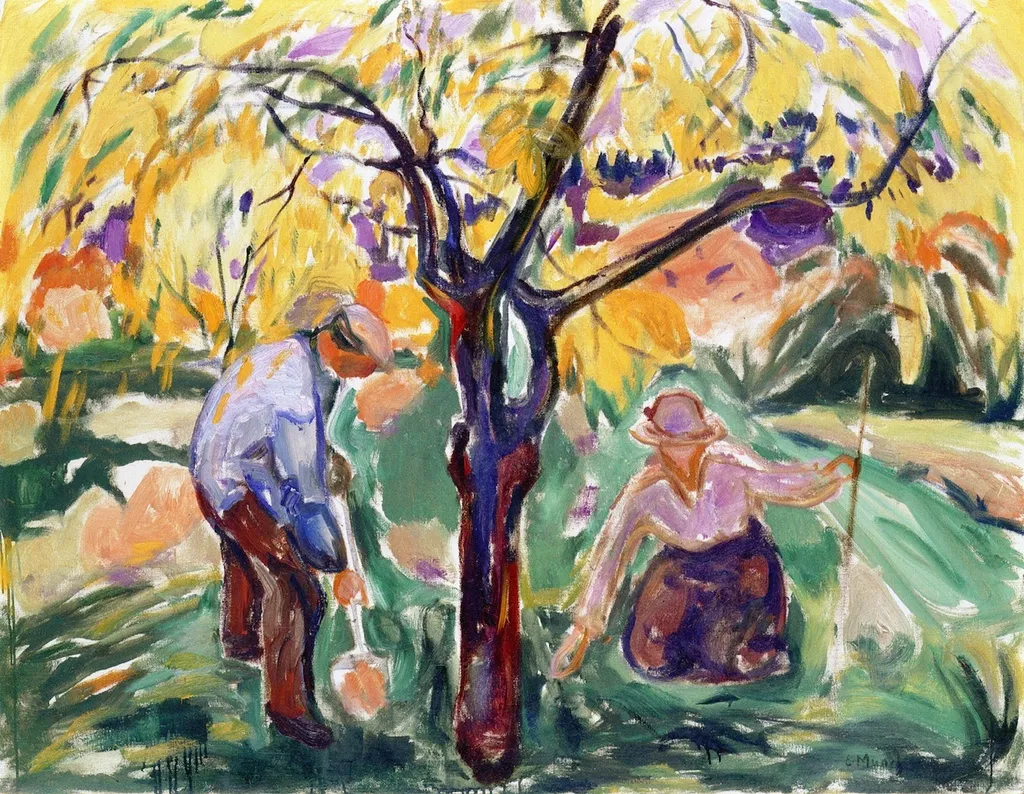
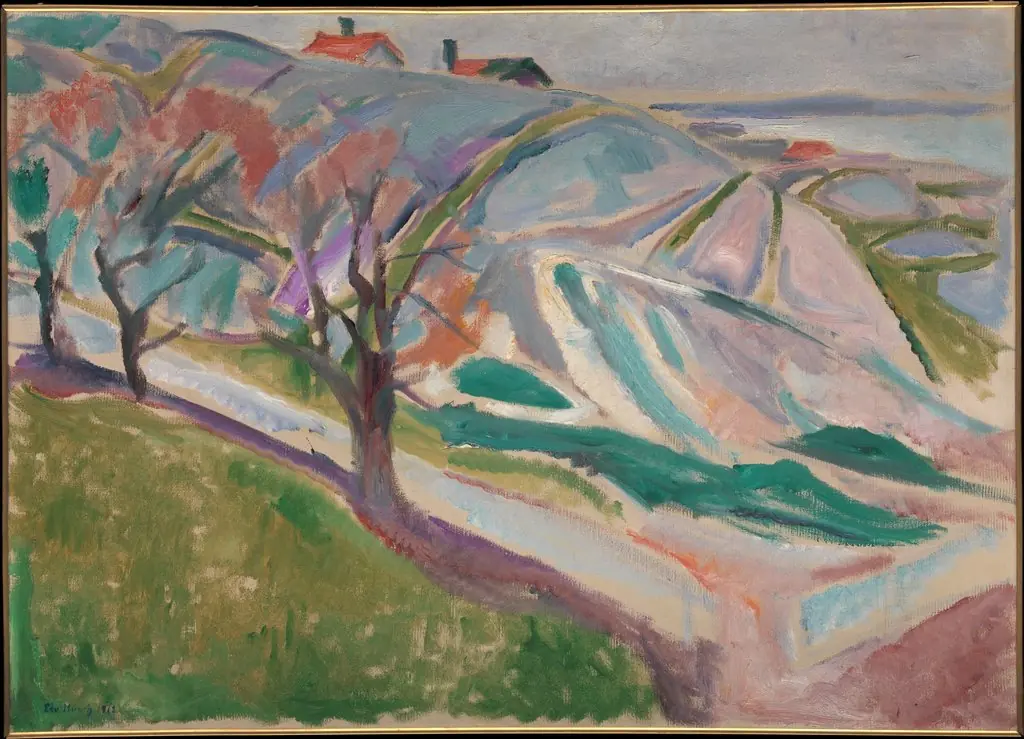
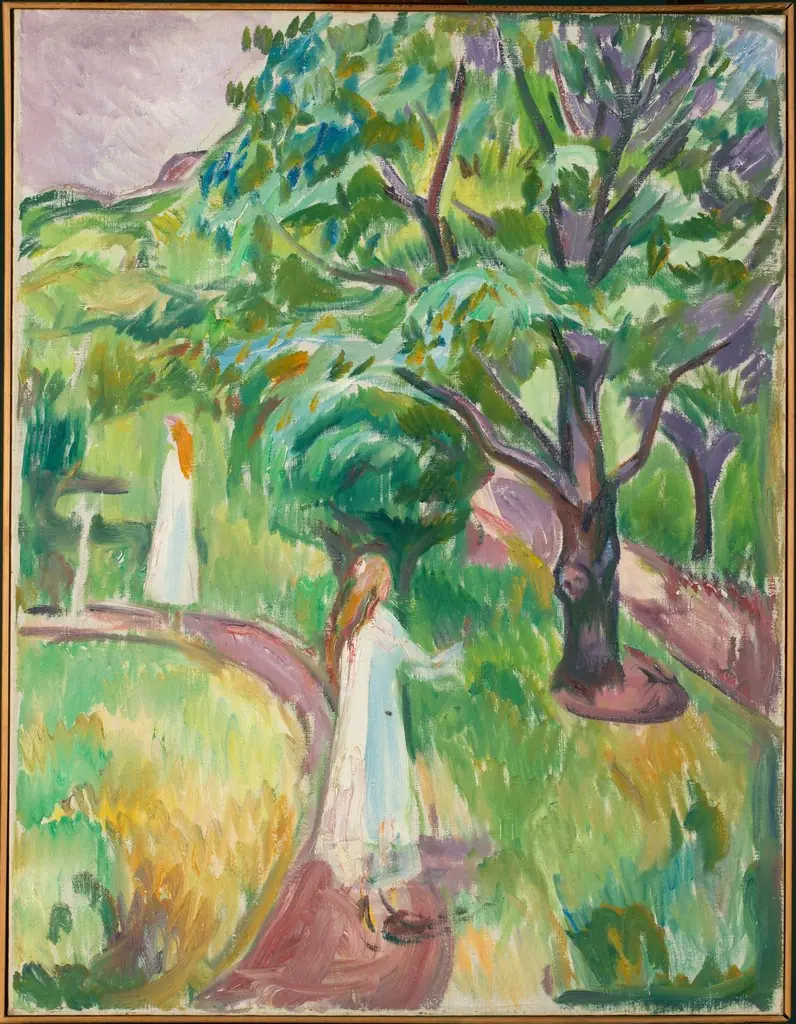
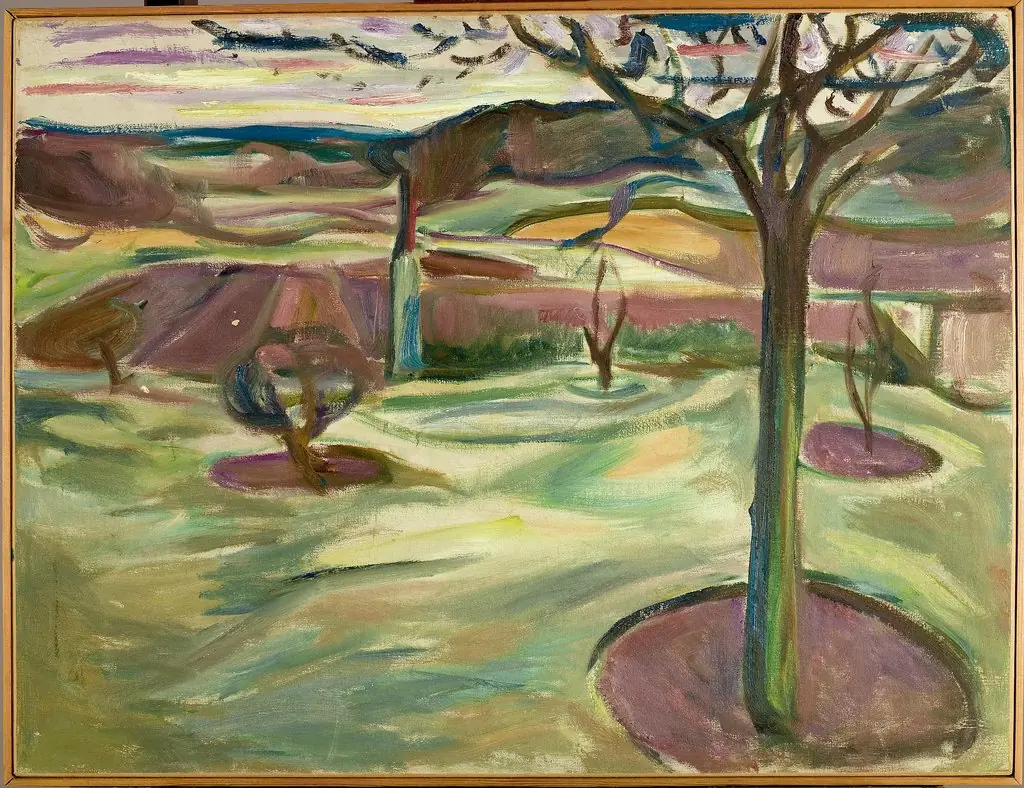
The Apple Tree is an oil painting by the Post-Impressionist artist Edvard Munch. It dates from 1921 and is held in the collection of the Kunsthaus Zürich.
About this work
Overview
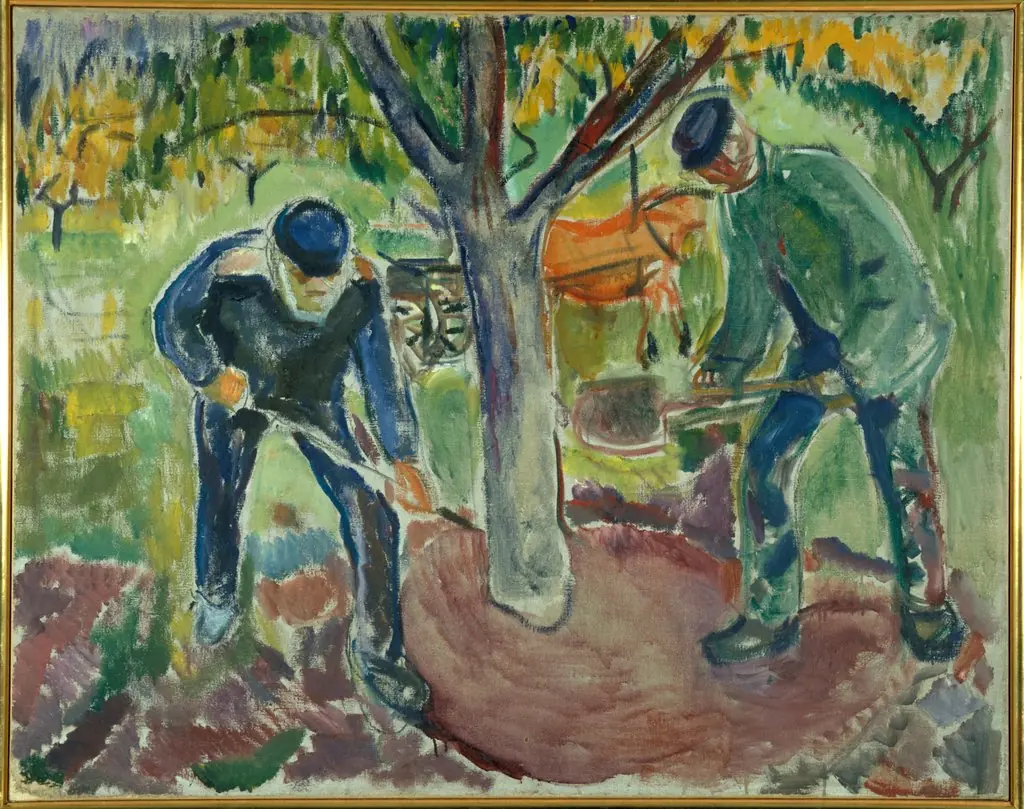
It depicts two figures engaged in quiet labor within a garden, framed by a central apple tree and scattered blooms.
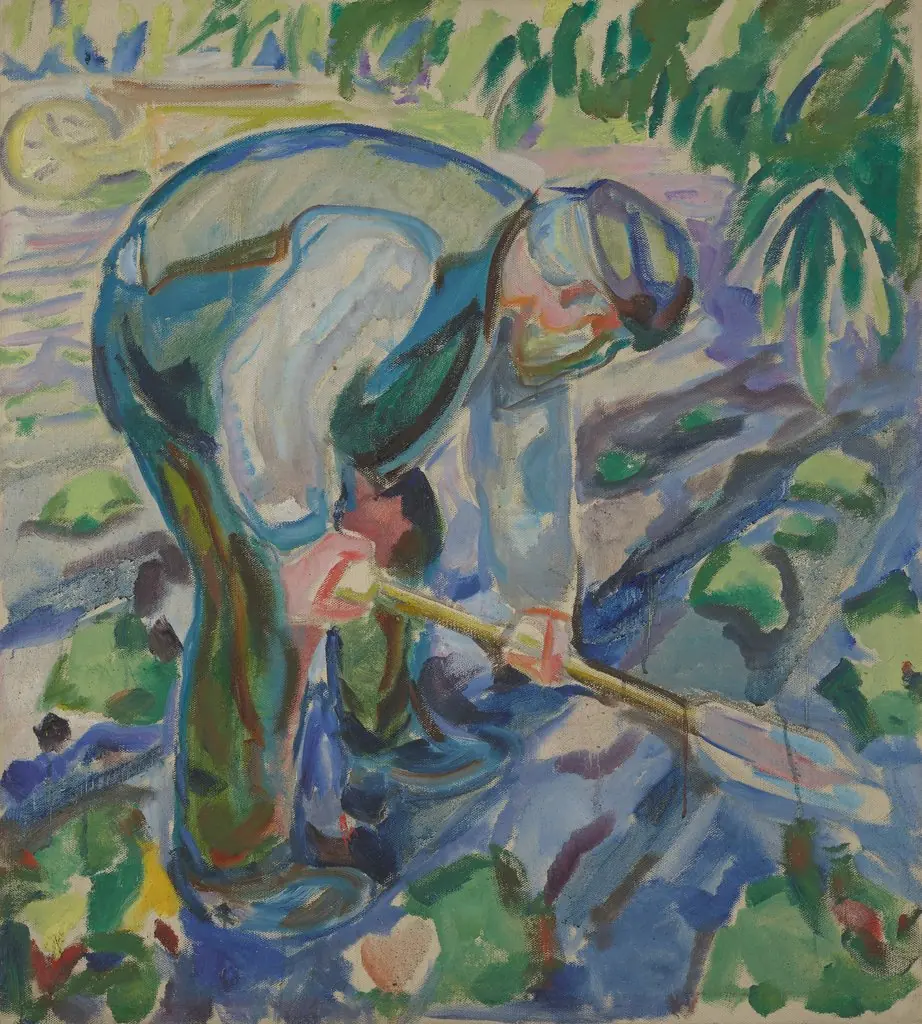
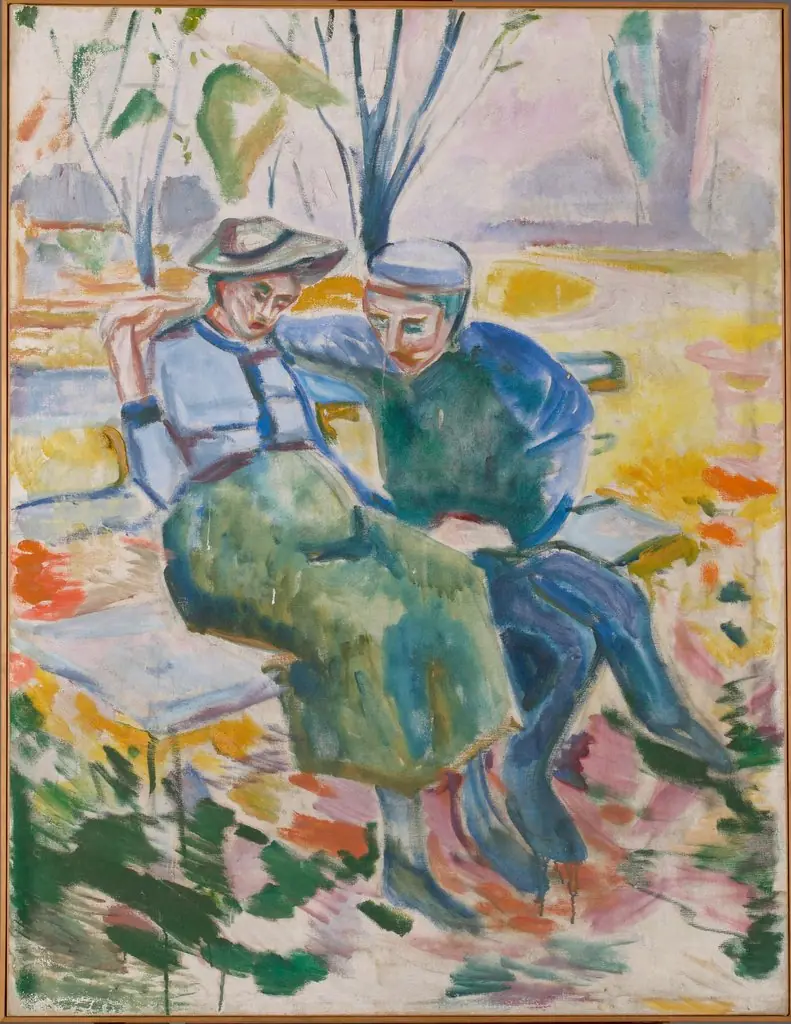
Painted in 1921, *The Apple Tree* is an oil on canvas work by Norwegian artist Edvard Munch. It depicts two figures engaged in quiet labor within a garden, framed by a central apple tree and scattered blooms. Unlike his more famous psychological portraits, this piece focuses on rural stillness and physical exertion, reflecting a later phase in Munch’s career where he turned toward themes of nature and daily toil.
Subject & Meaning
The painting portrays two individuals—one bending to work, the other seated with a staff—engaged in gardening tasks. Their postures suggest endurance rather than joy, evoking a sense of quiet perseverance. The apple tree, a recurring symbol in Munch’s work, may imply cycles of growth and decay. The absence of facial detail and the subdued interaction between figures emphasize solitude and the dignity of labor over narrative drama.
Technique & Style
Munch employed thick, deliberate brushwork and a restrained palette of earth tones, muted yellows, and soft oranges. Forms are simplified yet grounded in observable reality, blending post-impressionist structure with a personal, almost symbolic approach. The composition centers the tree and figures, using spatial compression to heighten intimacy. Light falls evenly, avoiding dramatic contrast, reinforcing the painting’s contemplative mood.
History & Provenance
Created during Munch’s later years in Norway, *The Apple Tree* was acquired by Kunsthaus Zürich in the mid-20th century and remains part of its permanent collection. It reflects a period when Munch, having moved away from the existential angst of his youth, focused on domestic and agricultural scenes. The work was not widely exhibited during his lifetime, contributing to its relative obscurity compared to his earlier pieces.
Context
In the 1920s, Munch lived in relative isolation near Oslo, increasingly drawn to the rhythms of rural life. His earlier associations with philosophical nihilism and Symbolism had given way to a quieter engagement with nature and manual work. This shift mirrored broader cultural trends in Scandinavia, where artists and writers sought solace in the land after the upheavals of war and modernization.
Legacy
Though less known than *The Scream*, *The Apple Tree* illustrates Munch’s enduring interest in human vulnerability and the natural world. It stands as a quiet testament to his evolving vision—less about inner torment, more about the endurance found in routine. The painting contributes to understanding his full artistic range, revealing how his themes transformed without losing their emotional gravity.
Artist & collection
Artist
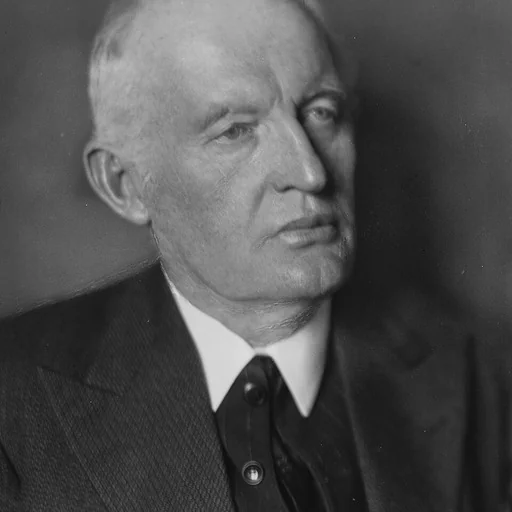
Edvard Munch ( MUUNK; Norwegian: ; 12 December 1863 – 23 January 1944) was a Norwegian painter.