Artwork
Thorvald Løchen
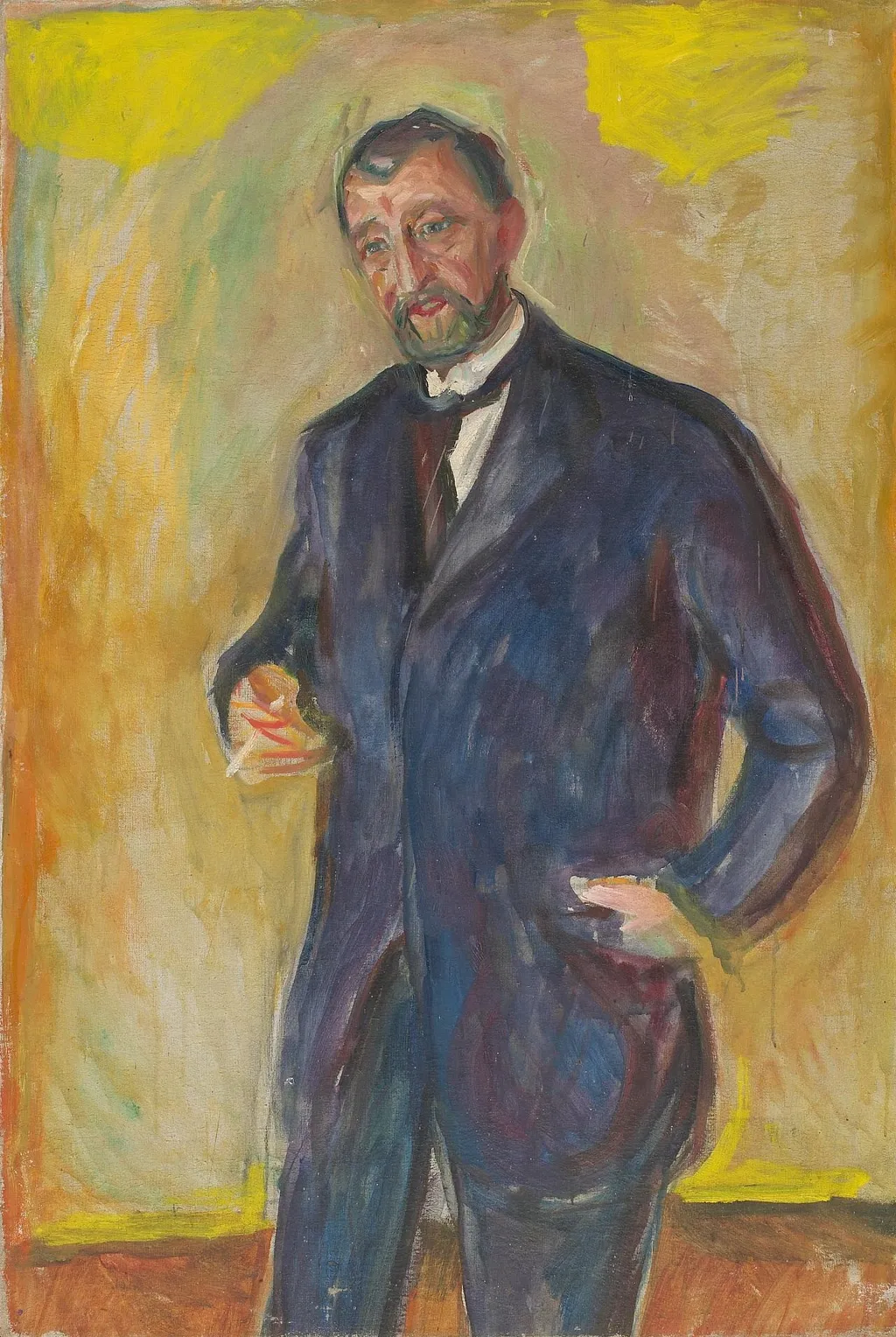
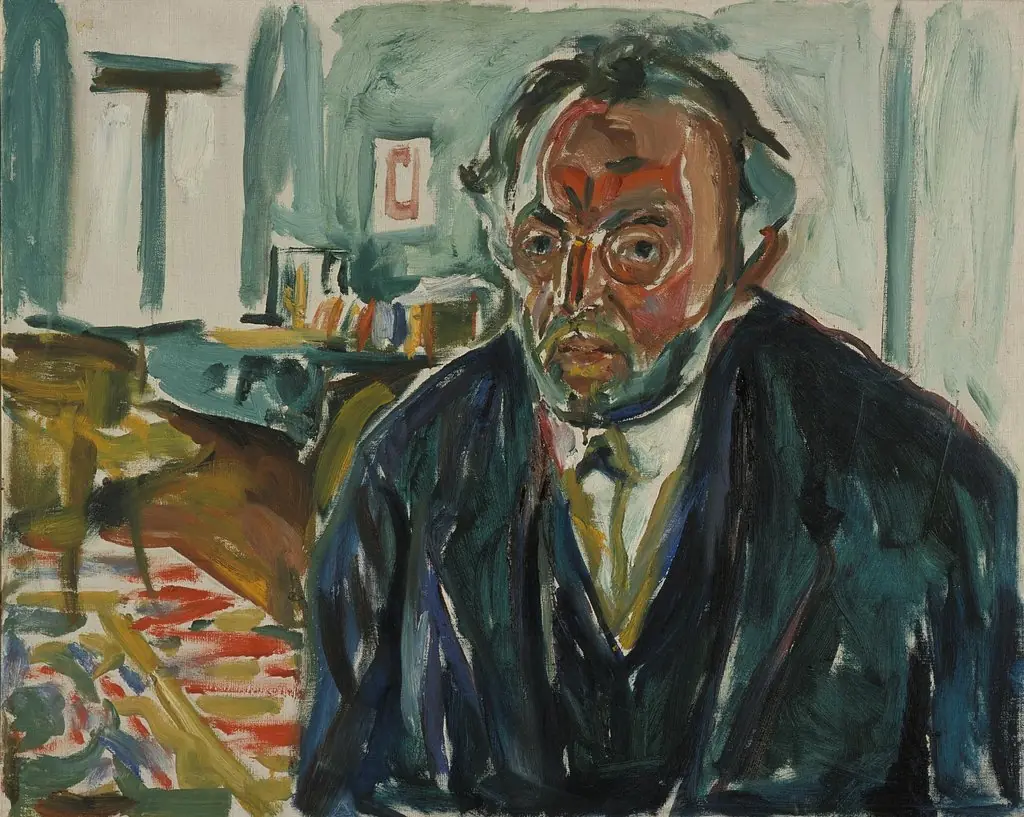
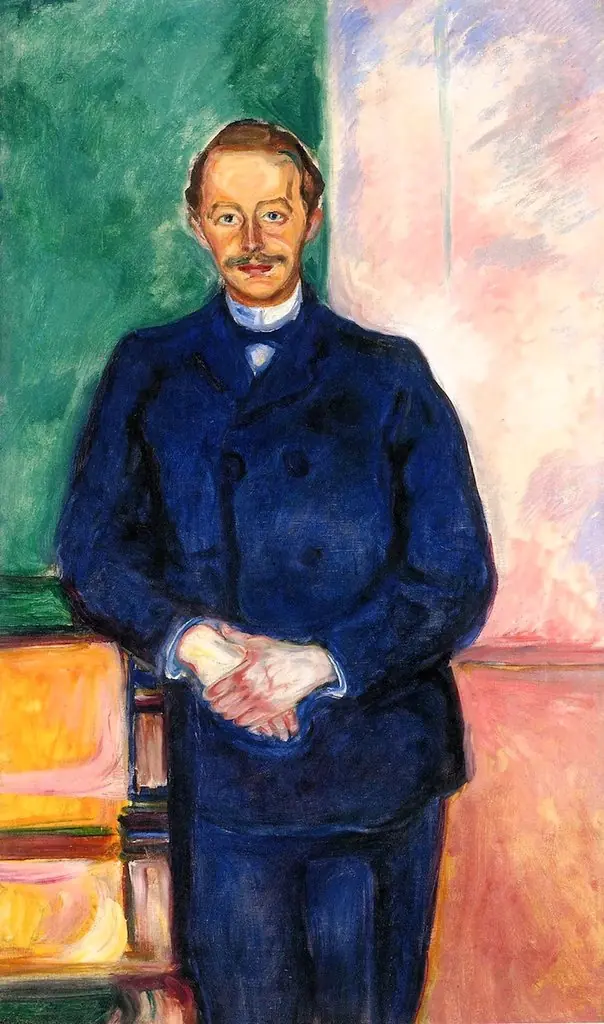
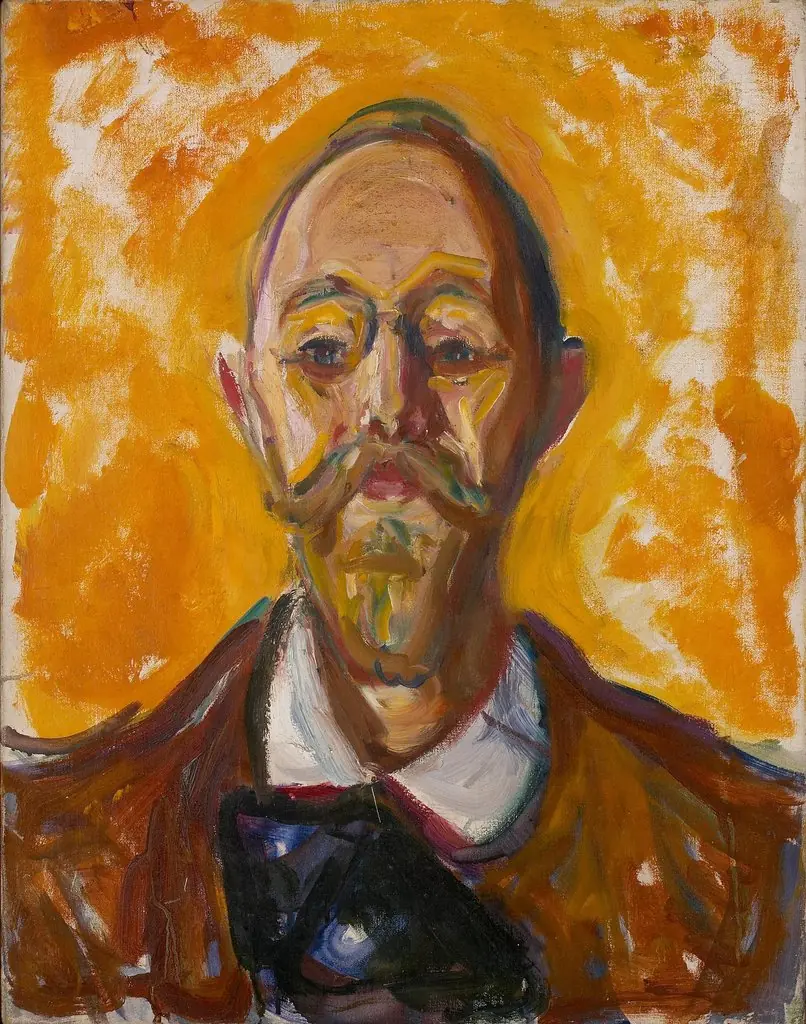
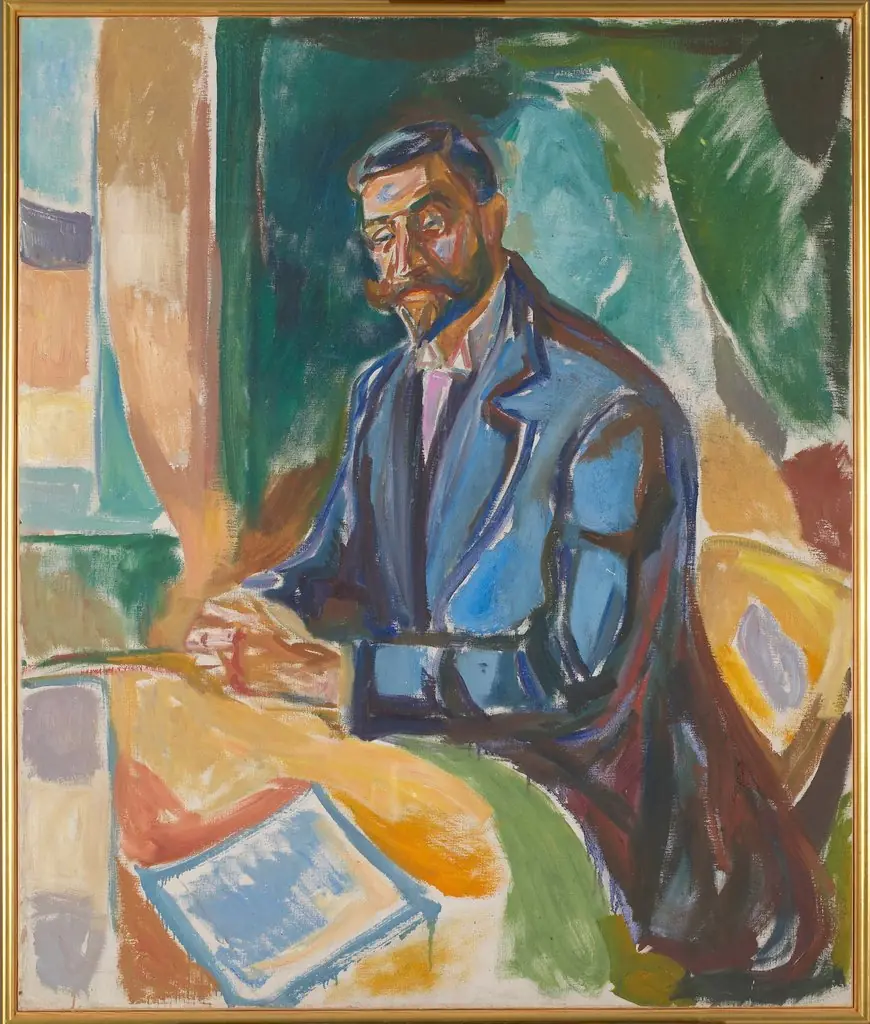
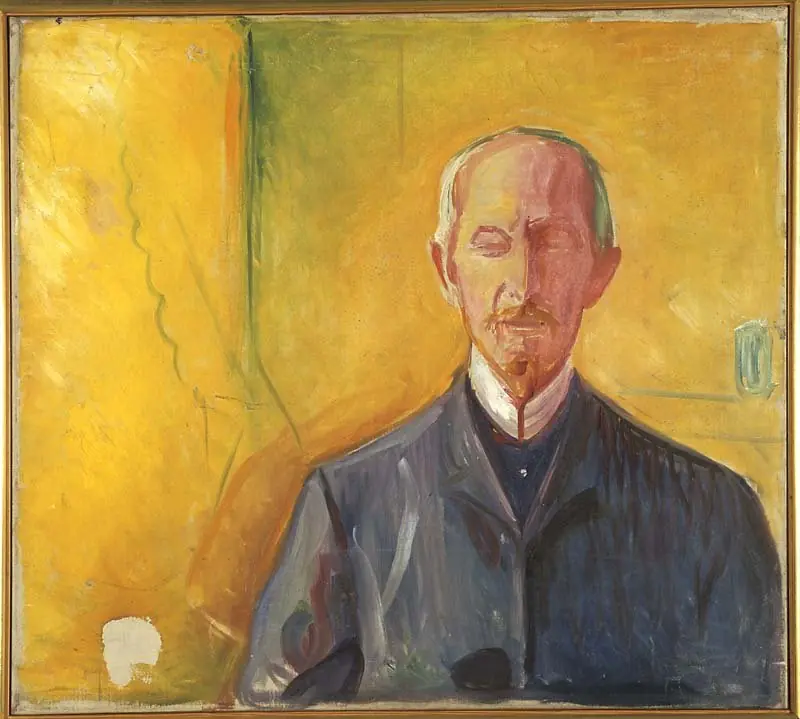
Thorvald Løchen is an oil painting by the Post-Impressionist artist Edvard Munch. It dates from 1917 and is held in the collection of the Munch Museum.
About this work
Overview
The work resides in the Munch Museum in Oslo, part of a broader collection documenting the artist’s engagement with portraiture and inner states.
Edvard Munch painted Thorvald Løchen in 1917 using oil on canvas. The portrait captures a man in a dark suit, standing with hands on his hips, facing the viewer with a composed, serious gaze. Munch’s style here reflects his mature approach, blending psychological intensity with expressive brushwork. The work resides in the Munch Museum in Oslo, part of a broader collection documenting the artist’s engagement with portraiture and inner states.
Subject & Meaning
Thorvald Løchen, a Norwegian lawyer and cultural figure, is portrayed with stillness and quiet authority. His direct gaze and upright posture suggest self-possession, while the absence of narrative context focuses attention on his presence. Munch, often drawn to introspective subjects, avoids idealization; instead, he renders Løchen as a grounded individual, revealing character through posture and expression rather than symbolism.
Technique & Style
Munch employs bold, visible brushstrokes and a restrained palette dominated by dark tones against warm yellow and brown backgrounds. The paint is applied with deliberate energy, creating texture that enhances emotional resonance without overt drama. Color is used expressively, not naturalistically, to convey mood rather than replicate reality. The composition is tightly framed, emphasizing the subject’s psychological weight.
History & Provenance
Painted in 1917, the portrait was likely commissioned or created during Munch’s period of renewed focus on portraiture after years of personal and artistic evolution. It entered the Munch Museum’s collection through the artist’s own bequest, ensuring its preservation alongside his most significant works. Løchen’s identity as a contemporary of Munch’s adds to the portrait’s value as a record of Norwegian intellectual life in the early 20th century.
Context
In the years following World War I, Munch turned increasingly to portraiture as a means of examining individual identity amid societal change. Though his earlier works like The Scream are more widely known, his later portraits reflect a quieter, more introspective phase. Løchen’s depiction aligns with Munch’s interest in capturing psychological presence, influenced by his long-standing engagement with existential themes and Nordic literary circles.
Legacy
The portrait of Thorvald Løchen exemplifies Munch’s enduring commitment to portraying the human condition with emotional honesty. It stands as a testament to his ability to convey depth through minimal means—posture, gaze, and brushwork. While less publicized than his symbolic works, this portrait contributes to a fuller understanding of his artistic range and his role in shaping modern Nordic portraiture.
Own this work as a print
Artist & collection
Artist
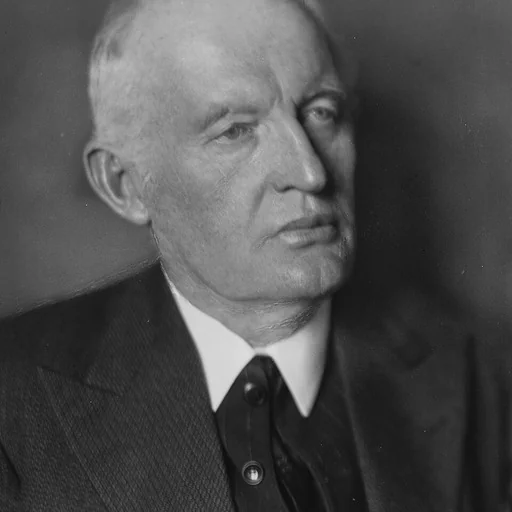
Edvard Munch ( MUUNK; Norwegian: ; 12 December 1863 – 23 January 1944) was a Norwegian painter.