Artwork
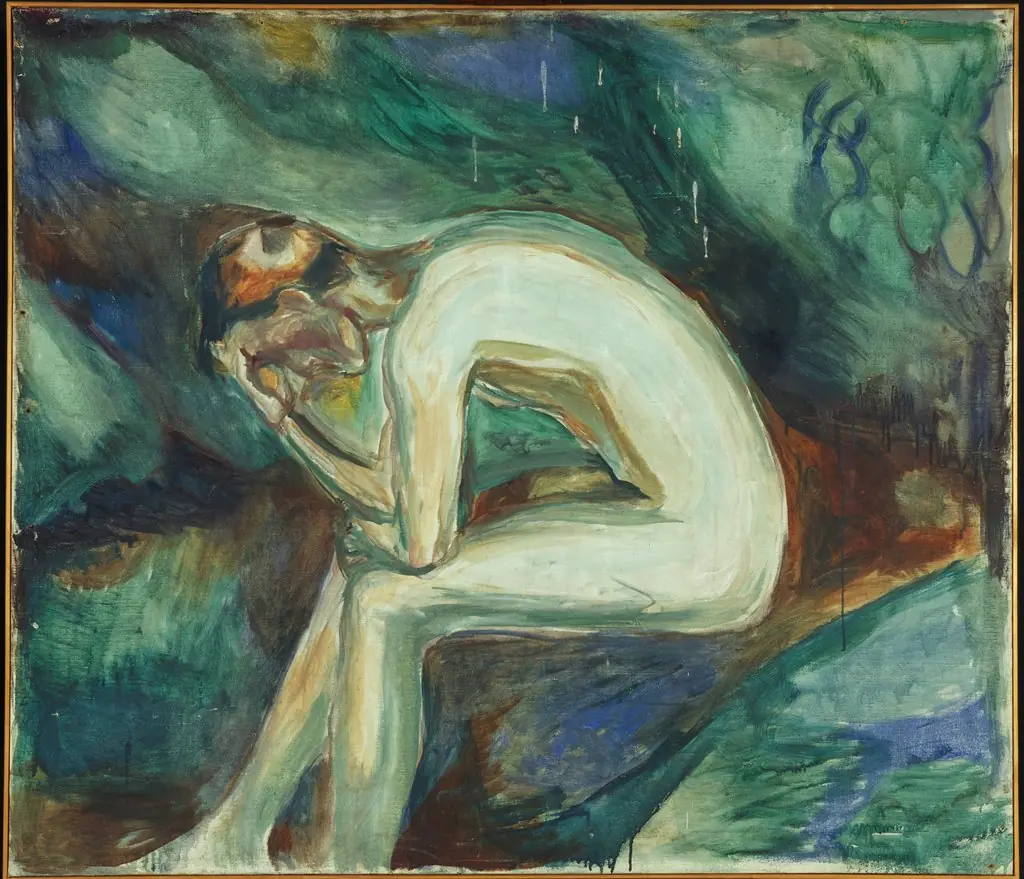
Weeping Nude
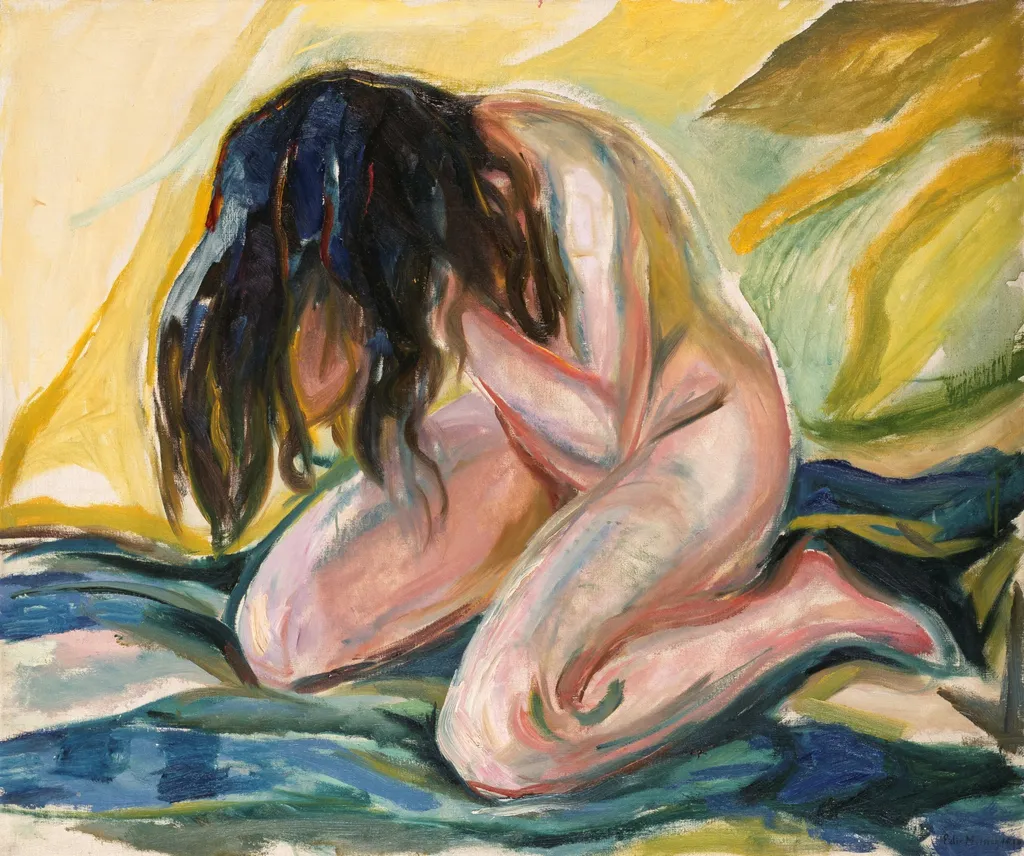
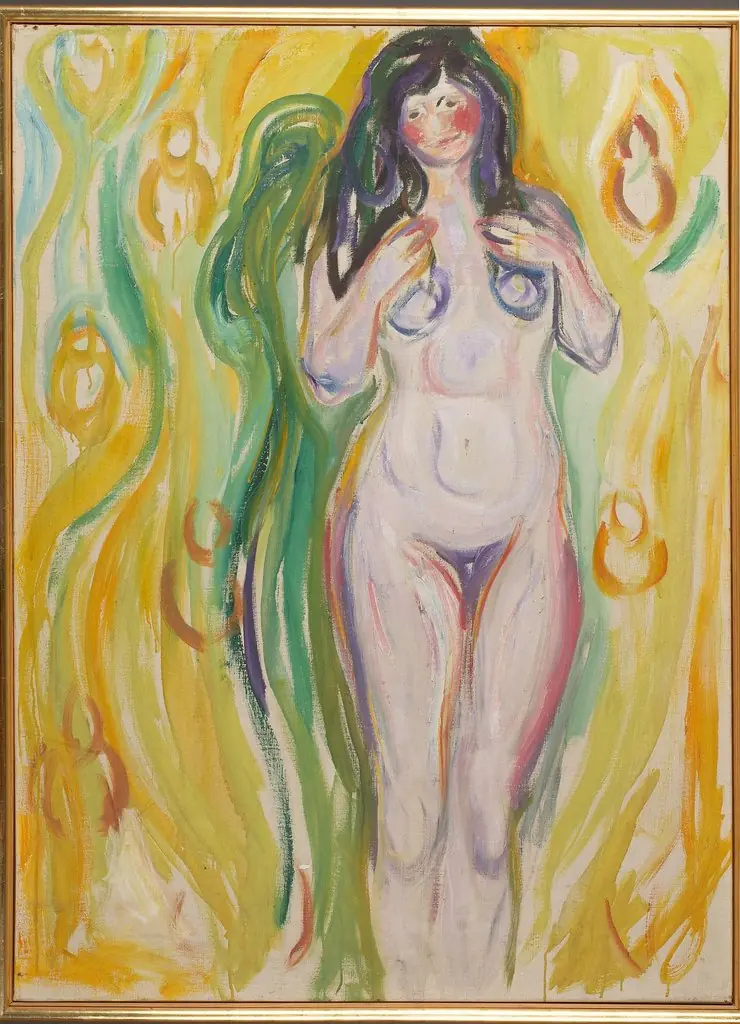
Weeping Nude is an oil painting by the Post-Impressionist artist Edvard Munch. It dates from 1919 and is held in the collection of the Museum of Fine Arts, Houston.
About this work
Overview
Weeping Nude, a 1919 oil painting by Edvard Munch, depicts a nude woman overcome with emotion, set against a vibrant, abstract background. Characteristic of Munch's post-Impressionist style, the work emphasizes psychological depth over representational detail.
Subject & Meaning
The painting's central figure, a nude woman with her head bowed and face obscured by hair, conveys profound sadness or despair. Her pose and the expressive, abstract environment amplify the emotional intensity of the scene, reflecting Munch's focus on inner turmoil.
Technique & Style
Munch executed the piece with loose, textured brushstrokes, evident in the woman's form, while the background features abstract shapes in contrasting hues of yellow, green, and blue. This stylistic approach, influenced by his training at the Royal School of Art and Design in Kristiania, prioritizes emotional expression over realism.
History & Provenance
Created in 1919, Weeping Nude is part of the post-Impressionist movement. The work is currently held in the collection of the Museum of Fine Arts, Houston.
Context
Munch's personal experiences with illness and loss, along with his association with nihilist thinker Hans Jæger, likely informed the painting's somber, emotionally charged atmosphere. His work during this period often explored themes of psychological distress and vulnerability.
Legacy
While specific legacy details of *Weeping Nude* are not widely highlighted, the piece contributes to Munch's broader reputation for pioneering psychologically intense, post-Impressionist works that explore human emotion, influencing subsequent generations of artists exploring similar themes.
Own this work as a print
Artist & collection
Artist
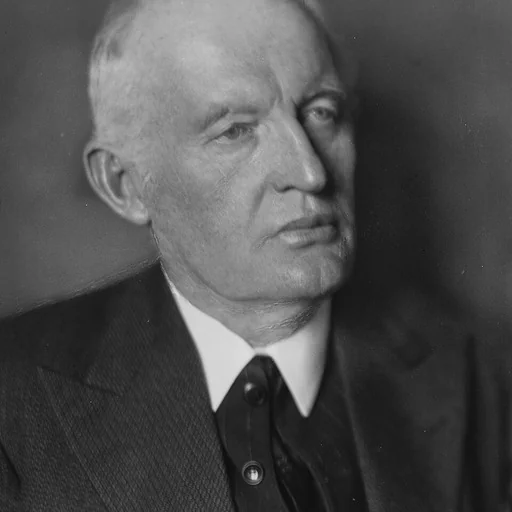
Edvard Munch ( MUUNK; Norwegian: ; 12 December 1863 – 23 January 1944) was a Norwegian painter.