Artwork
Woman Hurrying Downwards
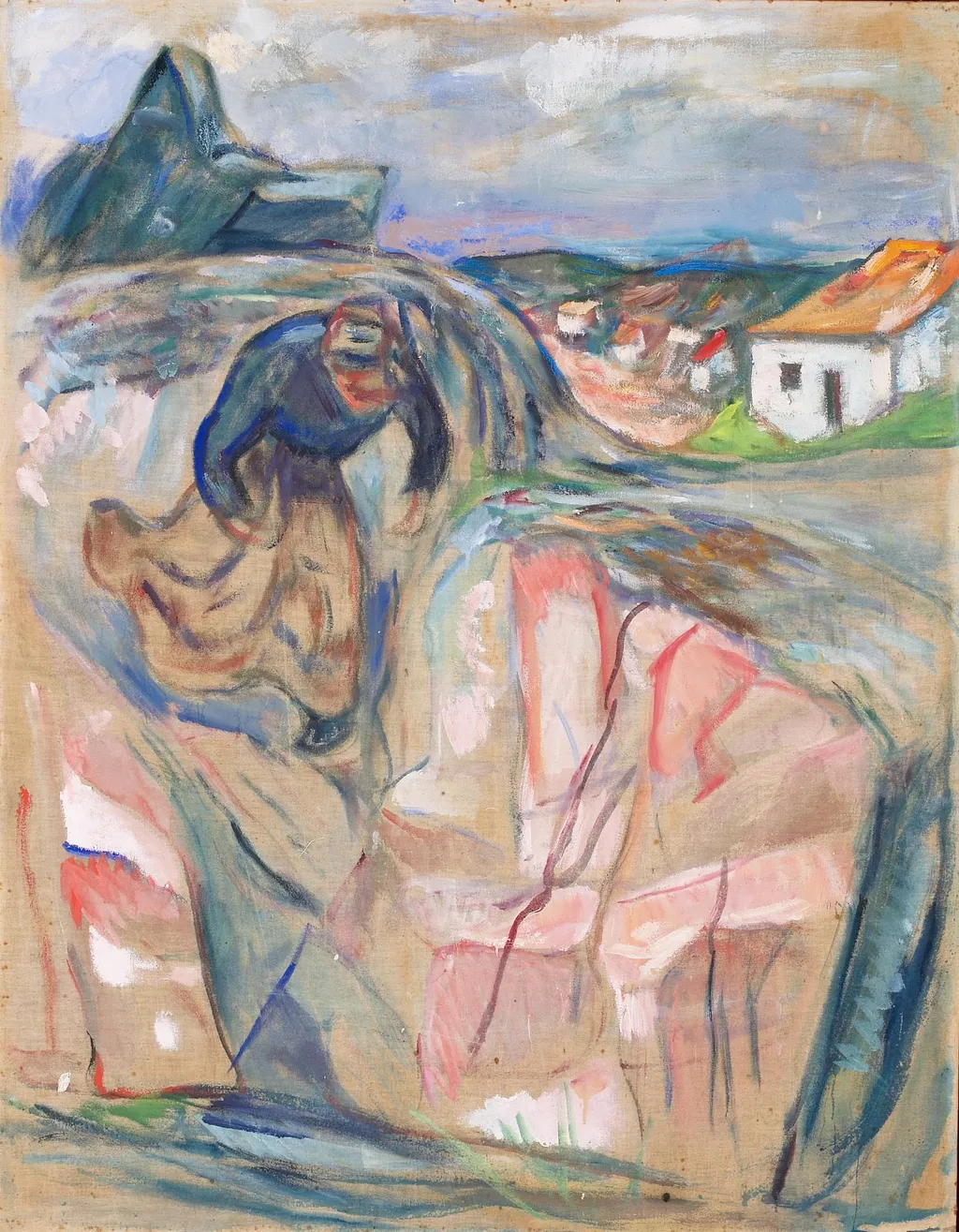
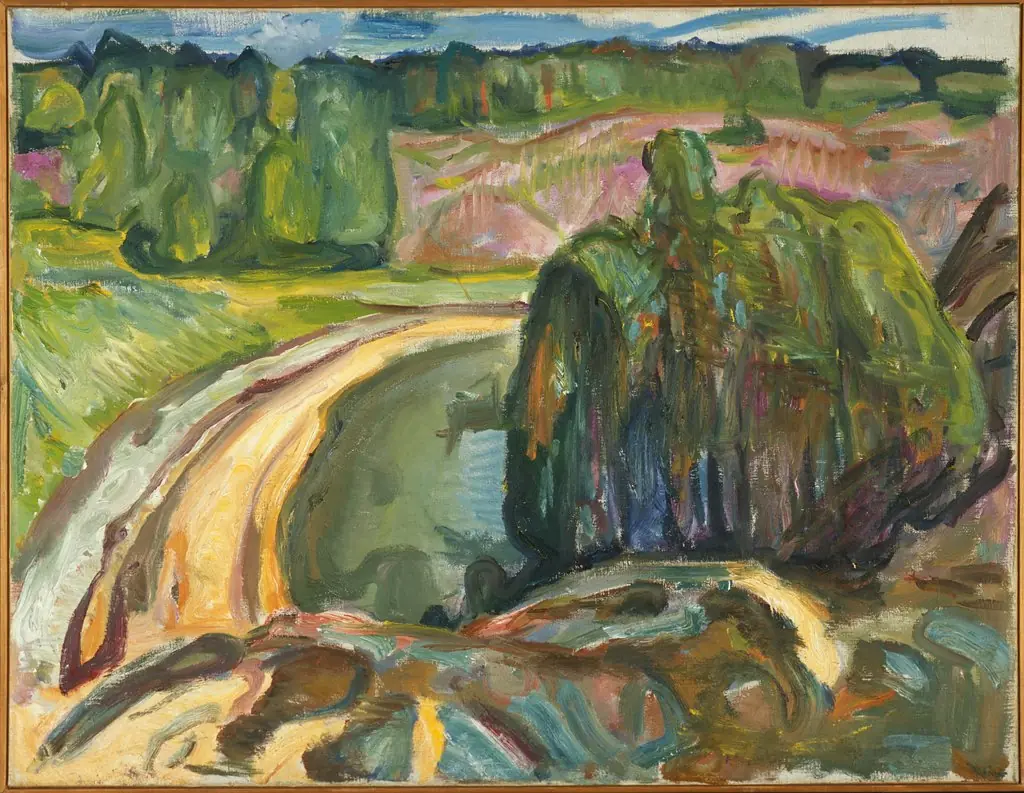
Woman Hurrying Downwards is an oil painting by the Post-Impressionist artist Edvard Munch. It dates from 1909 and is held in the collection of the Munch Museum.
About this work
Overview
The piece reflects Munch’s ongoing interest in human emotion and psychological tension, themes central to his broader body of work.
Painted in 1909, *Woman Hurrying Downwards* is an oil on canvas work by Norwegian artist Edvard Munch. It captures a solitary figure moving swiftly down a sloped path, rendered with loose brushwork and subdued tones. The piece reflects Munch’s ongoing interest in human emotion and psychological tension, themes central to his broader body of work. It resides today in the Munch Museum in Oslo, where it is preserved as part of the artist’s personal archive.
Subject & Meaning
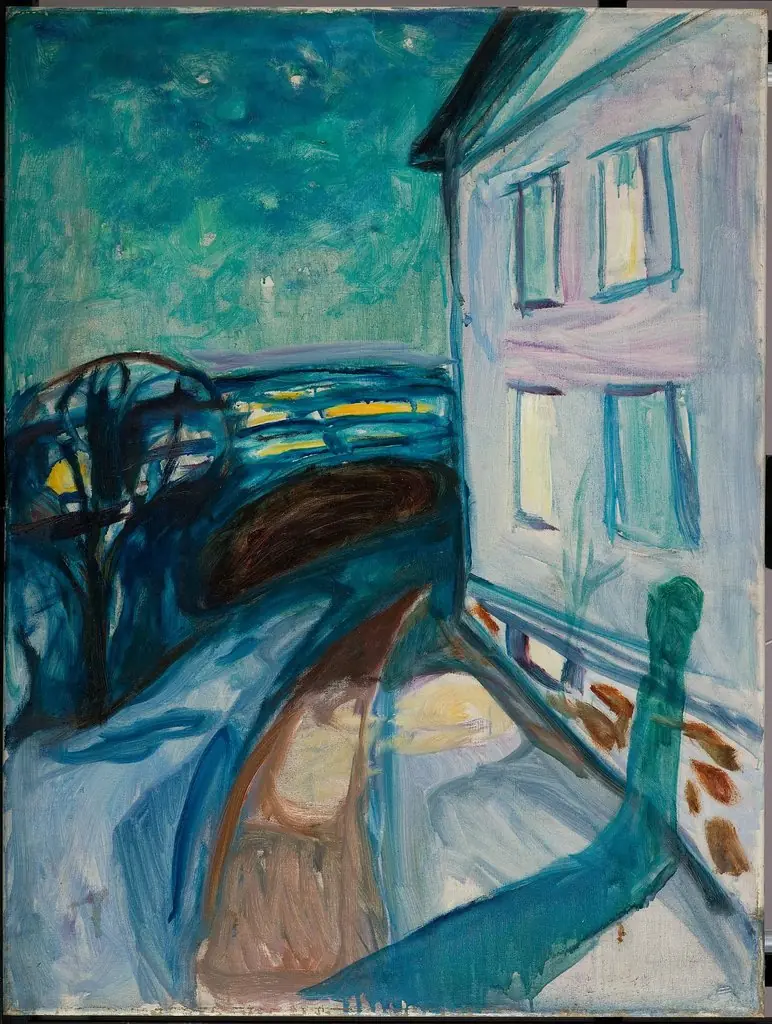
The painting depicts a woman in a long, dark dress, head bowed, descending a hill with urgent motion. Her posture and direction suggest isolation or inner urgency, though no narrative is explicitly given. Munch avoids literal storytelling, instead using the figure’s movement and the ambiguous environment to evoke a mood of quiet anxiety or resignation. The absence of facial detail invites viewers to project their own sense of emotional weight onto the scene.
Technique & Style
Munch employed oil paint with fluid, expressive brushstrokes that prioritize emotional resonance over precise detail. The background blends muted greens, grays, and browns, suggesting a hazy urban landscape with indistinct buildings and a winding path. The woman’s form is simplified, her edges slightly blurred to enhance the impression of motion. This approach aligns with post-impressionist tendencies, favoring psychological atmosphere over naturalistic representation.
History & Provenance
Created during Munch’s mature period, the painting was retained by the artist and later entered the collection of the Munch Museum upon its founding. The museum, established in Oslo, holds the largest assembly of Munch’s works, including personal sketches, prints, and paintings he kept throughout his life. *Woman Hurrying Downwards* has remained in this collection since its inception, with no record of public exhibition prior to the museum’s opening.
Context
Munch painted this work after years of personal hardship and exposure to the intellectual circles of Kristiania (now Oslo), where themes of alienation and existential unease were widely discussed. While not part of his famous *Scream* series, the painting shares the same preoccupation with inner states. It reflects a broader European artistic shift away from realism toward subjective experience, influenced by Symbolism and early modernist thought.
Legacy
Though less widely known than Munch’s more dramatic compositions, *Woman Hurrying Downwards* exemplifies his quiet, persistent exploration of solitude and movement. It contributes to the understanding of his later style—less overtly symbolic, more atmospheric. The painting continues to be studied for its emotional economy and its role in the evolution of modern Norwegian art, offering insight into Munch’s enduring focus on the human condition.
Own this work as a print
Artist & collection
Artist
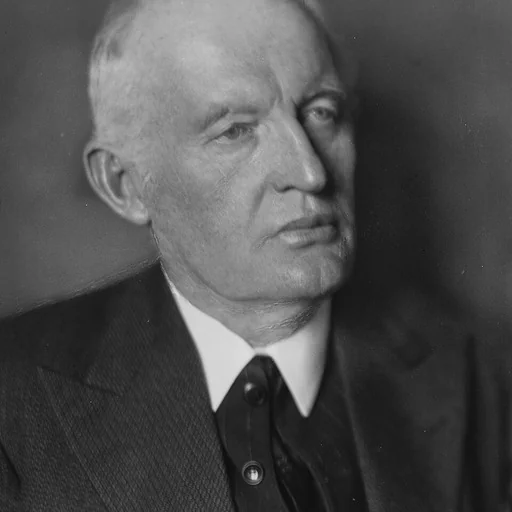
Edvard Munch ( MUUNK; Norwegian: ; 12 December 1863 – 23 January 1944) was a Norwegian painter.