Artwork
Woman Seated on a Couch
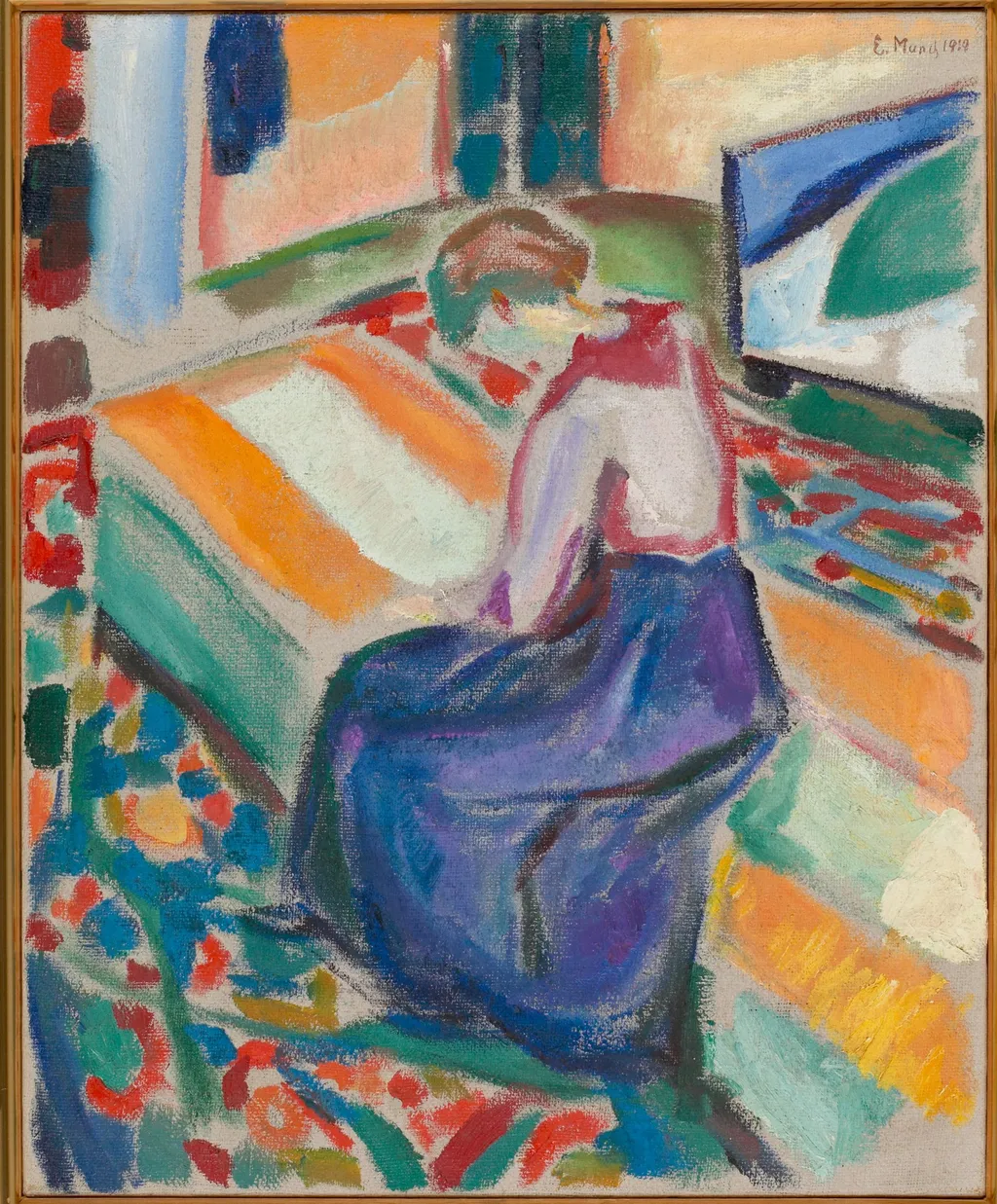
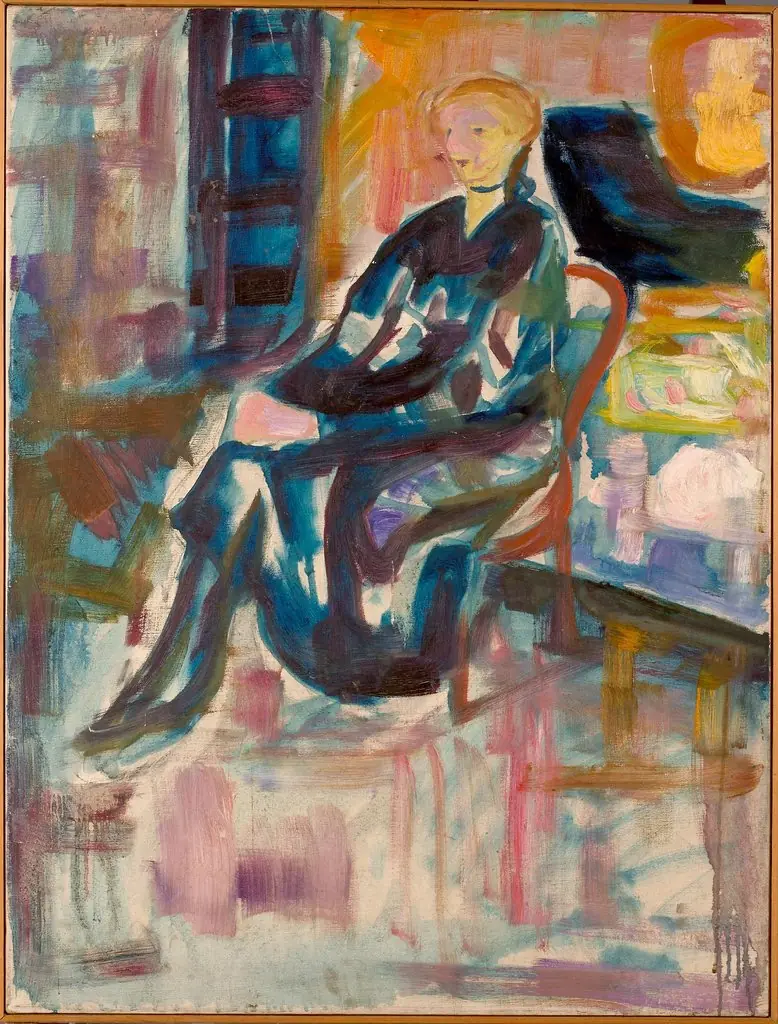
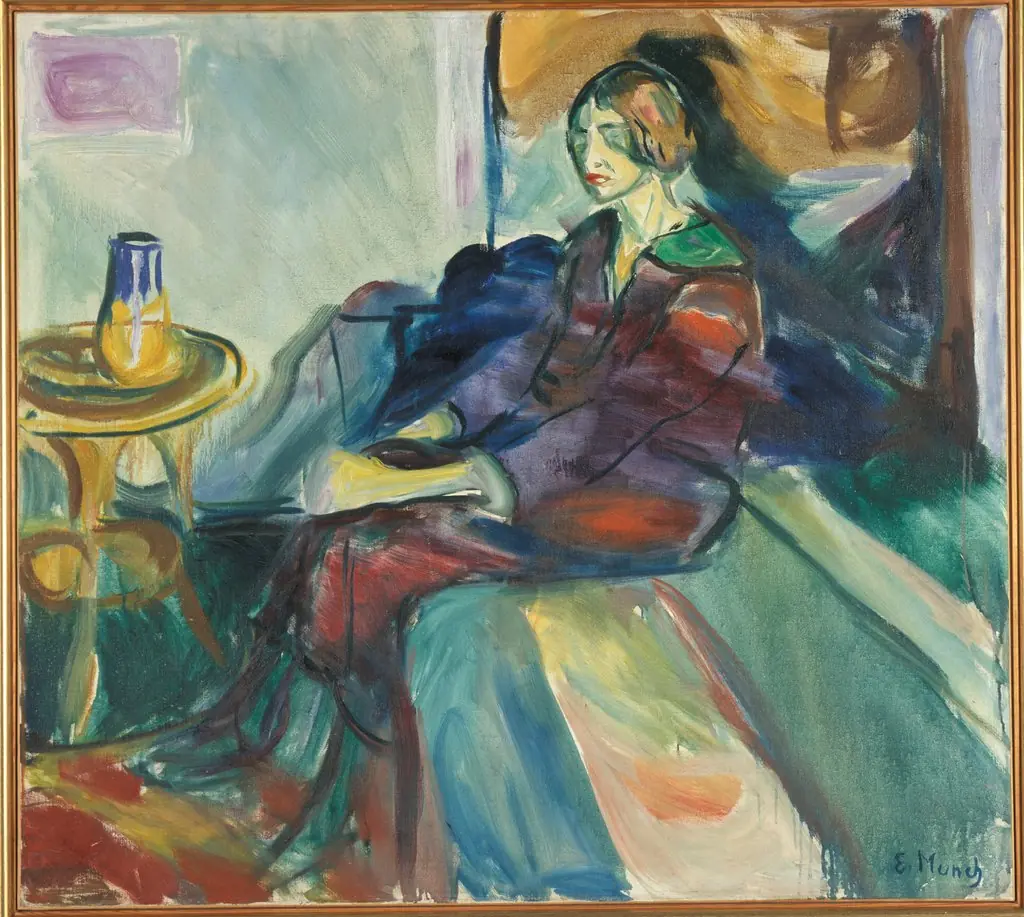
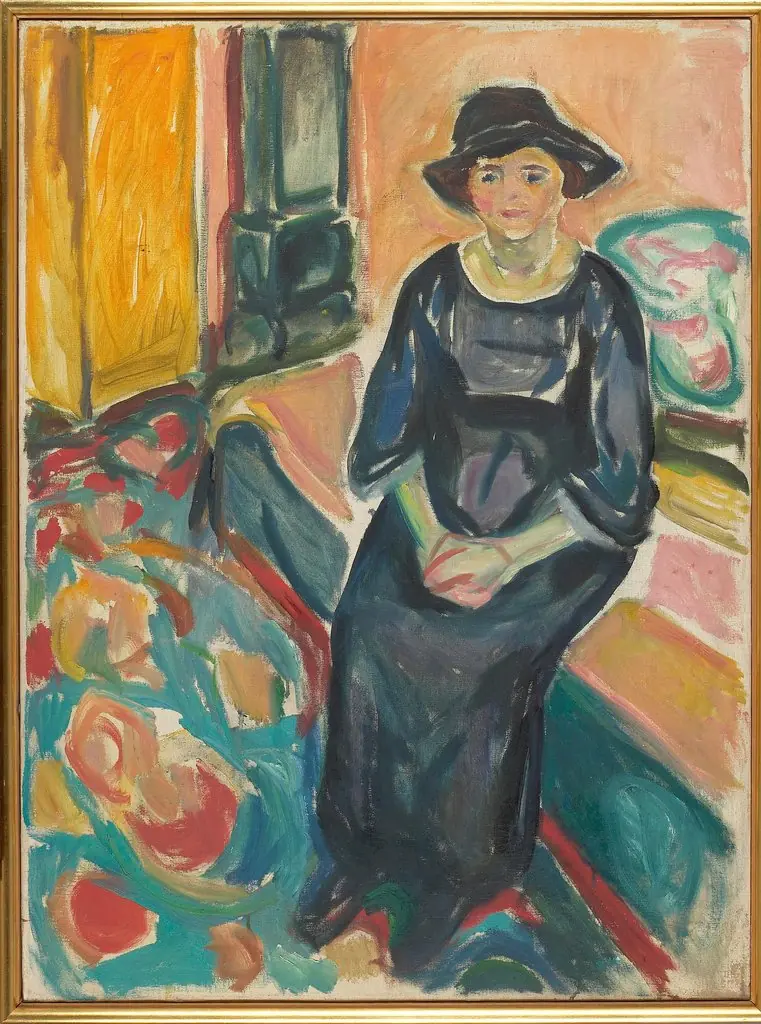
Woman Seated on a Couch is an oil painting by the Post-Impressionist artist Edvard Munch. It dates from 1919 and is held in the collection of the Munch Museum.
About this work
Overview
Created in 1919, *Woman Seated on a Couch* is an oil painting by Norwegian artist Edvard Munch. The work belongs to the collection of the Munch Museum and exemplifies the painter’s turn toward expressing inner states through color and form rather than literal representation.
Subject & Meaning
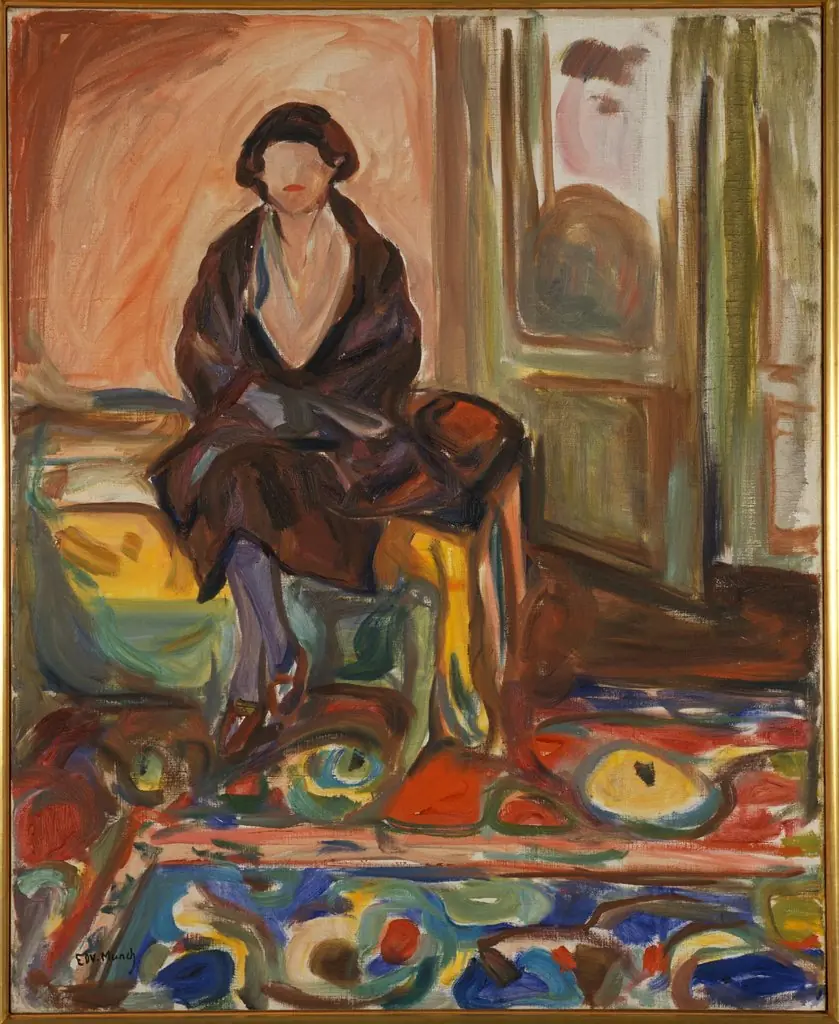
The canvas depicts a woman turned away from the viewer, seated on a couch with her right arm resting on its back. Dressed in a white blouse and blue skirt, her hair is pulled back, and her face remains hidden, inviting contemplation of her private reverie. The surrounding interior, rendered in vivid, patterned hues, contributes to a tranquil, introspective mood.
Technique & Style
Munch employs a post‑impressionist vocabulary, using bold, non‑naturalistic colors and simplified shapes to convey feeling. The brushwork is fluid, allowing the orange, yellow, and green walls to merge with the patterned rug of red, blue, and yellow flowers. This approach emphasizes emotional resonance over precise detail, a hallmark of Munch’s mature style.
History & Provenance
The painting emerged during a period when Munch, shaped by early personal loss and his studies at Oslo’s Royal School of Art and Design, was influenced by contemporary nihilist thought, notably through his association with Hans Jæger. Since its creation, the work has remained in Norway, ultimately entering the permanent holdings of the Munch Museum.
Artist & collection
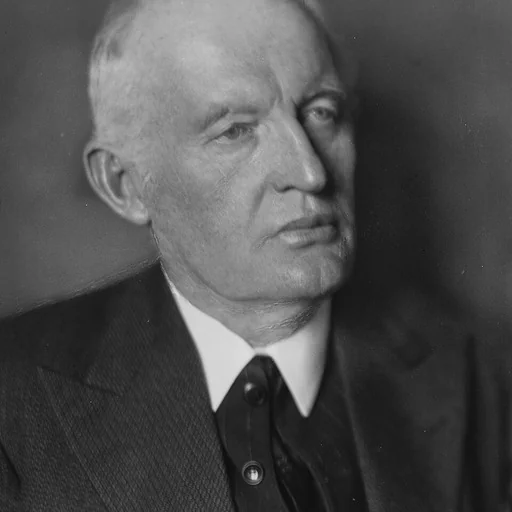
Artist
Edvard Munch ( MUUNK; Norwegian: ; 12 December 1863 – 23 January 1944) was a Norwegian painter.