Artwork
Youth
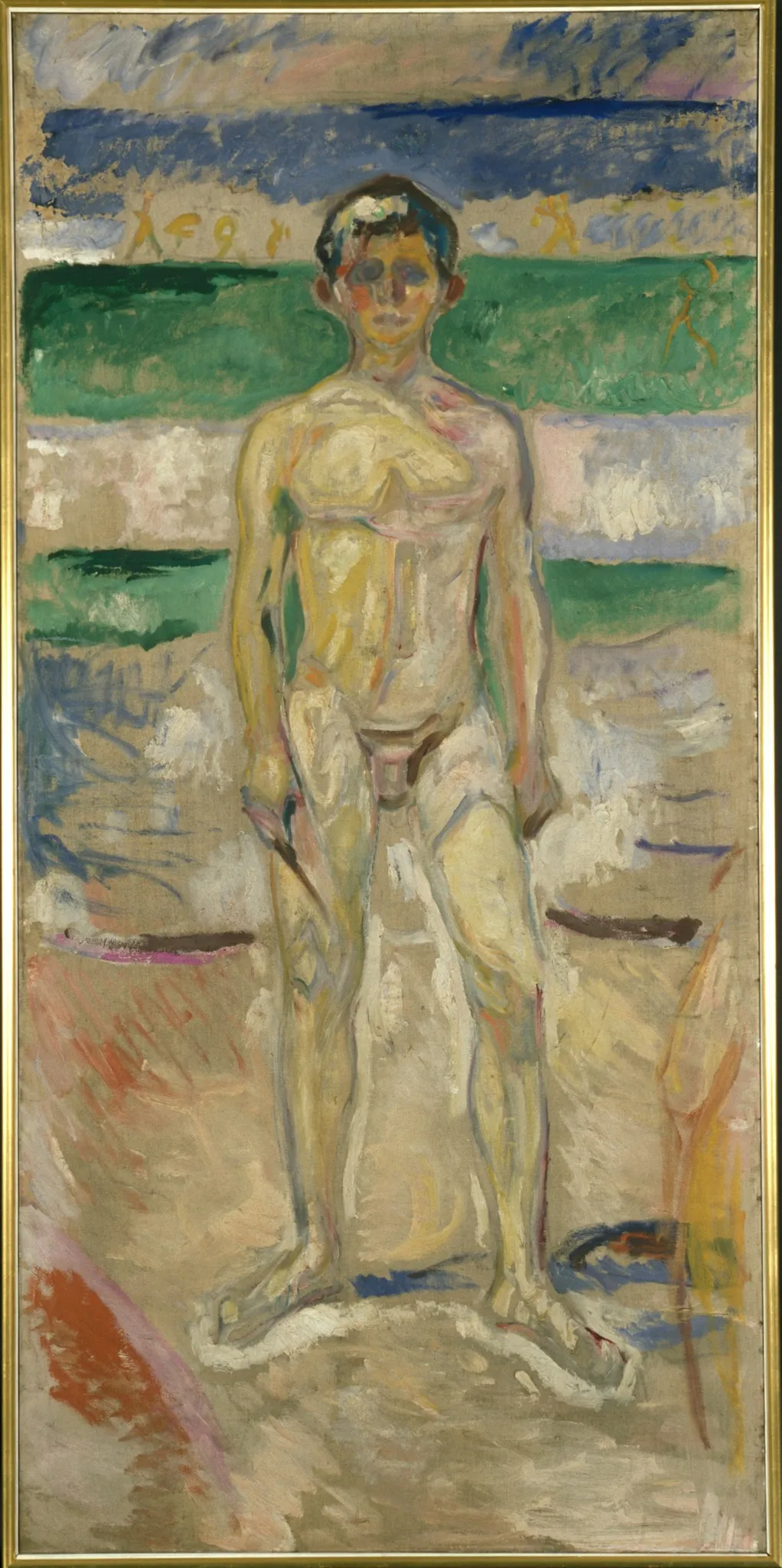
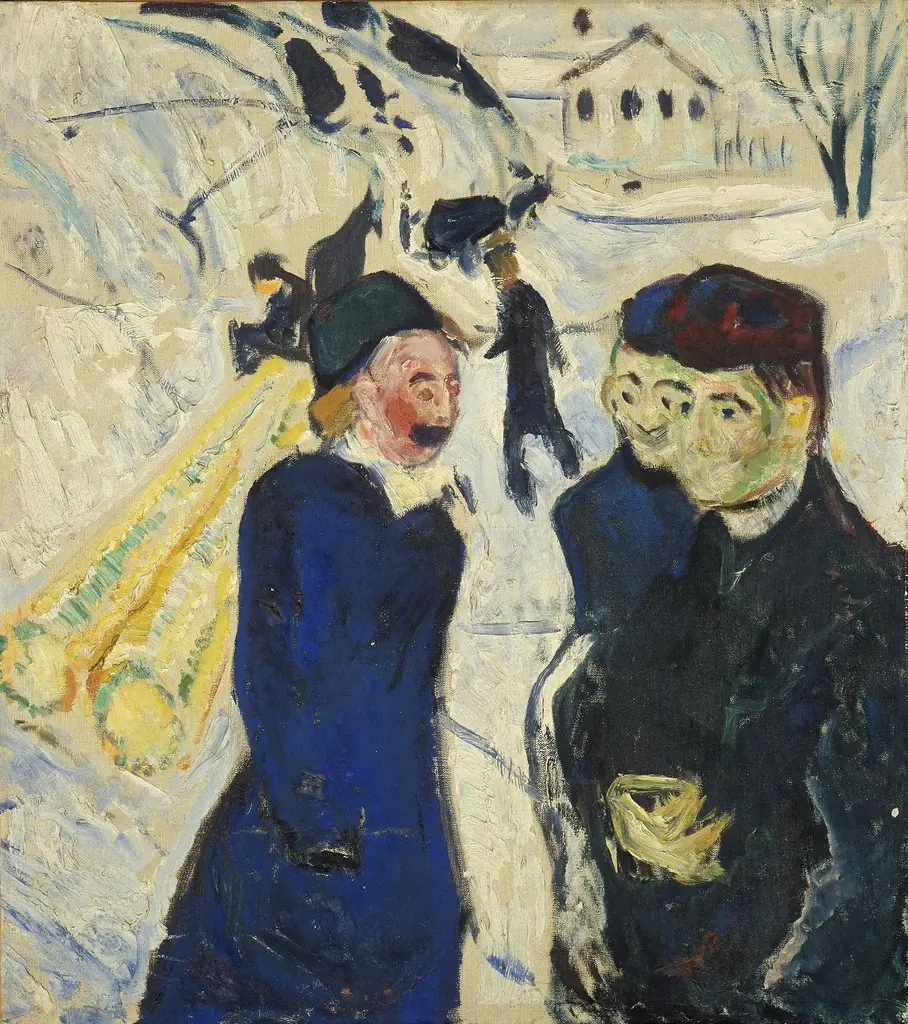
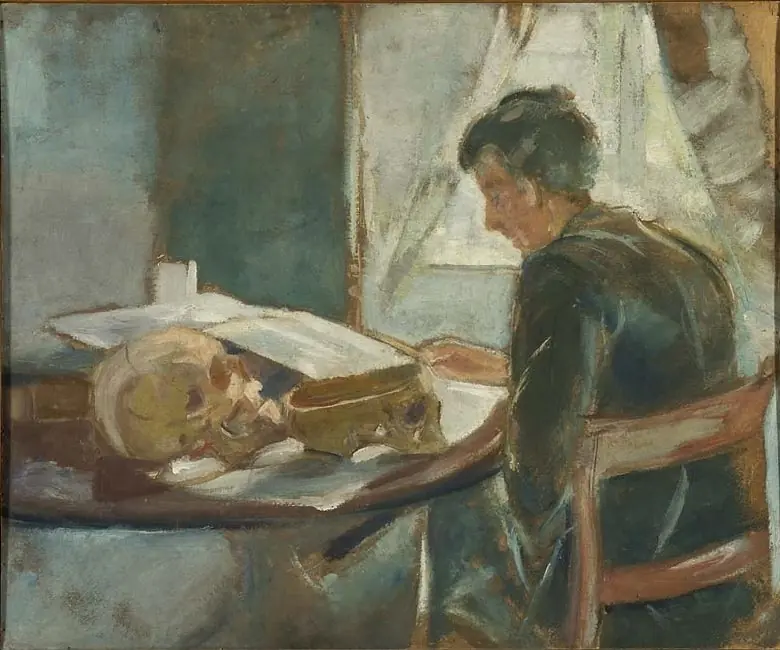
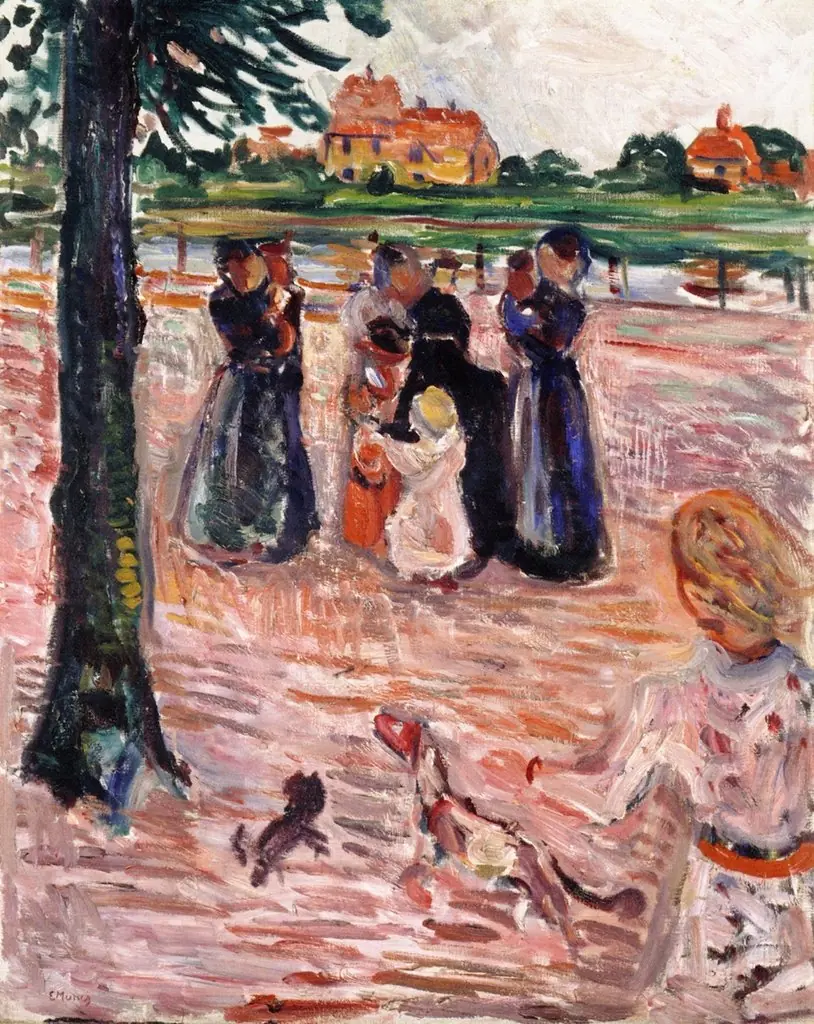
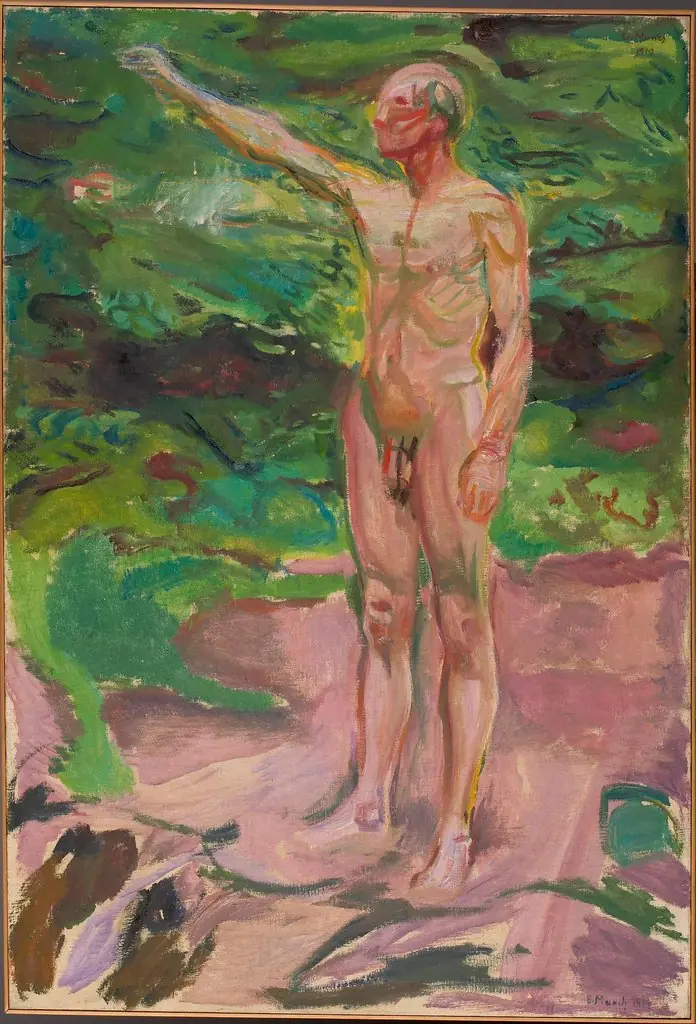
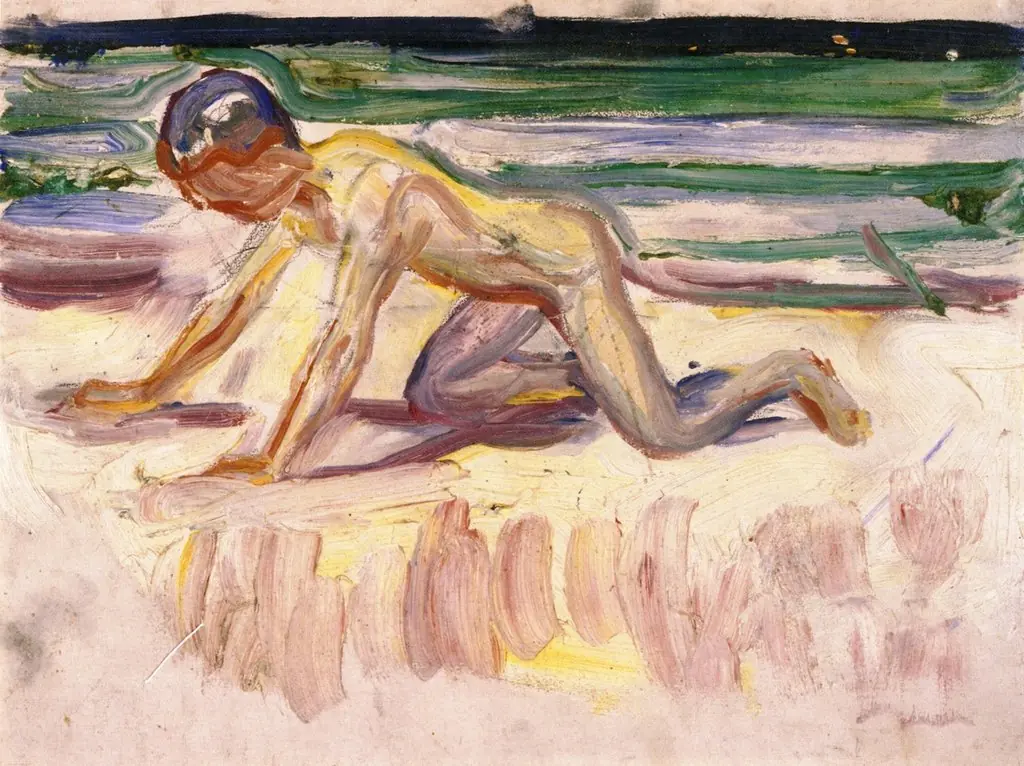
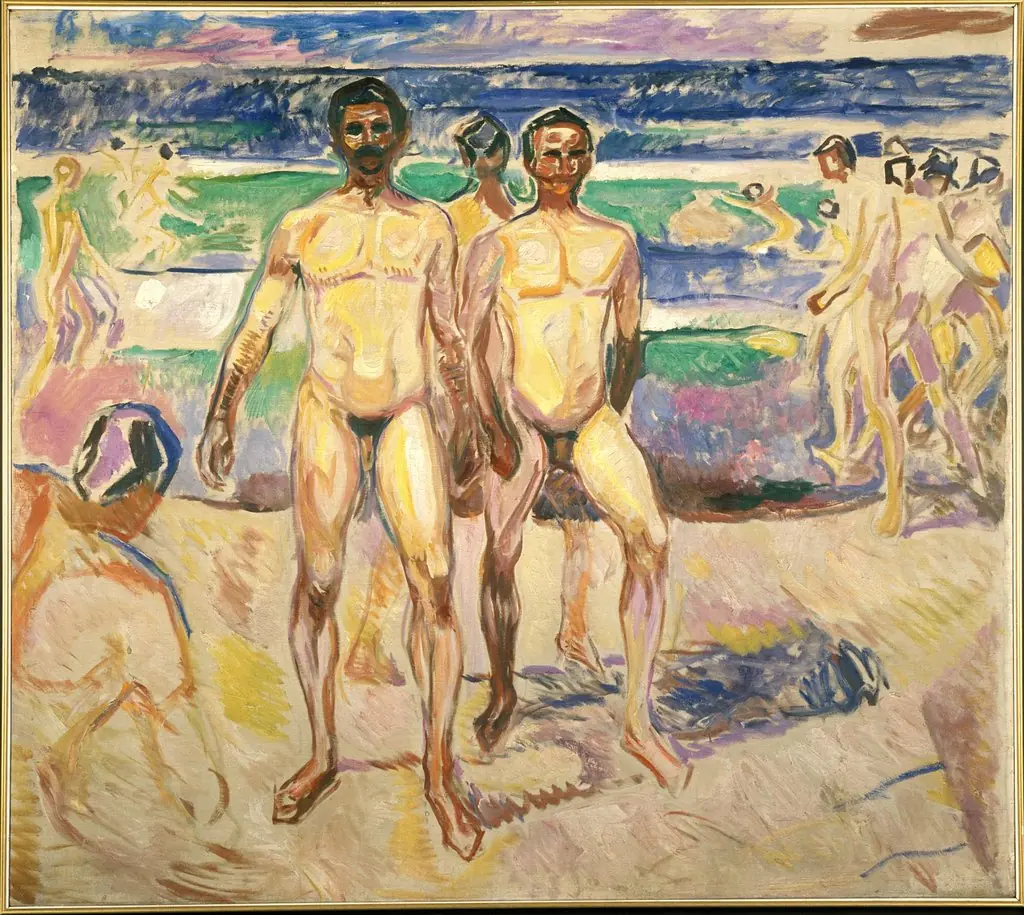
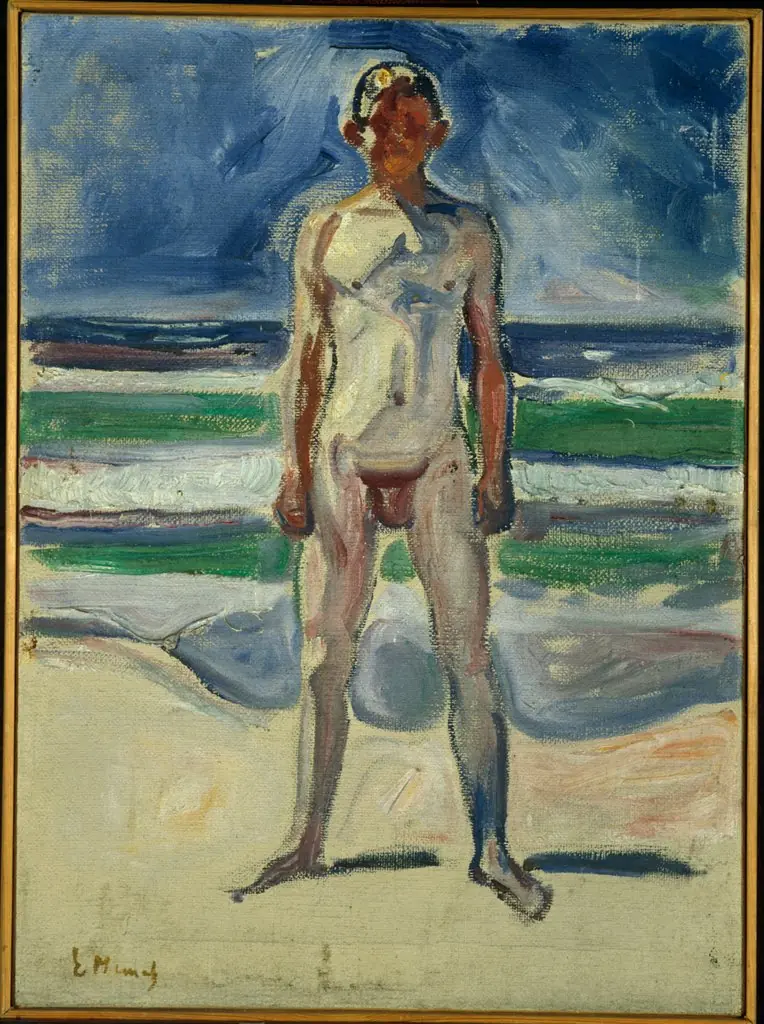
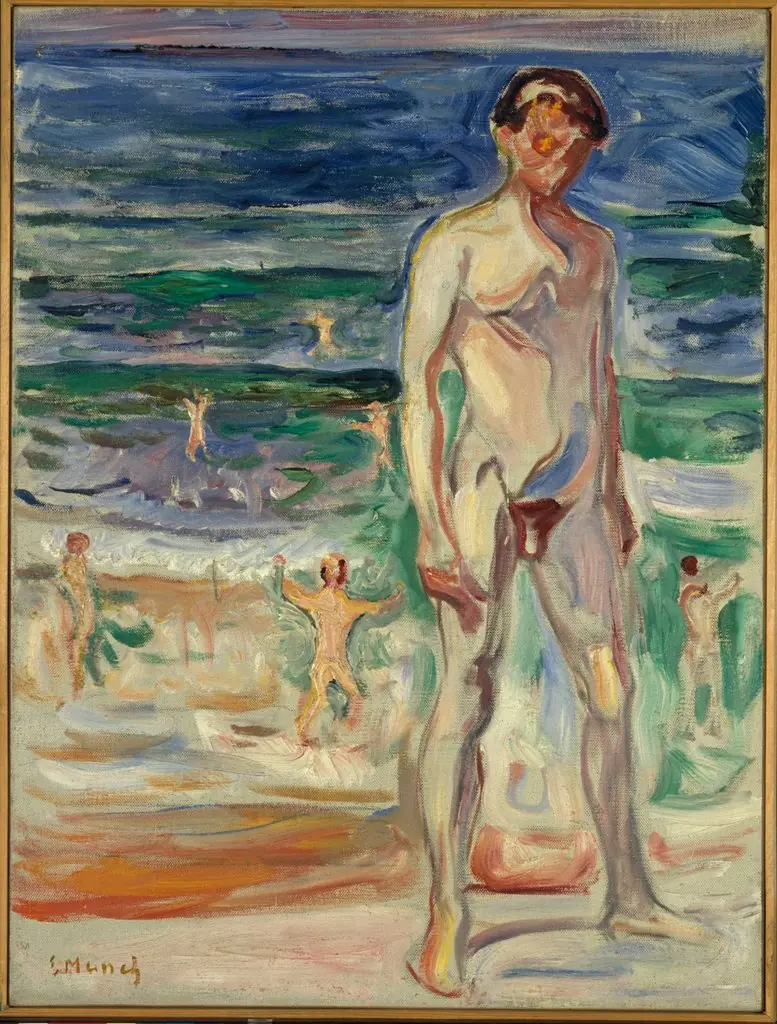
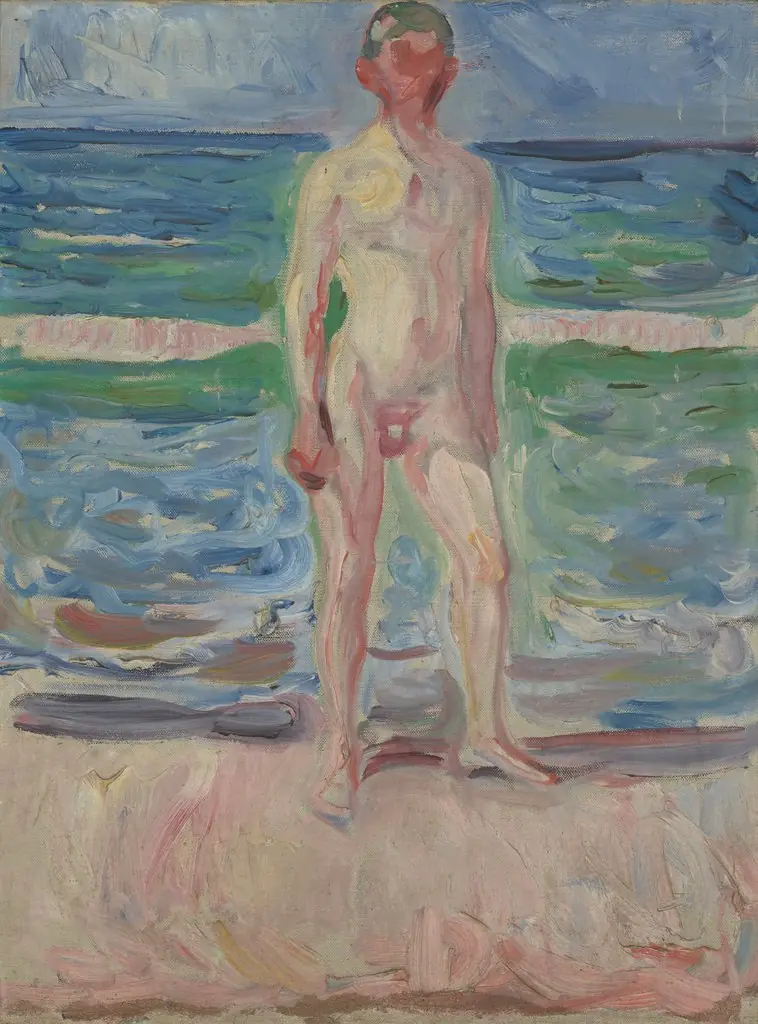
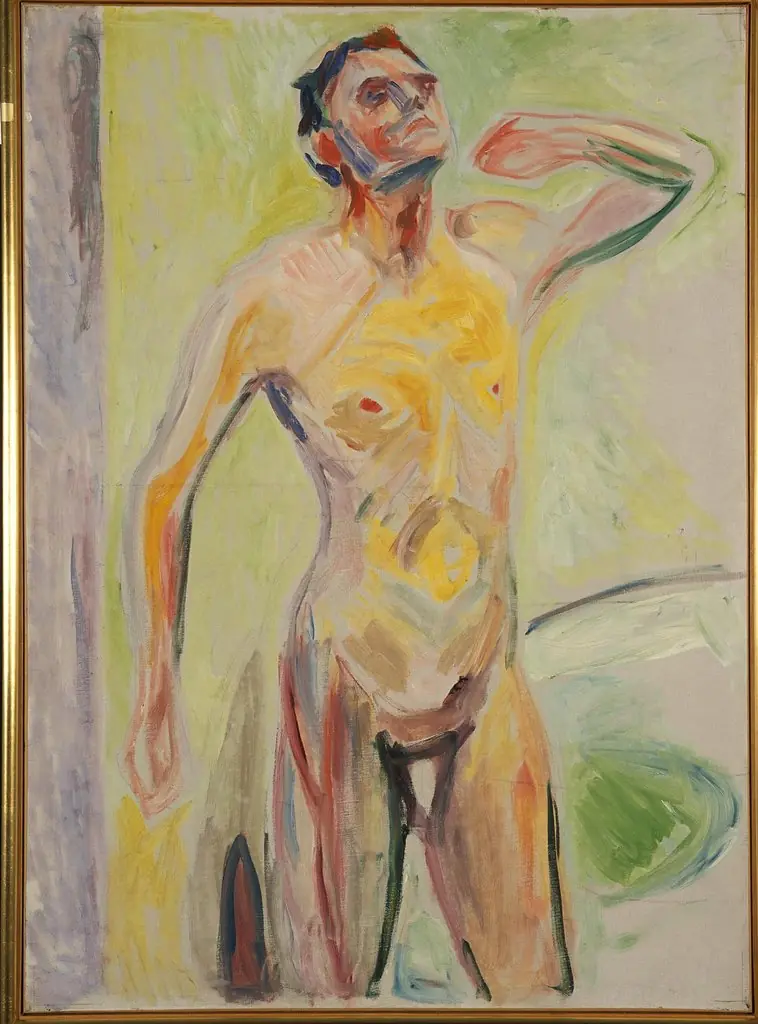
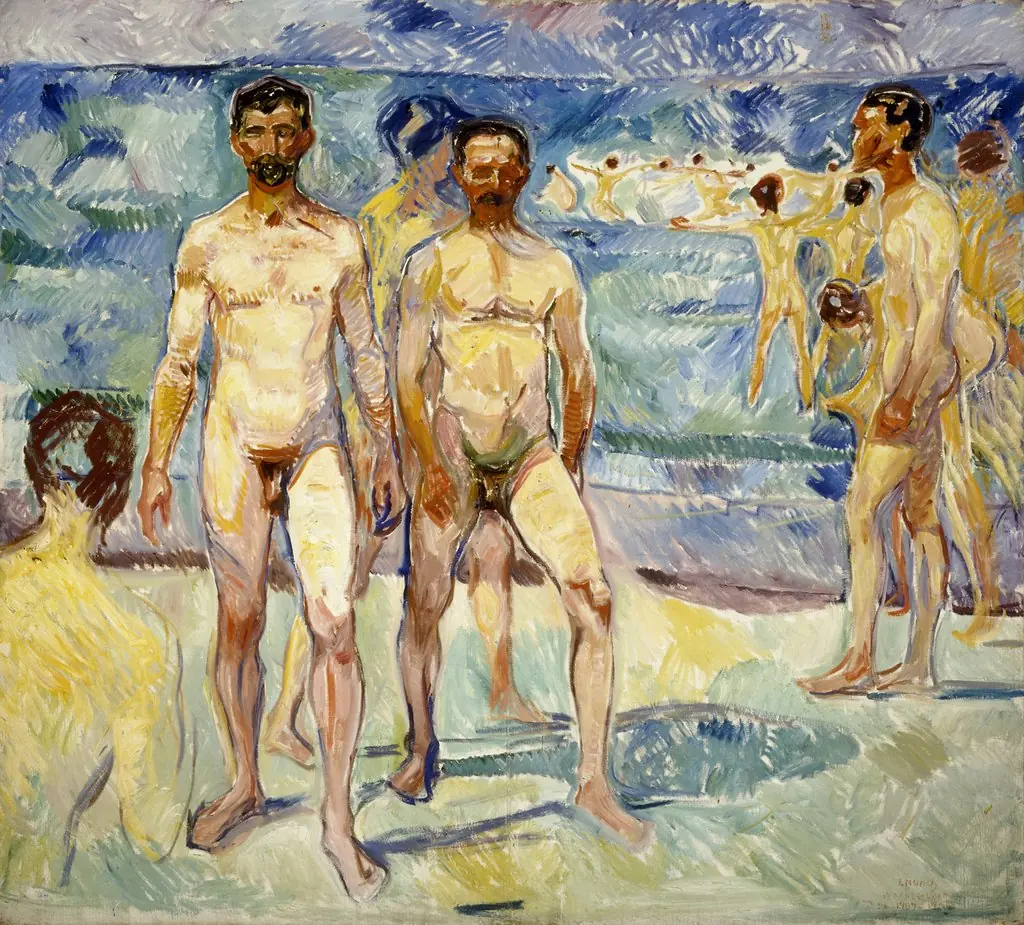
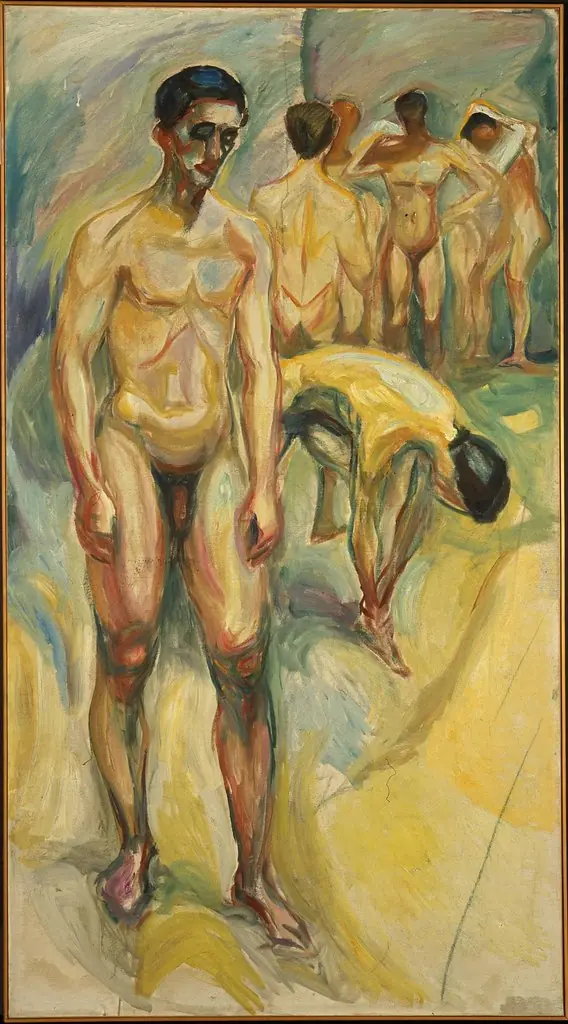
Youth is an oil painting by the Post-Impressionist artist Edvard Munch. It dates from 1913 and is held in the collection of the Munch Museum.
About this work
Overview
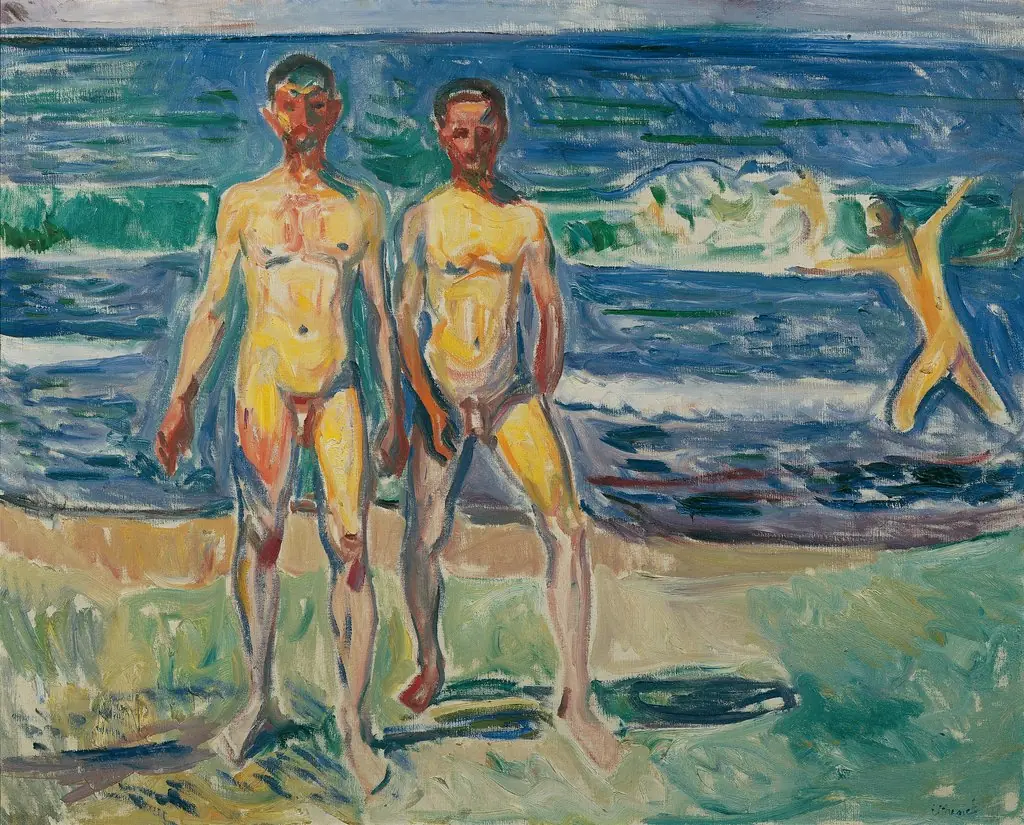
It portrays a solitary young man on a shoreline, rendered with expressive brushwork and a limited palette of blues, greens, and whites.
Painted in 1913, *Youth* is an oil on canvas work by Norwegian artist Edvard Munch. It portrays a solitary young man on a shoreline, rendered with expressive brushwork and a limited palette of blues, greens, and whites. The painting is part of the Munch Museum’s collection and reflects the artist’s sustained interest in human emotion and physical presence, moving beyond mere representation toward psychological resonance.
Subject & Meaning
The figure, bare-chested and standing still on a beach, conveys a quiet introspection. His posture—hand on hip, gaze outward—suggests contemplation rather than action. The absence of narrative context invites interpretation of inner states: solitude, transition, or awakening. Munch often explored themes of vulnerability and existential awareness, and here the nude form becomes a vessel for unspoken emotion rather than idealized beauty.
Technique & Style
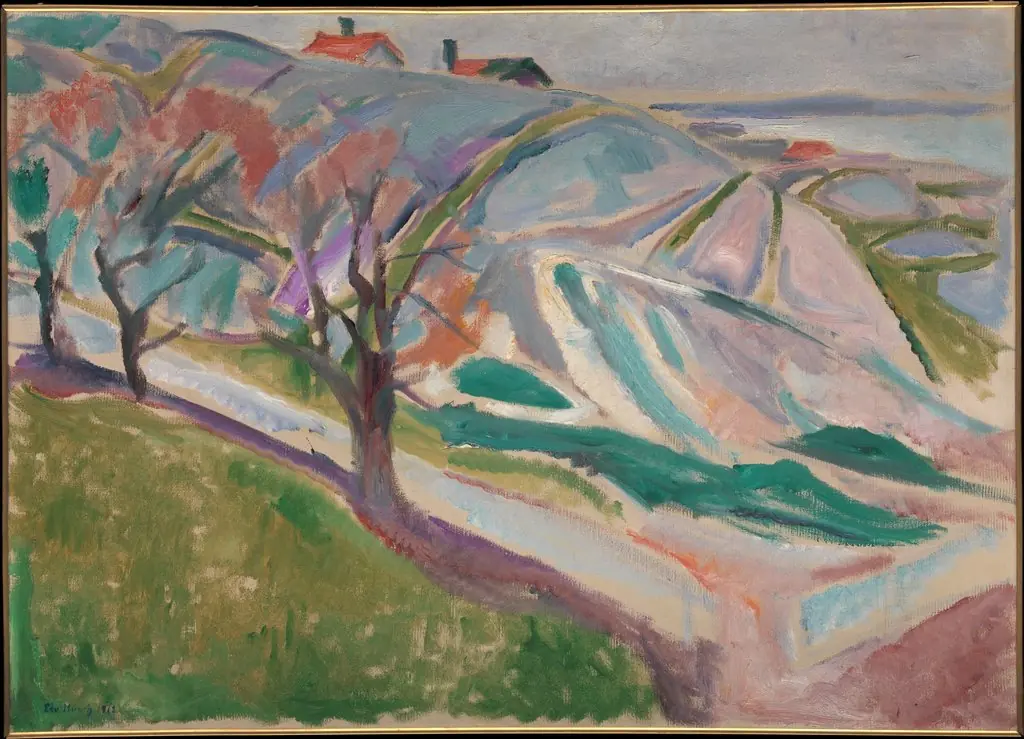
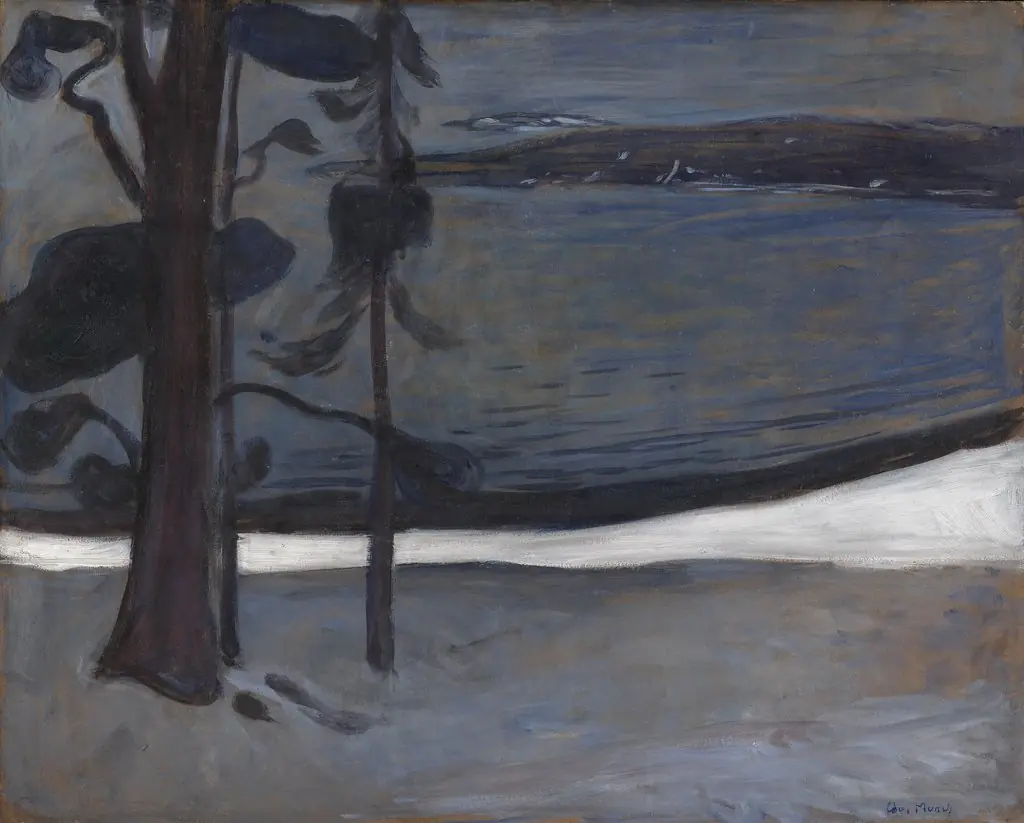
Munch employed bold, rhythmic brushstrokes to define both the figure and the landscape, blending form and environment through simplified planes. The sea and sky are rendered in horizontal bands of color, their edges softened yet distinct. Color is used emotionally rather than naturally—greens and blues evoke atmosphere, not realism. The paint is applied with deliberate energy, enhancing the sense of movement and inner tension.
History & Provenance
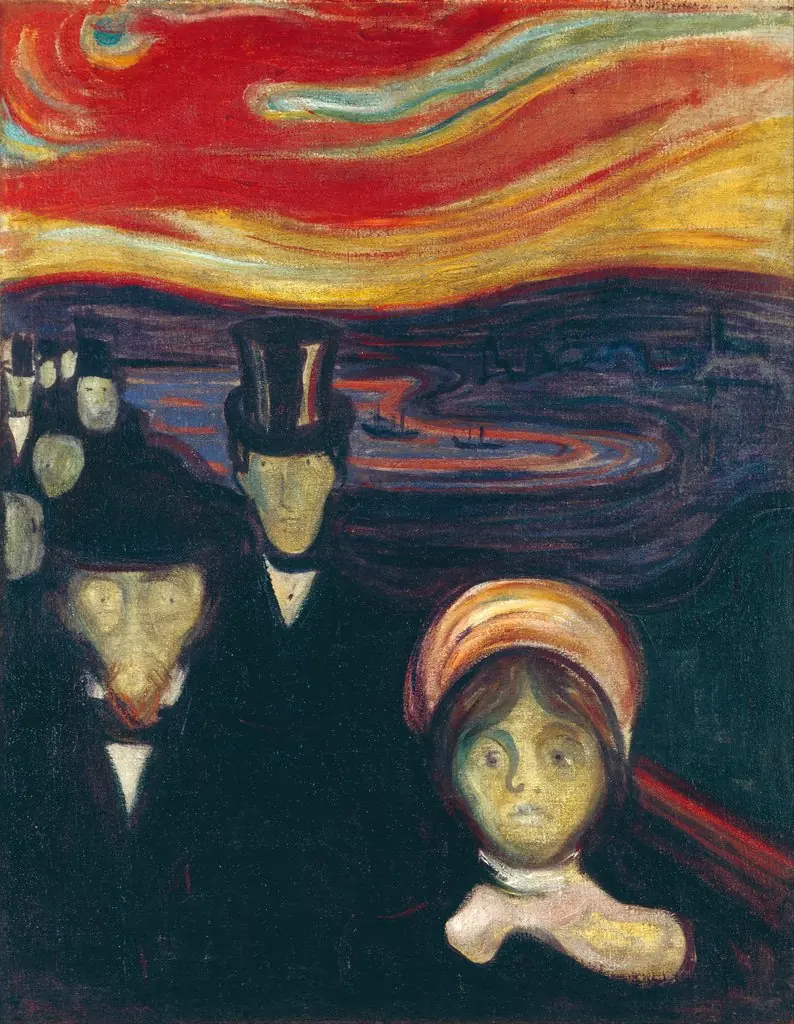
Created during Munch’s mature period, *Youth* was painted after his return to Norway following years abroad. It entered the collection of the Munch Museum in Oslo, established to preserve the artist’s legacy. The work was not exhibited widely at the time of its creation but gained recognition as part of broader efforts to document Munch’s thematic evolution beyond *The Scream*.
Context
In early 20th-century Norway, Munch stood apart from academic traditions, favoring personal expression over realism. His training at the Royal School of Art and Design in Kristiania exposed him to Symbolist and Post-Impressionist ideas, which he adapted to explore psychological depth. *Youth* aligns with his broader project of depicting internal experience through simplified forms and heightened color, resonating with contemporary European movements focused on subjectivity.
Legacy
Though less known than Munch’s more dramatic works, *Youth* exemplifies his enduring focus on the human condition through minimal means. Its quiet intensity influenced later Norwegian artists interested in emotional realism. The painting remains a key example of how Munch transformed the nude figure into a symbol of inner life, contributing to modern art’s shift toward psychological representation over idealized form.
Artist & collection
Artist
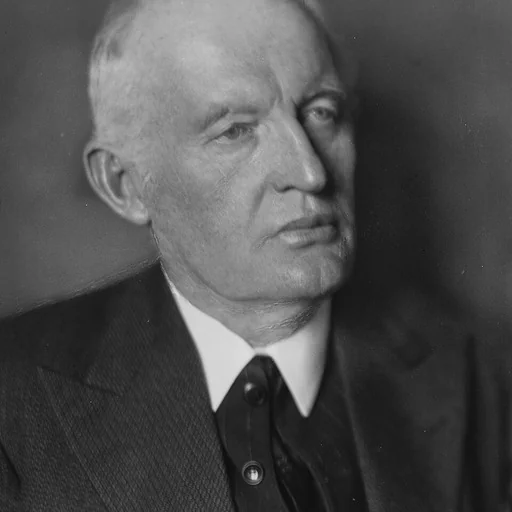
Edvard Munch ( MUUNK; Norwegian: ; 12 December 1863 – 23 January 1944) was a Norwegian painter.