Artwork
Dying Stag
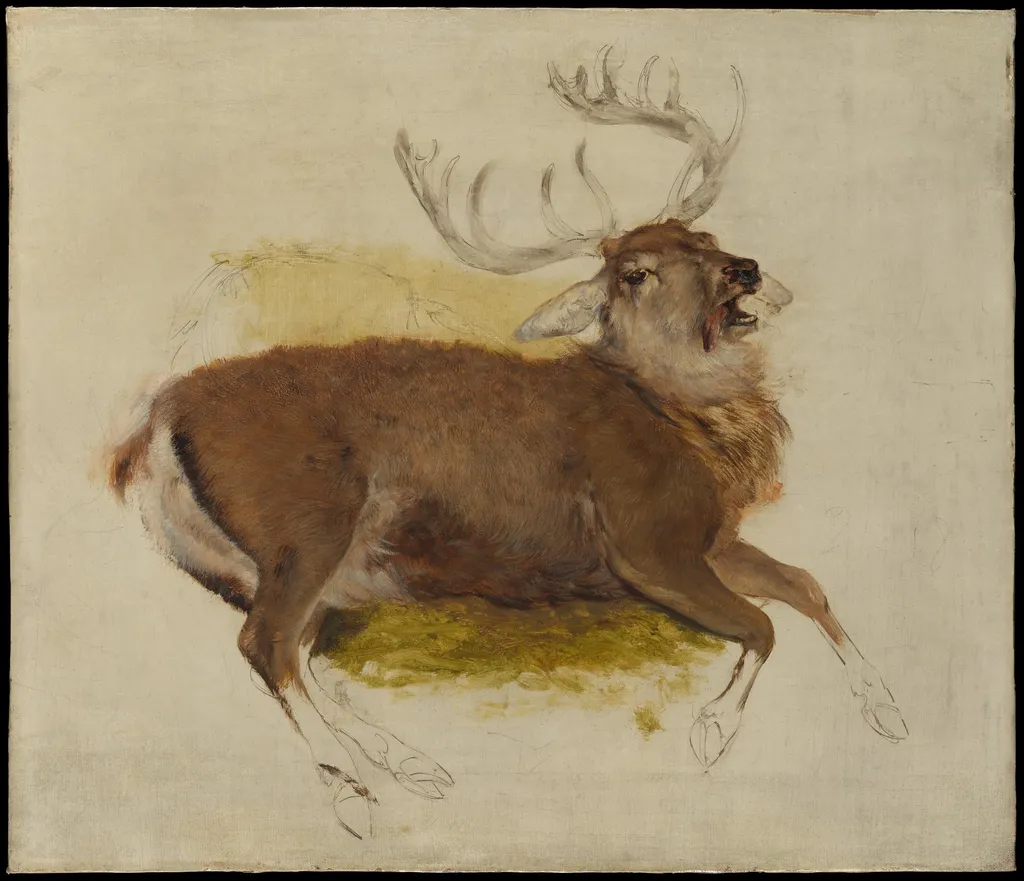
Dying Stag is an oil painting by Edwin Landseer. It dates from 1830 and is held in the collection of the Metropolitan Museum of Art.
About this work
Overview
Edwin Landseer’s 1830 oil work, titled Dying Stag, presents a solitary male deer collapsed on its side. The animal’s head is turned slightly toward the viewer, its mouth agape as if in a final gasp. The composition is set against an indistinct, pale backdrop that suggests a forested landscape, allowing the figure to dominate the visual field.
Subject & Meaning
The painting captures a moment of mortality in the natural world, focusing on the stag’s exhausted posture and the stark contrast between its robust antlers and vulnerable body. By isolating the animal and emphasizing its breathless expression, Landseer invites contemplation of the fragility of life and the inevitable decline that follows strength.
Technique & Style
Landseer employs brisk, textured brushwork to render the stag’s thick brown coat, while the face receives a gentler, more detailed treatment. Earthy browns and muted greens dominate the palette, reinforcing the somber mood. The background is rendered with soft, blurred strokes, creating a hazy atmosphere that recedes behind the central figure.
History & Provenance
Created in 1830, Dying Stag entered the collection of The Metropolitan Museum of Art, where it remains on display. The work reflects Landseer’s early interest in animal subjects, a theme he would pursue throughout his career, and it stands as an example of his skill in conveying animal anatomy and emotion through oil paint.
Artist & collection

Artist
Sir Edwin Henry Landseer was an English painter and sculptor, well known for his paintings of animals – particularly horses, dogs, and stags. His best-known work is the lion sculptures at the base of Nelson's Column in Trafalgar Square.