Artwork
Nude Man with Raised Arms (recto) Seated Man (verso)
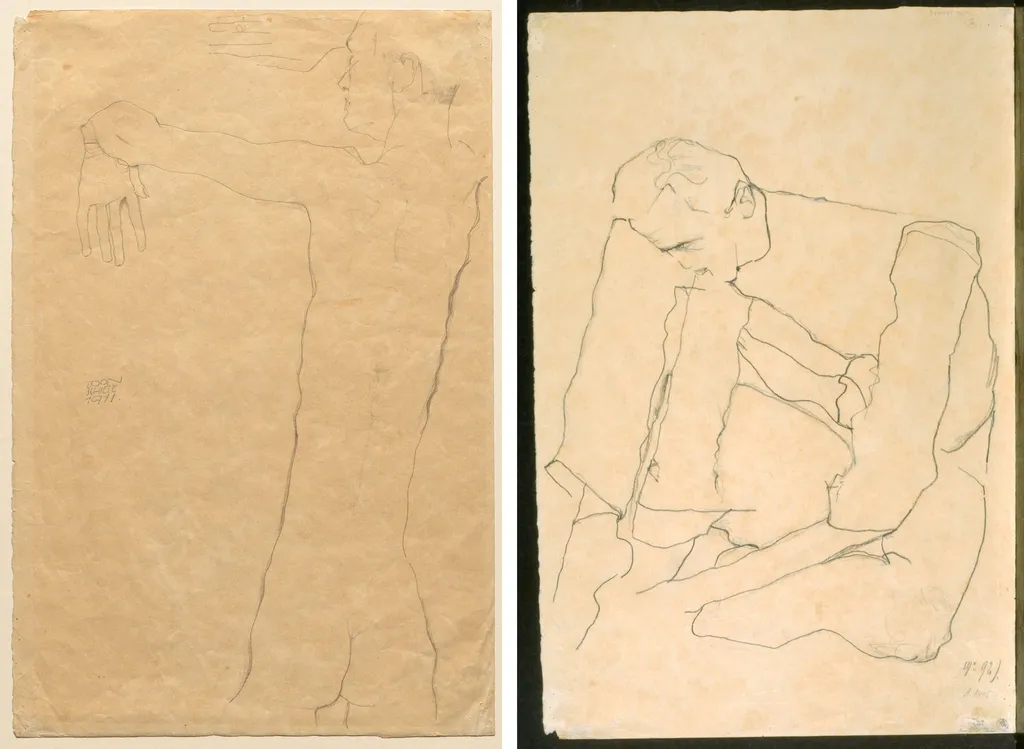
Nude Man with Raised Arms (recto) Seated Man (verso) is a drawing by Egon Schiele. It dates from 1911 and is held in the collection of the Cleveland Museum of Art.
About this work
Overview
Both figures are rendered in pencil with minimal detail, emphasizing posture and anatomical structure over environmental context or individual identity.
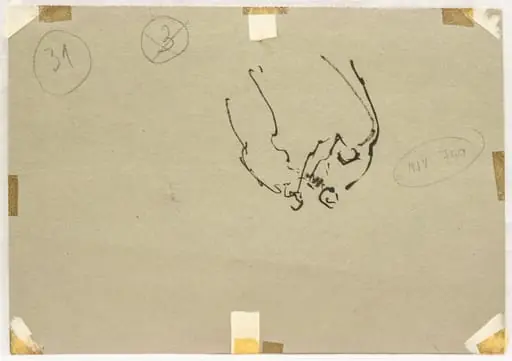
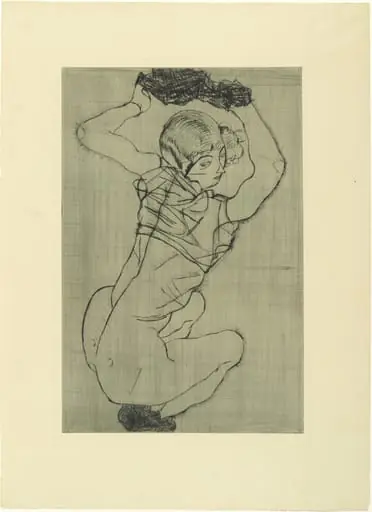
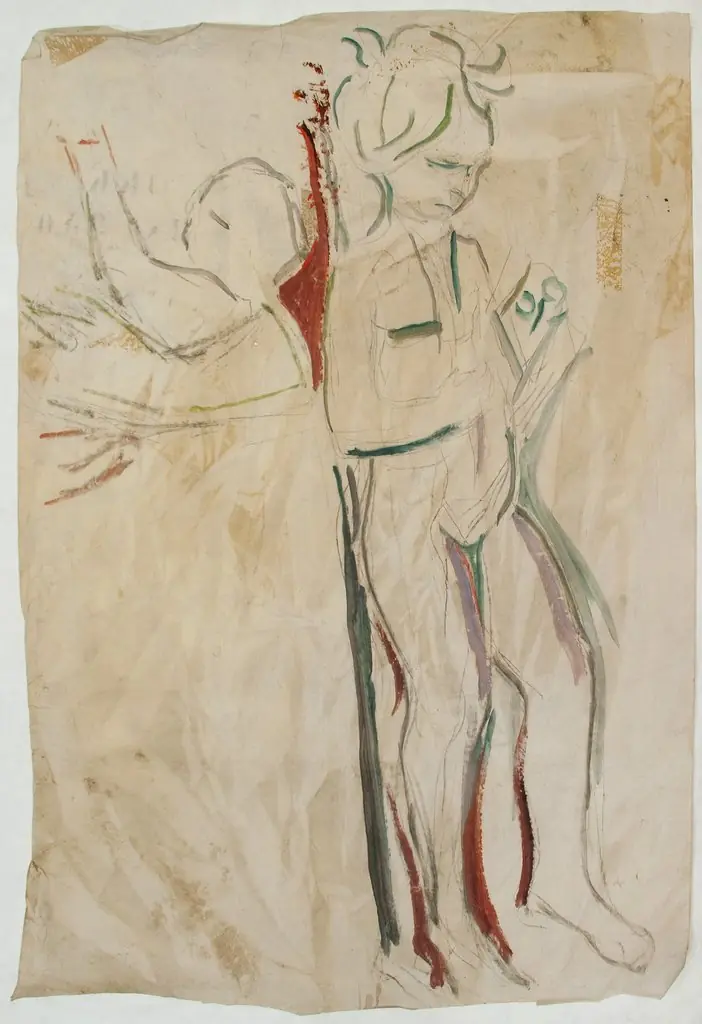
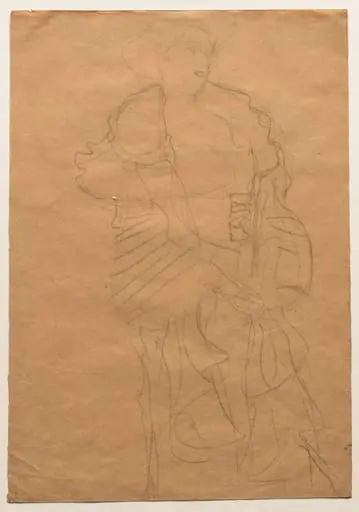
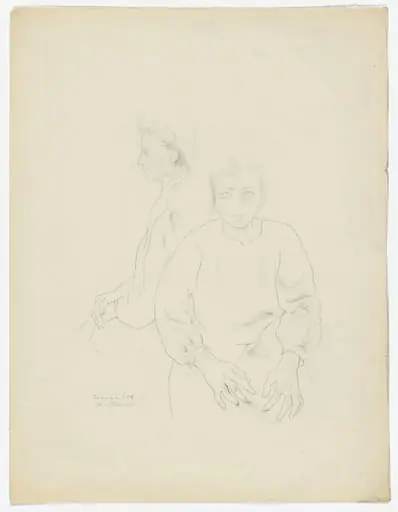
This double-sided drawing by Egon Schiele, dated 1911, features two figure studies on a single sheet of light-colored paper. The recto depicts a standing nude with arms raised, while the verso shows a seated figure leaning forward, arms resting on bent knees. Both figures are rendered in pencil with minimal detail, emphasizing posture and anatomical structure over environmental context or individual identity.
Subject & Meaning
The two figures explore the human form in static and dynamic poses, stripped of narrative or symbolic context. Schiele focuses on physical presence rather than psychological depth, using posture to convey tension and relaxation. The absence of facial features and background reinforces the body as the sole subject, reflecting an interest in raw, unadorned anatomy as a vehicle for expressive form.
Technique & Style
Schiele employs rapid, variable-weight pencil lines to define musculature and joint structure. The strokes are economical yet precise, capturing the weight and alignment of limbs without shading or texture. The contrast between thick, confident contours and lighter, sketchier marks creates a sense of motion and spontaneity, characteristic of his early explorations of the figure in motion.
History & Provenance
The drawing entered the collection of The Cleveland Museum of Art in 1958 as part of the John L. Severance Fund acquisition. It has been consistently attributed to Schiele’s prolific 1911 period, when he produced numerous figure studies during his time in Vienna and the Austrian countryside. Its survival in good condition reflects its status as a working sketch rather than a finished work.
Context
Created during Schiele’s formative years, this drawing aligns with his engagement with Expressionist ideals and the Viennese avant-garde’s interest in psychological and physical authenticity. The focus on the nude body, often in unconventional poses, challenged academic traditions and aligned with contemporary debates about sexuality, vulnerability, and the limits of representation in art.
Legacy
This drawing exemplifies Schiele’s enduring contribution to modern figure drawing: the reduction of the body to essential lines that convey both structure and emotional resonance. Its dual composition underscores his habit of reusing surfaces, revealing his iterative process. It remains a key reference for understanding his approach to form, economy of line, and the expressive potential of the naked body.
Artist & collection

Artist
Egon Leo Adolf Ludwig Schiele (German: ; 12 June 1890 – 31 October 1918) was an Austrian Expressionist painter.