Artwork
Perroquet Rouge
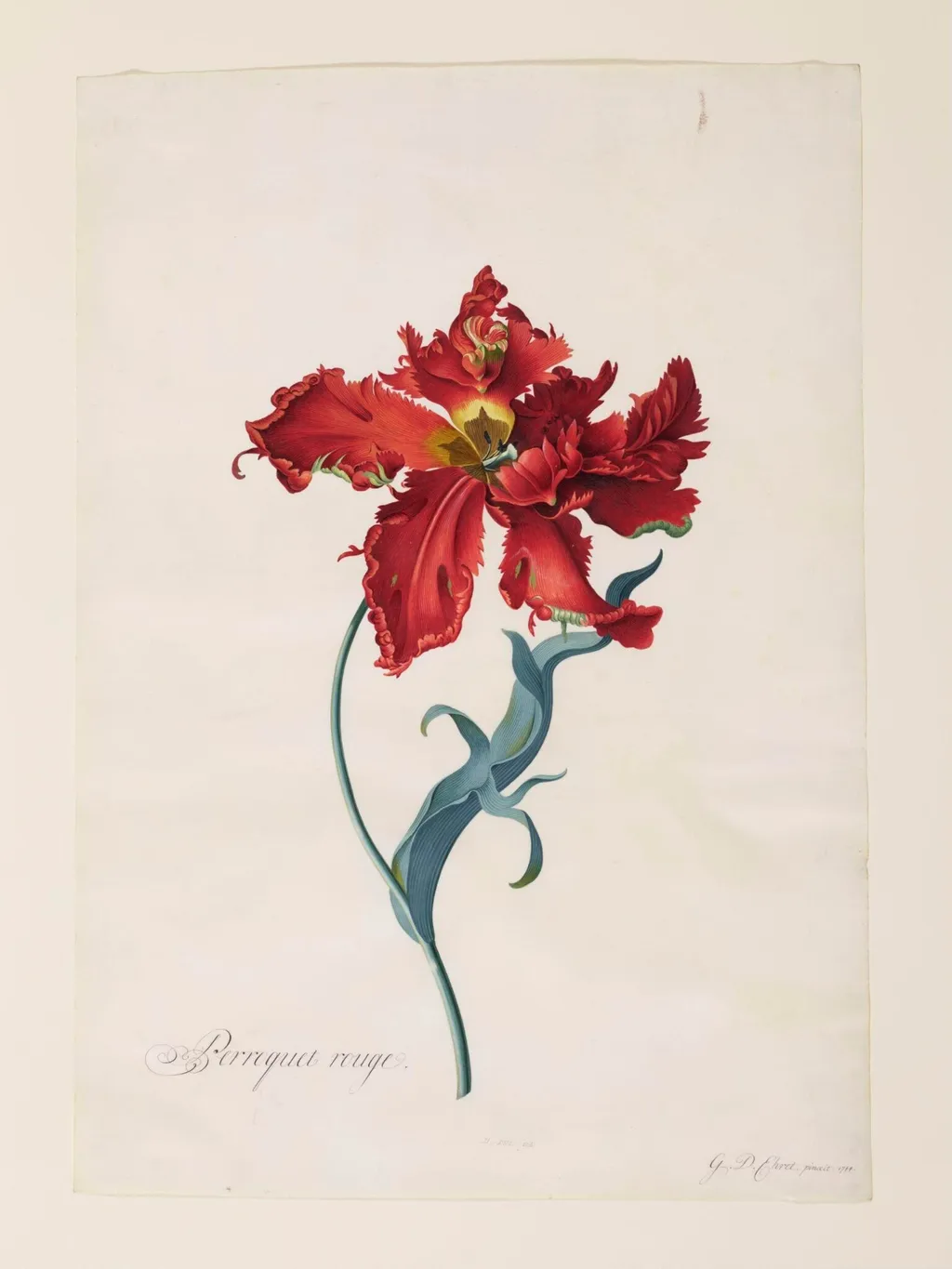
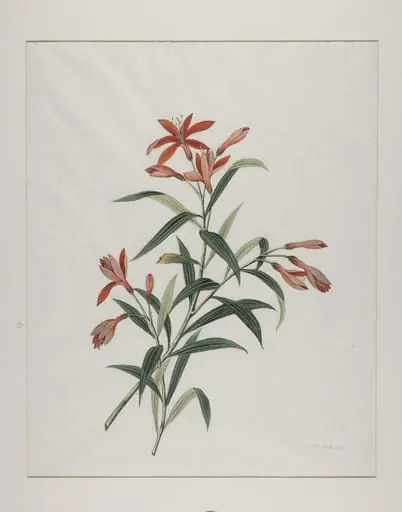
Perroquet Rouge is a watercolor work on paper by the Baroque artist Georg Dionysus Ehret. It dates from 1744 and is held in the collection of the Victoria and Albert Museum.
About this work
The painting is called Perroquet Rouge, made by Georg Dionysus Ehret around 1744.
It was part of a big project to draw pretty garden plants. The project was led by a German doctor and botanist named Dr Christoph Jakob Trew. He wanted to show the beauty of flowers.
You can learn more about this style by looking into the Baroque movement.
Overview
Perroquet Rouge is a watercolour painting by Georg Dionysus Ehret, created around 1744.
Perroquet Rouge is a watercolour painting by Georg Dionysus Ehret, created around 1744. It was one of forty-four illustrations produced for Hortus Nitidissimus, a multi-volume florilegium commissioned by the Nuremberg physician and botanist Christoph Jakob Trew. The work belongs to a series dedicated to depicting ornamental garden plants in full bloom, emphasizing aesthetic appeal over systematic botanical classification.
Subject & Meaning
The painting portrays a vibrant red parrot, likely a symbolic or decorative element rather than a botanical subject. Its inclusion among floral illustrations suggests a thematic link to exoticism and ornamental beauty, common in 18th-century garden culture. The parrot, with its vivid plumage, complements the lush flowers, reinforcing the project’s focus on visual splendour rather than scientific documentation.
Technique & Style
Ehret employed fine watercolour washes to render delicate textures and luminous colour gradations. The composition exhibits rococo influences, with flowing lines and stylized forms that prioritize elegance over anatomical precision. Botanical accuracy is softened by decorative flourishes, reflecting the period’s taste for ornamental artistry in natural history imagery.
History & Provenance
The painting was produced between 1750 and 1792 as part of Trew’s Hortus Nitidissimus, a privately funded publication intended for affluent patrons. Ehret, a renowned botanical illustrator, was commissioned for his skill in capturing floral detail with artistic flair. The original volumes were distributed across European collections, with individual plates later dispersed into private and institutional holdings.
Context
In mid-18th-century Europe, botanical illustration often straddled science and ornamentation. While Linnaean taxonomy was emerging, many patrons preferred images that celebrated nature’s beauty. Trew’s project aligned with this trend, drawing from baroque and rococo aesthetics to elevate garden flora into objects of luxury and admiration, distinct from the more clinical illustrations of contemporary scientific texts.
Legacy
Ehret’s illustrations, including Perroquet Rouge, influenced later botanical art by demonstrating how precision could coexist with artistic expression. Though not scientifically rigorous by modern standards, the works preserved a visual record of 18th-century horticultural tastes. Their decorative quality continues to inform how natural subjects are rendered in art, bridging botanical observation and aesthetic tradition.
Artist & collection
Artist
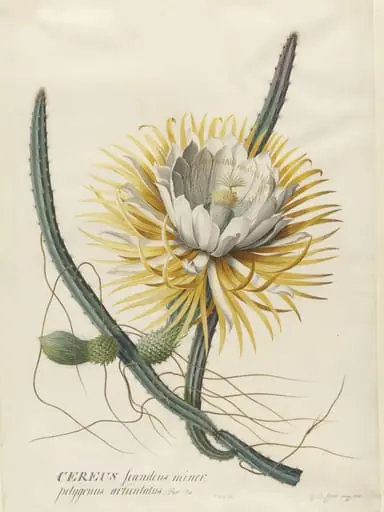
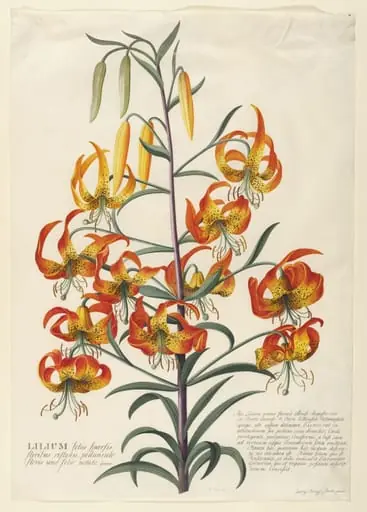
Georg Dionysius Ehret painted plants. In the 1700s he brushed watercolors of cacti, parrots, and lilies with sharp, clean lines and soft colors. His *Cereus Cactus* shows a spiky green stem crowned by a pale flower.…

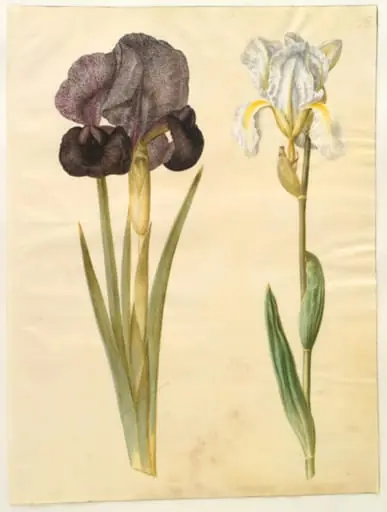 Iris susiana (sørge-iris); Iris ×florentina (violrod)
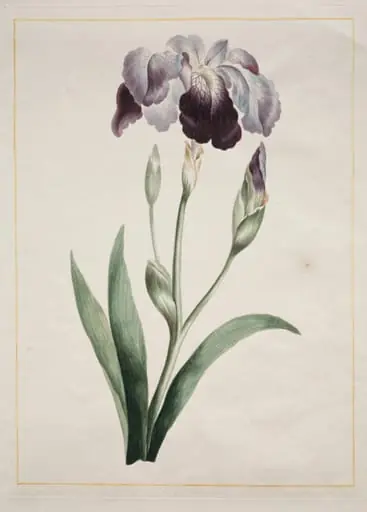 Japanese Iris (Large Blue Iris)
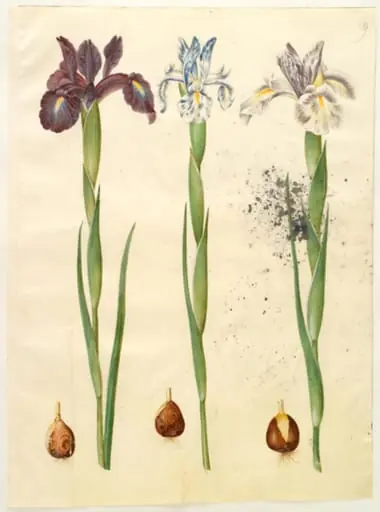 Iris latifolia (engelsk iris)
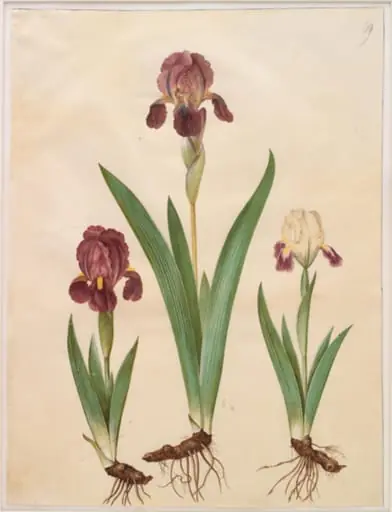 Iris ×lurida (iris-hybrid)
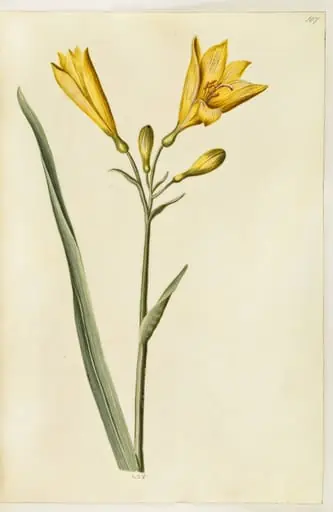 Hemerocallis lilioasphodelus (gul daglilje)
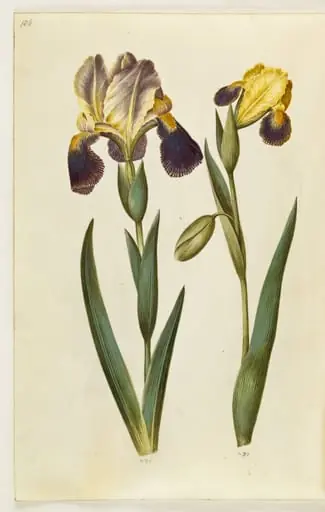 Iris ×germanica eller Iris ×sambucina (have-iris eller hylde-iris); Iris variegata (broget iris)
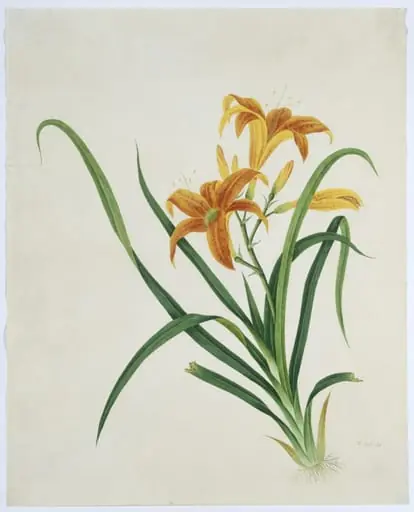 Orange Day Lily
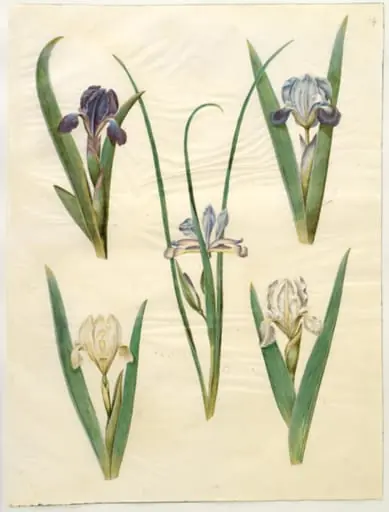 Iris pumila (lav iris) eller Iris lutescens (dværg-iris); Iris graminea (græsbladet iris)
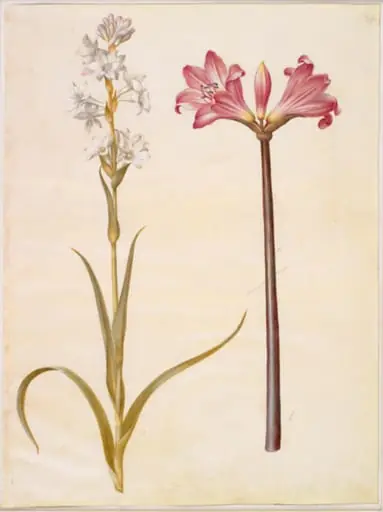 Polianthes tuberosa (tuberose); Amaryllis belladonna (belladonnalilje)
 Common orange day lily (hemerocallis fulva), xuan cao