Artwork
Christ on the Cross
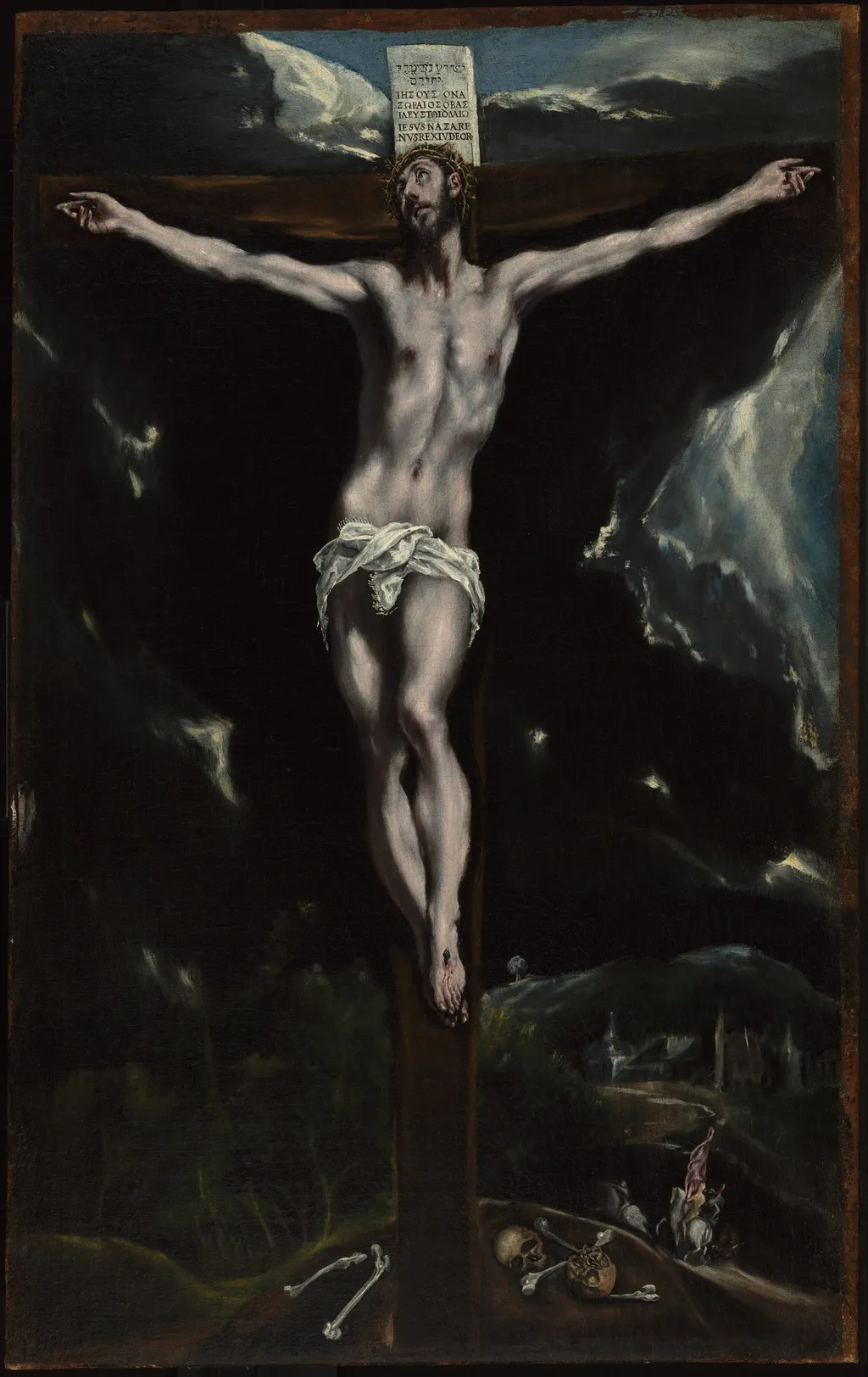
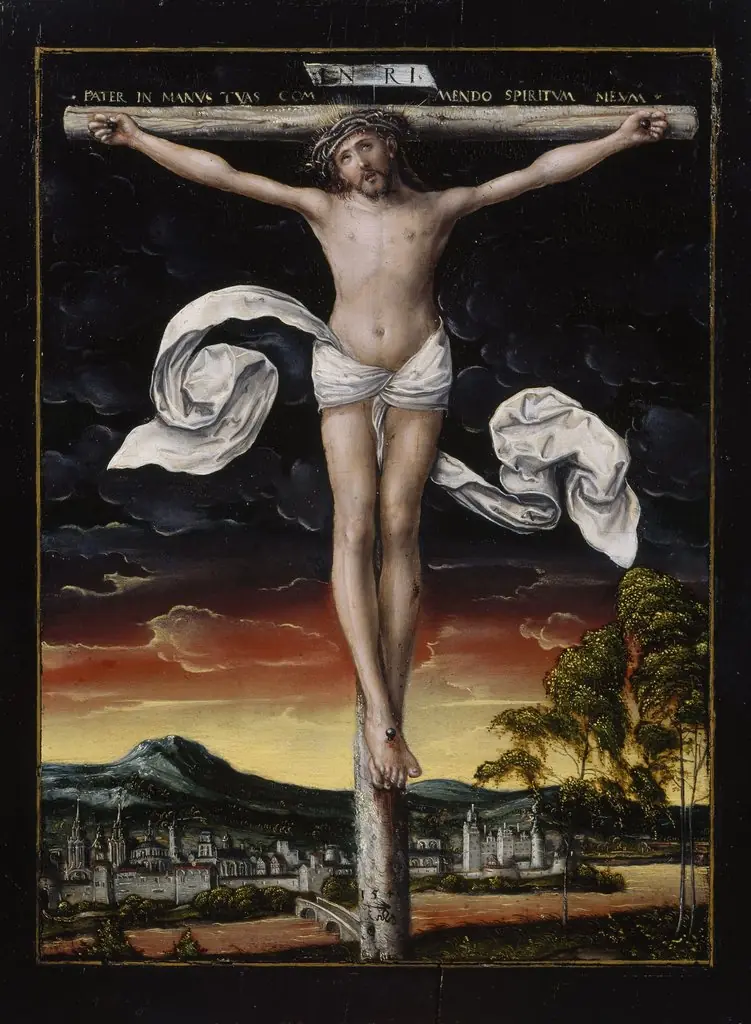
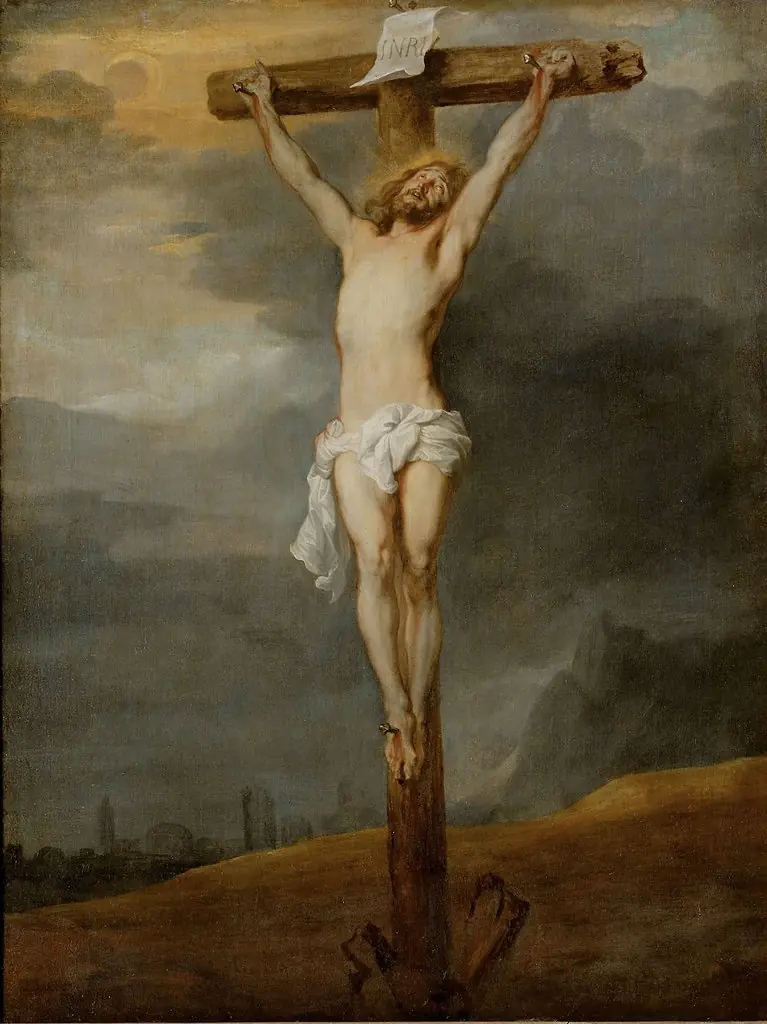
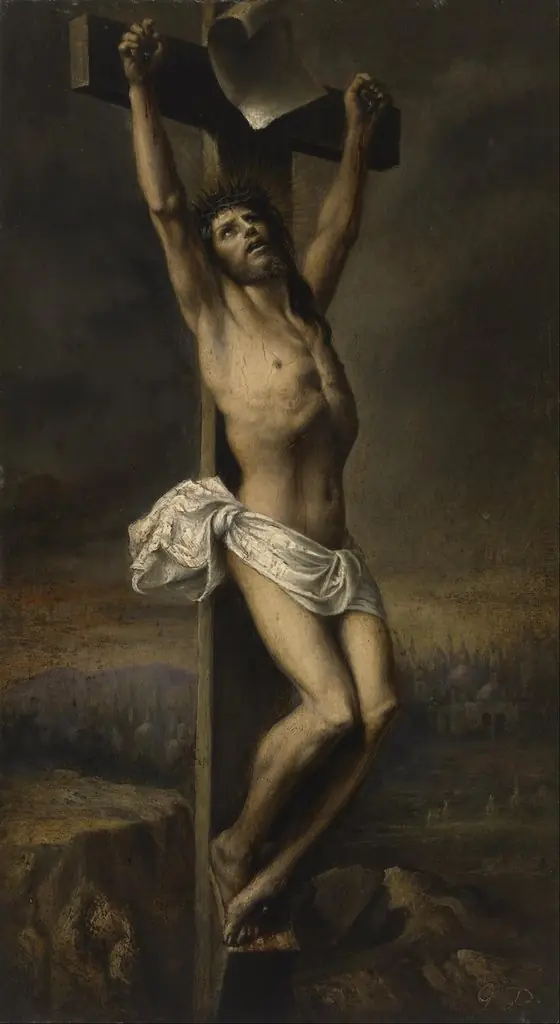
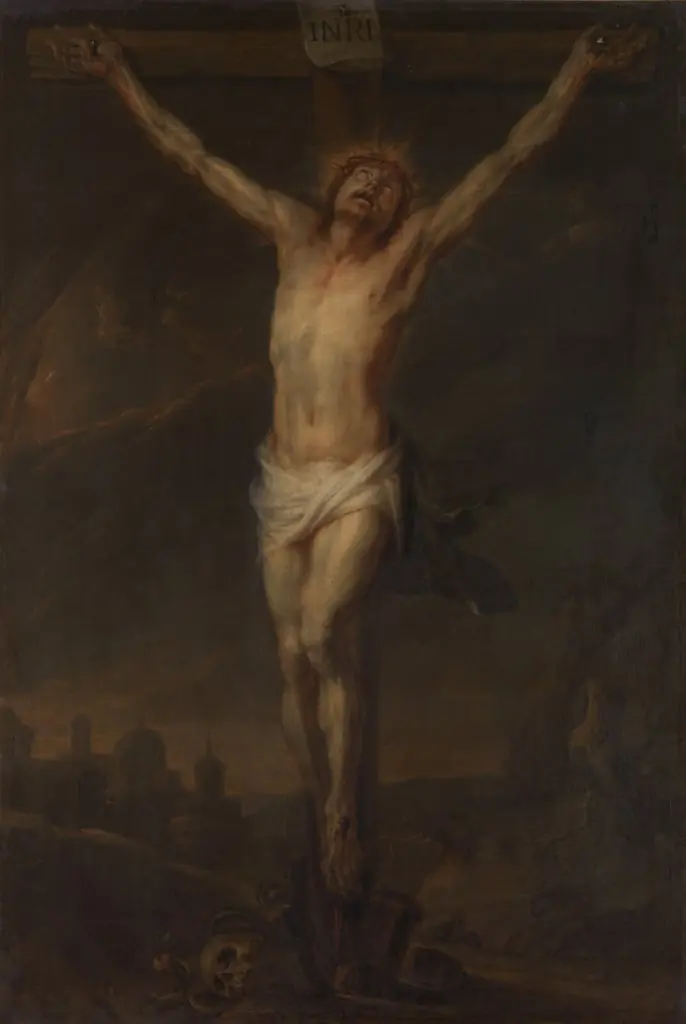
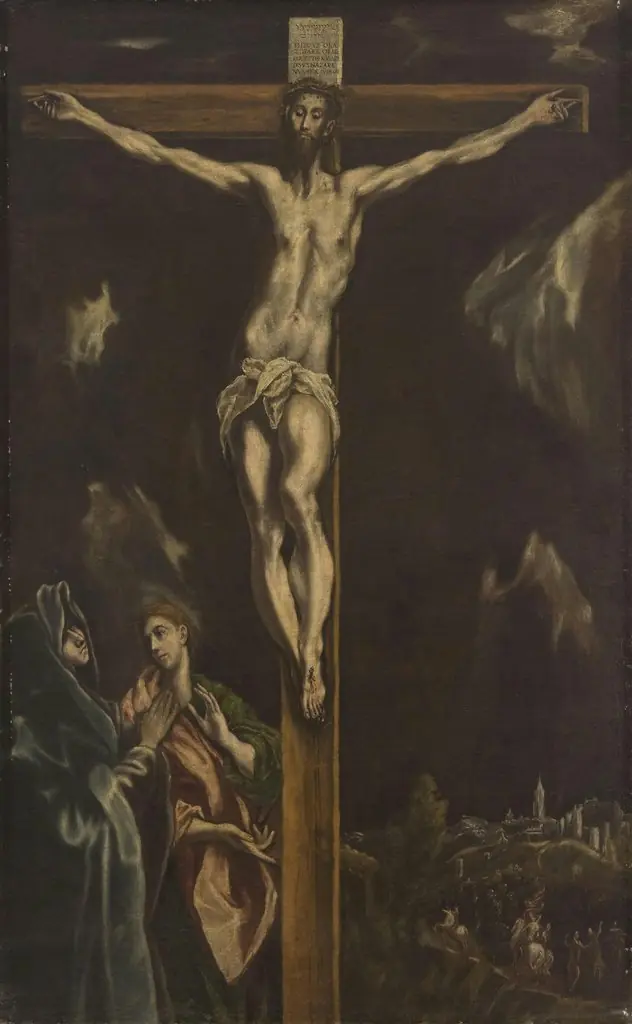
Christ on the Cross is an oil painting by the Mannerist artist El Greco. It dates from 1600 and is held in the collection of the J. Paul Getty Museum.
About this work
Overview
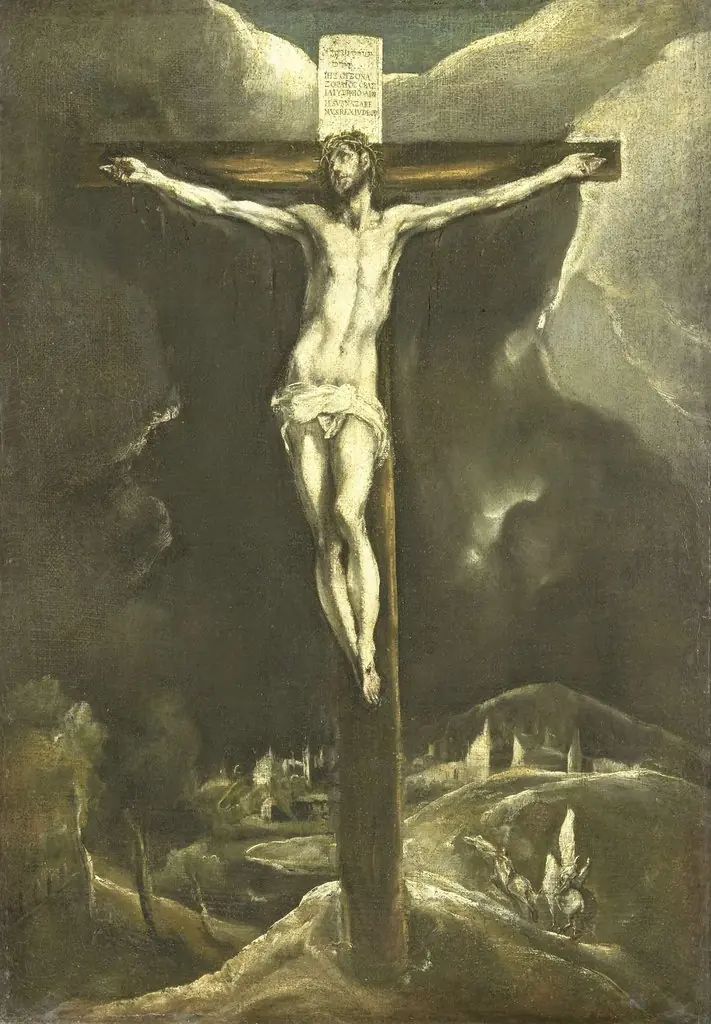
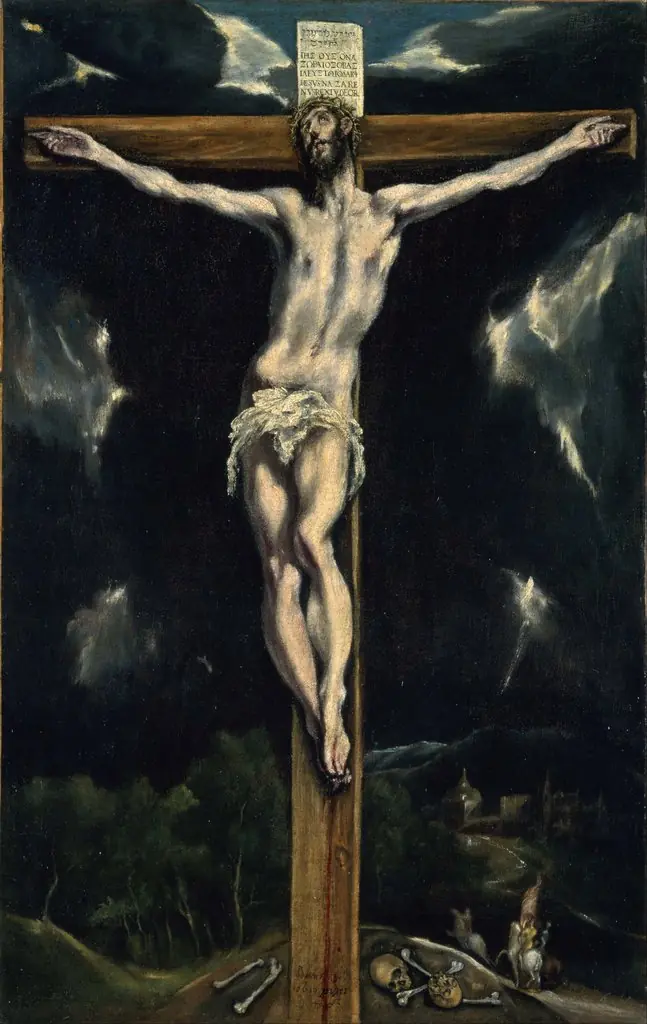
Painted in oil around 1600 by El Greco, this work presents Christ crucified against a deep, shadowed backdrop. The figure dominates the composition, rendered with elongated proportions and a luminous pallor. A simple loincloth covers his lower body, while a crown of thorns encircles his head. The dark environment isolates the figure, heightening the emotional gravity of the scene.
Subject & Meaning
The depiction centers on Christ’s sacrifice, emphasizing physical suffering and spiritual resignation. Scattered at the foot of the cross are human bones—a skull and femur—common symbols of Golgotha, the place of the skull, and reminders of mortality. These elements reinforce the theological theme of death overcome through redemption, grounding the sacred moment in earthly transience.
Technique & Style
The elongated limbs and unnatural posture reflect his distinctive Mannerist approach, prioritizing spiritual intensity over anatomical realism.
El Greco employs stark chiaroscuro to isolate Christ’s body, making it glow against the near-black background. Brushwork is fluid yet precise, with thin glazes enhancing the skin’s ethereal quality. The elongated limbs and unnatural posture reflect his distinctive Mannerist approach, prioritizing spiritual intensity over anatomical realism. The distant landscape is barely suggested, minimizing distraction from the central figure.
History & Provenance
The painting entered the collection of the J. Paul Getty Museum in the late 20th century, having passed through private European collections since its creation. Its attribution to El Greco has been consistently supported by stylistic analysis and documentary evidence. No major alterations or restorations are recorded, preserving its original tonal harmony and compositional balance.
Context
Created during El Greco’s mature period in Toledo, the work aligns with Counter-Reformation demands for emotionally charged religious imagery. While Spanish religious art of the time often emphasized martyrdom and penitence, El Greco’s version diverges with its psychological depth and otherworldly atmosphere, reflecting his unique synthesis of Byzantine, Venetian, and Spanish influences.
Legacy
The painting exemplifies El Greco’s enduring influence on later expressive traditions in religious art. Its emotional austerity and formal innovation anticipated modern sensibilities toward psychological realism and spiritual abstraction. Though not widely reproduced in his lifetime, it has since become a key reference in studies of late Renaissance spirituality and individual artistic voice.
Artist & collection
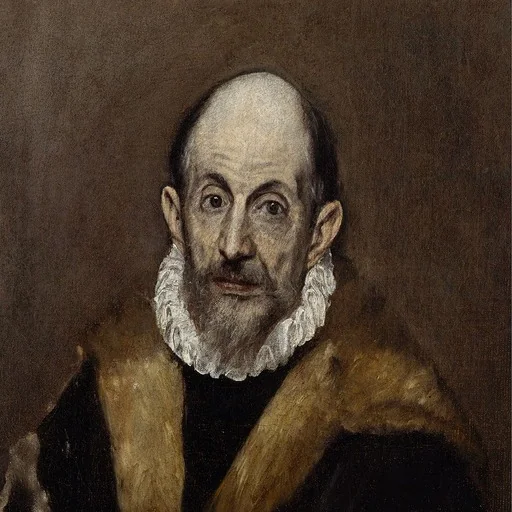
Artist
Doménikos Theotokópoulos was born in 1541 in Candia (modern Heraklion), the capital of Venetian-ruled Crete, where he was trained in the post-Byzantine tradition of icon painting.