Artwork
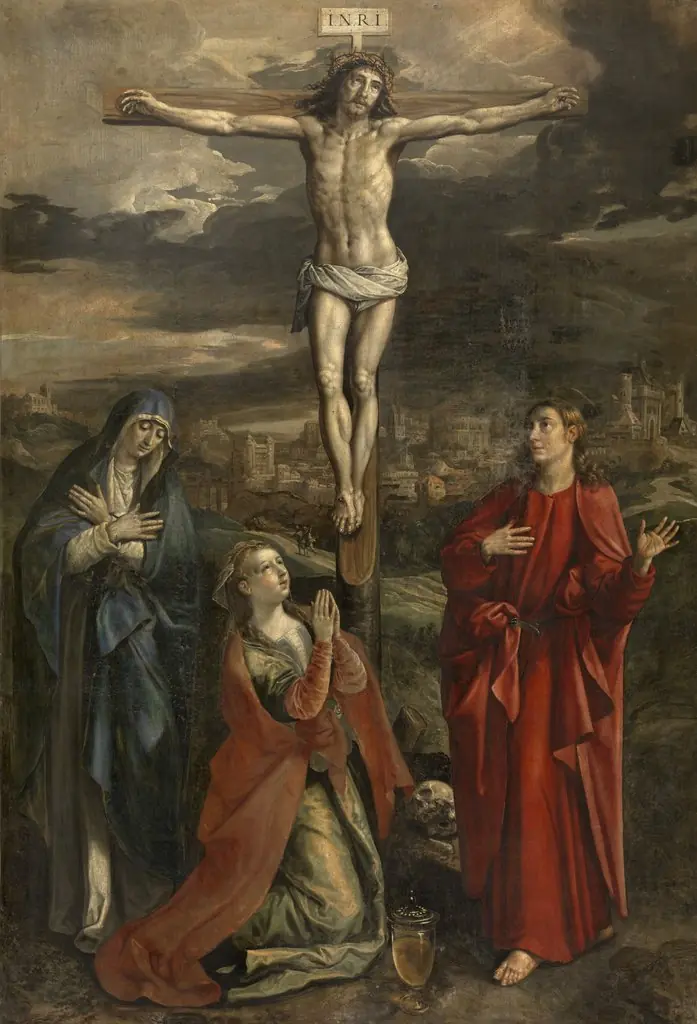
Crucifixion with the Virgin Mary and Saint John the Evangelist
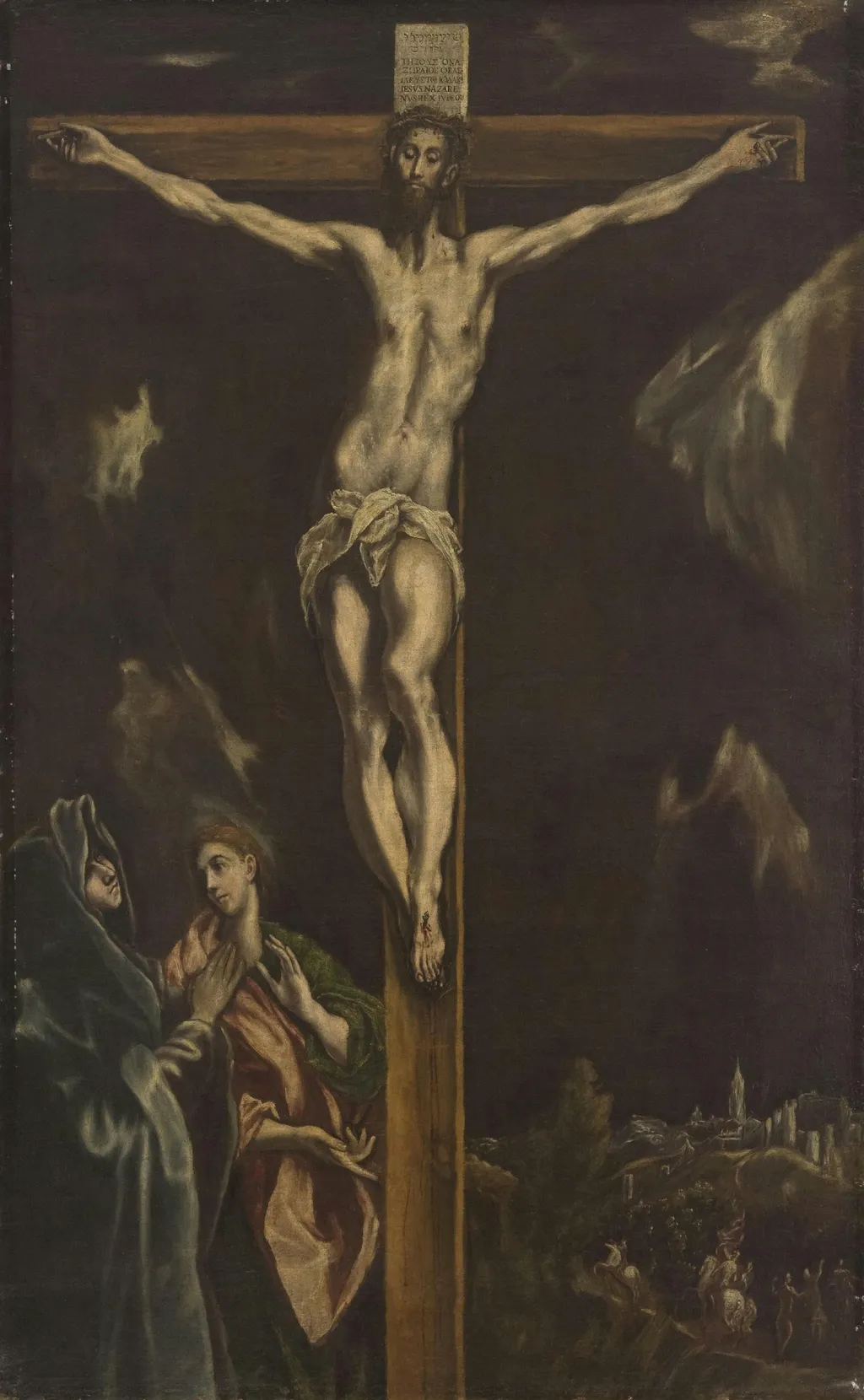
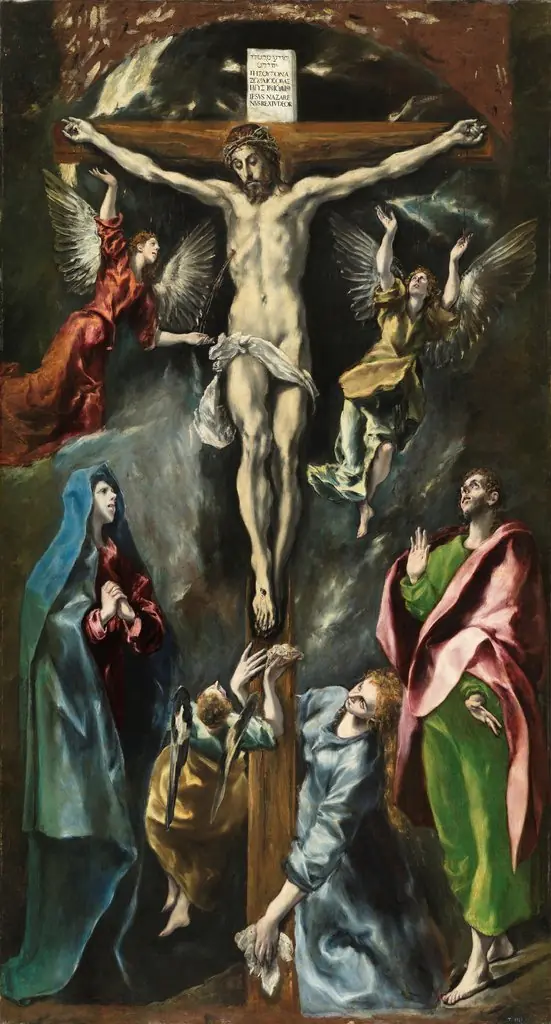
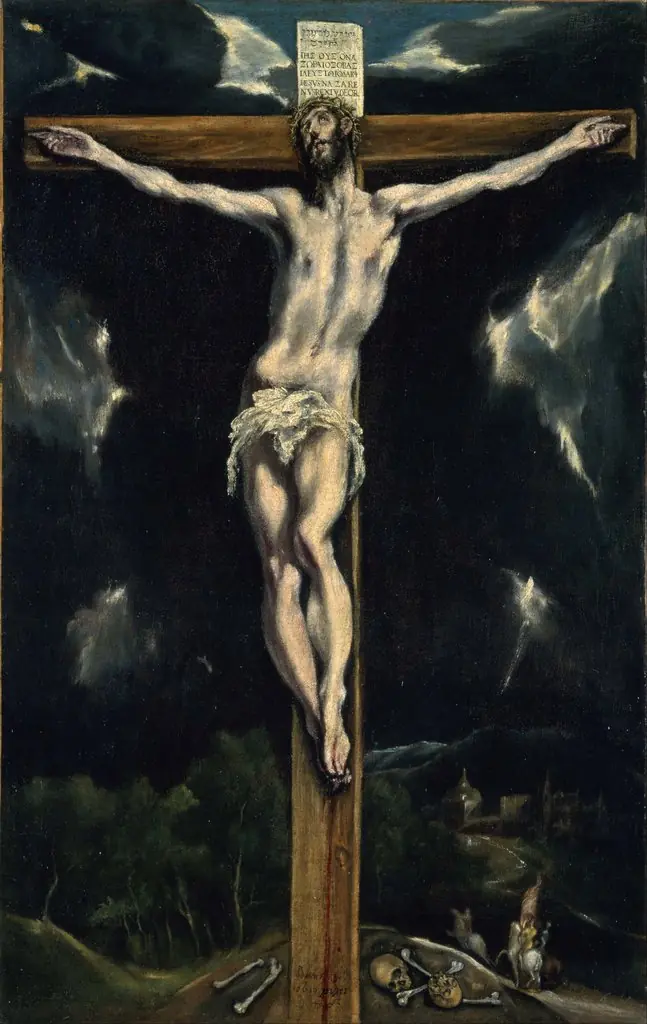
Crucifixion with the Virgin Mary and Saint John the Evangelist is an oil painting by the Mannerist artist El Greco. It dates from 1600 and is held in the collection of the Philadelphia Museum of Art.
About this work
Overview
This oil painting, created by El Greco in 1600, portrays the Crucifixion of Jesus Christ, accompanied by the Virgin Mary and Saint John the Evangelist. It exemplifies the Mannerist style and is part of the Philadelphia Museum of Art's collection.
Subject & Meaning
The painting depicts the dramatic moment of Christ's crucifixion. Christ's twisted yet robust figure is central, with Mary and John standing below, the latter in a hooded cloak and the former in flowing robes, hands clasped in prayer, conveying devotion and sorrow.
Technique & Style
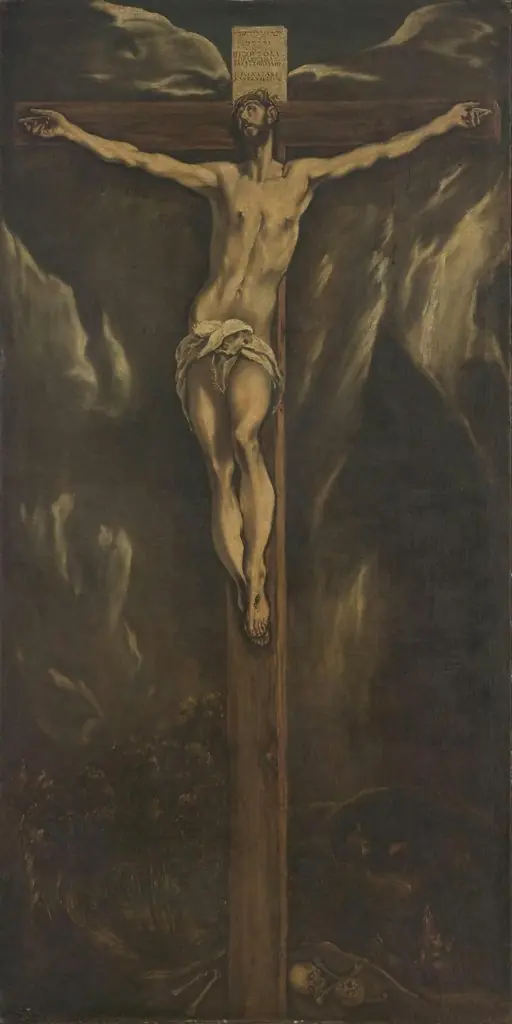
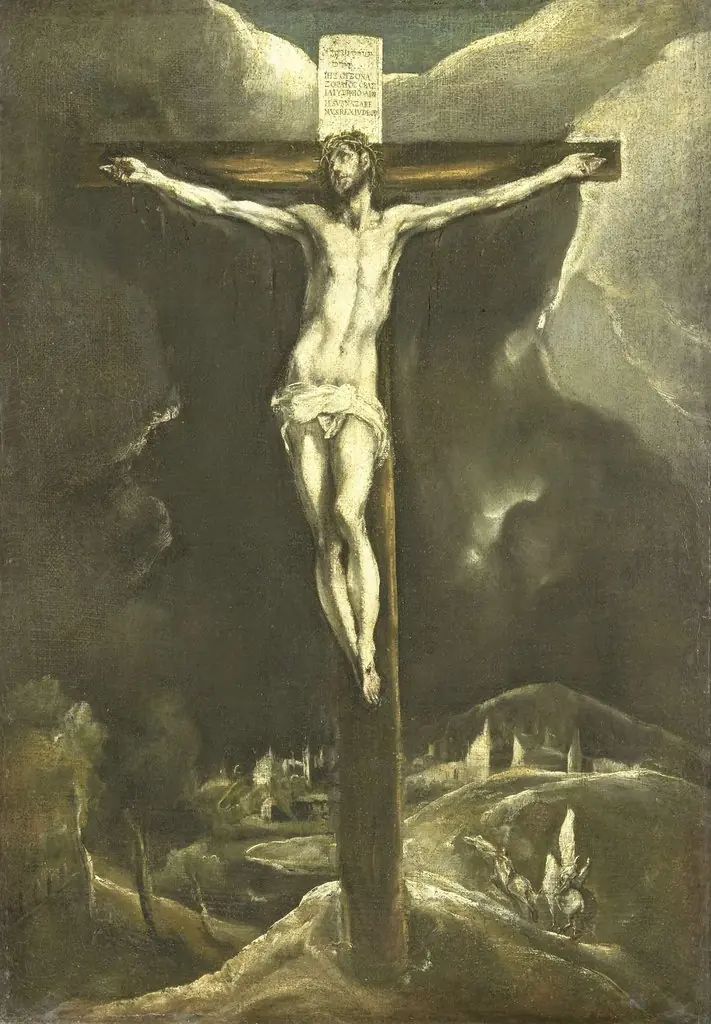
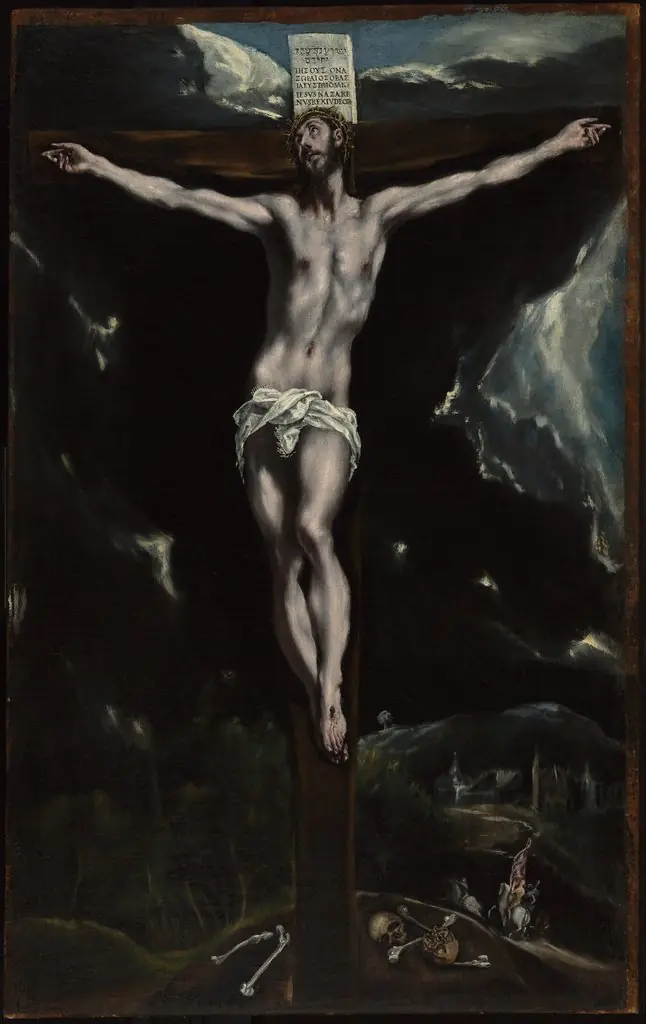
El Greco employs chiaroscuro to dramatic effect, with intense light illuminating Christ's body, accentuating his muscles against a dark, shadowy background that includes a distant cityscape and faint stars. The color palette is predominantly muted, except for the luminous glow of Christ's skin.
History & Provenance
Created in 1600, the painting is attributed to the Mannerism movement. Its current location is the Philadelphia Museum of Art, though specific details of its provenance prior to this are not provided in the available information.
Context
As a Mannerist work, it reflects the style's emphasis on emotional intensity and unconventional composition, distinguishing it from the harmony and balance of the Renaissance. The subject matter aligns with the religious themes prevalent in European art of the time.
Legacy
While specific influences or notable exhibitions of this work are not detailed, as part of El Greco's oeuvre, it contributes to the broader appreciation of Mannerist art and the artist's unique stylistic contributions to religious themes in painting.
Own this work as a print
Artist & collection
Artist
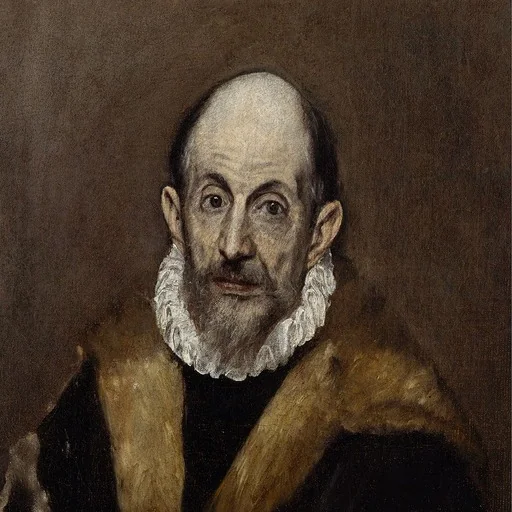
Doménikos Theotokópoulos was born in 1541 in Candia (modern Heraklion), the capital of Venetian-ruled Crete, where he was trained in the post-Byzantine tradition of icon painting.