Artwork
Holy Family with Saint Anne
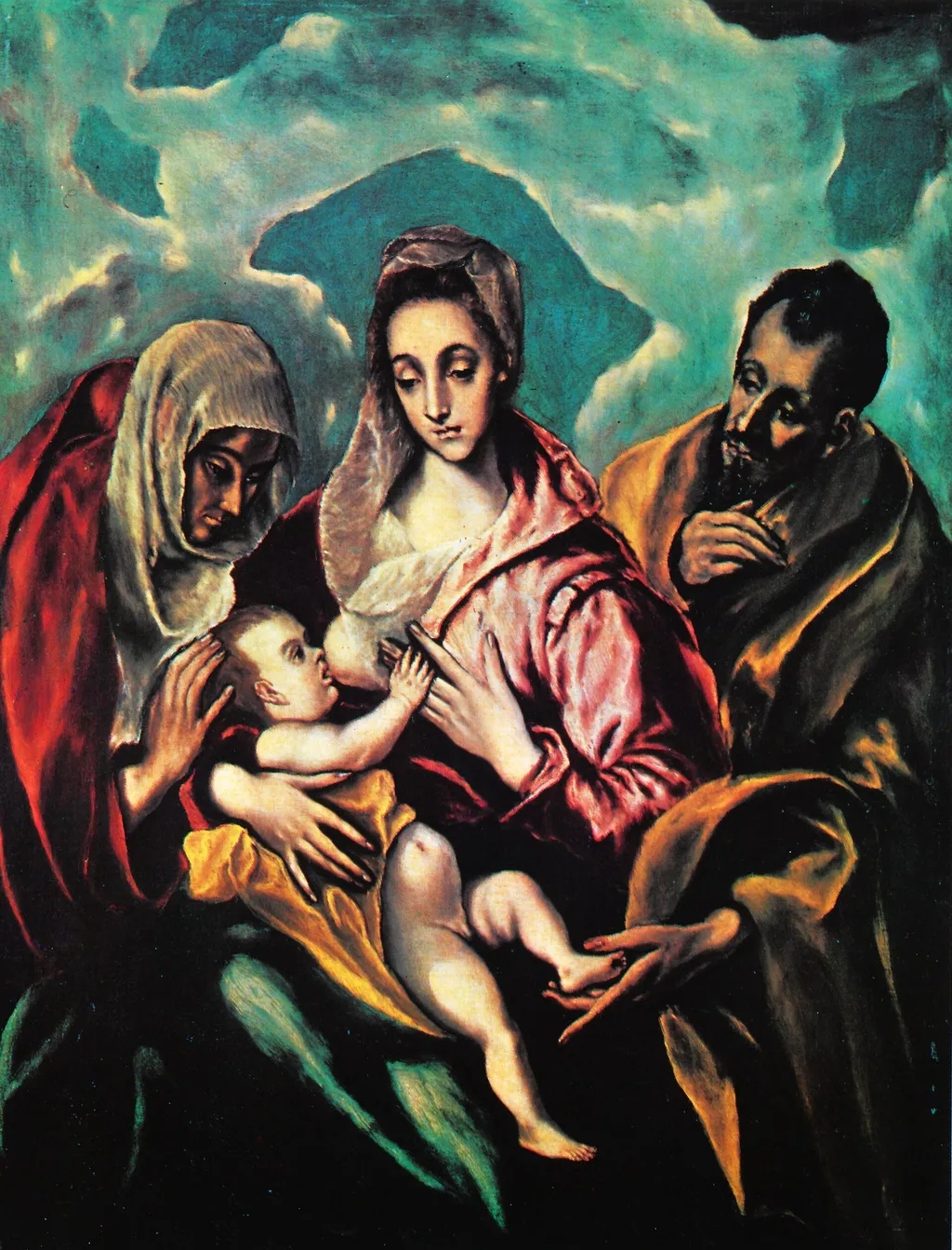
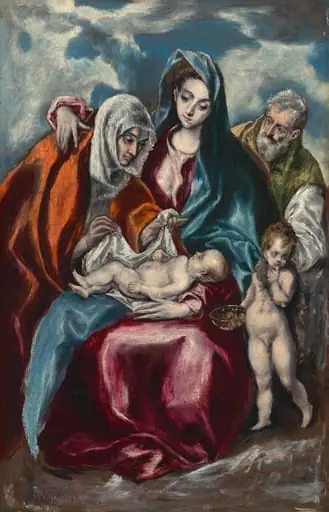
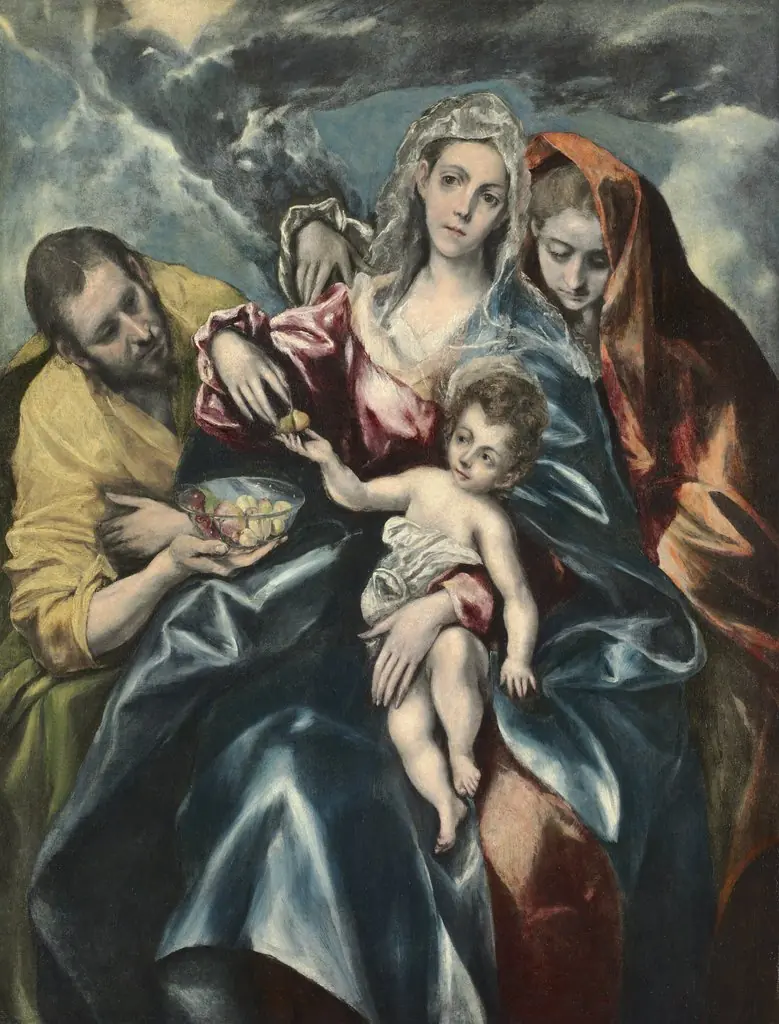
Holy Family with Saint Anne is an oil painting by the Mannerist artist El Greco. It dates from 1598 and is held in the collection of the Museum of Fine Arts, Budapest.
About this work
Overview
The composition emphasizes familial intimacy within a sacred context, rendered through elongated forms and a restrained yet luminous palette.
Painted in 1598, this oil on canvas work by El Greco presents a devotional scene centered on the Holy Family and Saint Anne. It is part of the collection at the Museum of Fine Arts in Budapest. The composition emphasizes familial intimacy within a sacred context, rendered through elongated forms and a restrained yet luminous palette. The painting reflects El Greco’s mature style, blending spiritual gravity with quiet human tenderness.
Subject & Meaning
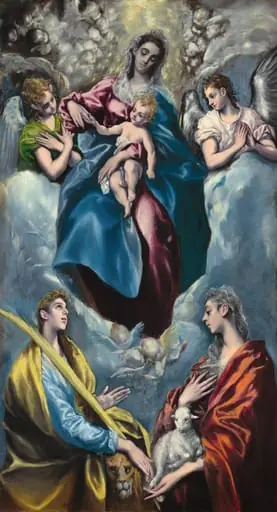
The painting portrays the Virgin Mary seated with the infant Jesus on her lap, flanked by Saint Anne, her mother, and Saint Joseph. The central gesture—Jesus reaching toward Anne’s face—suggests a moment of intergenerational affection, reinforcing the theological idea of divine lineage. This intimate interaction humanizes sacred figures, grounding their holiness in familial bonds rather than overt symbolism.
Technique & Style
El Greco employs a distinctive elongation of figures and a luminous, cool-toned palette dominated by deep blues, rich reds, and golden yellows. The background fades into a muted, atmospheric green-blue, enhancing the figures’ ethereal presence. Brushwork is fluid yet deliberate, with soft transitions between light and shadow that avoid harsh chiaroscuro, favoring a more spiritual glow over dramatic contrast.
History & Provenance
The painting was completed in Spain during El Greco’s later years in Toledo. It entered the collection of the Museum of Fine Arts, Budapest, in the early 20th century, likely through acquisition from a European private collection. Its documented history is limited after its creation, but its stylistic consistency with other works from the period supports its attribution and dating to around 1598.
Context
Created during the Counter-Reformation, the painting aligns with Catholic efforts to emphasize familial devotion and the veneration of saints. El Greco’s interpretation diverges from rigid iconography, favoring emotional resonance over doctrinal precision. His unique synthesis of Byzantine tradition, Venetian color, and Mannerist form reflects the spiritual and artistic currents of late 16th-century Spain.
Legacy
Though not among El Greco’s most widely reproduced works, this painting exemplifies his ability to infuse religious subjects with psychological depth. Its quiet intimacy influenced later artists seeking to portray sacred figures with human warmth. Today, it remains a key example of his late style, valued for its emotional subtlety and distinctive chromatic harmony.
Own this work as a print
Artist & collection
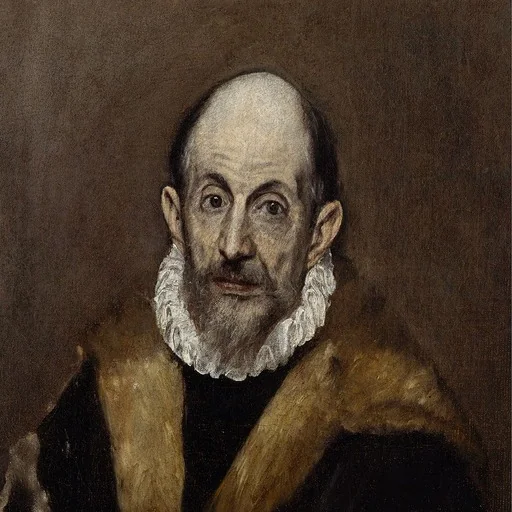
Artist
Doménikos Theotokópoulos was born in 1541 in Candia (modern Heraklion), the capital of Venetian-ruled Crete, where he was trained in the post-Byzantine tradition of icon painting.