Artwork
Saint John the Evangelist and Saint Francis of Assisi
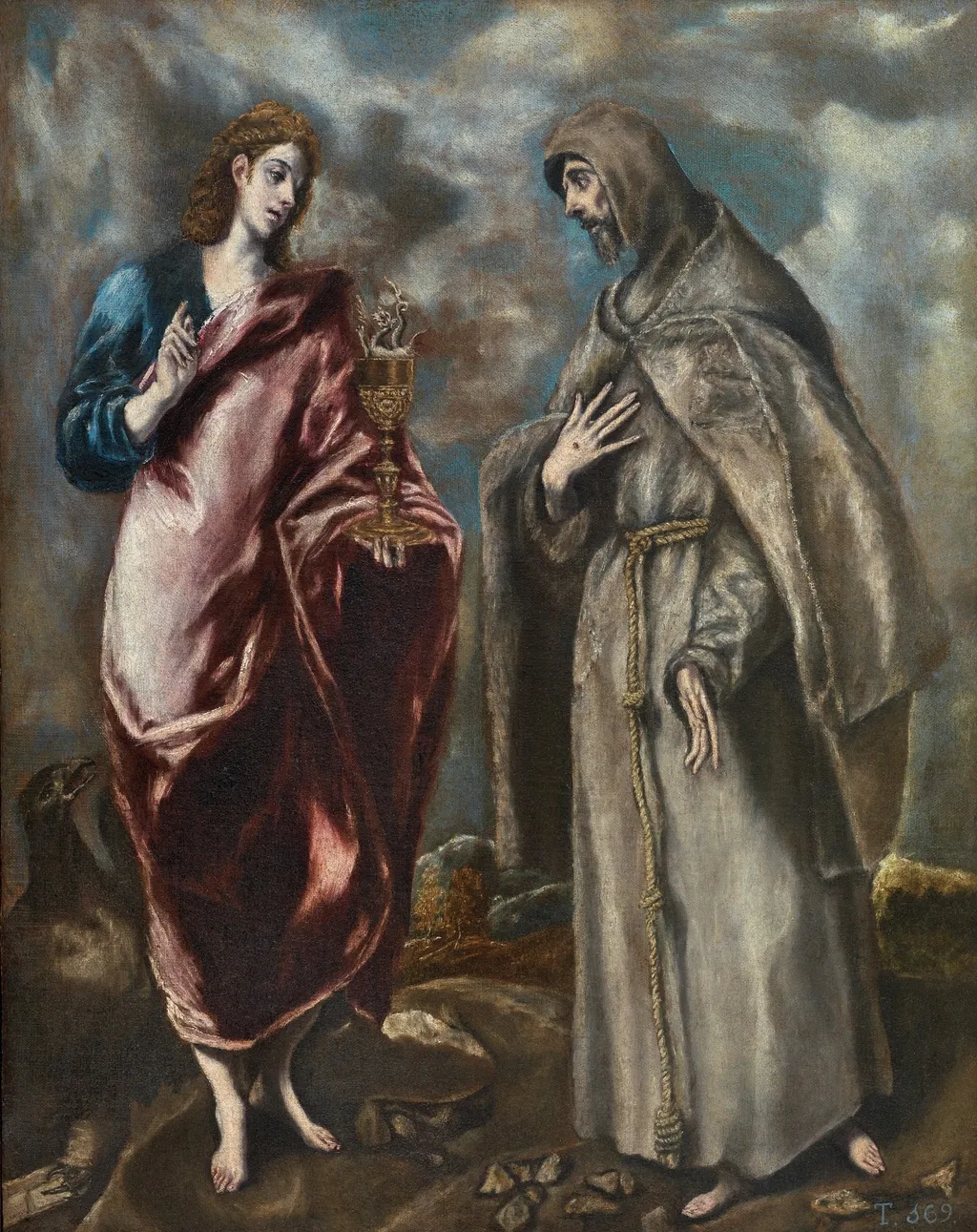
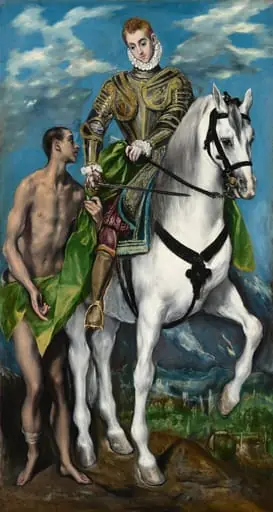
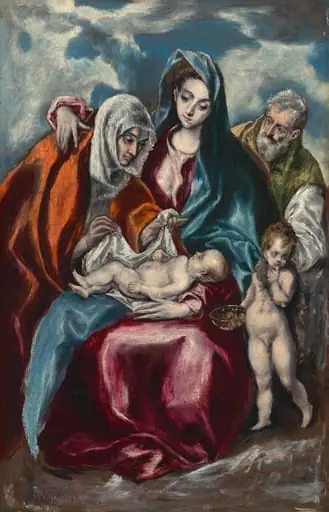
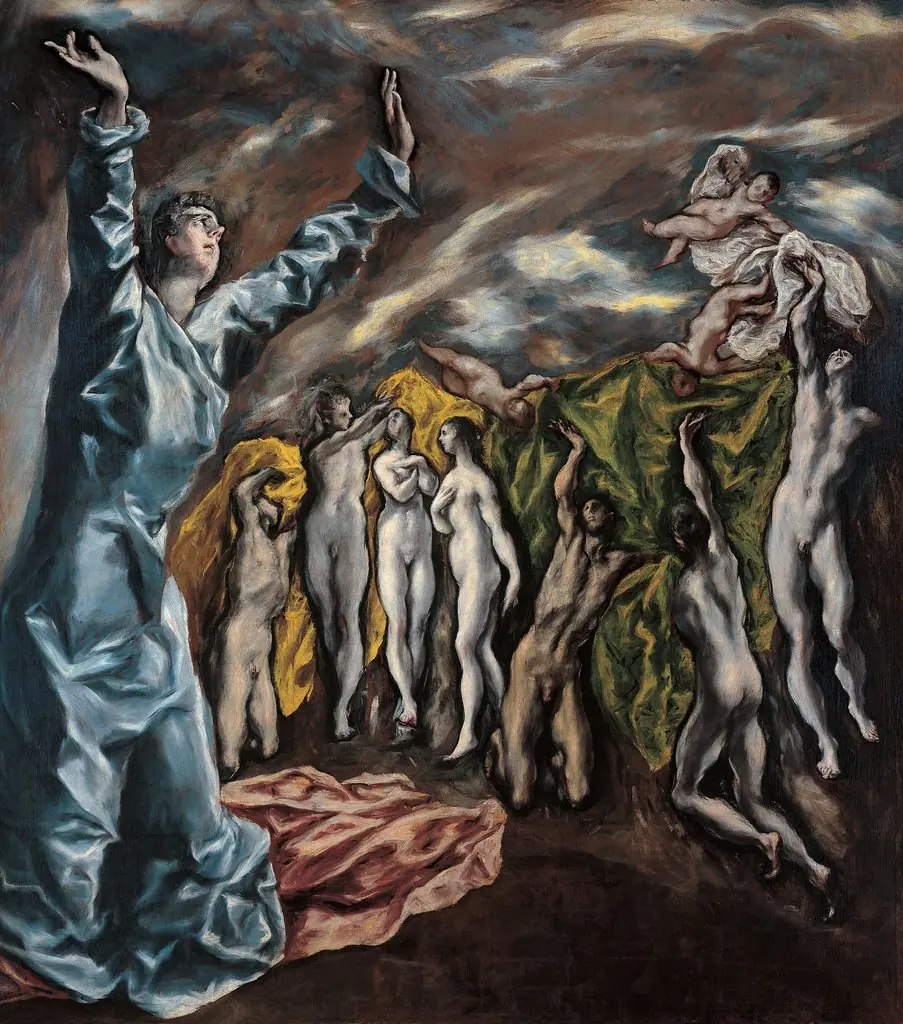
Saint John the Evangelist and Saint Francis of Assisi is an oil painting by the Mannerist artist El Greco. It dates from 1599 and is held in the collection of the Museo del Prado.
About this work
Overview
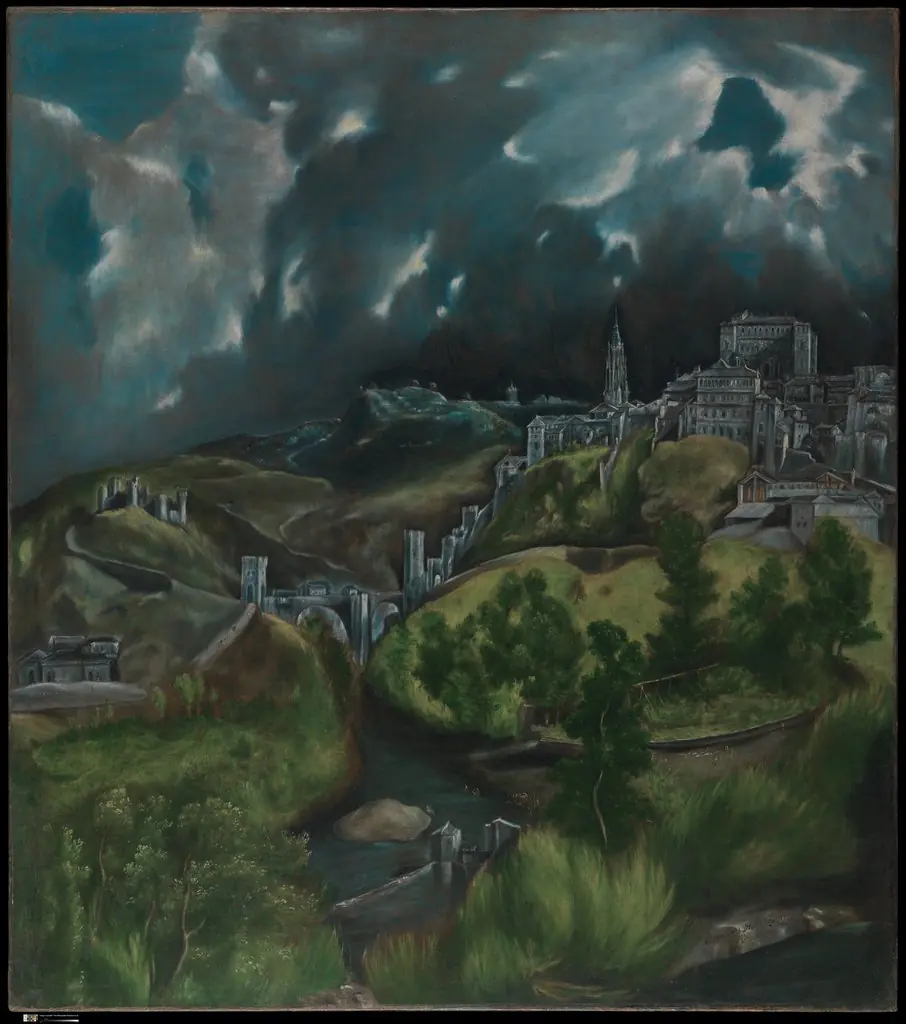
El Greco’s oil on canvas from 1599 presents a compact outdoor scene in which two saints stand upon a rugged terrain. The composition is anchored by a darkened sky that frames the figures, while a modest landscape of rocks and clouds provides a muted backdrop. The work is part of the Prado Museum’s collection and exemplifies the artist’s late‑career approach to religious subjects.
Subject & Meaning
The left‑hand figure, identifiable as Saint Francis of Assisi by his simple gray habit and rope belt, holds a golden chalice topped with a cross, a symbol of the Eucharist. To his right, Saint John the Evangelist is shown in a pinkish robe over a blue tunic, his demeanor serene and contemplative. The pairing underscores themes of humility and divine revelation within Christian iconography.
Technique & Style
El Greco employs pronounced chiaroscuro, using deep shadows to isolate the saints from the cloudy atmosphere and to give the rocky ground a tactile quality. The contrast between the rough stone surface and the soft, flowing drapery highlights his Mannerist sensibility, characterized by elongated forms and exaggerated gestures that convey spiritual intensity.
History & Provenance
Painted in 1599, the canvas entered the Spanish royal collection before being transferred to the Museo del Prado, where it remains on public display. Documentation traces its ownership through several 17th‑century inventories, confirming its attribution to El Greco and its continuous presence in Spanish collections.
Context
Created during the final phase of El Greco’s career, the painting reflects the broader Mannerist movement that favored expressive distortion over naturalistic representation. Its subject matter aligns with Counter‑Reformation efforts to promote veneration of saints, while the dramatic lighting and stylized forms echo contemporary artistic trends in Toledo and beyond.
Own this work as a print
Artist & collection
Artist
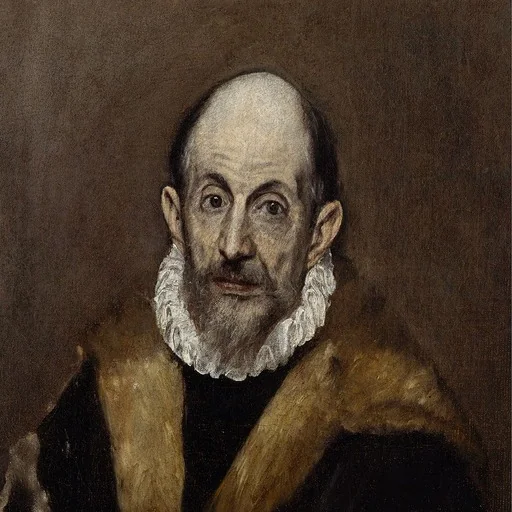
Doménikos Theotokópoulos was born in 1541 in Candia (modern Heraklion), the capital of Venetian-ruled Crete, where he was trained in the post-Byzantine tradition of icon painting.