Artwork
The Annunciation
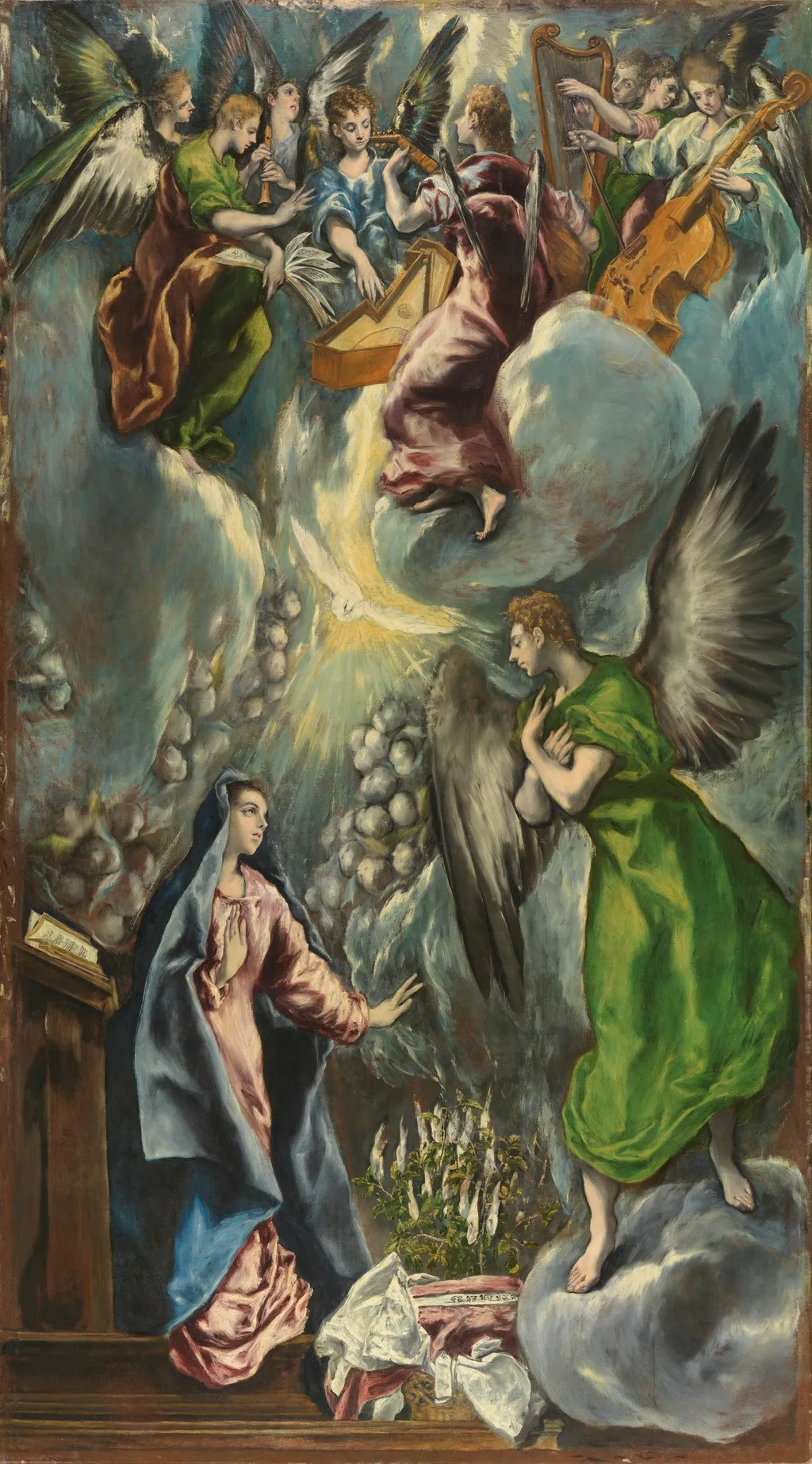
The Annunciation is an oil painting by the Mannerist artist El Greco. It dates from 1599 and is held in the collection of the Museo del Prado.
About this work
Overview
El Greco’s 1599 oil on canvas entitled The Annunciation presents a nocturnal interior where a kneeling woman in a pink garment holds a book, while a luminous angel in green hovers above her. The scene is populated by additional angels playing lutes and recorders, and a shaft of light pierces the ceiling, illuminating the figures against a darkened backdrop.
Subject & Meaning
The composition interprets the biblical moment of the Virgin Mary’s encounter with the angel Gabriel, emphasizing the transmission of divine message. The woman’s book suggests contemplation or prophecy, while the angel’s outstretched hand directs attention to the celestial beam, symbolizing the Holy Spirit’s illumination and the forthcoming incarnation.
Technique & Style
El Greco employs a pronounced chiaroscuro, contrasting bright, saturated hues with deep shadows to give the figures a sculptural presence. The elongated forms and exaggerated gestures align with Mannerist aesthetics, while the vivid coloration of the angel’s attire and the reflective surfaces of the instruments highlight the artist’s skill in rendering texture and light.
History & Provenance
Created at the close of the 16th century, The Annunciation entered the collection of the Museo del Prado, where it remains on public display. Its acquisition reflects the museum’s dedication to preserving works by El Greco, a pivotal figure in Spanish art whose reputation grew substantially after his death.
Context
The painting belongs to the late Mannerist period, a time when artists explored artificial elegance and complex compositions. El Greco’s synthesis of Byzantine heritage and Italian influences manifests in the ethereal atmosphere and the dynamic arrangement of angels, situating the work within the broader religious reforms and artistic experimentation of post‑Council of Trent Spain.
Artist & collection
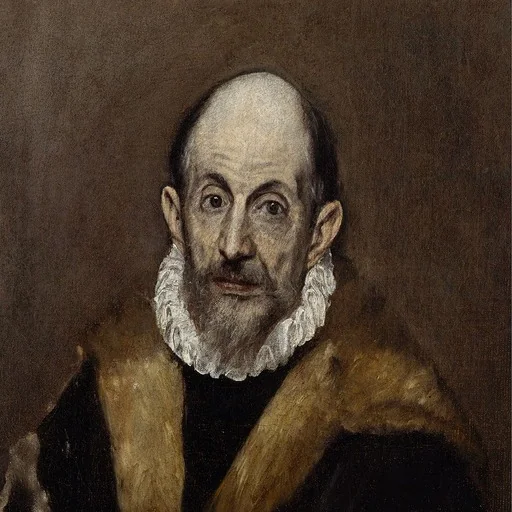
Artist
Doménikos Theotokópoulos was born in 1541 in Candia (modern Heraklion), the capital of Venetian-ruled Crete, where he was trained in the post-Byzantine tradition of icon painting.