Artwork
The Holy Trinity
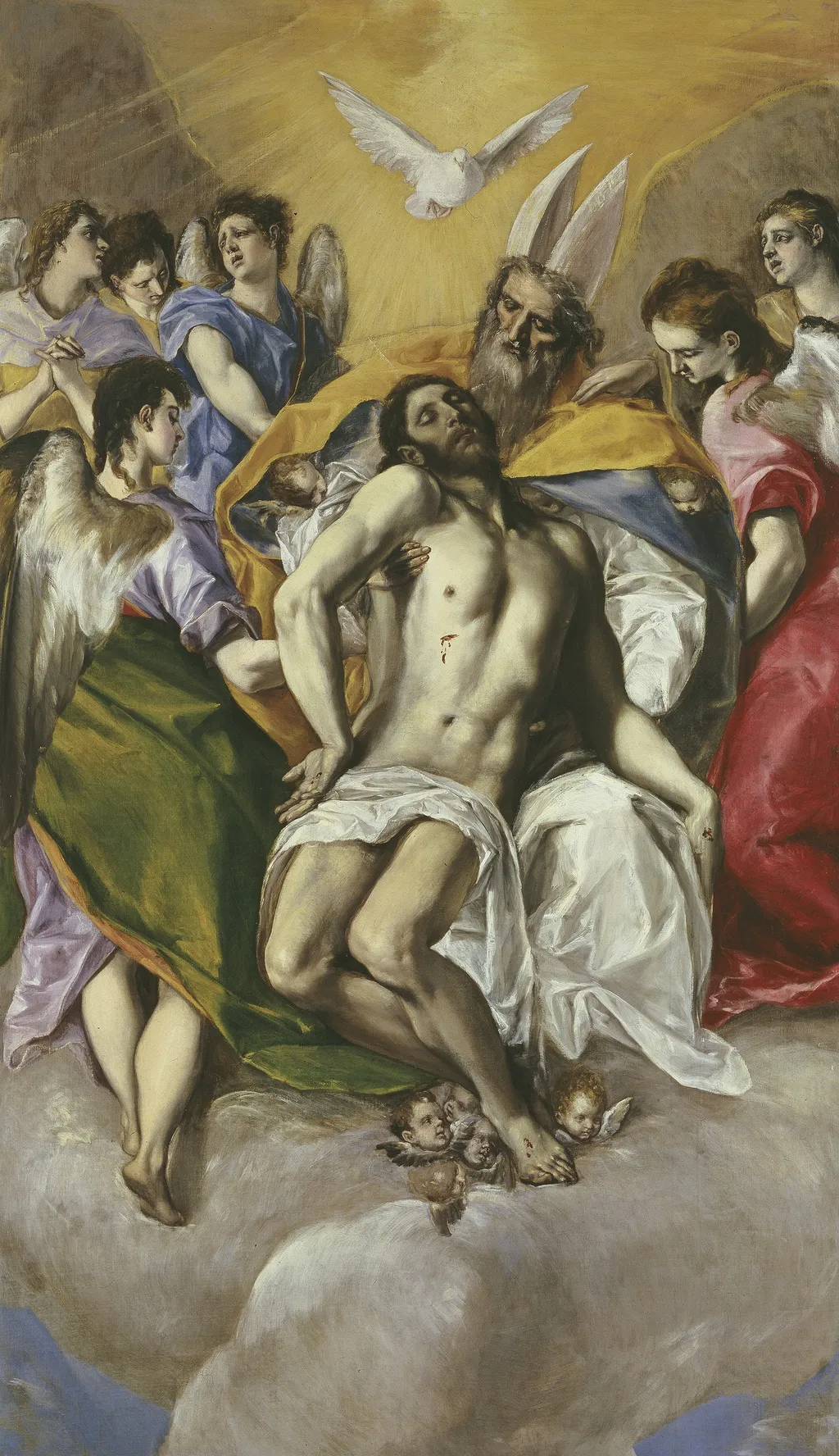
The Holy Trinity is an oil painting by the Mannerist artist El Greco. It dates from 1589 and is held in the collection of the Museo del Prado.
About this work
Overview
El Greco’s oil on canvas, dated between 1577 and 1579, presents a dramatic vision of the Holy Trinity. The central scene depicts a bearded God the Father cradling the crucified Christ, while the Holy Spirit is symbolised by a dove above them. The composition is set against a turbulent sky populated by angels and cherubs, creating a dynamic spiritual tableau.
Subject & Meaning
The work visualises the Christian doctrine of the Trinity, uniting the three divine persons in a single, emotionally charged moment. The wounded Christ, supported by the Father, emphasizes the sacrifice and redemption central to the faith, while the surrounding celestial beings underscore the heavenly endorsement of this salvific act.
Technique & Style
El Greco employs a pronounced chiaroscuro, with luminous highlights on the figures contrasting against deep shadows, enhancing three‑dimensionality. The muscular anatomy reflects Michelangelo’s influence, while the vivid colour palette recalls Tintoretto’s Venetian chromatic daring. The overall arrangement shows a compositional rigor reminiscent of Albrecht Dürer’s prints.
History & Provenance
Originally one of nine canvases commissioned for the Convent of Santo Domingo el Antiguo in Toledo, the painting entered the royal collection when Ferdinand VII purchased it from sculptor Valeriano Salvatierra in 1832. It has been on public display at the Prado Museum in Madrid since that acquisition.
Own this work as a print
Artist & collection
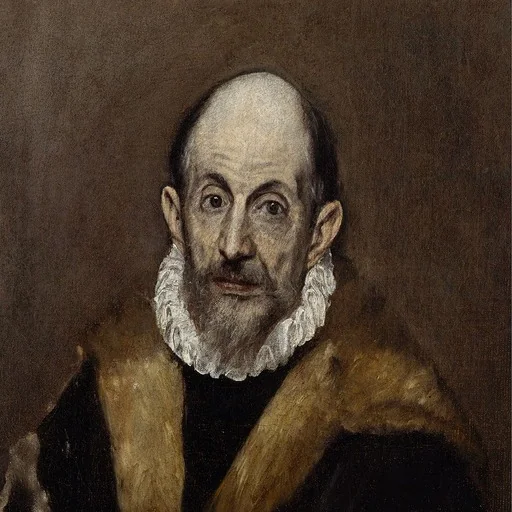
Artist
Doménikos Theotokópoulos was born in 1541 in Candia (modern Heraklion), the capital of Venetian-ruled Crete, where he was trained in the post-Byzantine tradition of icon painting.