Artwork
Acoperișuri la Bukhara
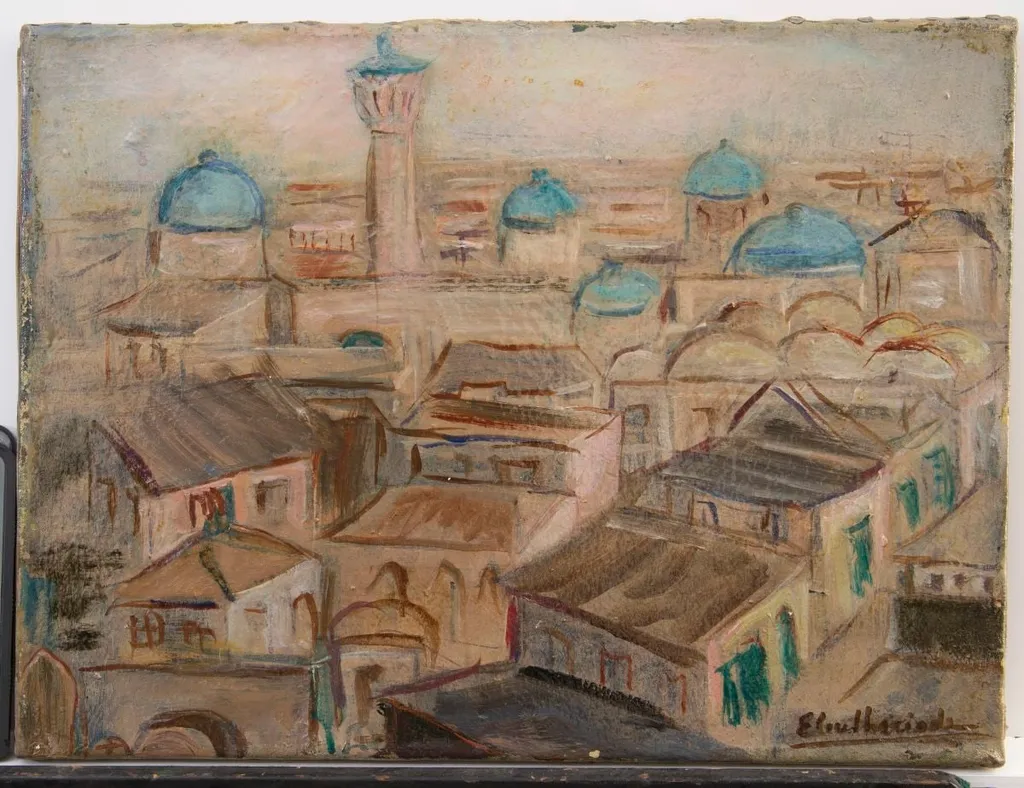
Acoperișuri la Bukhara is a print by Micaela Eleutheriade. It dates from 1972 and is held in the collection of the National Museum of Art of Romania.
About this work
Overview
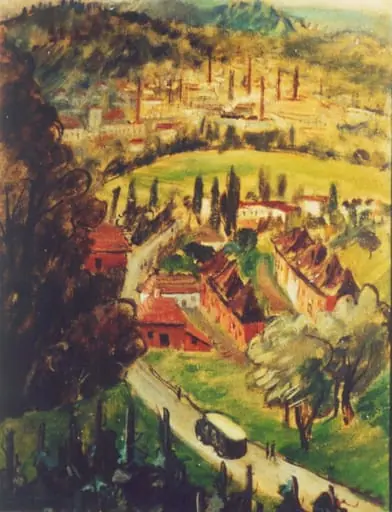
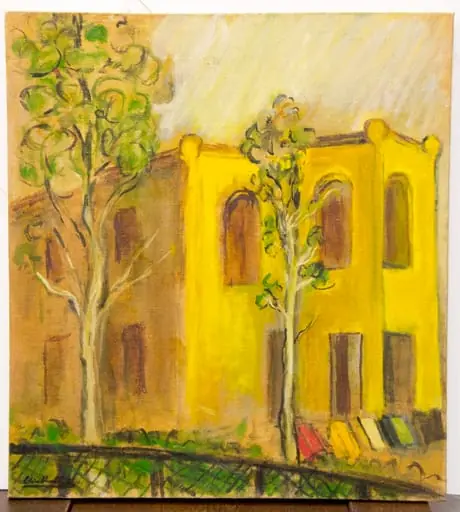
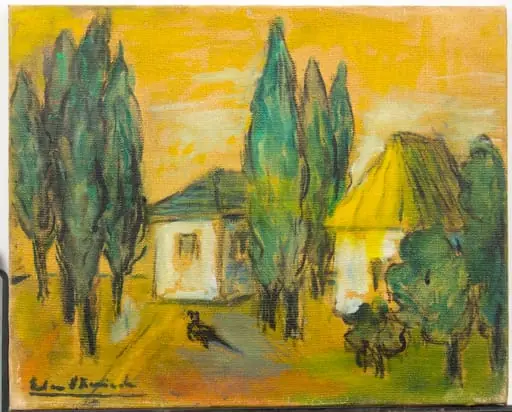
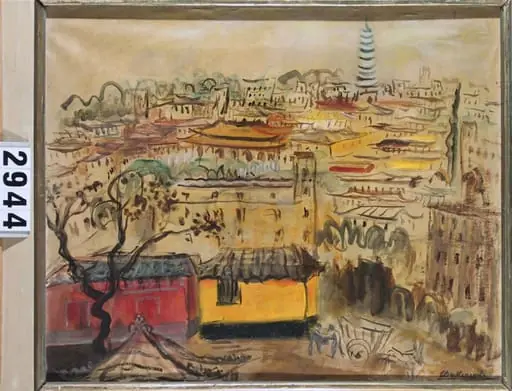
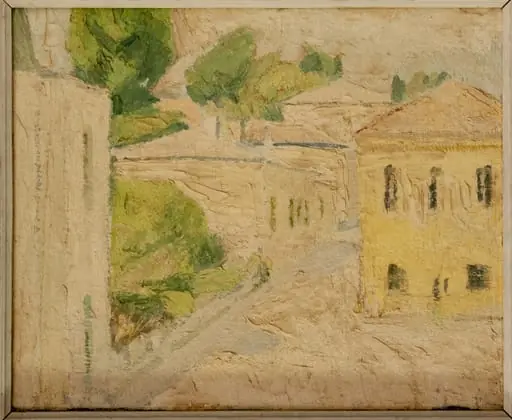
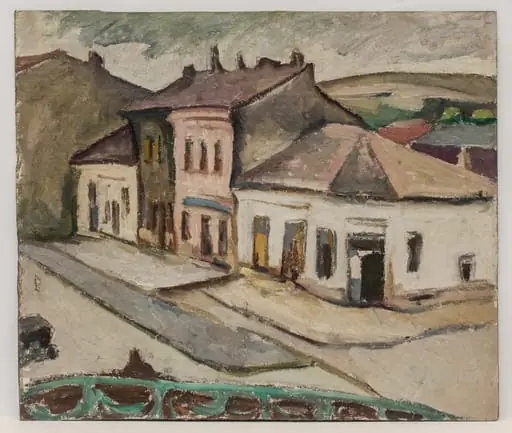
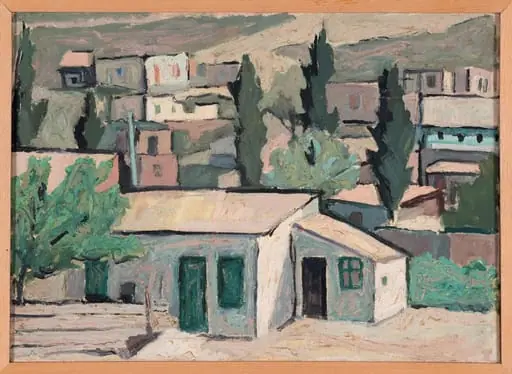
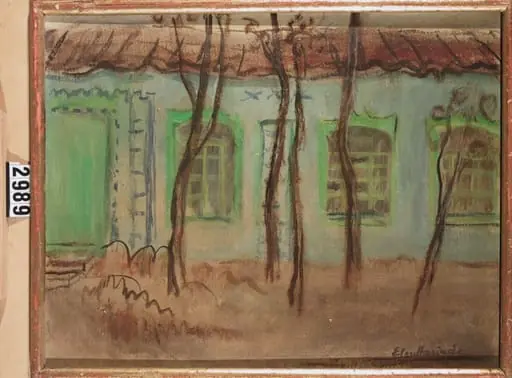
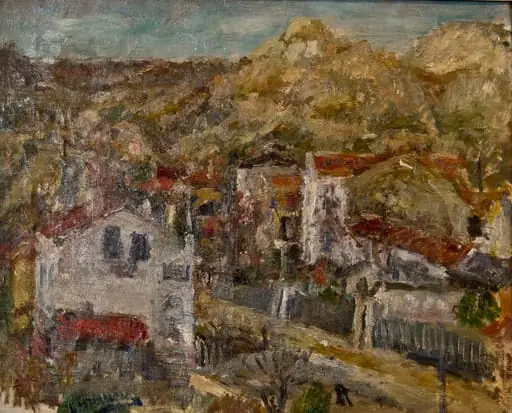
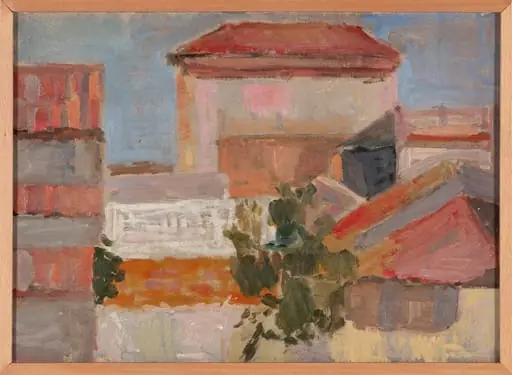
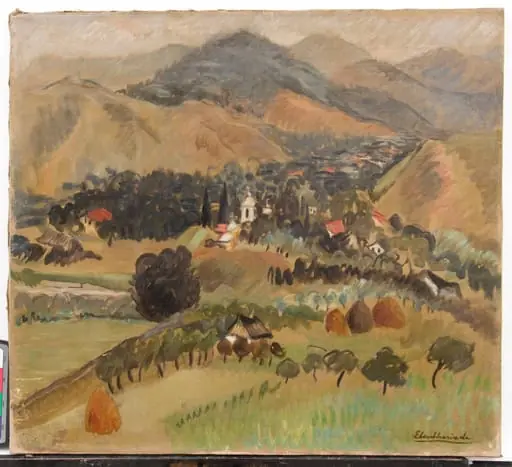
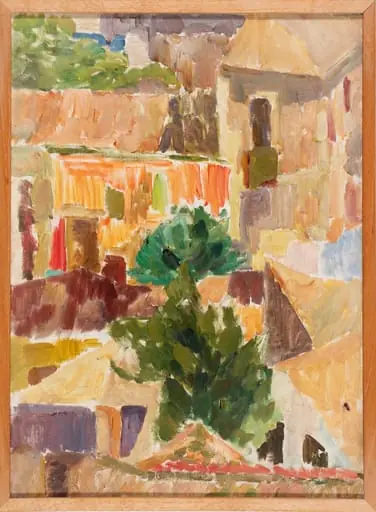
Acoperișuri la Bukhara, painted around 1972 by Micaela Eleutheriade, captures a view of Bukhara’s urban skyline through a loose, impressionistic lens.
Acoperișuri la Bukhara, painted around 1972 by Micaela Eleutheriade, captures a view of Bukhara’s urban skyline through a loose, impressionistic lens. The composition centers on a dense grouping of domed rooftops, rendered in muted earth tones and pale blues. The artist avoids precise detail, instead using gestural brushwork to suggest architectural forms and spatial depth, evoking the quiet rhythm of a historic Central Asian city.
Subject & Meaning
The painting focuses on the rooftops of Bukhara, a city long known for its Islamic architecture. By isolating the domes and minimizing human presence, Eleutheriade emphasizes the cumulative weight of built heritage. The stacked, overlapping forms suggest continuity across generations, while the subdued palette conveys a sense of time-worn permanence rather than grandeur, inviting reflection on everyday urban life.
Technique & Style
Eleutheriade employed a loose, rapid brushwork technique, applying paint with visible, uneven strokes that mimic the texture of weathered surfaces. Colors are thinly layered, creating a translucent, almost washed-out effect. The absence of sharp outlines and the deliberate blurring of edges give the scene an ephemeral quality, as if captured in a fleeting glance rather than a studied observation.
History & Provenance
The work was completed during a period when Eleutheriade was exploring architectural motifs from Eastern Europe and Central Asia. Though little is documented about its early ownership, the painting entered public collections in the late 1980s. Its preservation reflects a growing interest in 20th-century European artists’ responses to non-Western urban landscapes, particularly those with rich historical layers.
Context
Created during the Cold War era, the painting quietly engages with a region largely inaccessible to Western artists. Bukhara, then part of the Soviet Union, retained its architectural identity despite political pressures. Eleutheriade’s focus on rooftops—rather than monuments—suggests an interest in the ordinary, enduring structures that persist beyond ideology, offering a subtle counterpoint to state-sanctioned narratives.
Legacy
Acoperișuri la Bukhara remains a quiet example of how mid-century artists used abstraction and simplification to convey cultural texture without exoticism. Its influence is seen in later works that prioritize atmospheric suggestion over documentary precision. The painting endures not for its fame, but for its restrained, thoughtful engagement with place and memory.
Artist & collection

Artist
Micaela Eleutheriade (1900–1982) was a noted Romanian painter and engraver. She was a descendant, through her mother, of the painter Gheorghe Tattarescu, the pioneer of neoclassicism in Romania.