Artwork
Alunișul
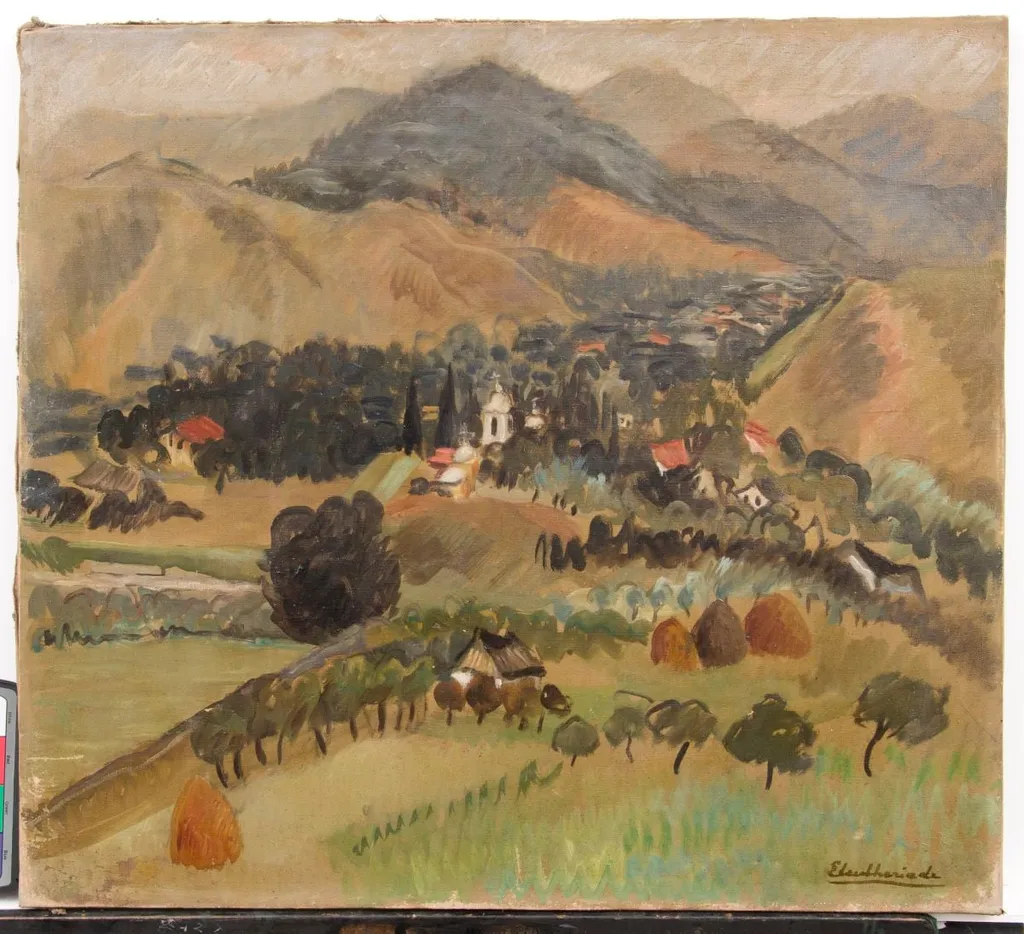
Alunișul is a print by Micaela Eleutheriade. It dates from 1936 and is held in the collection of the National Museum of Art of Romania.
About this work
Overview
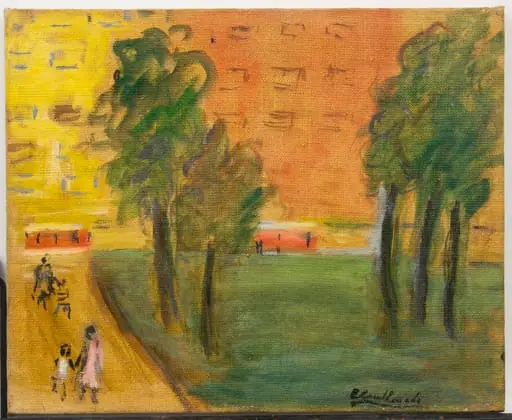
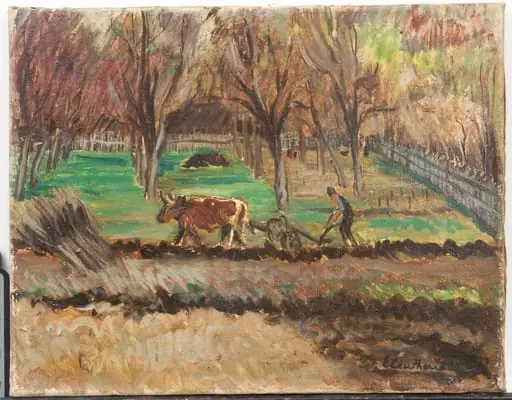
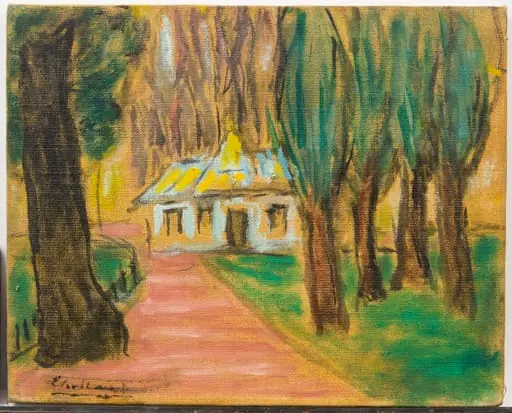
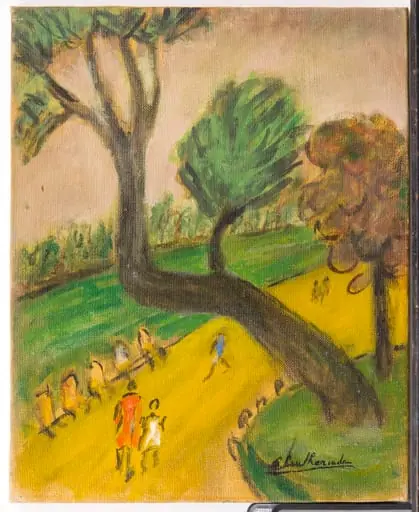
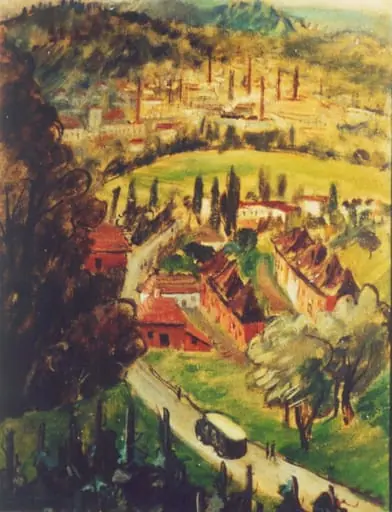
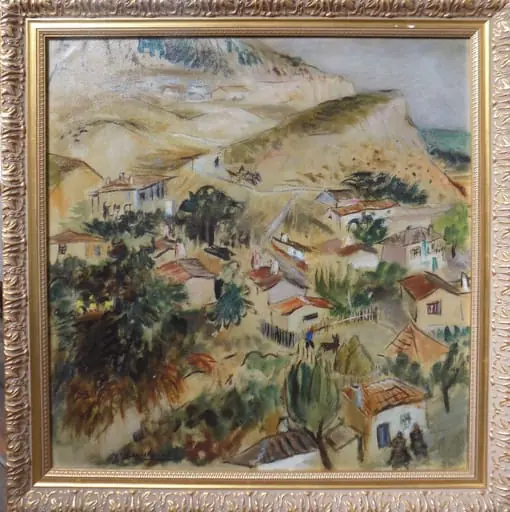
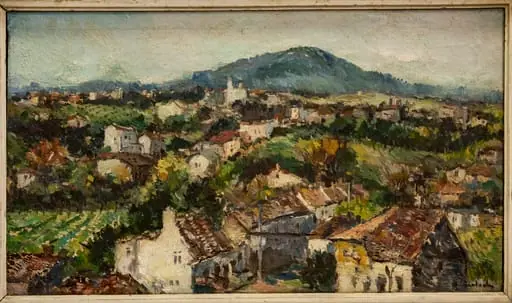
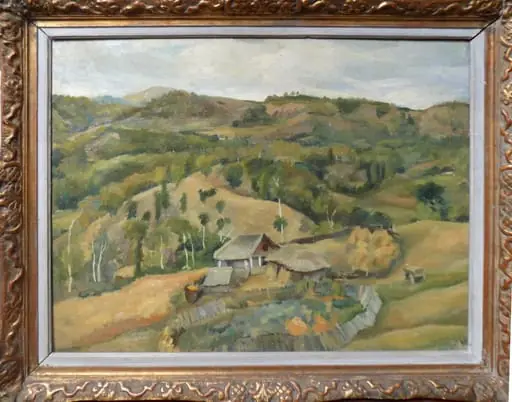
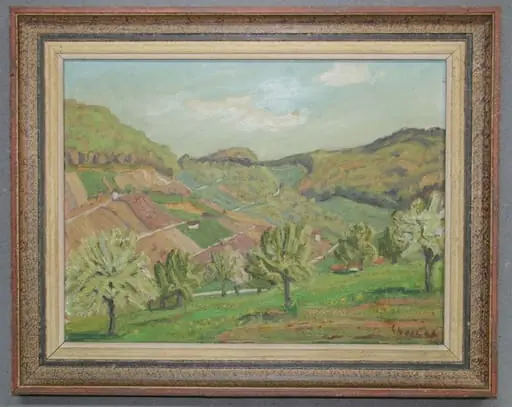
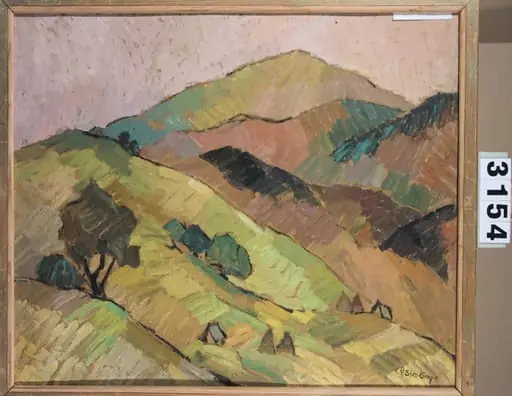
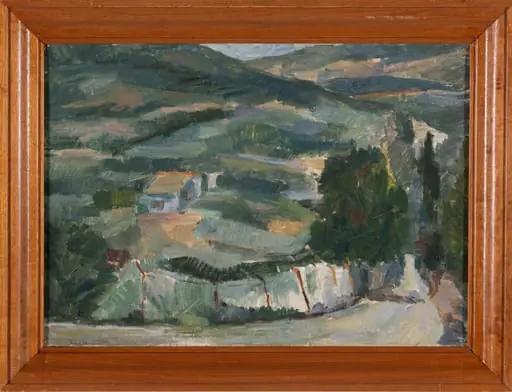
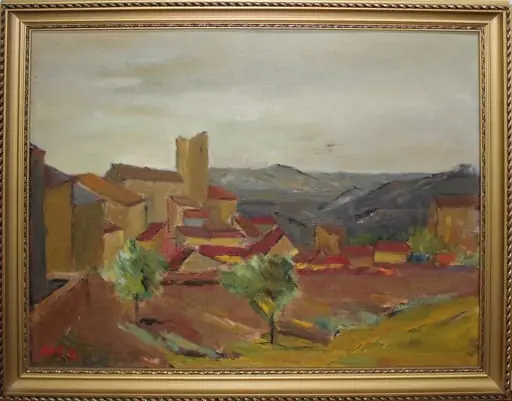
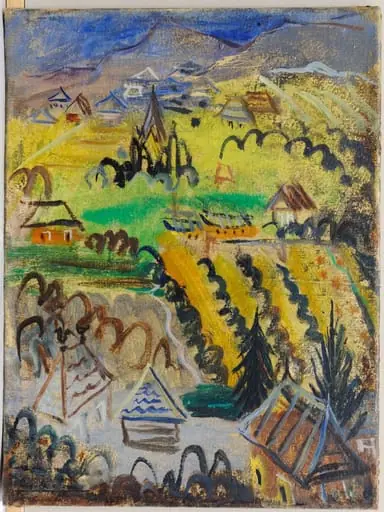
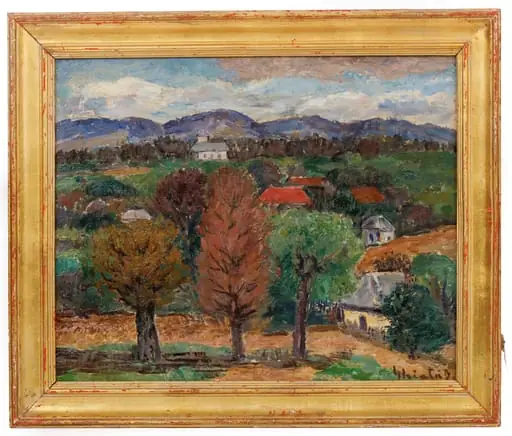
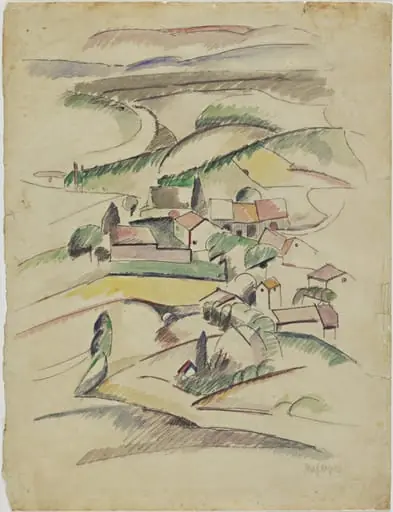
Alunișul, painted by Micaela Eleutheriade in 1936, depicts a rural scene of gently undulating terrain. In the distance a small village of white structures topped with red tiles can be seen, while the foreground is populated with trees and haystacks. The composition balances open land with built forms, offering a quiet glimpse of countryside life.
Subject & Meaning
The work presents a typical agrarian landscape, emphasizing the relationship between cultivated fields and the modest settlement that depends on them. The muted palette and simplified forms suggest a contemplative mood, inviting viewers to consider the enduring rhythms of rural labor and the modest beauty of everyday surroundings.
Technique & Style
Eleutheriade employs loose, expressive brushwork that animates the hills and foliage with a sense of movement. A restrained chromatic range of browns, greens, and occasional reds defines the scene, while the handling of paint creates texture in the haystacks and foliage, reinforcing the tactile quality of the terrain.
Context
Created in the interwar period, the painting reflects a broader interest among Romanian artists in documenting local landscapes and traditional ways of life. Alunișul aligns with contemporary trends that favored naturalistic observation combined with a personal, painterly approach, situating Eleutheriade within the regional artistic dialogue of the 1930s.
Artist & collection

Artist
Micaela Eleutheriade (1900–1982) was a noted Romanian painter and engraver. She was a descendant, through her mother, of the painter Gheorghe Tattarescu, the pioneer of neoclassicism in Romania.