Artwork
PEISAJ CITADIN
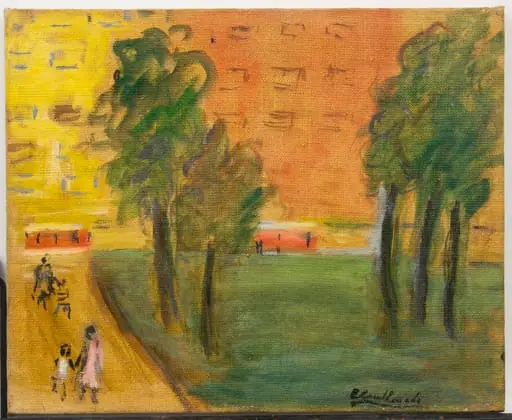
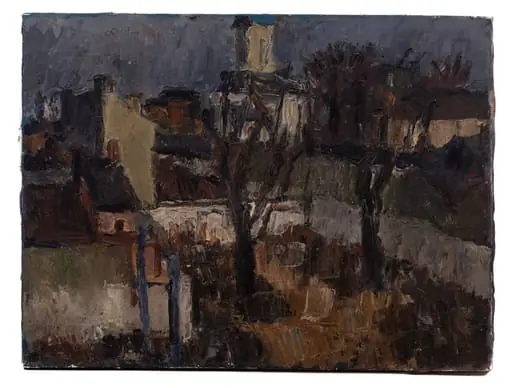
PEISAJ CITADIN is an unspecified painting by Micaela Eleutheriade. It dates from 1941 and is held in the collection of the National Museum of Art of Romania.
About this work
Overview
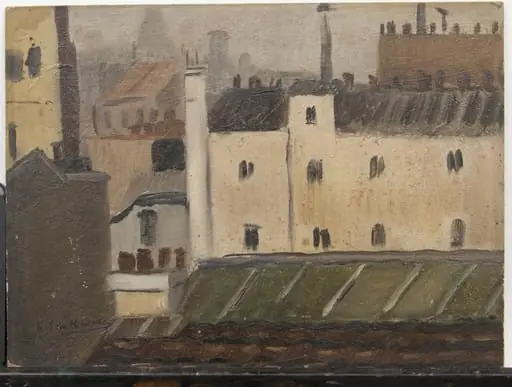
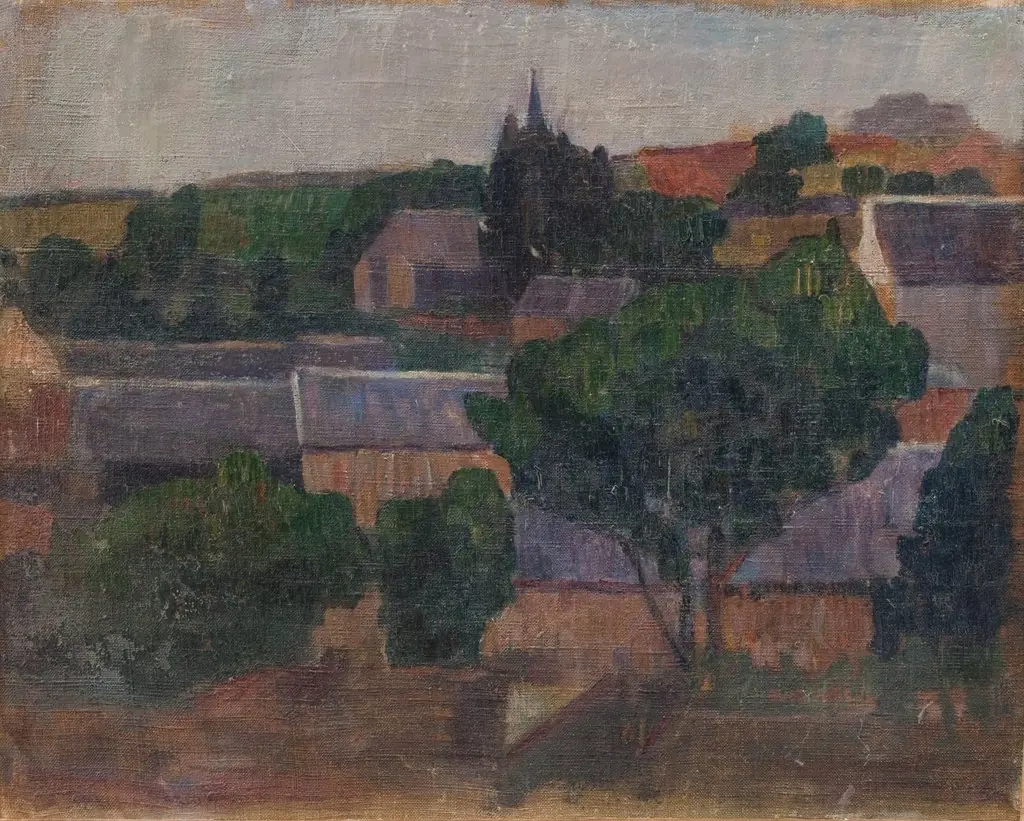
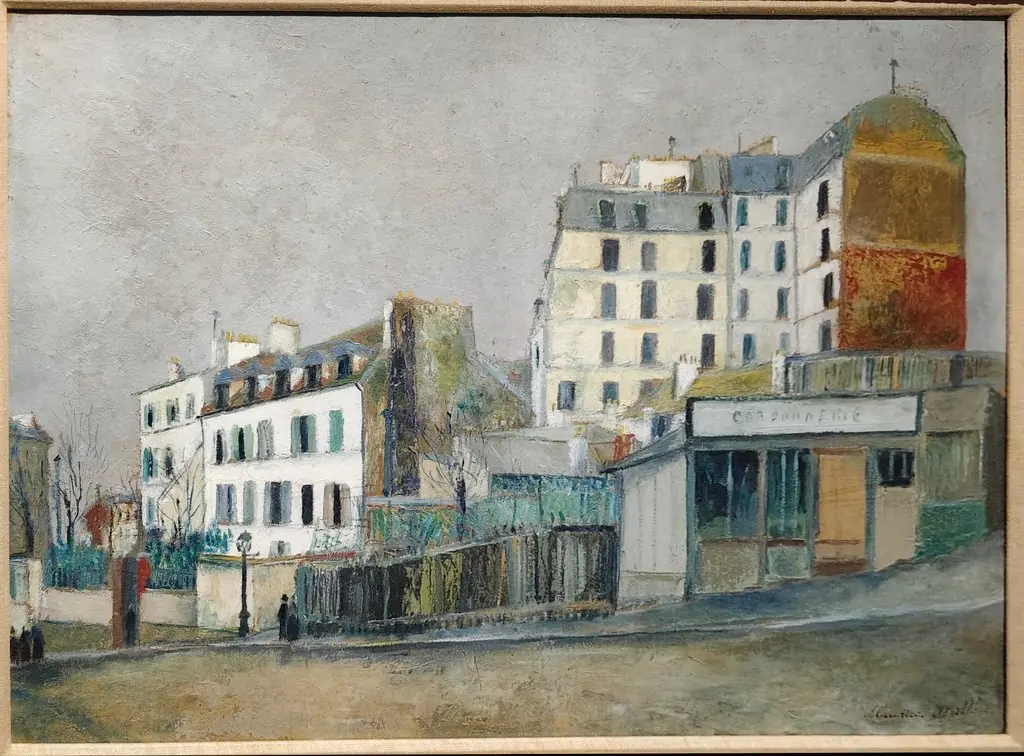
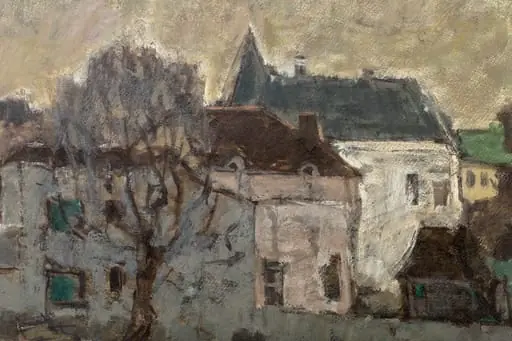
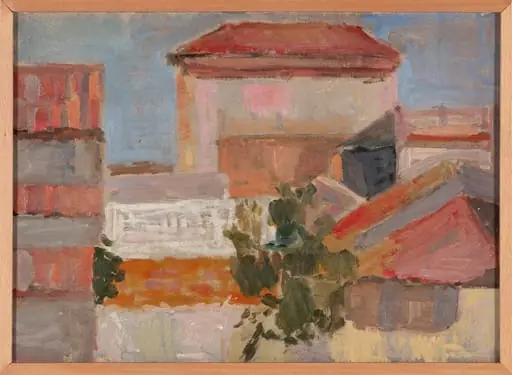
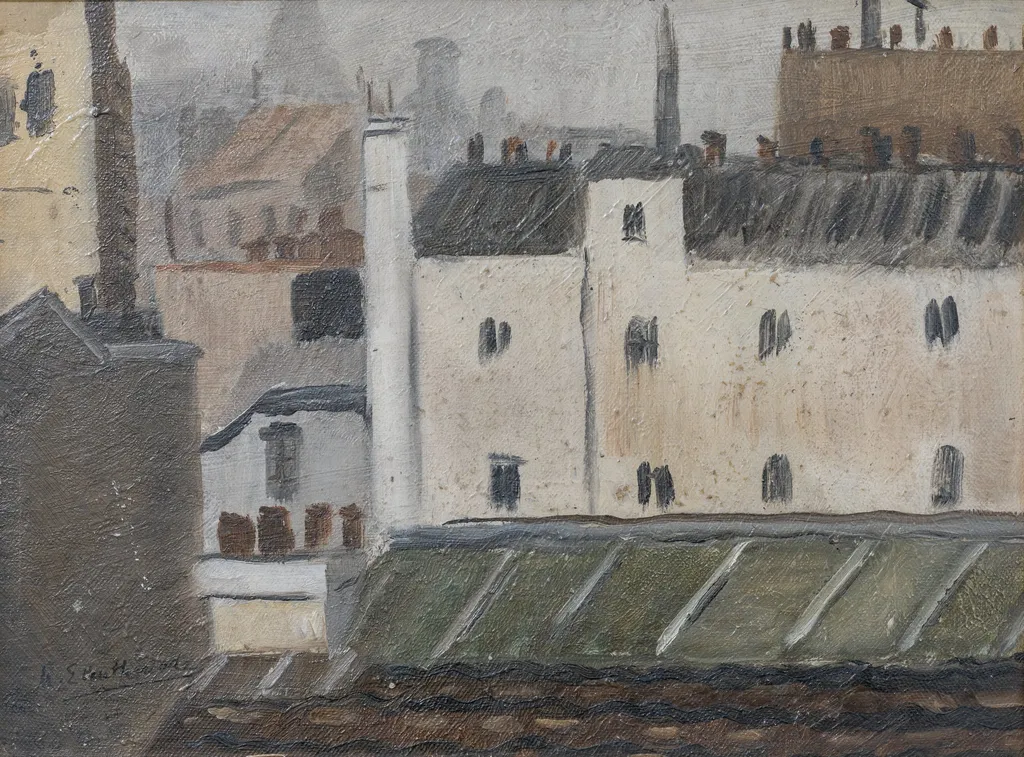
PEISAJ CITADIN, executed by Micaela Eleutheriade around 1941, is an image depicting a compact street scene of aging architecture. The composition centers on a line of weathered, white‑washed walls topped by dark, uneven roofs, interspersed with modest windows and chimneys. A protruding green‑tiled roof in the foreground supports three modest plant pots, adding a touch of domestic detail.
Subject & Meaning
The work captures a quiet urban quarter, emphasizing the passage of time through the worn surfaces of the buildings. The close arrangement of structures suggests a dense, perhaps historic neighborhood, while the modest garden elements hint at everyday life and a lingering connection to nature within a built environment.
Technique & Style
Eleutheriade employs a thick, impasto application, allowing the paint to stand out in pronounced, uneven strokes. This tactile surface creates a sketch‑like texture, especially on the roofs and walls, where the paint remains deliberately rough. The handling of light and shadow is subdued, letting the materiality of the medium dominate the visual experience.
History & Provenance
Created circa 1941, PEISAJ CITADIN reflects the artist’s practice during a period marked by limited resources and a turn toward more direct, material‑focused expression. The work’s provenance remains modest, with no recorded exhibition history, suggesting it may have been retained within a private collection or local institutional holdings.
Artist & collection

Artist
Micaela Eleutheriade (1900–1982) was a noted Romanian painter and engraver. She was a descendant, through her mother, of the painter Gheorghe Tattarescu, the pioneer of neoclassicism in Romania.