Artwork
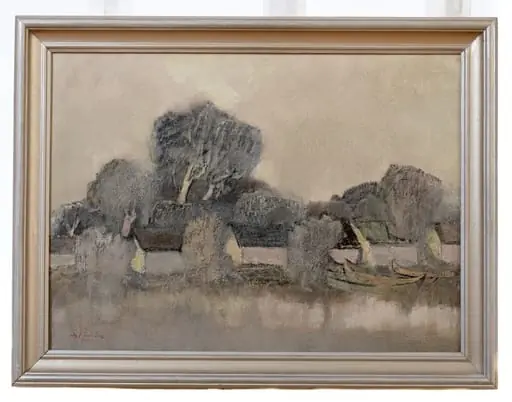
Peisaj în brunuri
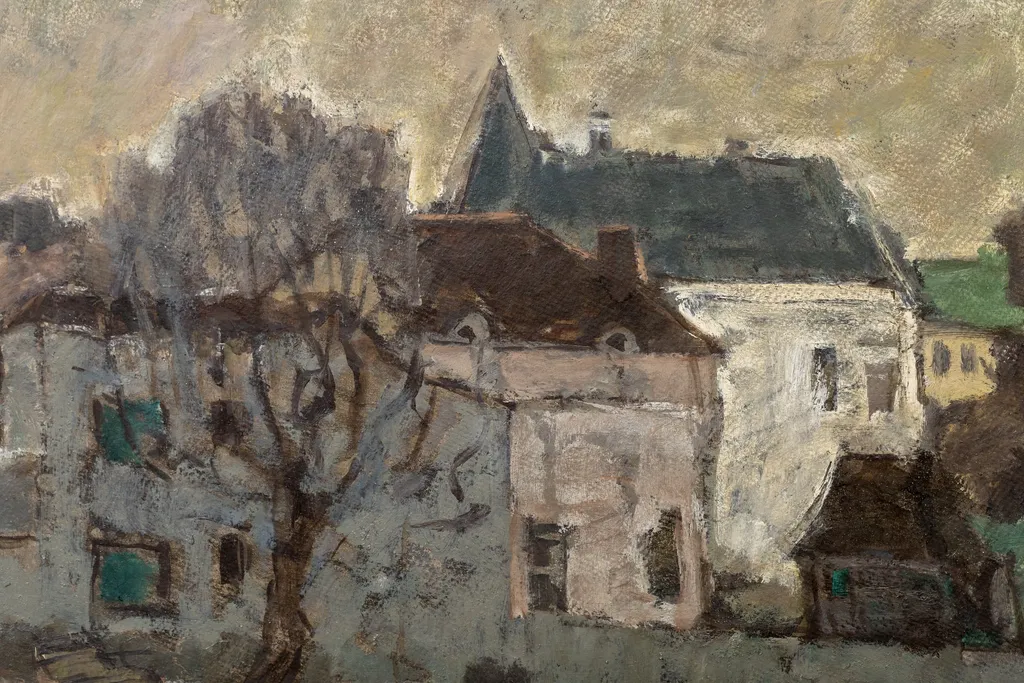
Peisaj în brunuri is a print by Podoleanu Adrian. It dates from 1969 and is held in the collection of the Moldova National Museum Complex.
About this work
Overview
The work belongs to a period in Romanian art where naturalism gave way to more expressive, material-focused approaches.
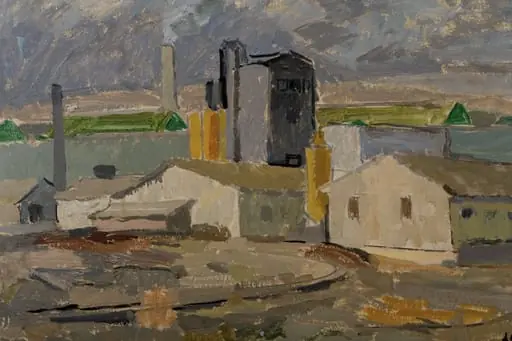
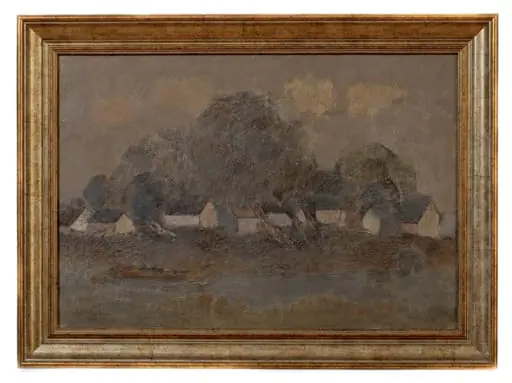
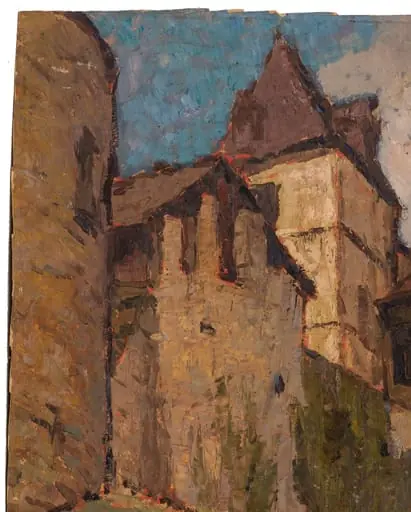
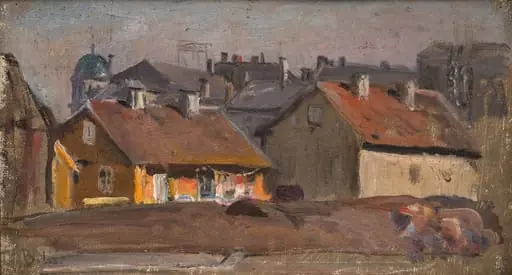
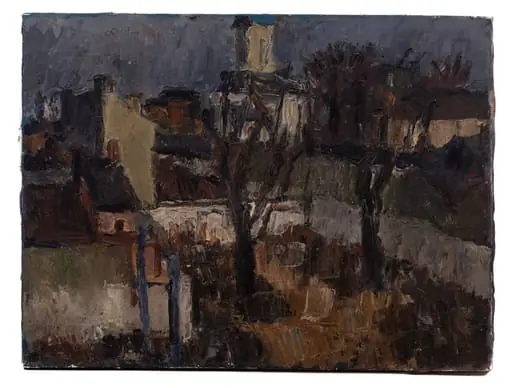
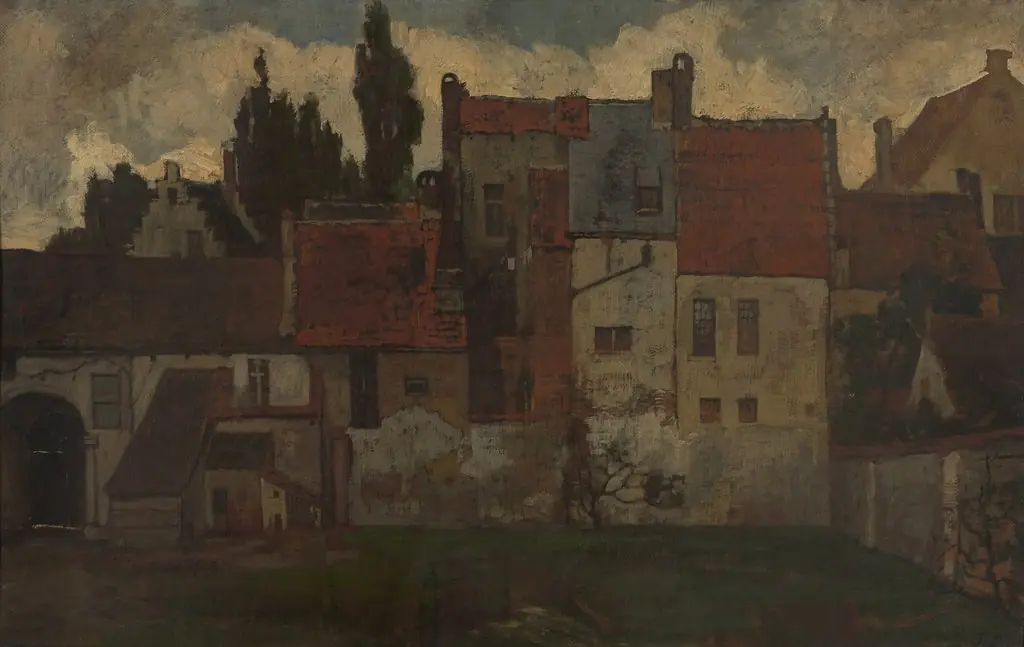
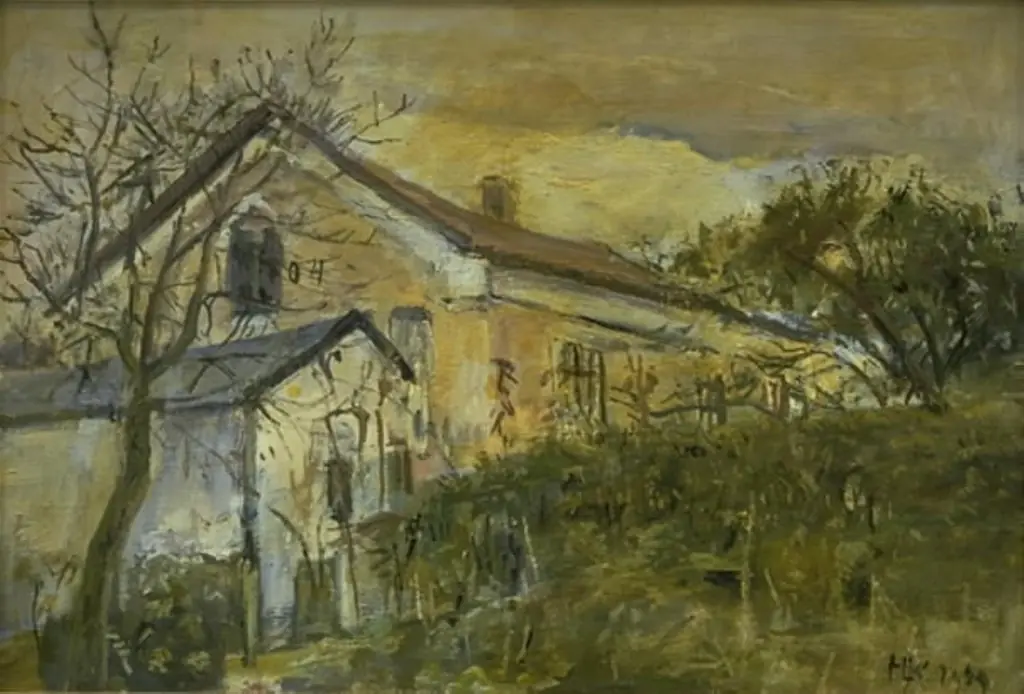
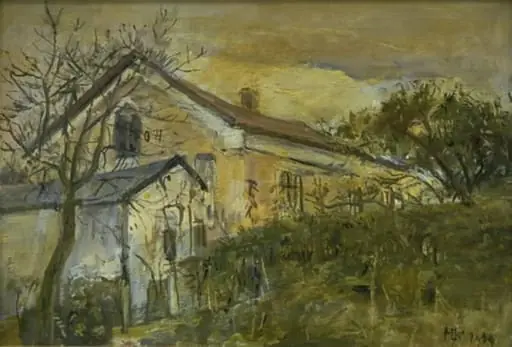
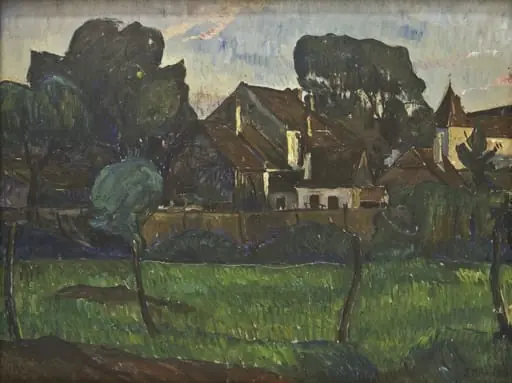
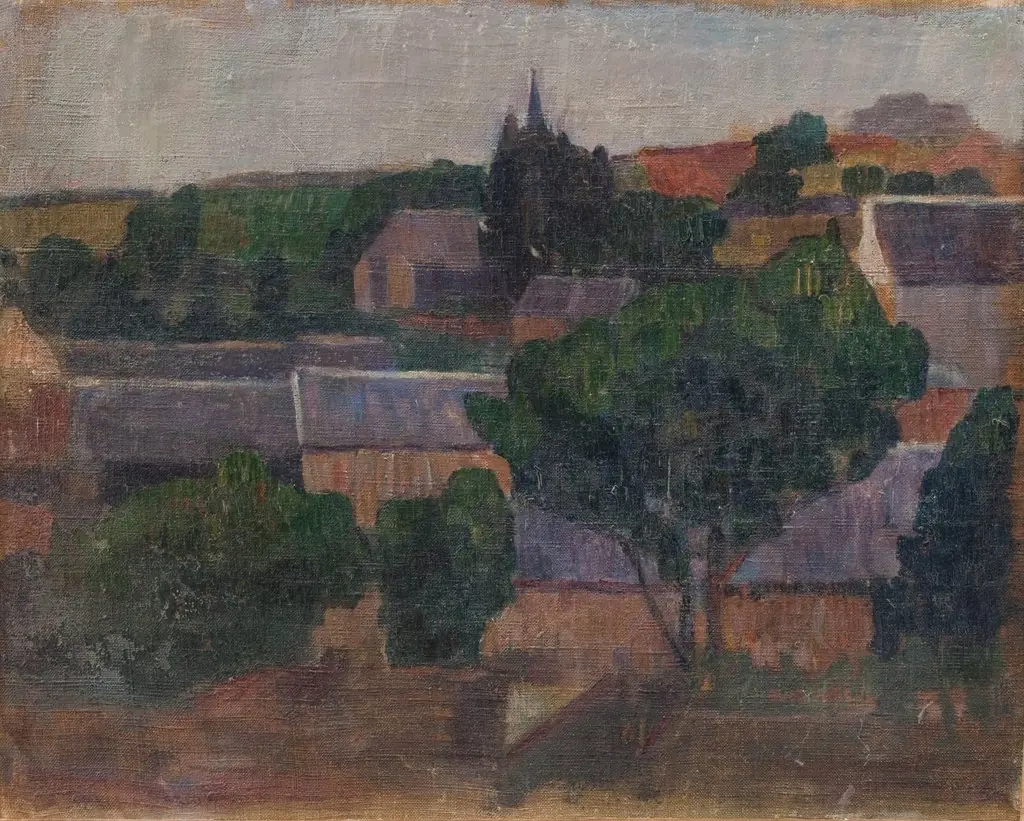
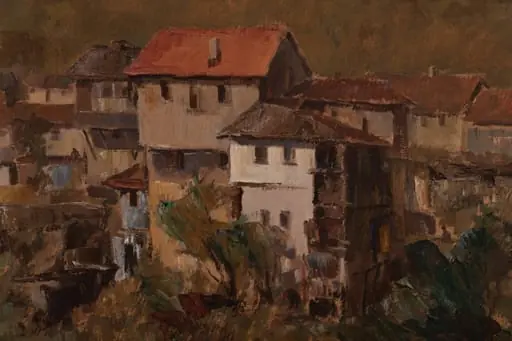
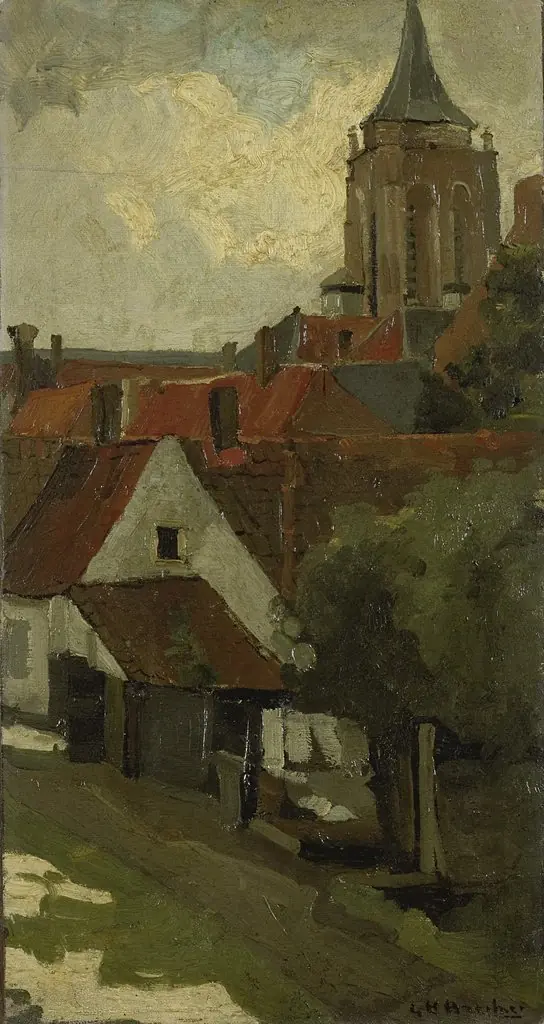
Created around 1969 by Adrian Podoleanu, Peisaj în brunuri is a landscape painting rendered in muted earth tones. The composition presents a quiet rural scene with modest buildings and bare trees, rendered without idealization. The palette is restrained, dominated by browns, grays, and subtle greens, reinforcing a somber, contemplative mood. The work belongs to a period in Romanian art where naturalism gave way to more expressive, material-focused approaches.
Subject & Meaning
The painting depicts a modest village setting, likely drawn from memory or direct observation of rural Romania. Structures with uneven roofs and a distant steeple suggest a small, unremarkable community. The absence of human figures and the muted tones evoke solitude and time’s quiet passage. The scene carries no narrative, instead inviting reflection on the endurance of place and the quiet decay of everyday architecture.
Technique & Style
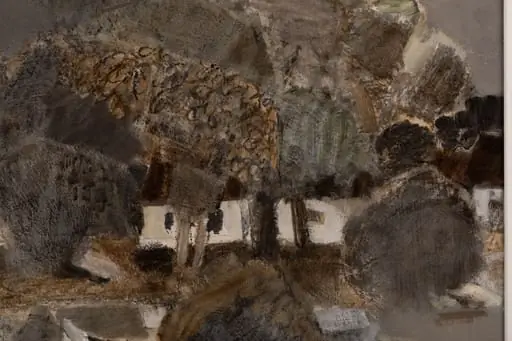
Podoleanu applied paint thickly and irregularly, using a scraping or dragging motion that leaves visible texture. Brushstrokes are deliberate yet unrefined, creating a surface that feels tactile and physically layered. The lack of smooth blending and the rough handling of edges contribute to a sense of immediacy. This approach prioritizes material presence over illusion, aligning with postwar tendencies to emphasize the act of painting itself.
History & Provenance
The painting emerged during a period of state-regulated artistic production in Romania, when landscape remained a permissible subject despite ideological constraints. Podoleanu, working outside official circles, developed a personal style that avoided socialist realism. Peisaj în brunuri was likely kept in private hands until entering public collection, its survival reflecting its quiet resistance to dominant aesthetic norms.
Context
In late 1960s Romania, artists navigated strict cultural policies while seeking personal expression. Landscape painting offered a relatively safe outlet, but Podoleanu’s textured, non-idealized approach diverged from state-sanctioned realism. His work shares affinities with Eastern European postwar painters who used materiality to convey emotional weight, subtly challenging the regime’s polished visual language without overt confrontation.
Legacy
Peisaj în brunuri exemplifies a quiet strand of Romanian modernism that valued emotional resonance over formal polish. Though not widely exhibited during its time, it has since become a reference for artists interested in the expressive potential of paint texture and restrained color. Its influence is seen in later generations who embraced rawness as a form of authenticity in a landscape of imposed conformity.