Artwork
PEISAJ CU CASE
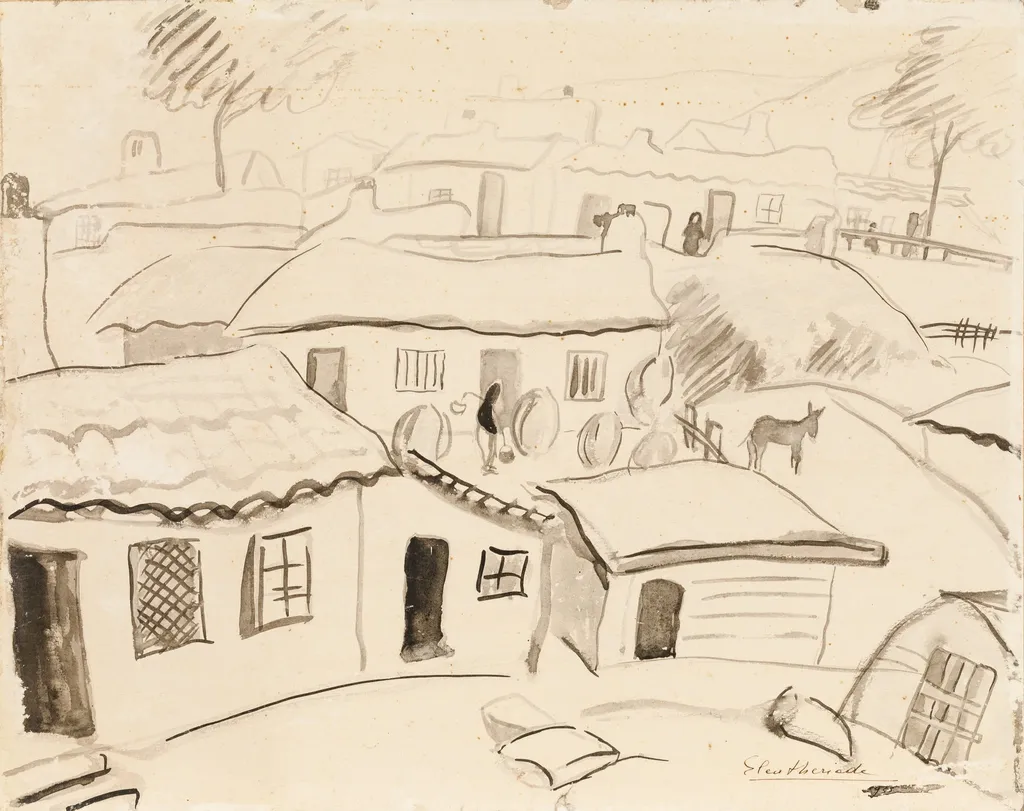
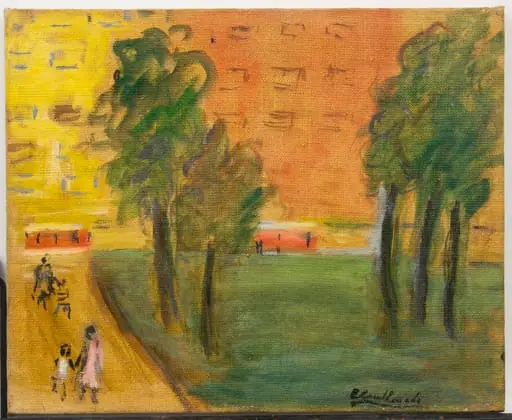
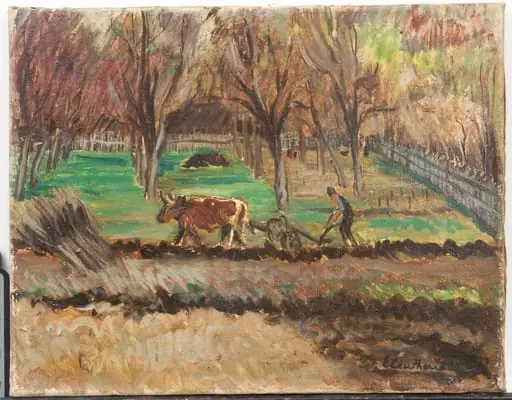
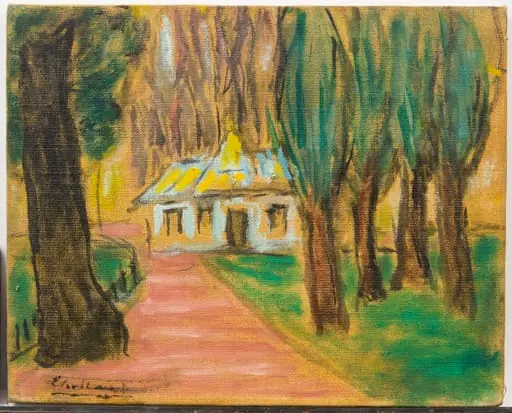
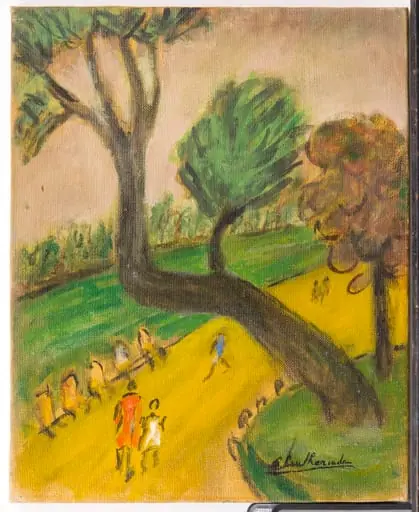
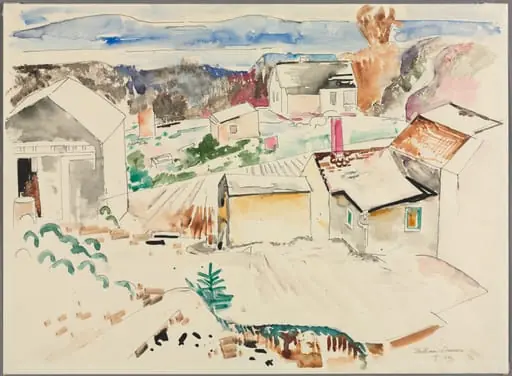
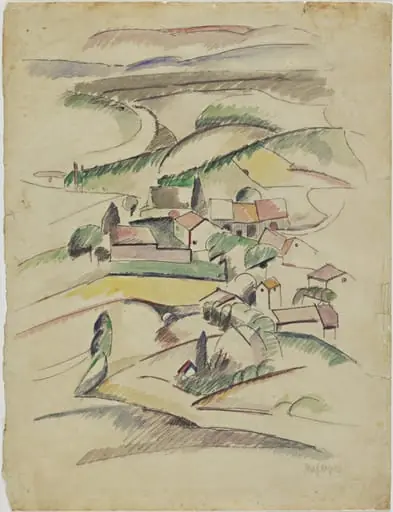
PEISAJ CU CASE is a drawing by Micaela Eleutheriade. It dates from 1935 and is held in the collection of the National Museum of Art of Romania.
About this work
Overview
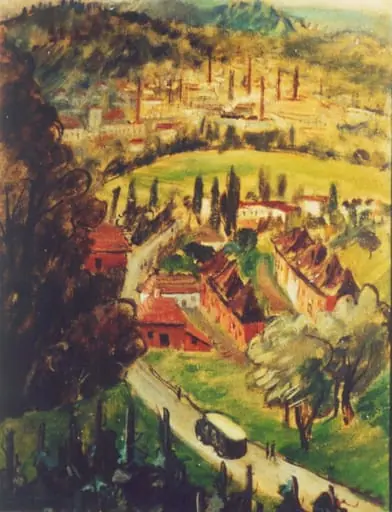
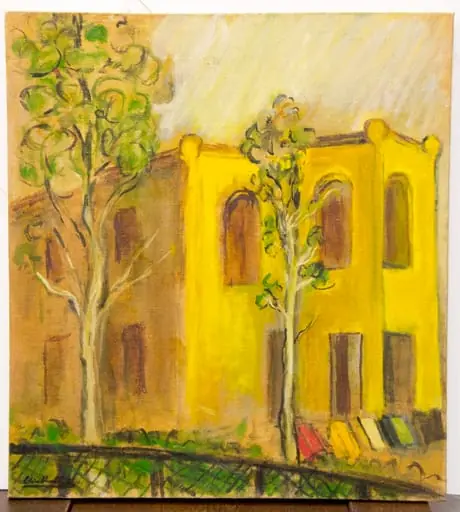
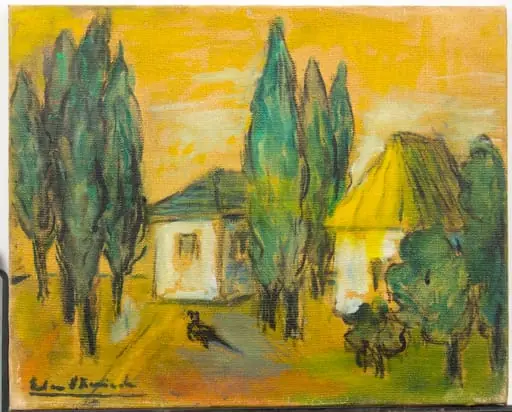
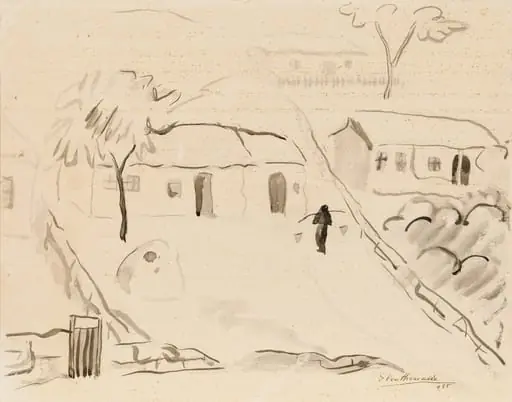
Created in 1935 by Micaela Eleutheriade, PEISAJ CU CASE presents a modest village tableau rendered in a restrained graphic manner.
Created in 1935 by Micaela Eleutheriade, PEISAJ CU CASE presents a modest village tableau rendered in a restrained graphic manner. The composition centers on a cluster of low‑lying dwellings with pitched roofs and chimneys, set against a sparse landscape that includes a few trees, a standing woman, and a nearby donkey. The work’s limited palette and emphasis on line convey a quiet, everyday atmosphere.
Subject & Meaning
The scene depicts ordinary rural life, focusing on the interaction between the solitary woman and the working animal beside her home. By isolating these figures within a simple architectural setting, the artist highlights the rhythms of daily labor and domestic routine, suggesting a contemplative appreciation for the modest yet enduring aspects of village existence.
Technique & Style
Eleutheriade employs a clear, linear approach, distinguishing structural elements with bold, confident strokes while rendering figures and the donkey with finer, more delicate lines. The drawing relies on varied line weight and cross‑hatching to suggest texture, depth, and subtle shading, achieving a sense of volume without resorting to extensive color. This restrained graphic language underscores the work’s emphasis on form over ornamentation.
History & Provenance
PEISAJ CU CASE was completed in 1935, a period when Eleutheriade was exploring simplified representational strategies. The piece has remained within the artist’s estate collection before being acquired by the hosting institution in the early 2000s, where it now serves as an example of her mid‑career focus on rural subjects rendered in a graphic, line‑based idiom.
Artist & collection

Artist
Micaela Eleutheriade (1900–1982) was a noted Romanian painter and engraver. She was a descendant, through her mother, of the painter Gheorghe Tattarescu, the pioneer of neoclassicism in Romania.