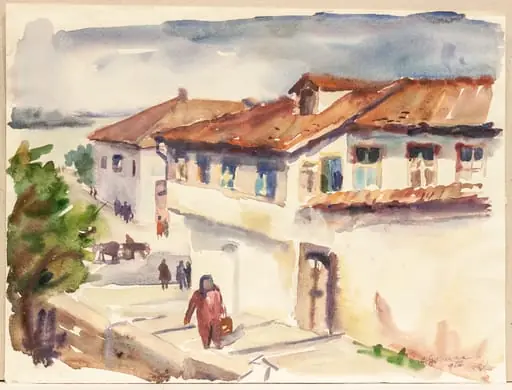
Artwork
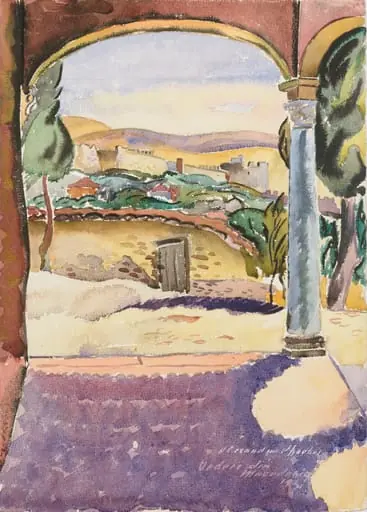
PEISAJ DIN SALONIC – GRECIA
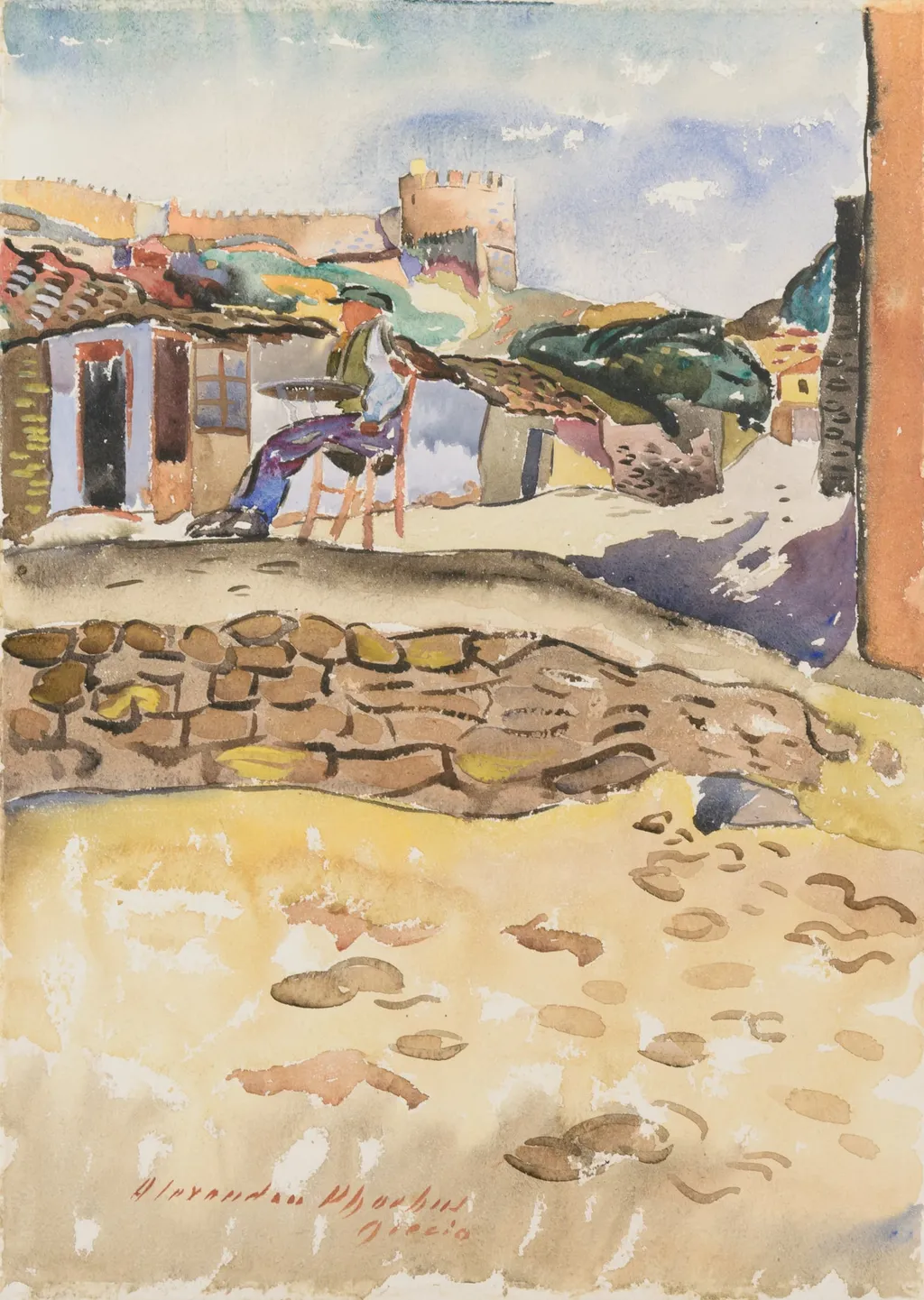
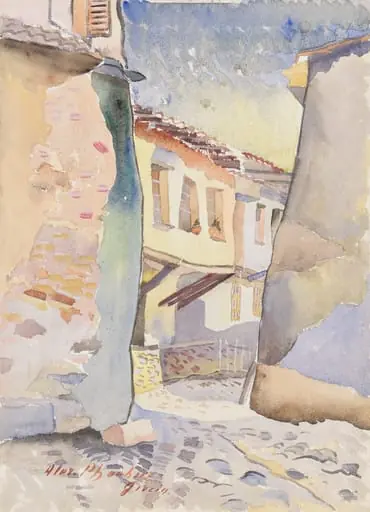
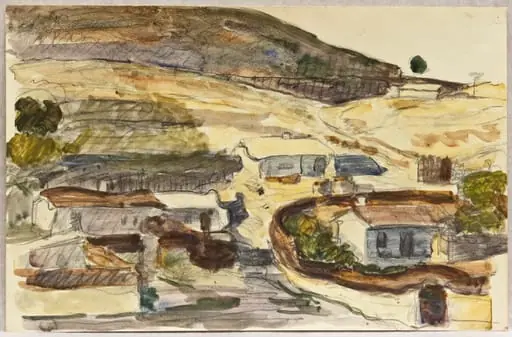
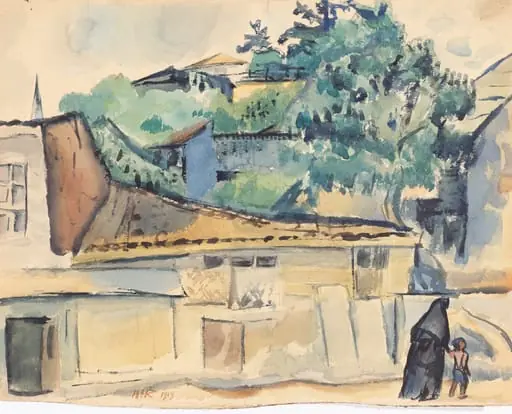
PEISAJ DIN SALONIC – GRECIA is an unspecified painting by Alexandru Phoebus. It dates from 1850 and is held in the collection of the National Museum of Art of Romania.
About this work
Overview
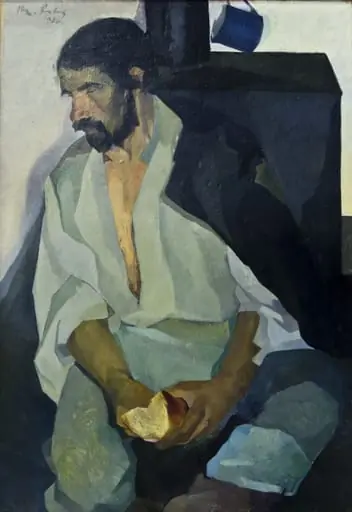
Painted around 1850 by Alexandru Phoebus, this watercolor depicts a solitary figure in Salonica, then part of the Ottoman Empire. Rendered in muted earth tones, the scene captures a quiet, unguarded moment of rest. The artist employs loose, fluid brushwork to suggest movement and atmosphere, avoiding rigid detail in favor of emotional resonance.
Subject & Meaning
A man sits with his back against a wall, clad in a white shirt and blue trousers, a hat resting beside him. A small table holds a bowl, perhaps containing food or water. His stillness suggests introspection or pause amid daily routines. The setting implies a life shaped by local rhythms, not grand events — a quiet dignity in ordinary existence.
Technique & Style
Executed in watercolor, the work relies on translucent layers to build subtle gradations of brown, tan, and gray. Brushstrokes are deliberate yet unrestrained, conveying texture without precision. The background cityscape is suggested rather than defined, using soft edges and minimal detail to evoke depth and distance.
History & Provenance
The painting originates from Phoebus’s early period, likely created during his travels in the Balkans. It reflects his engagement with regional life under Ottoman rule. No documented ownership history exists prior to its inclusion in modern collections, though its style aligns with 19th-century Romanian artists documenting the empire’s peripheries.
Context
In the mid-1800s, Salonica was a multicultural port city with Greek, Jewish, Turkish, and Slavic communities. Phoebus’s focus on a single figure in a modest urban setting mirrors a broader trend among Eastern European painters to record everyday life amid political change, avoiding romanticized narratives in favor of quiet observation.
Legacy
Though not widely exhibited, the work contributes to a lesser-known strand of 19th-century Romanian art that prioritized ethnographic observation over grand historical themes. Its restrained palette and intimate scale anticipate later modernist approaches to landscape and figure studies in the Balkans.
Own this work as a print
Artist & collection