Artwork
Untitled
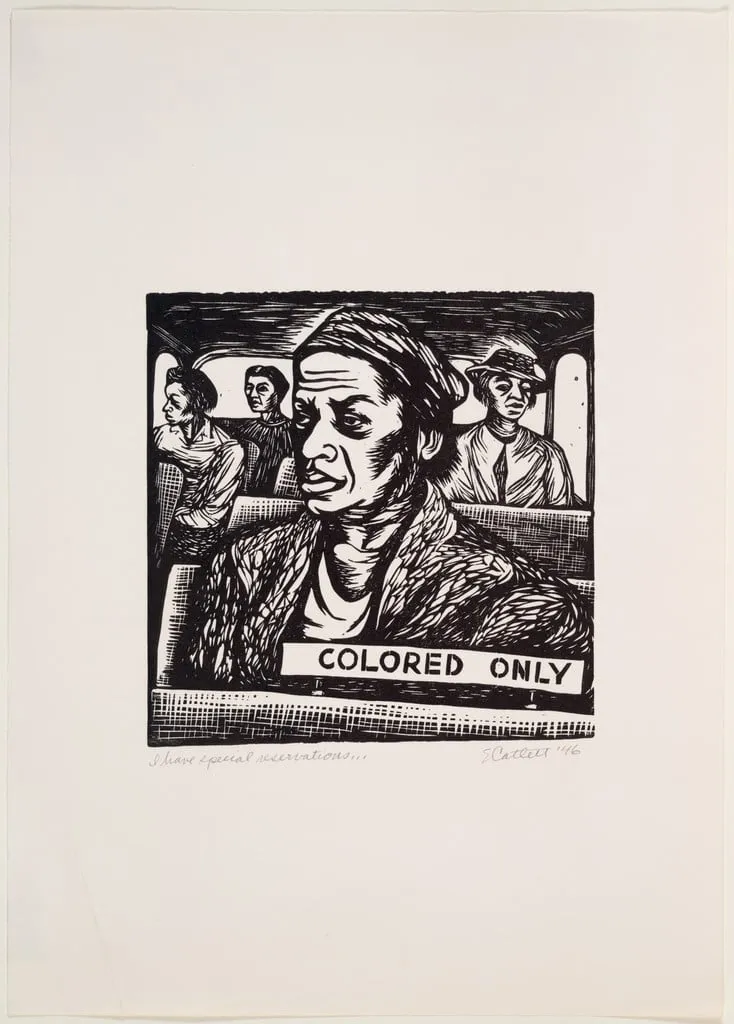
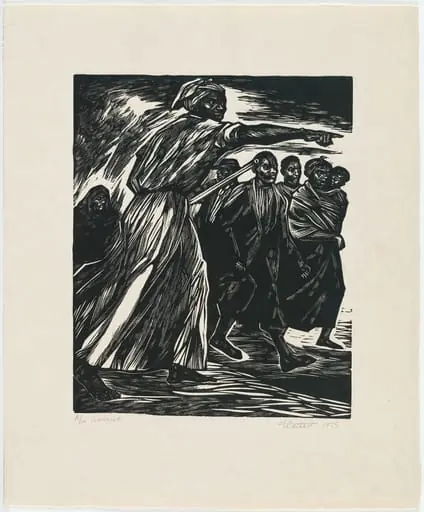
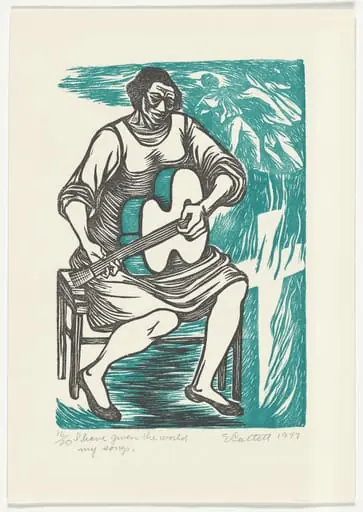
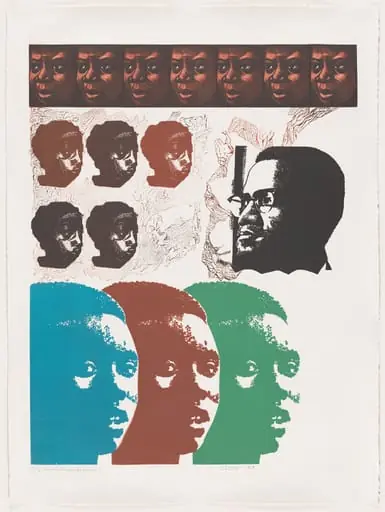
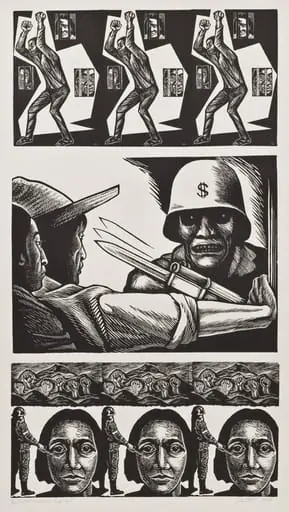
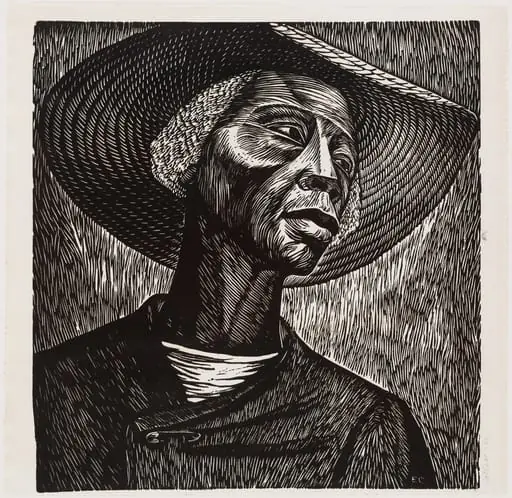
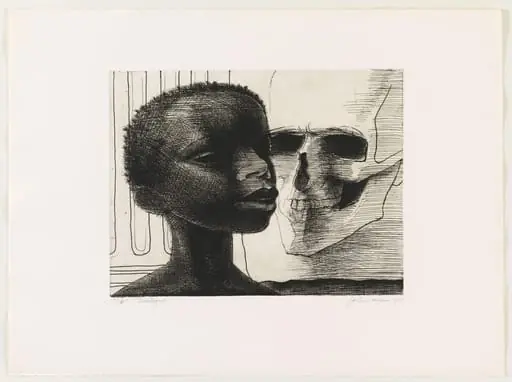
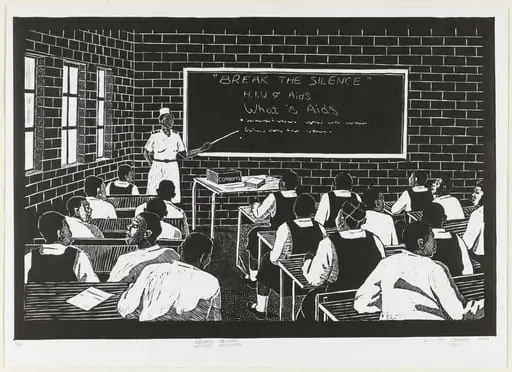
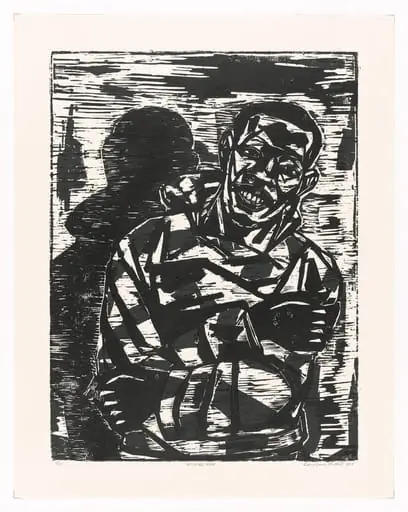
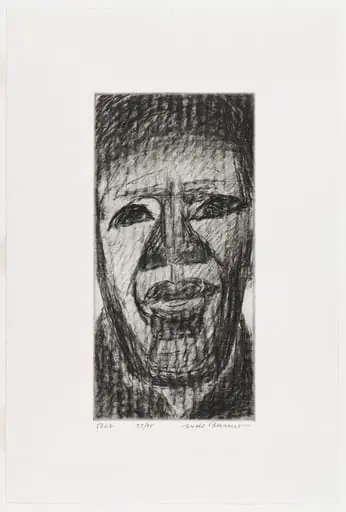
Untitled is a print by Elizabeth Catlett. It dates from 1946 and is held in the collection of the Museum of Modern Art.
About this work
Overview
Executed with stark contrasts and minimal color, the piece exemplifies her use of printmaking as a tool for quiet but forceful advocacy.
Created in 1946, this linoleum cut is part of Elizabeth Catlett’s early printmaking phase, during which she refined a visual language rooted in social commentary. The work reflects her commitment to portraying the lived experiences of Black Americans, particularly through the lens of everyday scenes imbued with systemic inequality. Executed with stark contrasts and minimal color, the piece exemplifies her use of printmaking as a tool for quiet but forceful advocacy.
Subject & Meaning
The image depicts a group of Black passengers on a segregated train, their gazes fixed outward through a window marked 'COLORED ONLY.' The central figure, dressed in a hat and coat, stares directly ahead, conveying quiet resilience. The absence of color and the emphasis on text underscore the institutionalized nature of racial separation. The composition avoids overt drama, instead inviting reflection on the dignity and endurance of those subjected to Jim Crow norms.
Technique & Style
Catlett employed a linoleum cut technique to produce bold, high-contrast imagery, reminiscent of woodcut traditions. Sharp black lines define figures and text, while the white background amplifies their presence. The method allows for clear readability and emotional intensity, with minimal detail focused on expression rather than realism. This reduction to essential forms heightens the work’s immediacy and political clarity.
History & Provenance
Made during Catlett’s time in the United States before her permanent move to Mexico in 1946, this print emerged from a period of intense artistic and political development. She was actively engaged with the African American artistic community and influenced by the Harlem Renaissance and social realism. The work was likely produced for exhibition or educational purposes, aligning with her belief in art as a vehicle for public awareness.
Context
In 1946, racial segregation remained legally enforced across much of the U.S., particularly in public transit. Catlett’s print responds directly to this reality, capturing a mundane yet deeply charged moment in Black daily life. Her choice to focus on train travel—common among migrants and laborers—grounds the work in the material conditions of the era, linking personal experience to broader structural injustice.
Legacy
This print stands as an early example of Catlett’s lifelong dedication to representing Black identity with dignity and precision. It influenced later generations of artists working in printmaking and social realism, particularly those addressing race and gender. Its restrained aesthetic and unflinching subject matter continue to be studied as models of how visual art can document and challenge systemic oppression without sensationalism.
Artist & collection
Artist
Elizabeth Catlett, born as Alice Elizabeth Catlett, also known as Elizabeth Catlett Mora (April 15, 1915 – April 2, 2012) was an American and Mexican sculptor and graphic artist best known for her depictions of the…