Artwork
Wood Scene
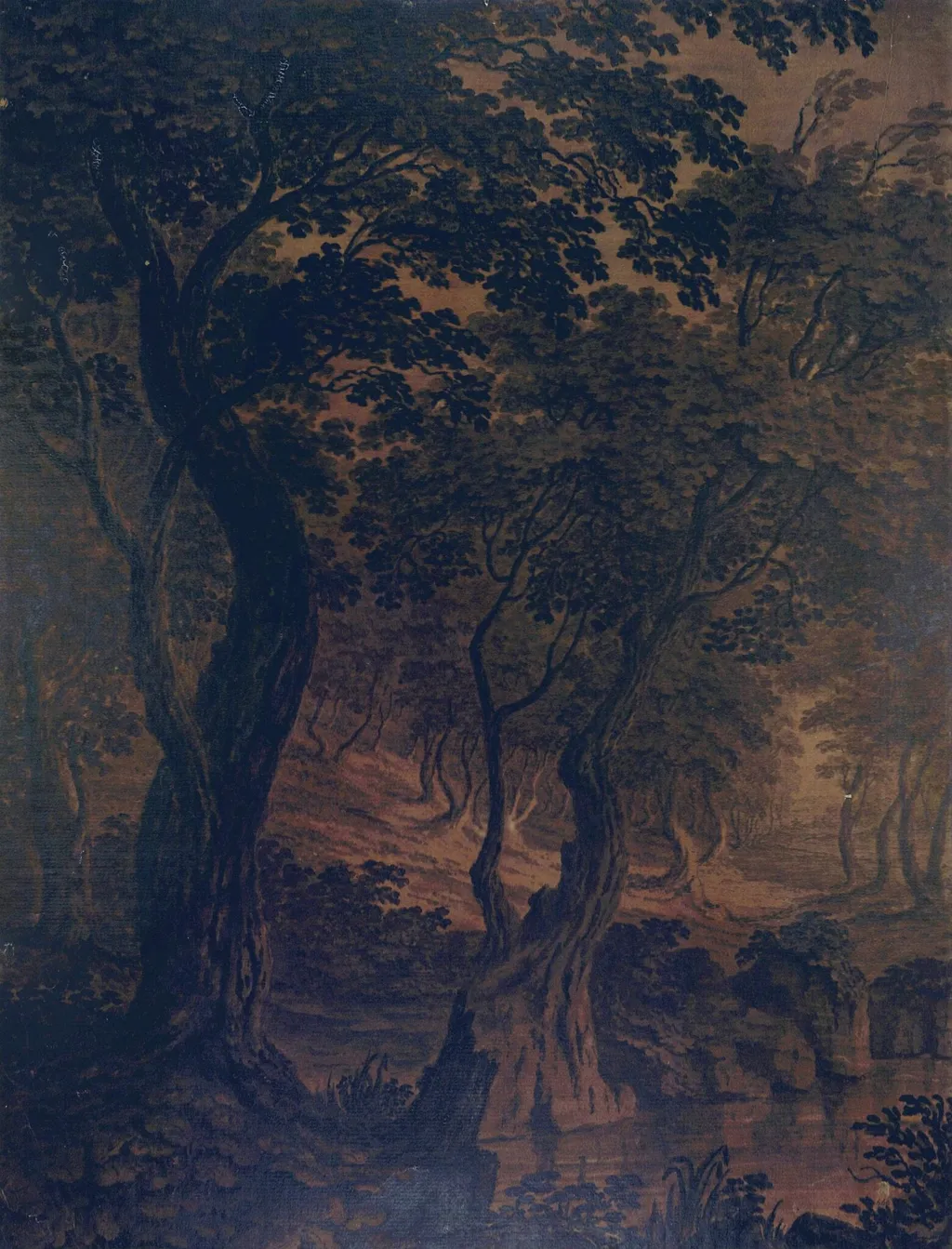
Wood Scene is a watercolor work on paper by the Rococo painting artist Elizabeth Upton. It dates from 1775 and is held in the collection of the Victoria and Albert Museum.
About this work
Overview
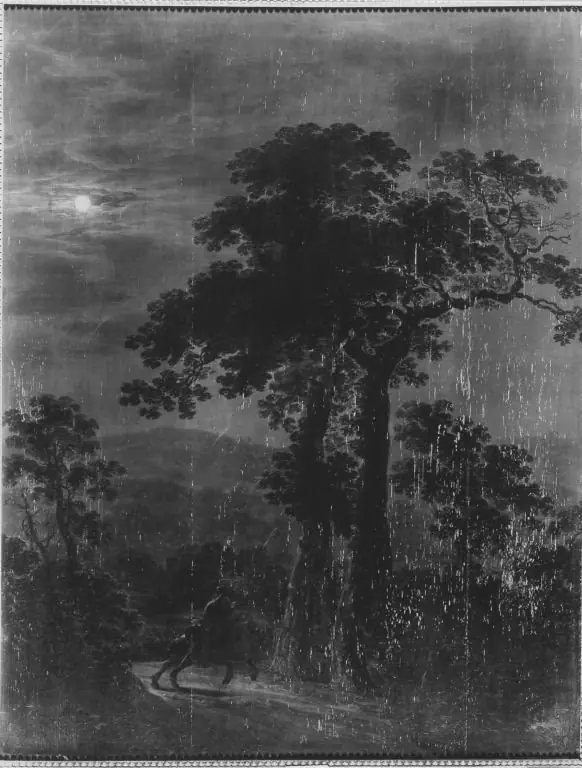
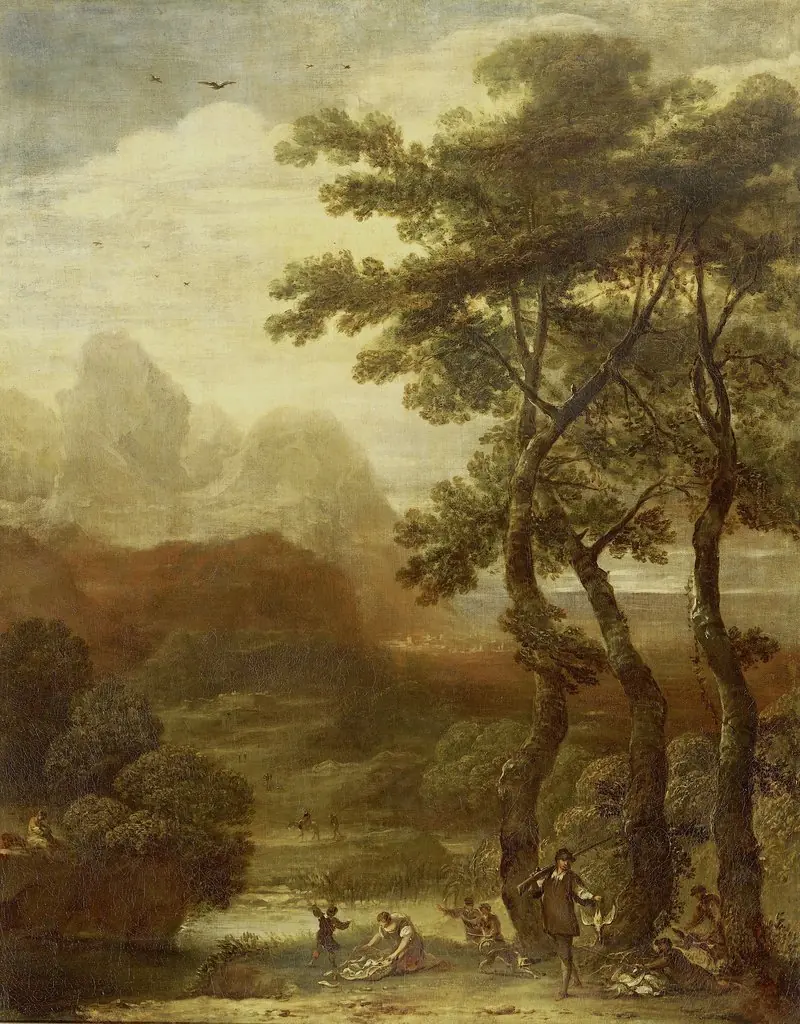
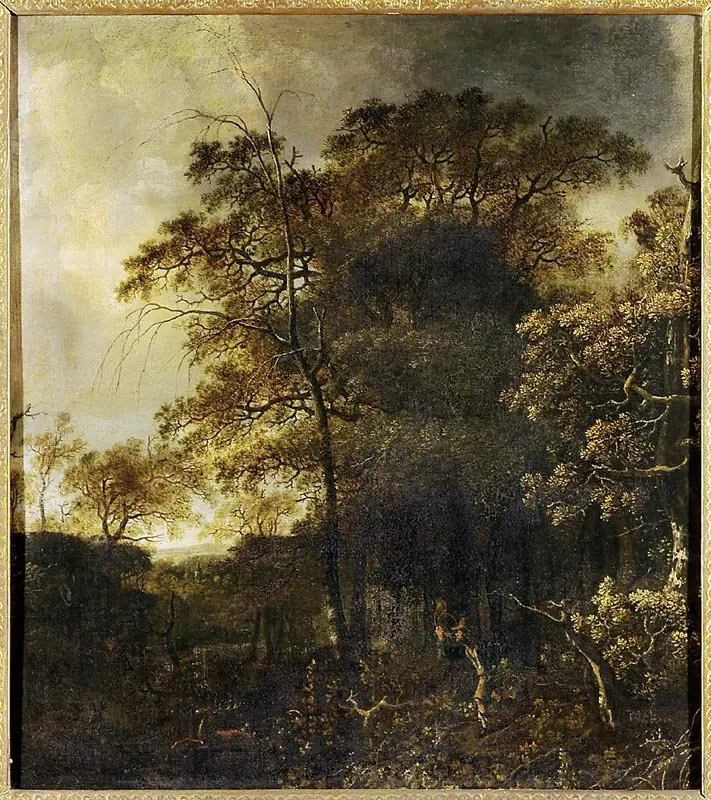
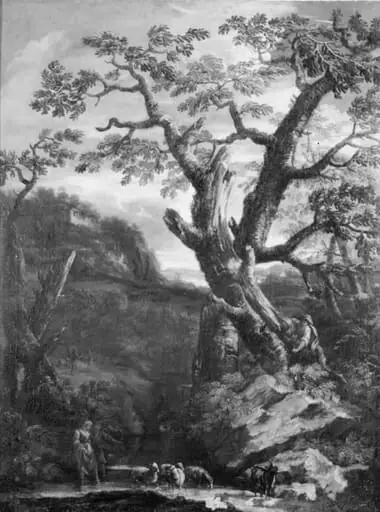
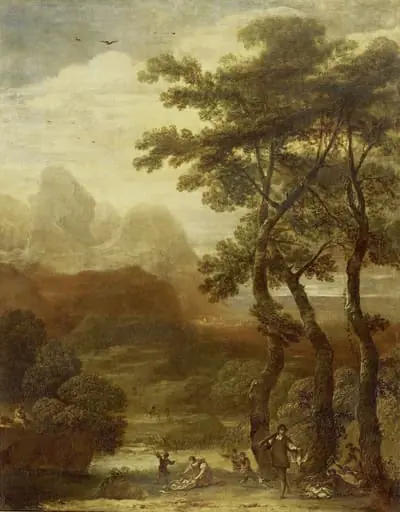
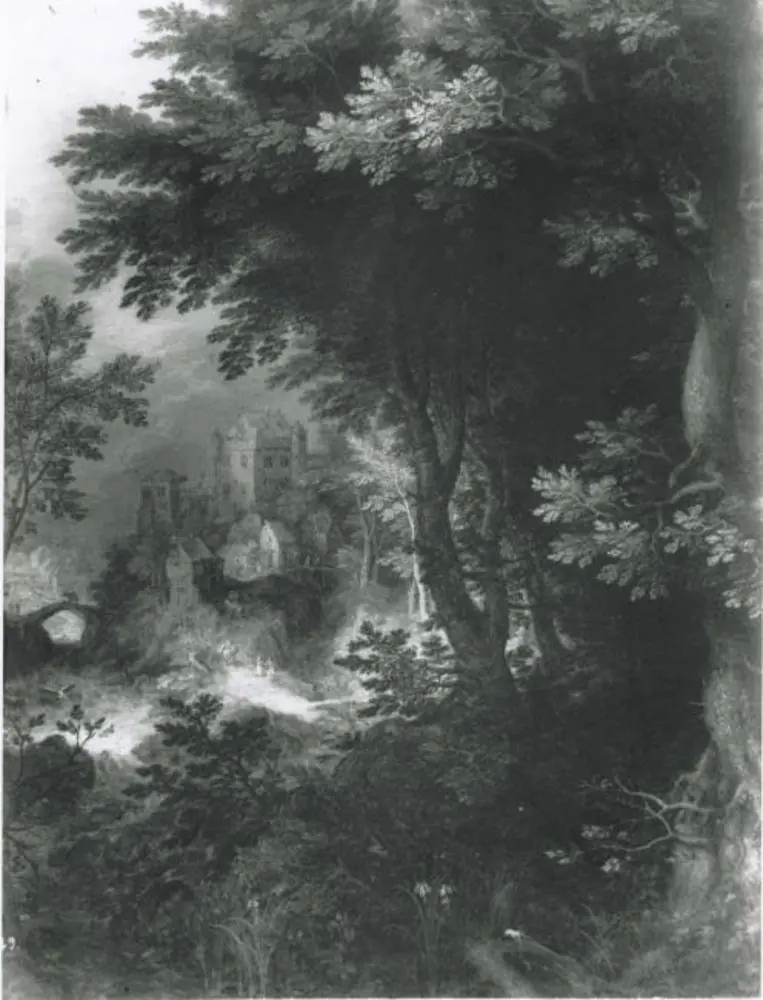
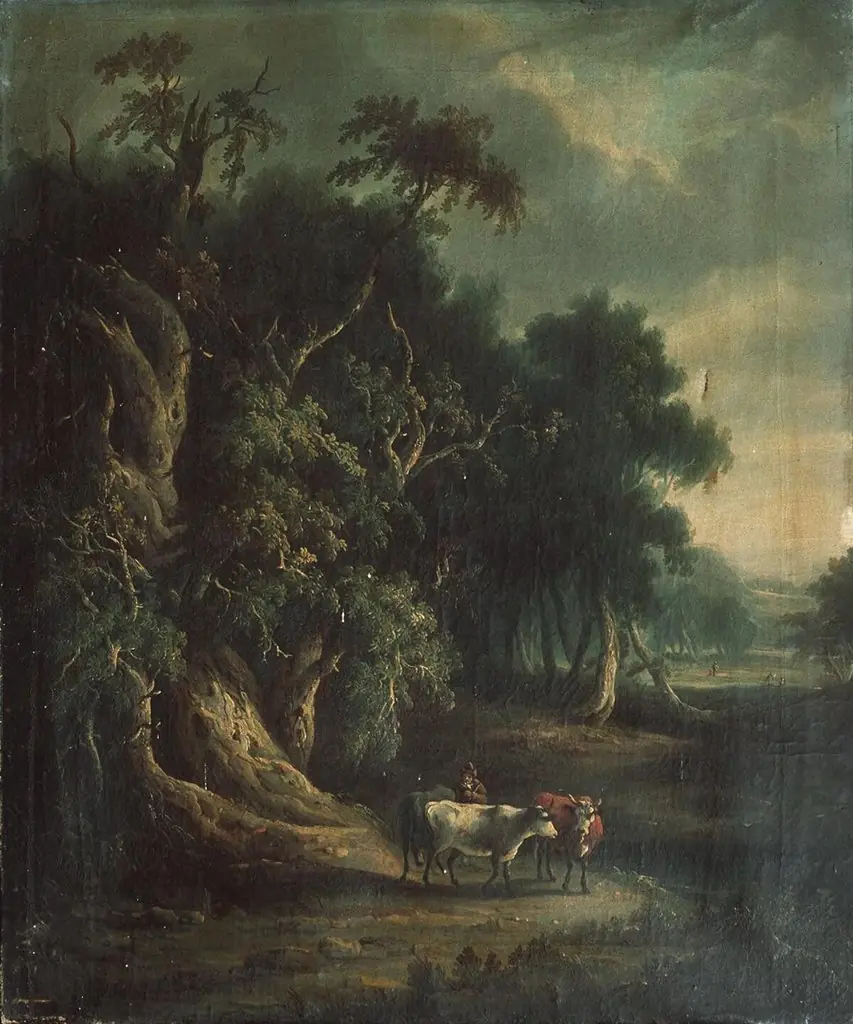
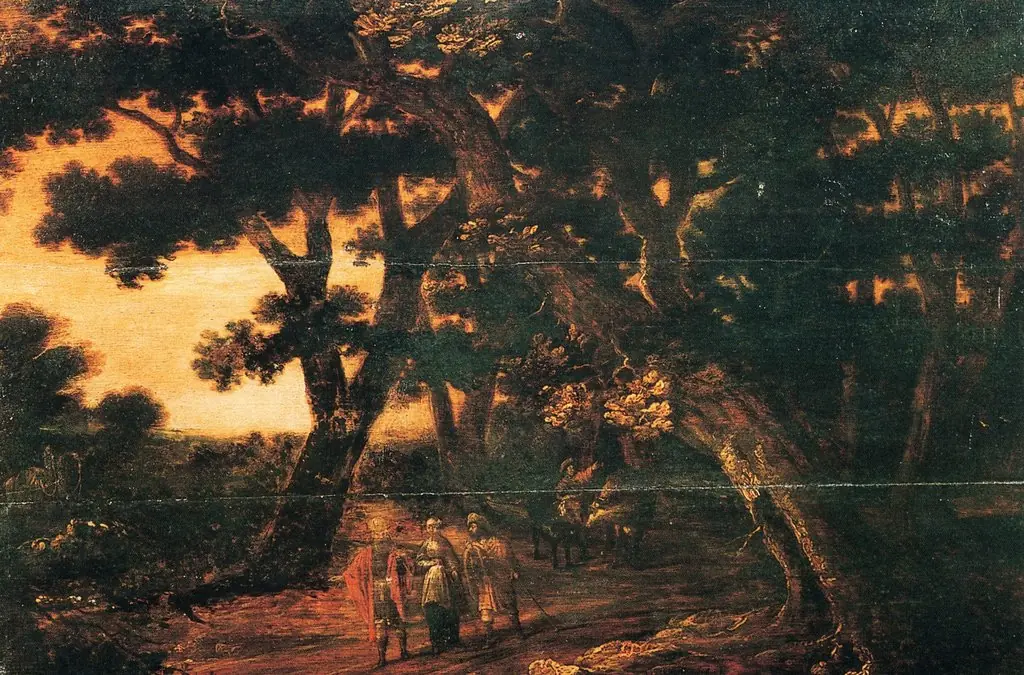
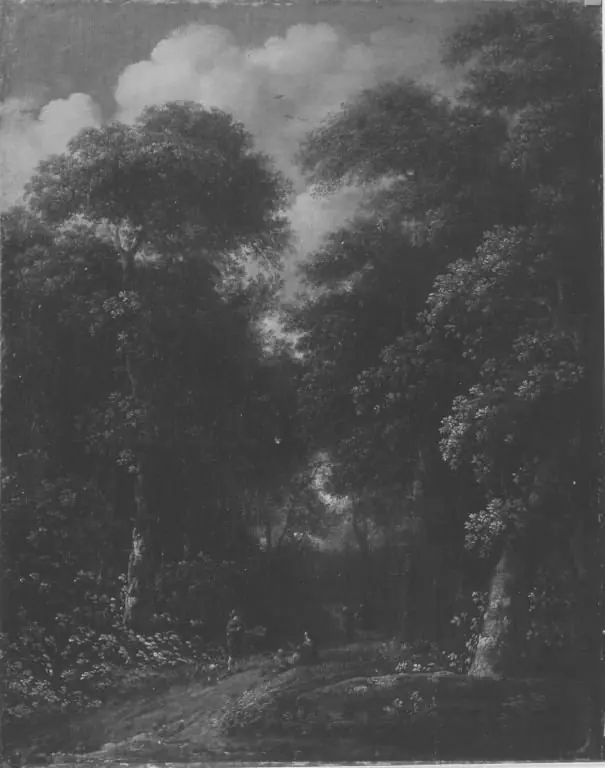
Created in 1775 by Elizabeth Upton, Baroness Templetown, *Wood Scene* is a watercolour painting that captures a dense, shadowed forest.
Created in 1775 by Elizabeth Upton, Baroness Templetown, *Wood Scene* is a watercolour painting that captures a dense, shadowed forest. Though better known for her cut-paper art and collaborations with Josiah Wedgwood, Upton also produced delicate watercolours that reflect her interest in natural forms. The work is part of the Victoria and Albert Museum’s collection, representing a quiet, introspective approach to landscape within the late 18th-century British artistic context.
Subject & Meaning
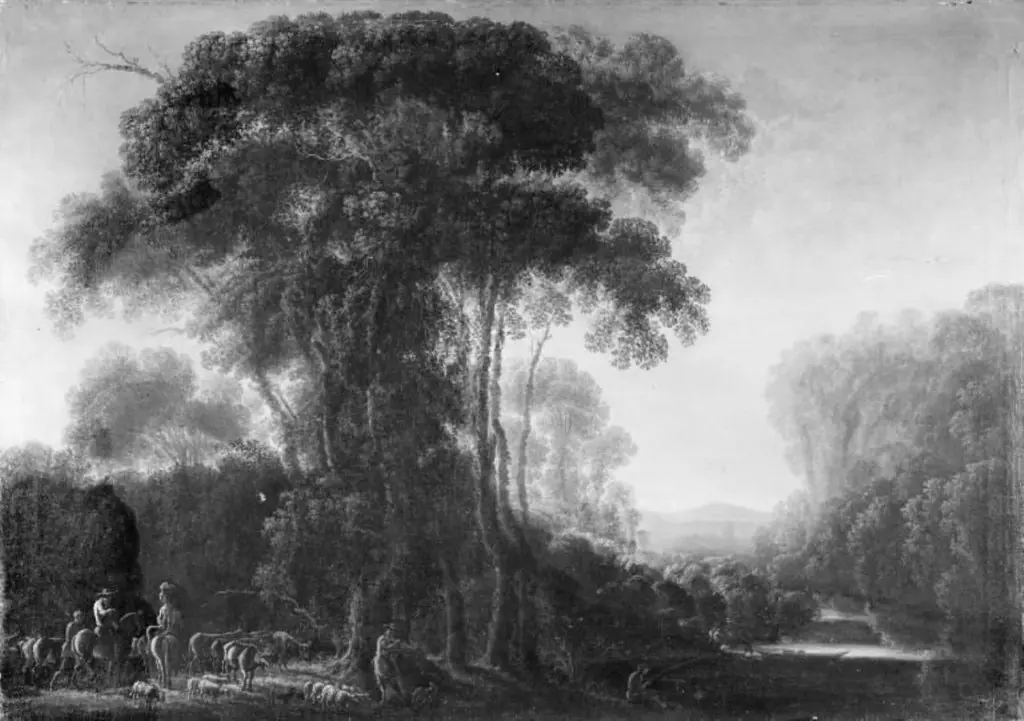
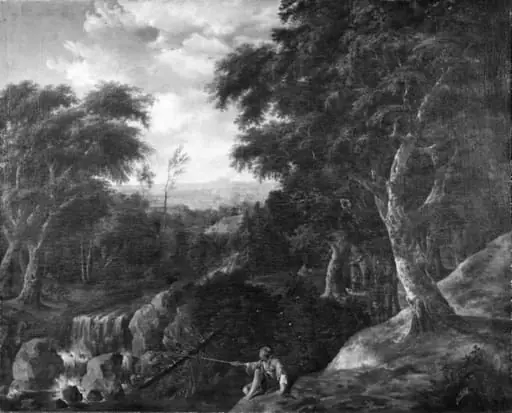
The painting depicts an enclosed woodland, its tangled trees and heavy foliage suggesting isolation and stillness. There are no human figures or signs of cultivation, emphasizing nature’s autonomy. The mood is contemplative rather than dramatic, evoking a sense of quiet mystery. This focus on undisturbed natural space aligns with emerging sensibilities that valued nature as a space for reflection, distinct from the ornamental landscapes of earlier Rococo traditions.
Technique & Style
Upton employed soft watercolour washes to blur the edges of tree trunks and branches, allowing forms to dissolve into the background. The palette is restrained—dominated by muted browns and deep greens—with subtle gradations creating depth without sharp contrast. The absence of linear definition and the emphasis on atmospheric tone reflect a sensitivity to light and texture, distinguishing her approach from the more precise botanical illustrations common at the time.
History & Provenance
The painting entered the Victoria and Albert Museum’s collection as part of its broader acquisition of 18th-century British decorative and fine arts. While Upton’s cut-paper designs for Wedgwood are better documented, *Wood Scene* remains a rare surviving example of her independent watercolour work. Its preservation suggests it was valued within her social circle, possibly as a personal study or gift, rather than a commercial piece.
Context
Produced during the late Rococo era, *Wood Scene* diverges from the period’s ornamental elegance by embracing somber, naturalistic tones. While contemporaries often depicted idealized gardens or pastoral scenes, Upton’s forest feels unmanipulated and introspective. This shift anticipates Romanticism’s later fascination with wild nature, though her approach remains restrained, rooted in the quiet observation typical of amateur women artists of her class.
Legacy
Though not widely exhibited during her lifetime, Upton’s watercolours like *Wood Scene* offer insight into the private artistic practices of 18th-century women. Her work, often overshadowed by her collaborations with Wedgwood, reveals a nuanced engagement with landscape that predates the Romantic movement. Today, it stands as a quiet testament to the understated contributions of female artists working outside institutional frameworks.
Own this work as a print
Artist & collection
Artist
Elizabeth Upton, Baroness Templetown (née Boughton; 1746/47 – c. 30 September 1823) was an English artist whose designs were used by Josiah Wedgwood the potter. She specialised in detailed cut-paper work which adapted…