Artwork
The Metropolitan Tower on A Summer Evening
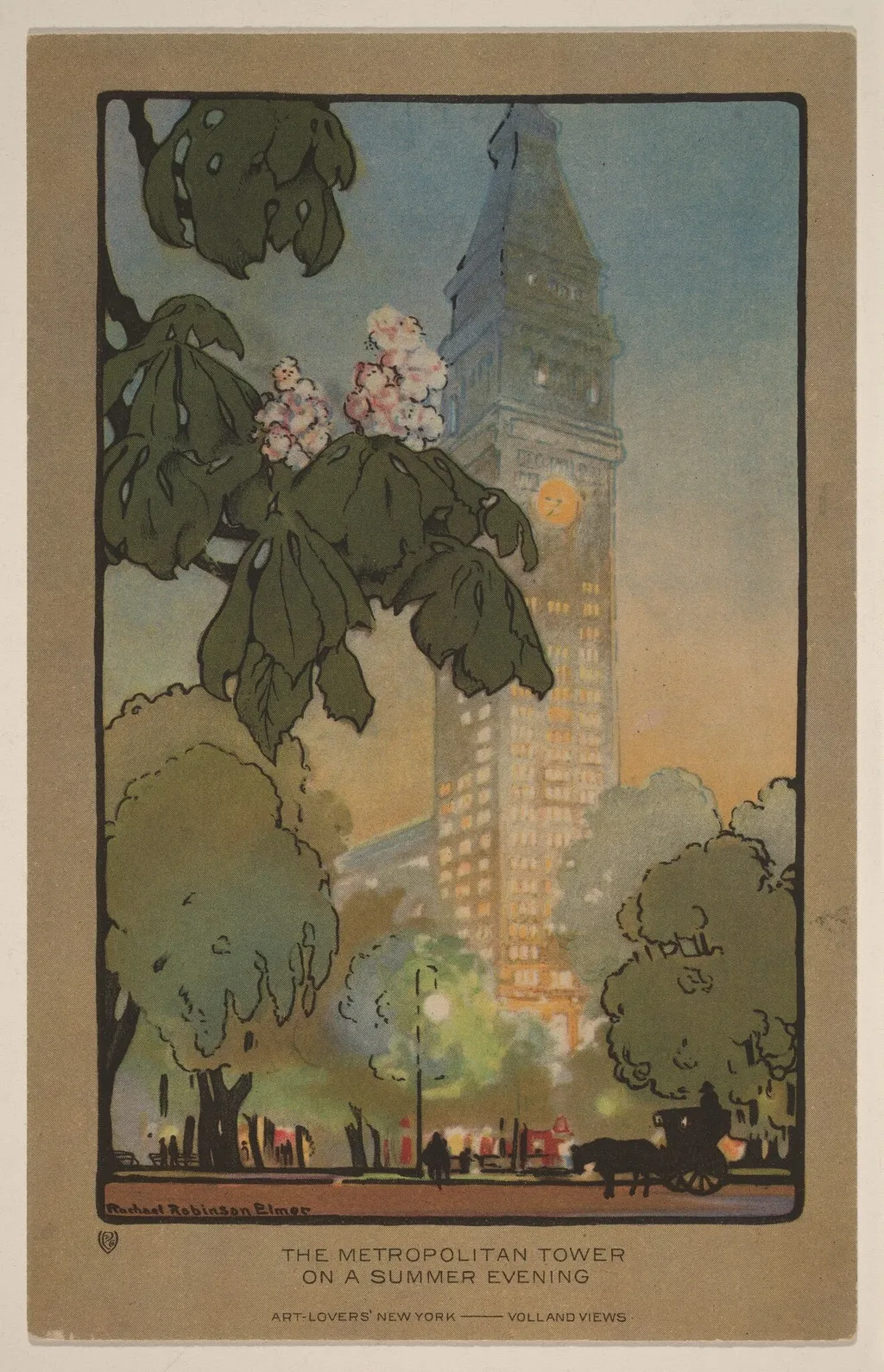
The Metropolitan Tower on A Summer Evening is an ink print by Rachael Robinson Elmer. It dates from 1914 and is held in the collection of the National Gallery of Art.
About this work
Overview
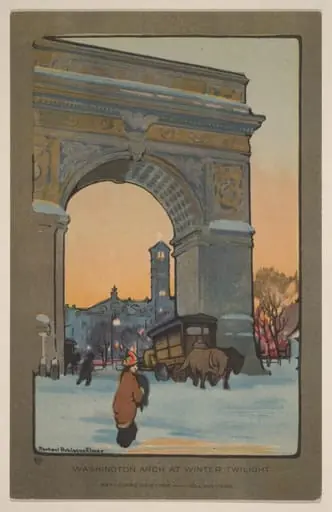
Below, trees frame the scene with dark foliage and blooming pink blossoms, while a horse-drawn carriage moves along a quiet street.
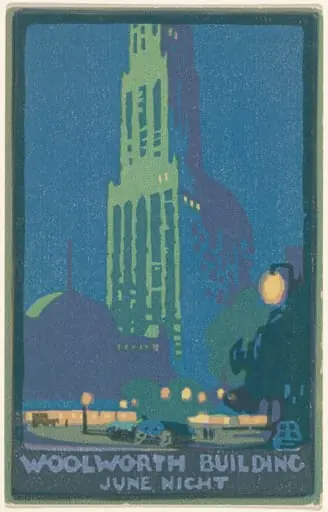
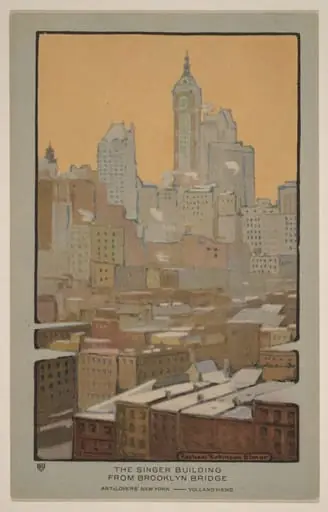
Created in 1914, this offset lithograph by Rachael Robinson Elmer captures a quiet urban evening in New York City. The Metropolitan Tower rises prominently against a twilight sky, its windows glowing with warm light. Below, trees frame the scene with dark foliage and blooming pink blossoms, while a horse-drawn carriage moves along a quiet street. The composition balances architectural grandeur with intimate natural detail.
Subject & Meaning
The work juxtaposes the emerging modern city with lingering pastoral elements. The illuminated tower symbolizes industrial progress, while the carriage and flowering trees suggest a fading rural rhythm. Elmer presents no overt narrative, but the coexistence of these elements implies a moment of transition—urban life not yet overwhelming the natural world, but already reshaping it.
Technique & Style
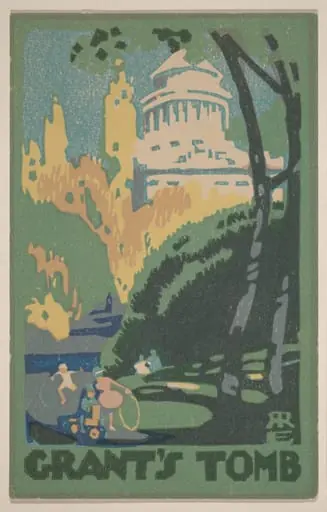
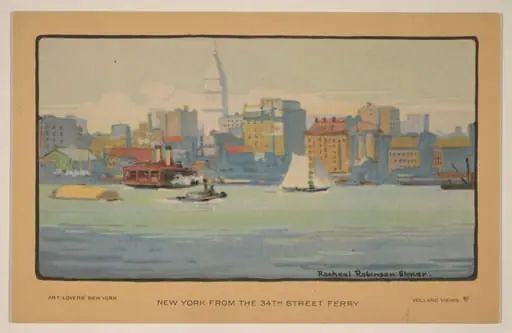
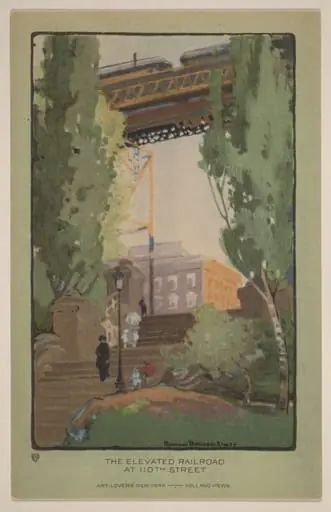
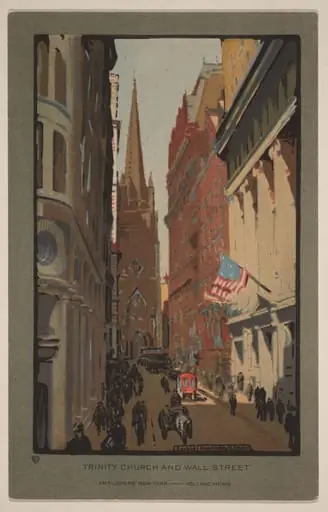
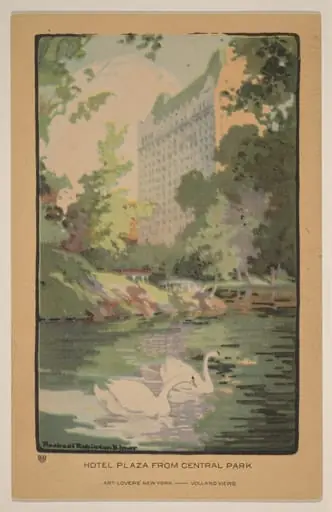
Elmer employed offset lithography to achieve a flat, even tonality with minimal shading. Lines are clean and simplified, avoiding dramatic perspective or texture. The color palette is restrained: soft blues, muted greens, and golden yellows define the scene without realism. This deliberate stylization emphasizes harmony over detail, aligning with early 20th-century decorative print traditions.
History & Provenance
The print was produced in 1914 as part of Elmer’s series documenting New York’s evolving skyline. It was likely distributed through art societies or as a commercial print, reflecting her interest in making art accessible. No record of early ownership exists beyond its inclusion in institutional collections by the mid-20th century, suggesting modest circulation during its time.
Context
In 1914, New York was rapidly modernizing, with skyscrapers redefining the city’s silhouette. Elmer’s work responds to this change not with spectacle, but with quiet observation. Her focus on twilight—a liminal hour—mirrors broader cultural anxieties about progress. Unlike contemporaries who glorified industry, she framed it within the familiar rhythms of nature and everyday life.
Legacy
Elmer’s print remains a quiet testament to early urban modernism in American printmaking. Though not widely known today, it exemplifies a genre of art that documented city life with sensitivity rather than spectacle. Its preservation in museum collections underscores its value as a visual record of a transitional moment in American urban experience.
Artist & collection