Artwork
Interior of a Protestant Church
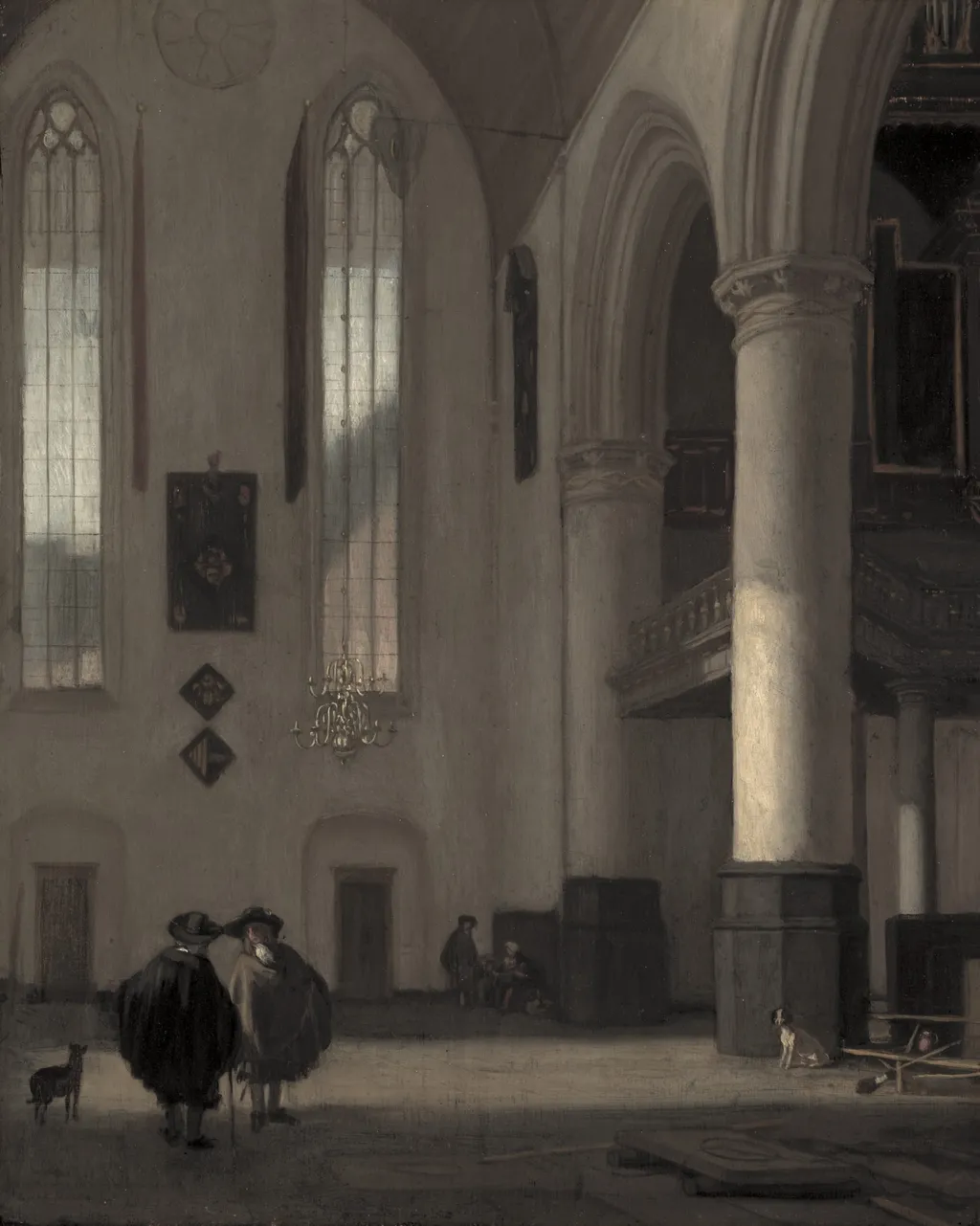
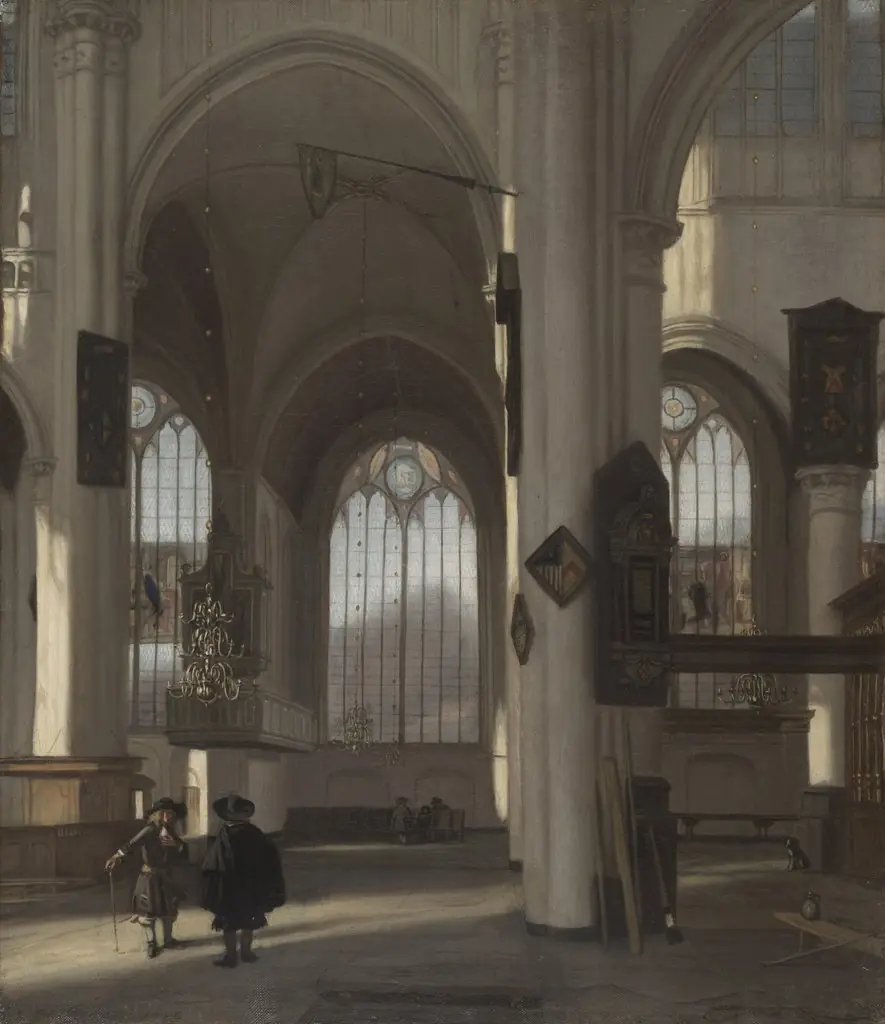
Interior of a Protestant Church is an unspecified painting by the Dutch Golden Age artist Emanuel de Witte. It dates from 1689 and is held in the collection of the Detroit Institute of Arts.
About this work
Overview
Emanuel de Witte’s 1689 oil painting, Interior of a Protestant Church, presents a spacious ecclesiastical interior rendered with meticulous attention to architectural detail. The work is part of the Detroit Institute of Arts’ collection and exemplifies the Dutch artist’s focus on interior spaces during the late seventeenth century.
Subject & Meaning
The canvas captures a Protestant sanctuary defined by lofty ceilings, stone flooring, and expansive windows that admit diffused daylight. Two figures, accompanied by a dog, move along the nave toward the rear, suggesting a quiet, everyday moment of worship or passage rather than a formal ceremony.
Technique & Style
De Witte employs a restrained palette of muted tones, allowing subtle chiaroscuro to model the interior’s depth. Light falls softly across the arches and columns, creating a gentle contrast that guides the eye toward the far end of the space while emphasizing the architectural geometry of the church.
History & Provenance
Painted in the final year of de Witte’s life, the piece reflects his mature period of interior church scenes. It entered the Detroit Institute of Arts through acquisition in the twentieth century, where it has remained on display as a representative example of Dutch Baroque interior genre painting.
Context
During the Dutch Golden Age, Protestant churches were often depicted without overt religious iconography, focusing instead on spatial harmony and light. De Witte’s work aligns with this tradition, offering a secular appreciation of sacred architecture that resonated with contemporary viewers interested in realism and atmospheric perspective.
Own this work as a print
Artist & collection

Artist
Emanuel de Witte was born circa 1617 in Alkmaar, the son of Pieter de Wit, a local schoolmaster.

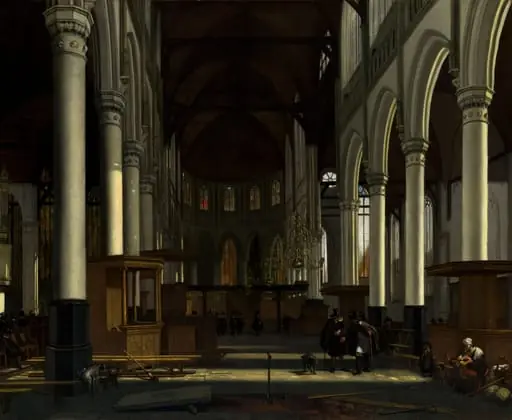 The Interior of the Oude Kerk, Amsterdam
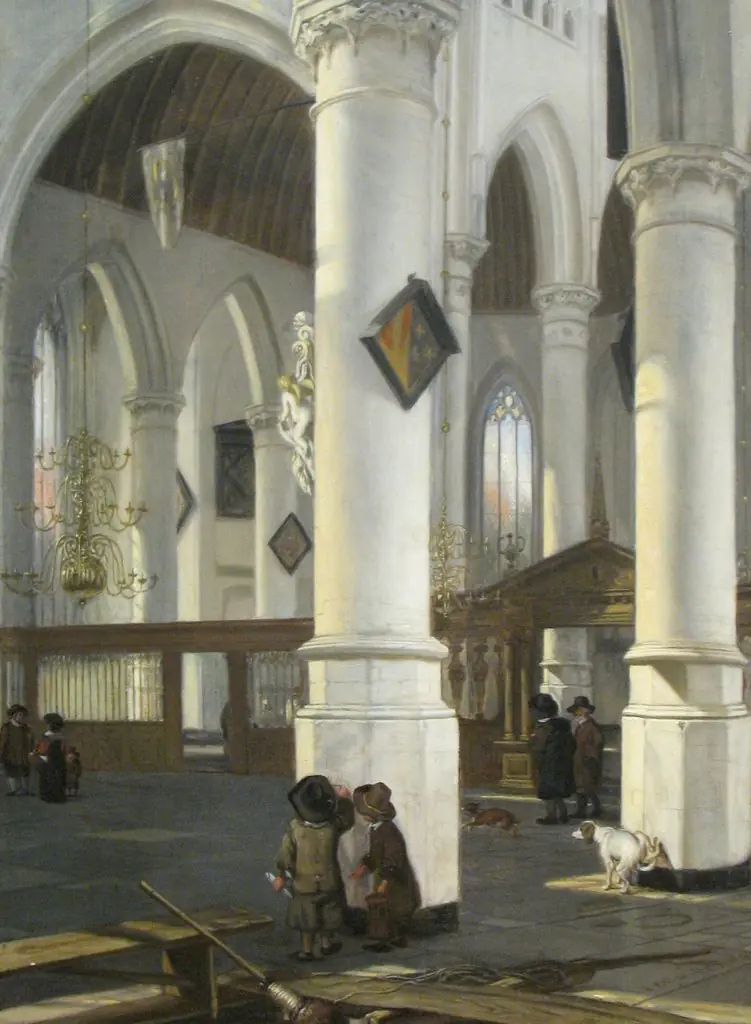 Interior of the Oude Kerk, Delft
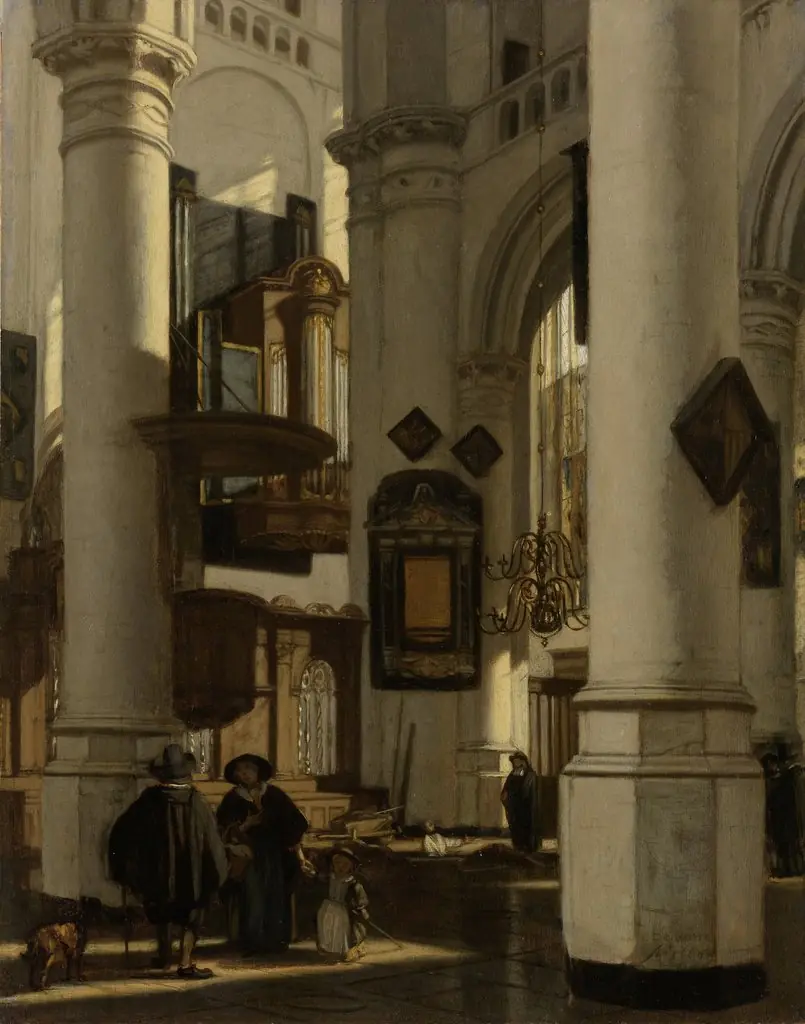 Interior of a Protestant, Gothic Church, with a Gravedigger in the Choir
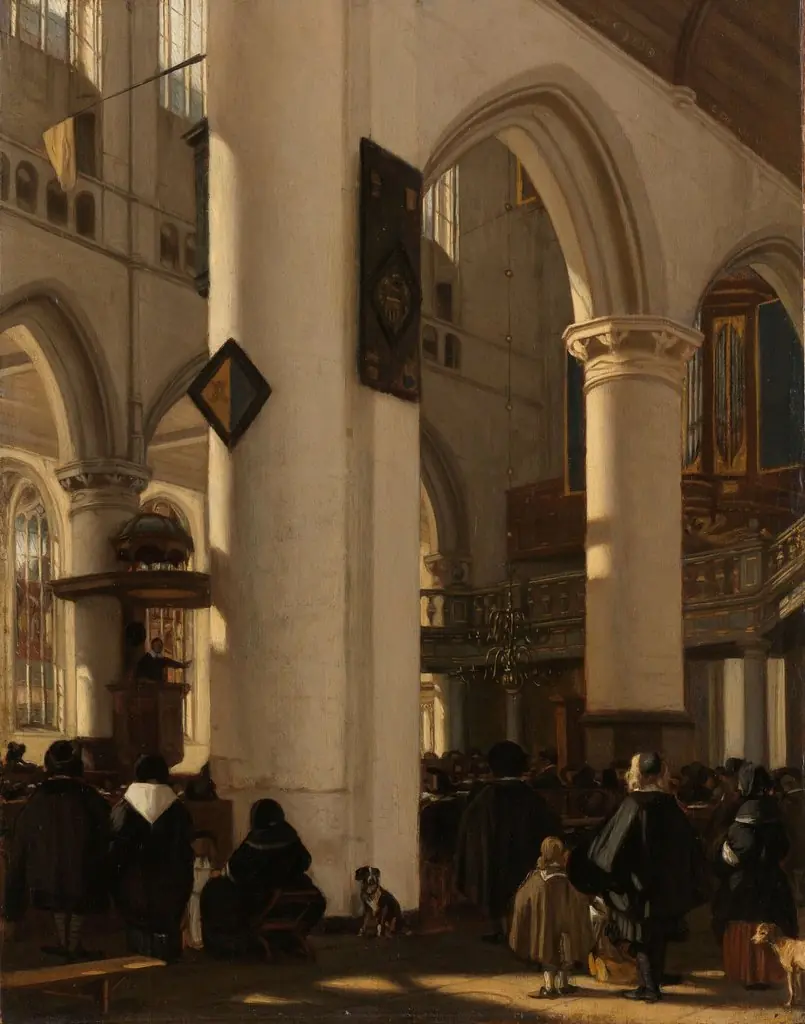 Interior of a Protestant, Gothic Church during a Service
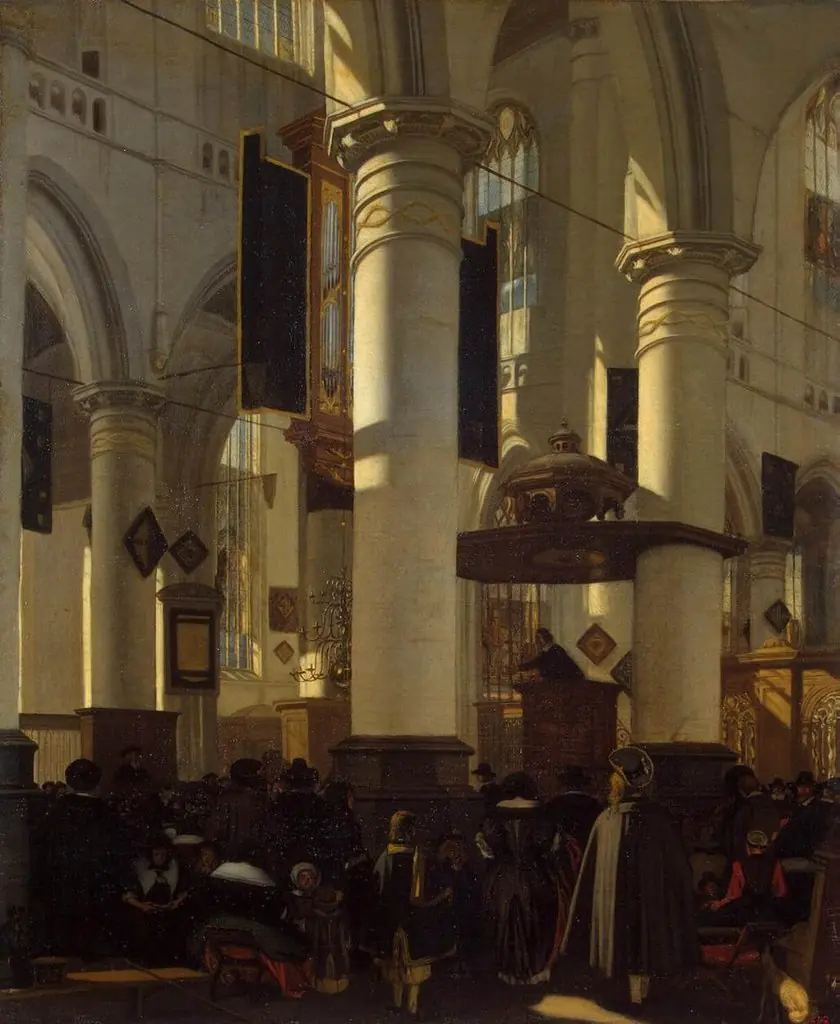 Interior of a Church
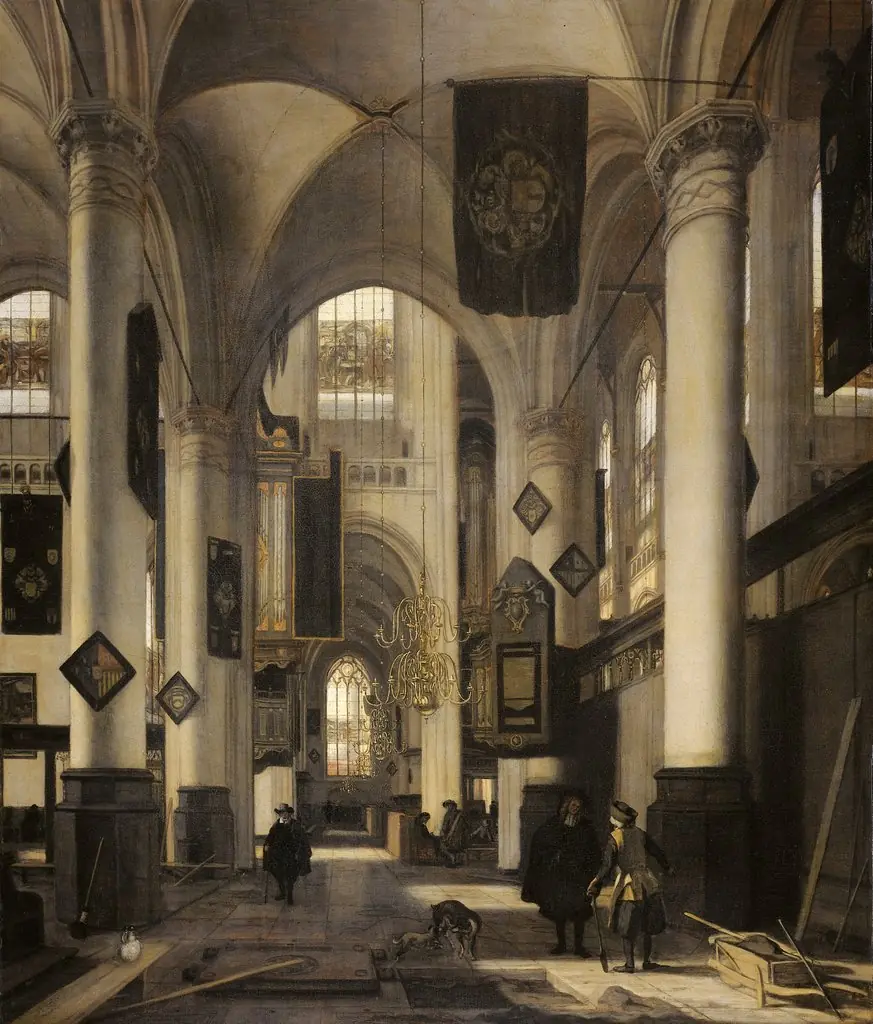 Interior of a Protestant Gothic Church
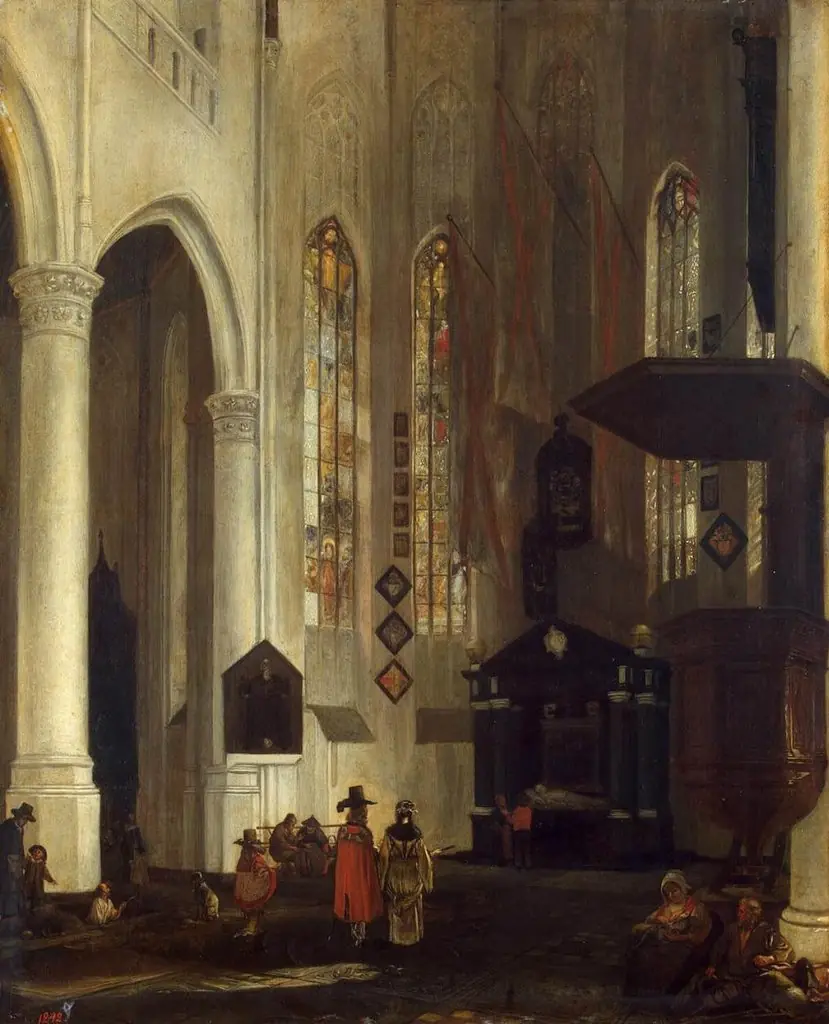 Old Church (Oudekerk) in Delft with the Tomb of Admiral Pieter Pieterszoon Hein (Heyn)
 Interior of a Church