Artwork
Interior of a Protestant Gothic Church
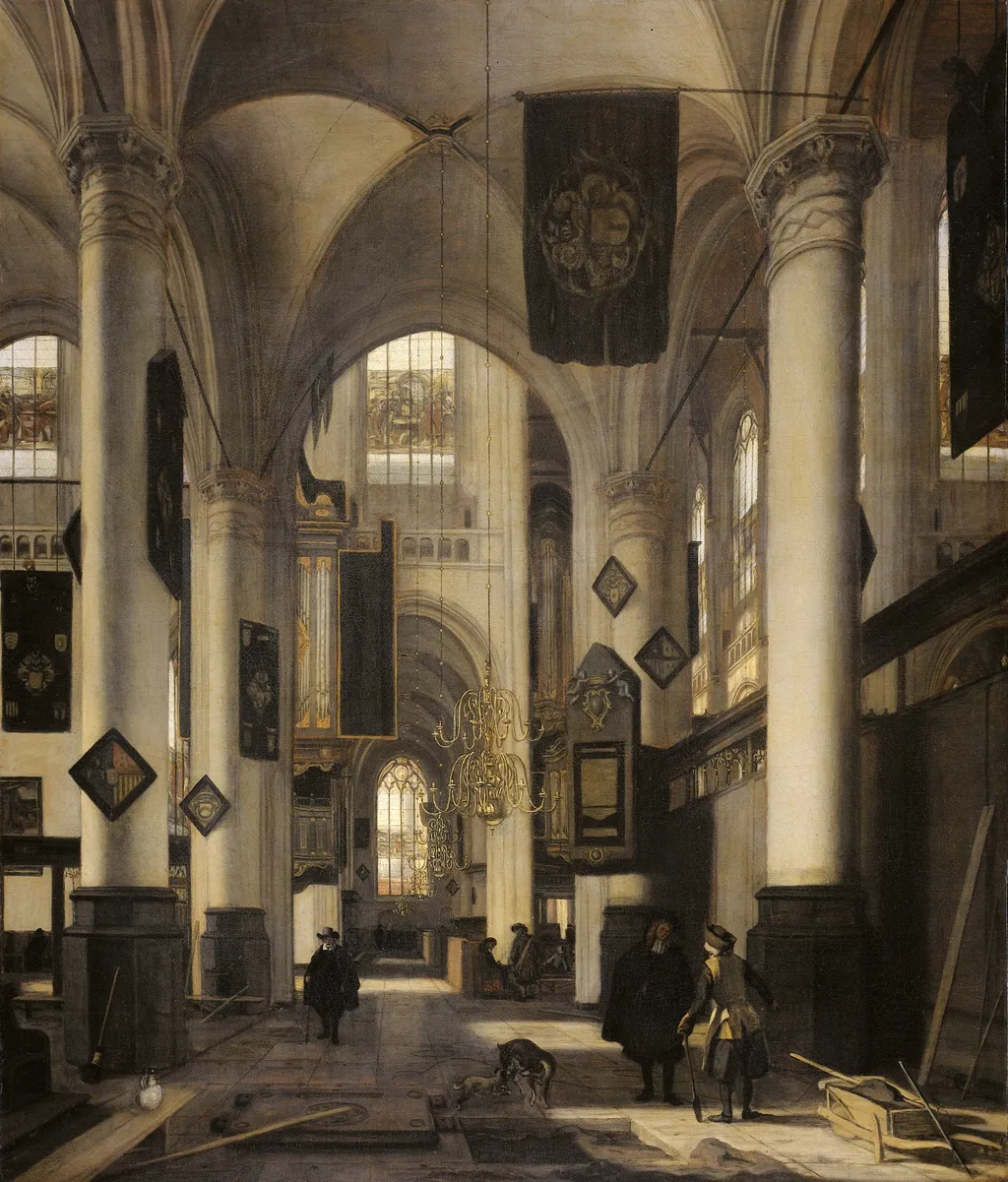
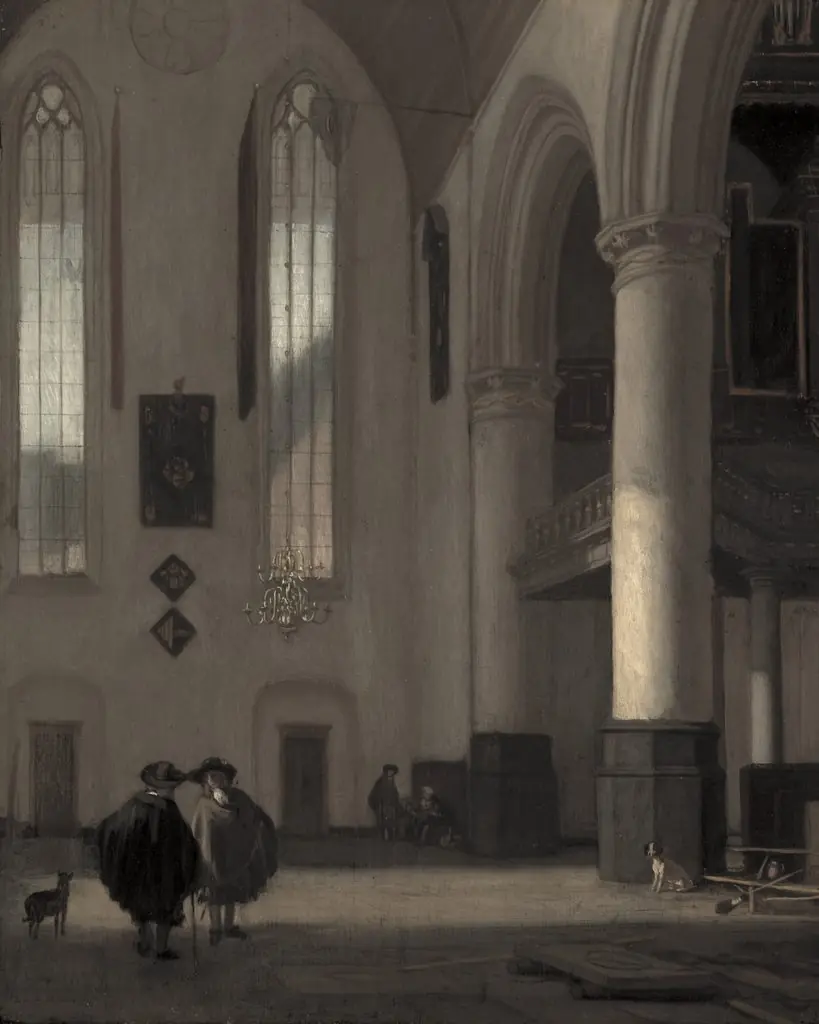
Interior of a Protestant Gothic Church is an oil painting by the Dutch Golden Age artist Emanuel de Witte. It dates from 1670 and is held in the collection of the Rijksmuseum.
About this work
Overview
The composition utilizes a low viewpoint to emphasize the soaring verticality of the Gothic nave, defined by massive stone columns and high, arched vaults.
Emanuel de Witte's 'Interior of a Protestant Gothic Church,' painted in 1670, exemplifies the Dutch Golden Age fascination with architectural perspective and the effects of light within sacred spaces. The composition utilizes a low viewpoint to emphasize the soaring verticality of the Gothic nave, defined by massive stone columns and high, arched vaults. De Witte masterfully renders the interplay of natural illumination streaming through tall windows, which casts elongated shadows across the stone floor and highlights the texture of the masonry. The scene depicts a sparse congregation; figures dressed in modest, dark attire are scattered throughout the space, engaging in quiet conversation or solitary contemplation, reflecting the post-Reformation shift toward functional, unadorned worship environments. The walls feature empty frames, a direct reference to the iconoclasm that stripped Protestant churches of Catholic imagery. This work solidifies de Witte's reputation as the preeminent painter of church interiors, distinguishing his approach from contemporaries like Pieter Saenredam by prioritizing the atmospheric presence of light and the human element within the architectural grandeur over strict topographical precision.
Subject & Meaning
The artwork portrays a Protestant church, evident in the absence of elaborate religious adornments and the presence of empty frames on the walls. A few individuals, dressed in simple, dark clothing, are depicted moving through the space. Specific elements such as a dog, a grave, and a tombstone are included, subtly integrating aspects of everyday life and mortality within the sacred architectural setting, a common motif in Dutch art.
Technique & Style
De Witte demonstrates a skilled command of light and shadow to convey the immense scale and depth of the church interior. Strong illumination from the windows creates striking contrasts, accentuating architectural features while allowing distant areas to recede into softer tones. This deliberate use of light enhances the realism of the scene and guides the viewer's gaze through the perspective, emphasizing the building's solemn grandeur.
Own this work as a print
Artist & collection

Artist
Emanuel de Witte was born circa 1617 in Alkmaar, the son of Pieter de Wit, a local schoolmaster.

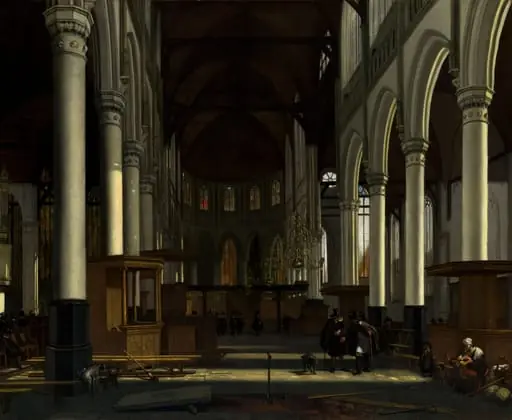 The Interior of the Oude Kerk, Amsterdam
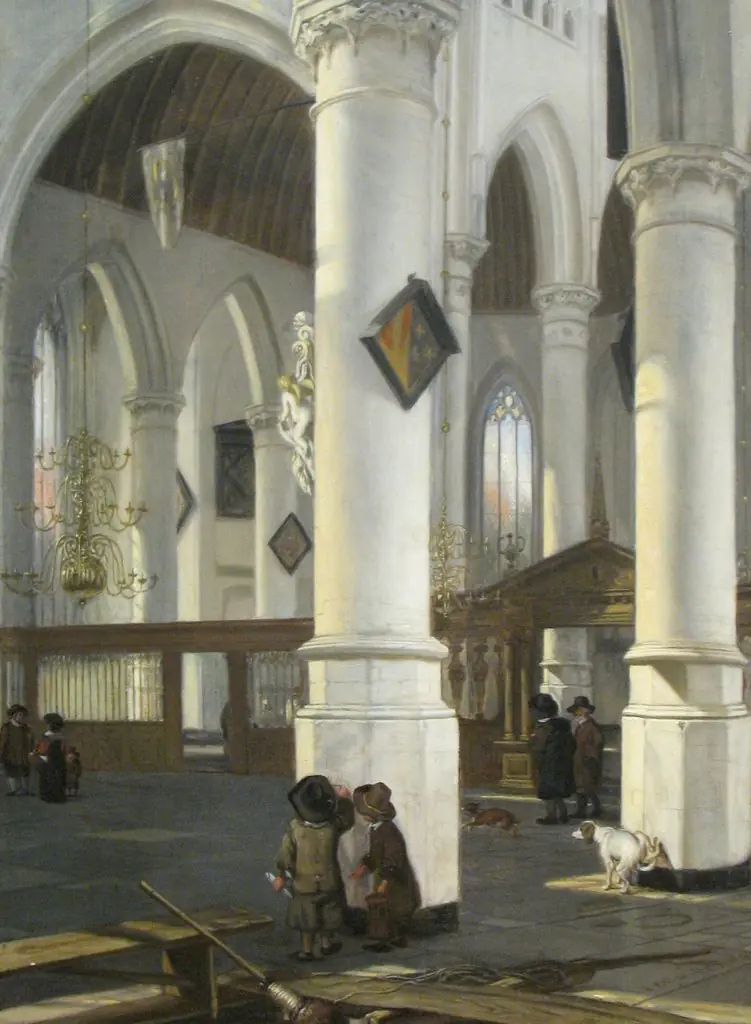 Interior of the Oude Kerk, Delft
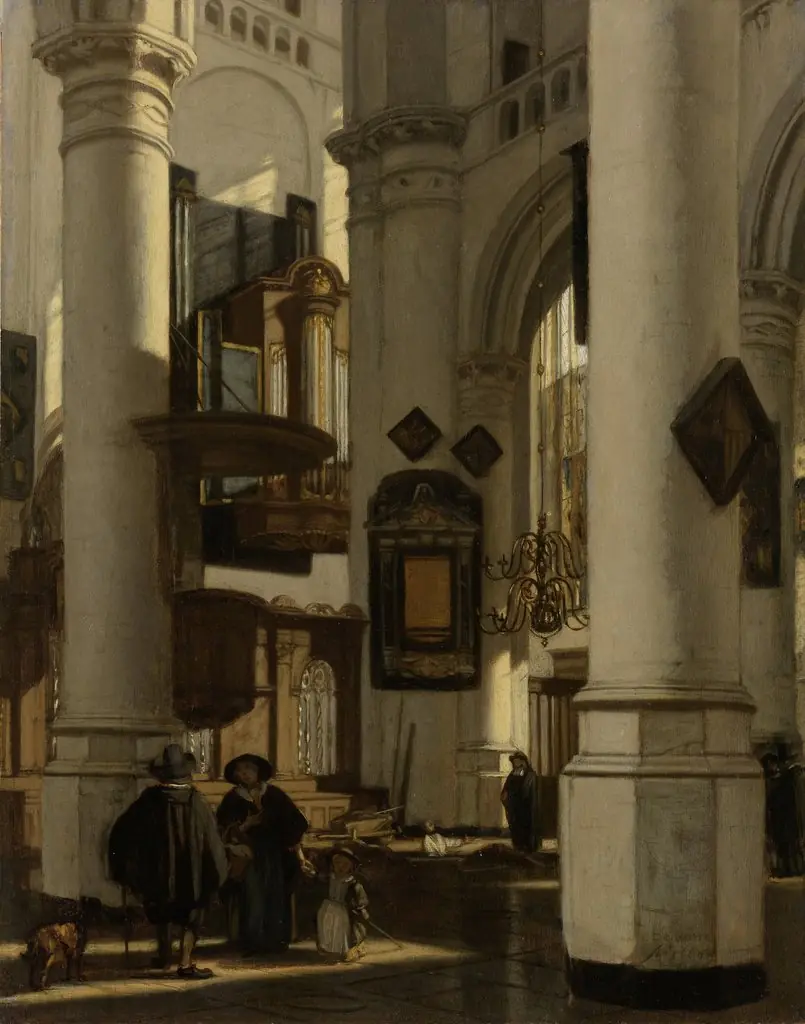 Interior of a Protestant, Gothic Church, with a Gravedigger in the Choir
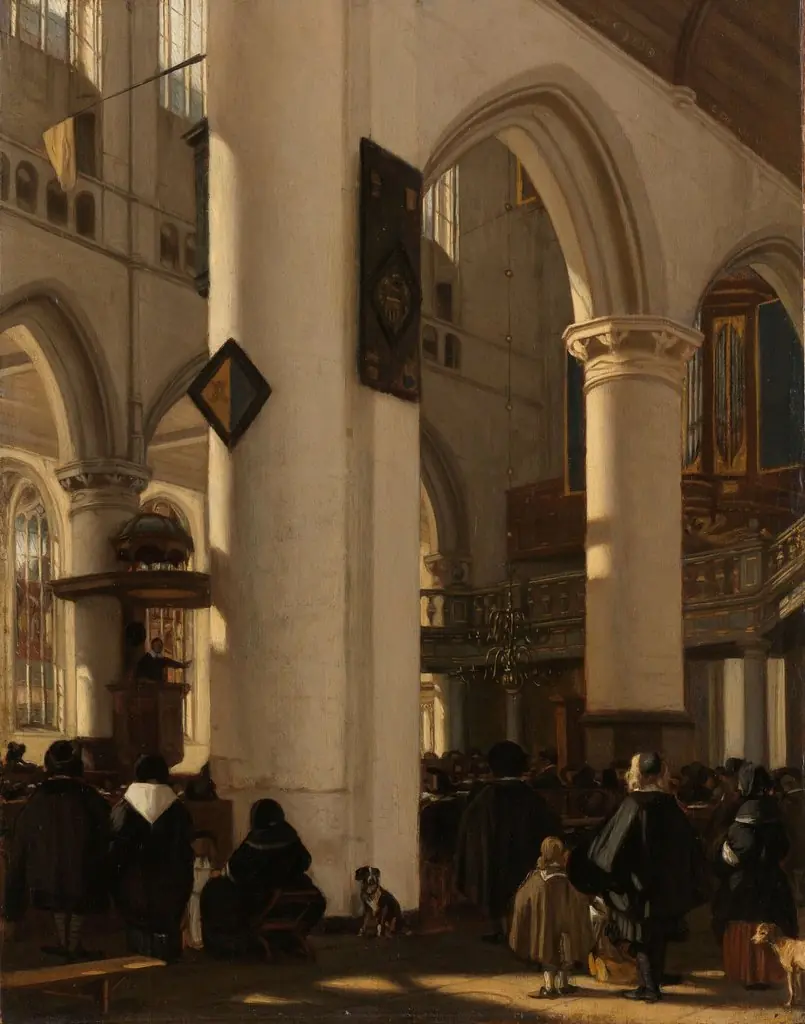 Interior of a Protestant, Gothic Church during a Service
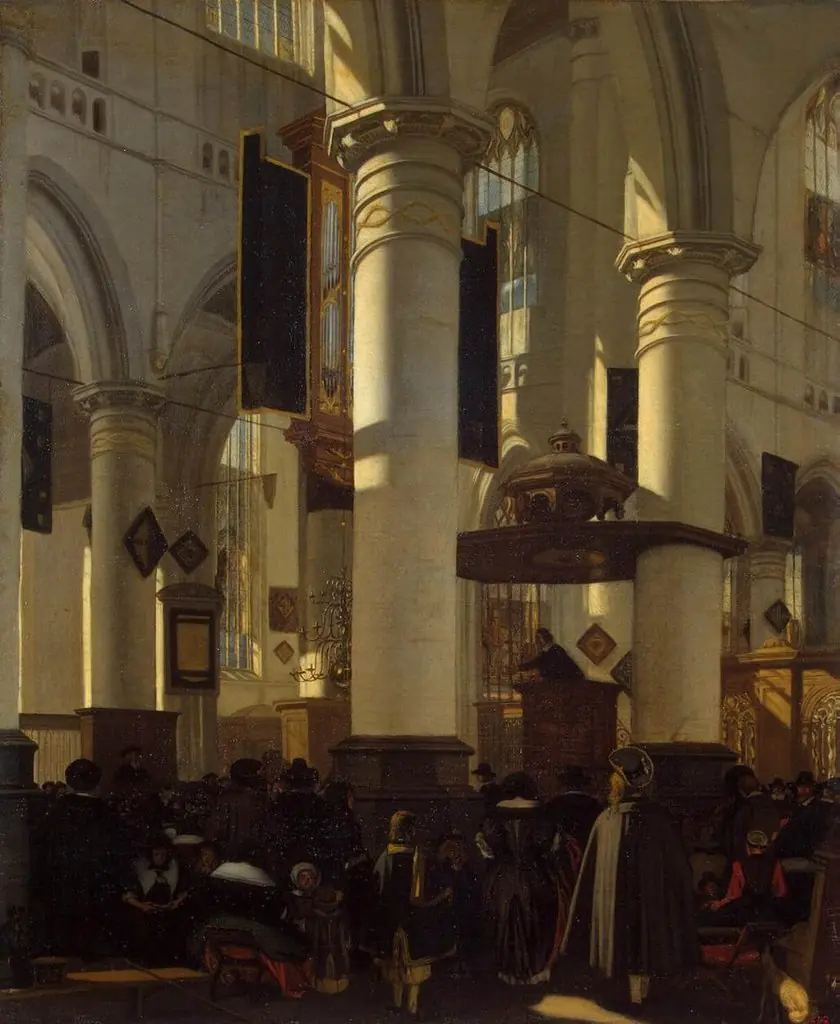 Interior of a Church
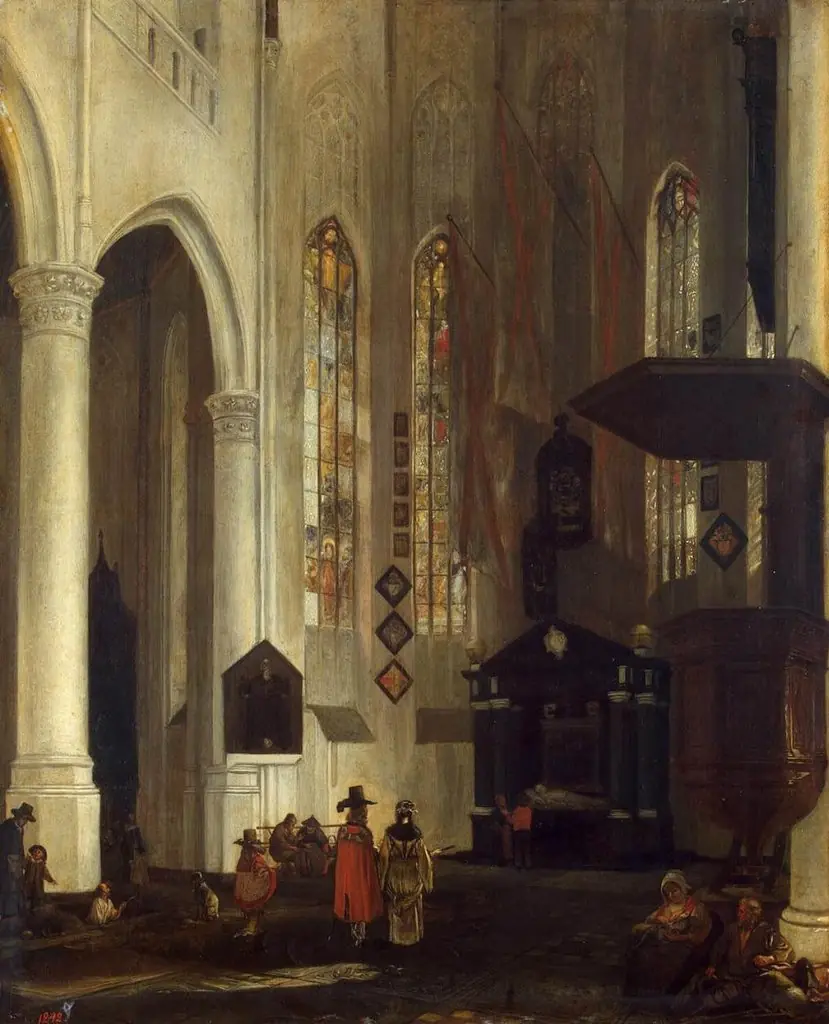 Old Church (Oudekerk) in Delft with the Tomb of Admiral Pieter Pieterszoon Hein (Heyn)
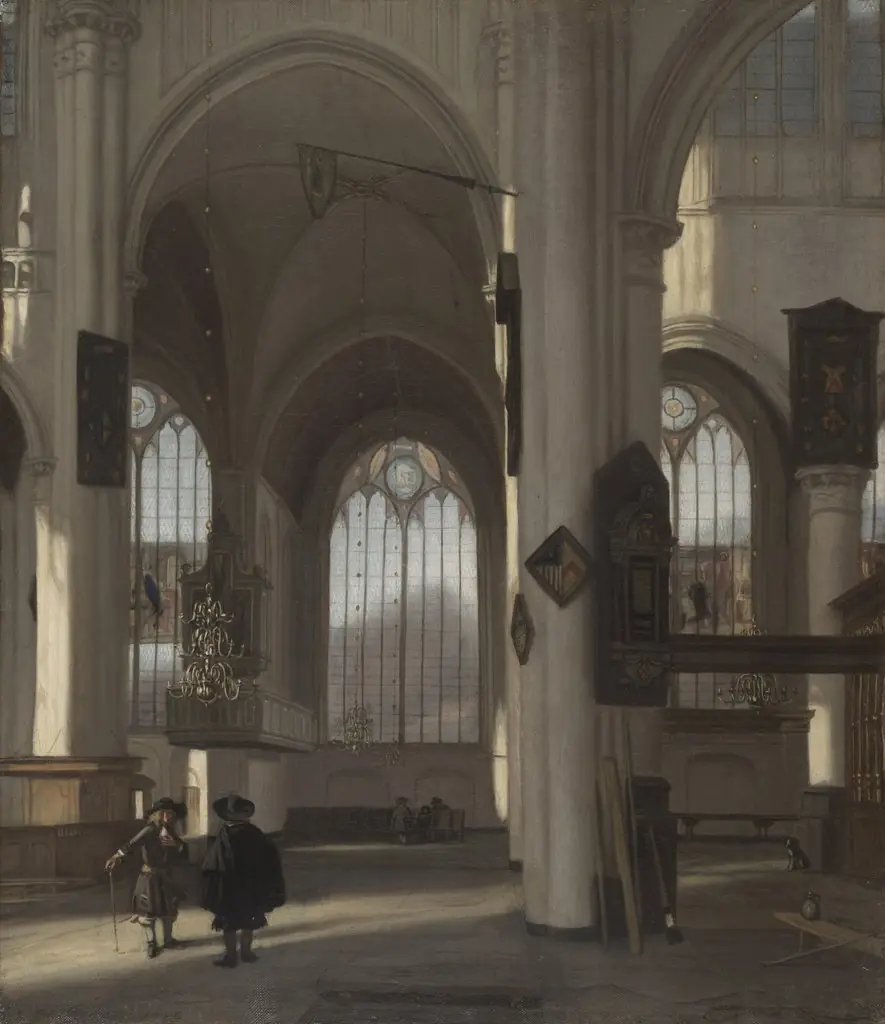 Interior of a Church
 Interior of a Protestant Church