Artwork
Interior of the Oude Kerk, Amsterdam
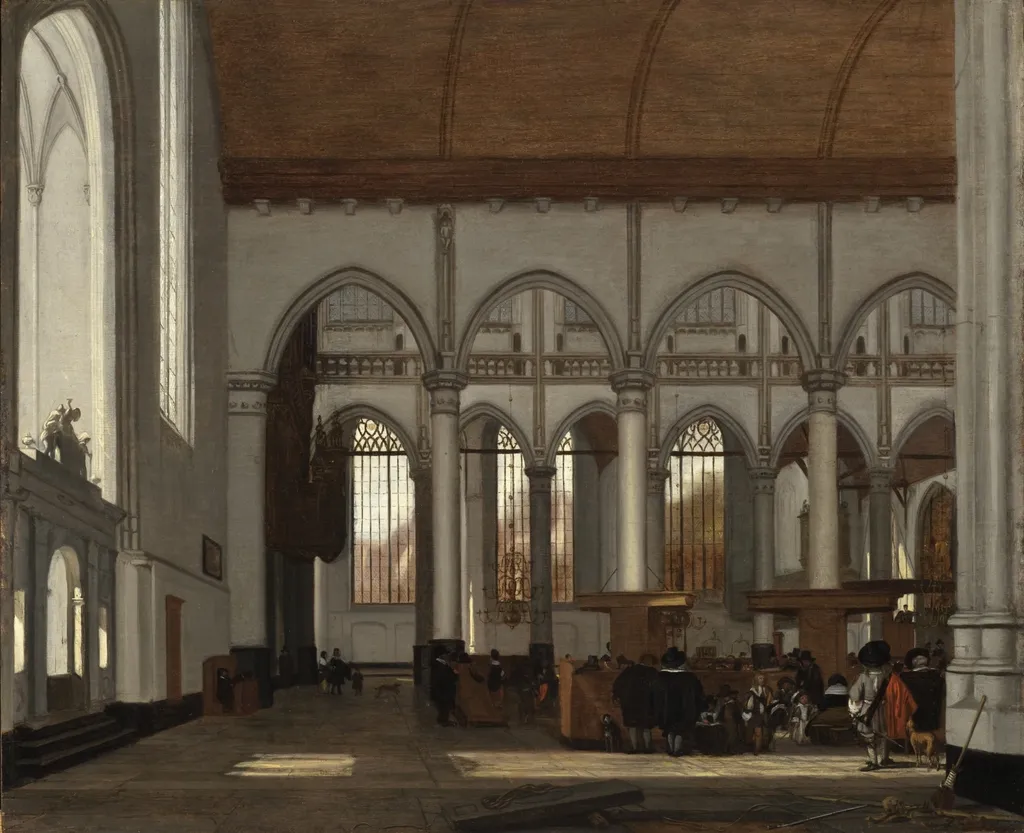
Interior of the Oude Kerk, Amsterdam is an oil painting by the Dutch Golden Age artist Emanuel de Witte. It dates from 1654 and is held in the collection of the Los Angeles County Museum of Art.
About this work
Overview
Emanuel de Witte’s 1654 oil on canvas presents the interior of Amsterdam’s Oude Kerk. The composition captures a spacious nave illuminated by muted daylight filtering through high arched windows. Rows of stone columns frame the scene, while wooden pews occupy the floor, populated by congregants and a few resting dogs. The painting resides in the Los Angeles County Museum of Art.
Subject & Meaning
The work records a moment of ordinary worship within a Dutch Reformed setting, emphasizing the communal aspect of prayer and the quiet rhythms of daily church life. The inclusion of a dog and a modest grave hints at the everyday realities that coexist with sacred routine, underscoring the church’s role as both a spiritual and social space.
Technique & Style
De Witte employs a restrained palette and precise linear perspective to convey depth, while his handling of light creates a subtle chiaroscuro effect. Soft illumination falls on the stone columns and floorboards, generating gentle shadows that enhance the sense of volume. The painter’s meticulous rendering of textures—stone, wood, fabric—contributes to the realistic atmosphere.
History & Provenance
Executed in the mid‑seventeenth century, the canvas reflects de Witte’s long‑standing interest in ecclesiastical interiors. After remaining in private collections for several centuries, the painting entered the Los Angeles County Museum of Art’s holdings in the late twentieth century, where it has been displayed as part of the museum’s European Baroque holdings.
Own this work as a print
Artist & collection

Artist
Emanuel de Witte was born circa 1617 in Alkmaar, the son of Pieter de Wit, a local schoolmaster.

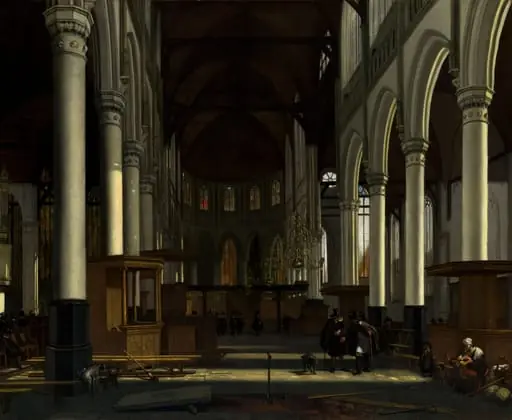 The Interior of the Oude Kerk, Amsterdam
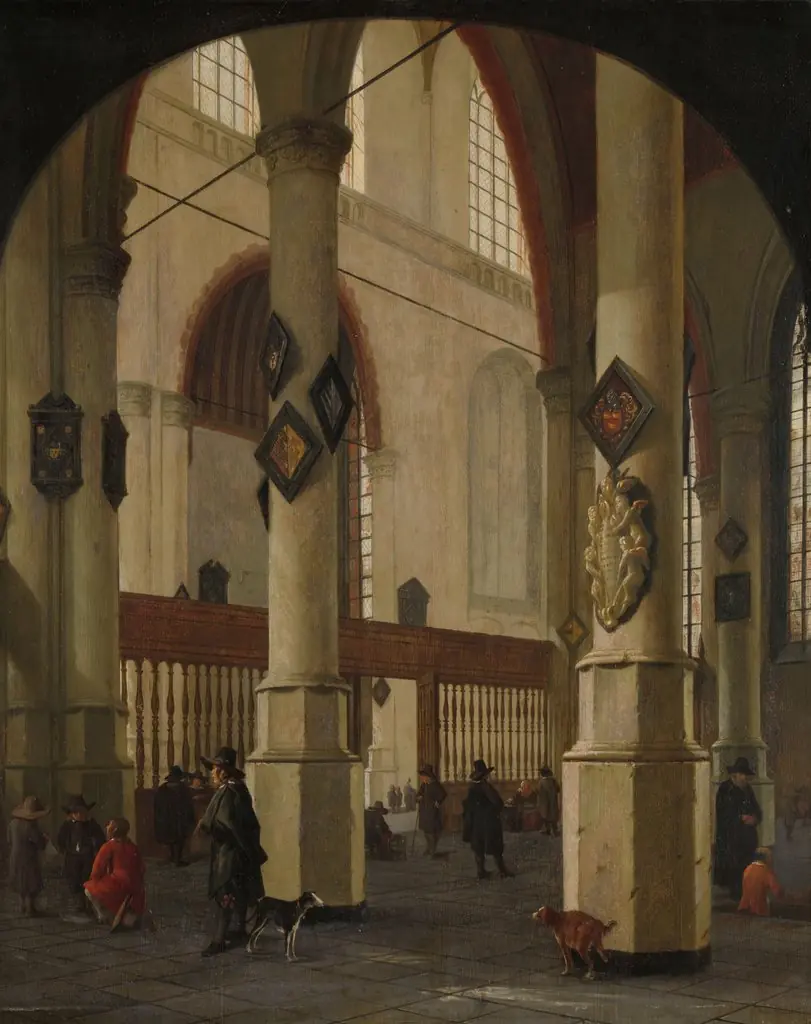
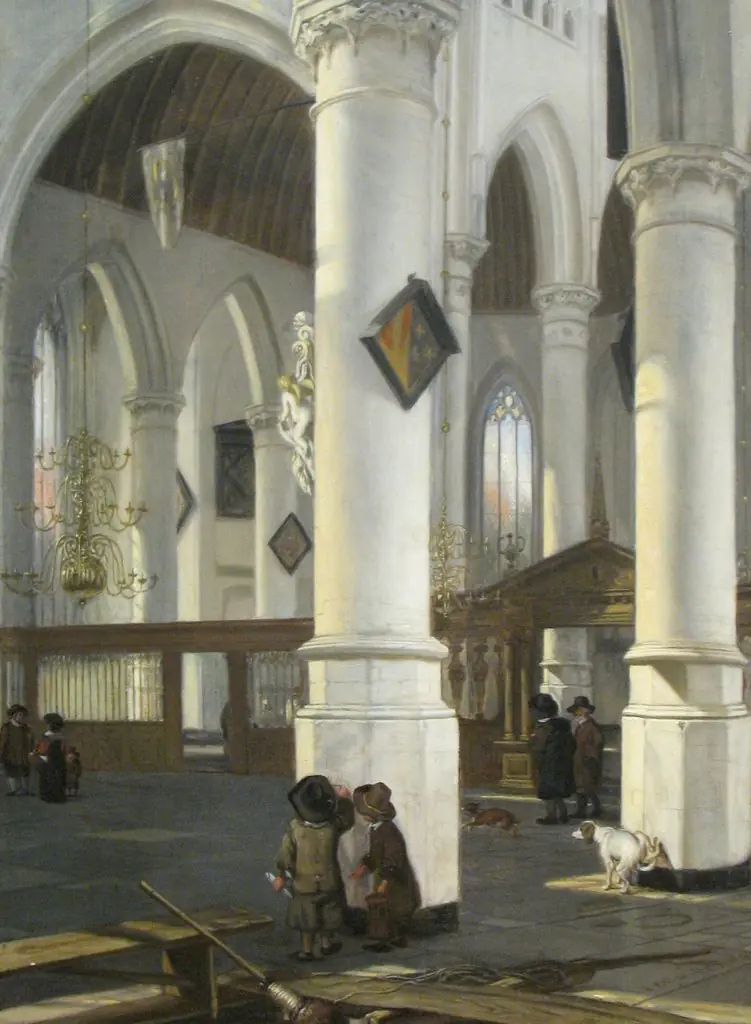 Interior of the Oude Kerk, Delft
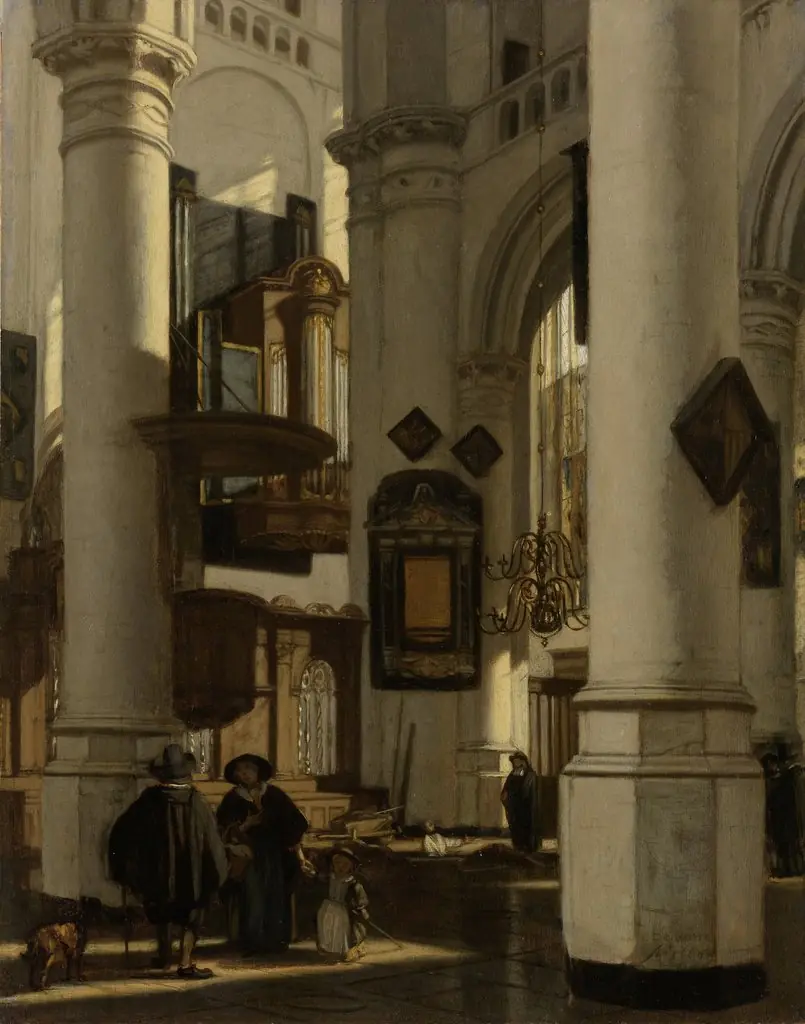 Interior of a Protestant, Gothic Church, with a Gravedigger in the Choir
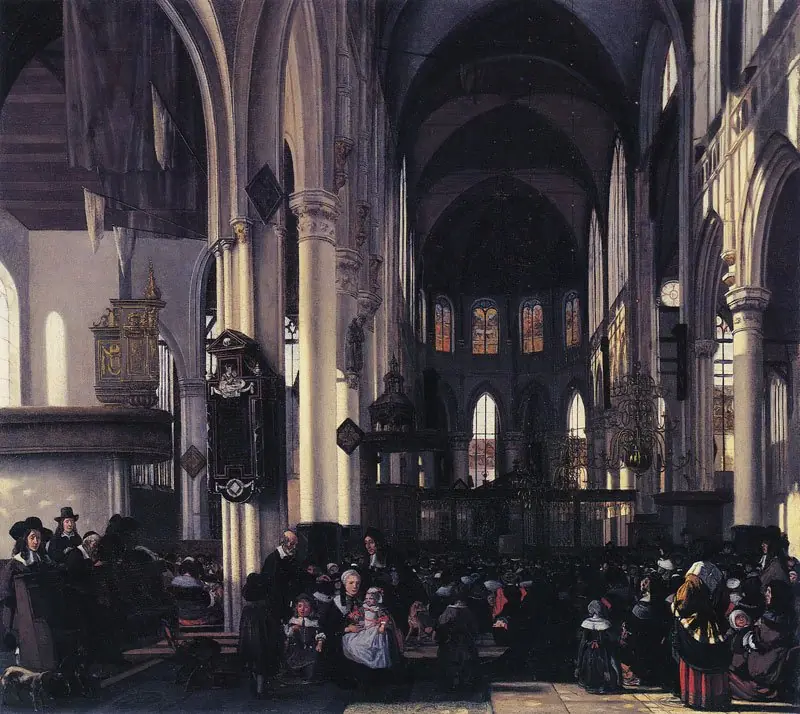
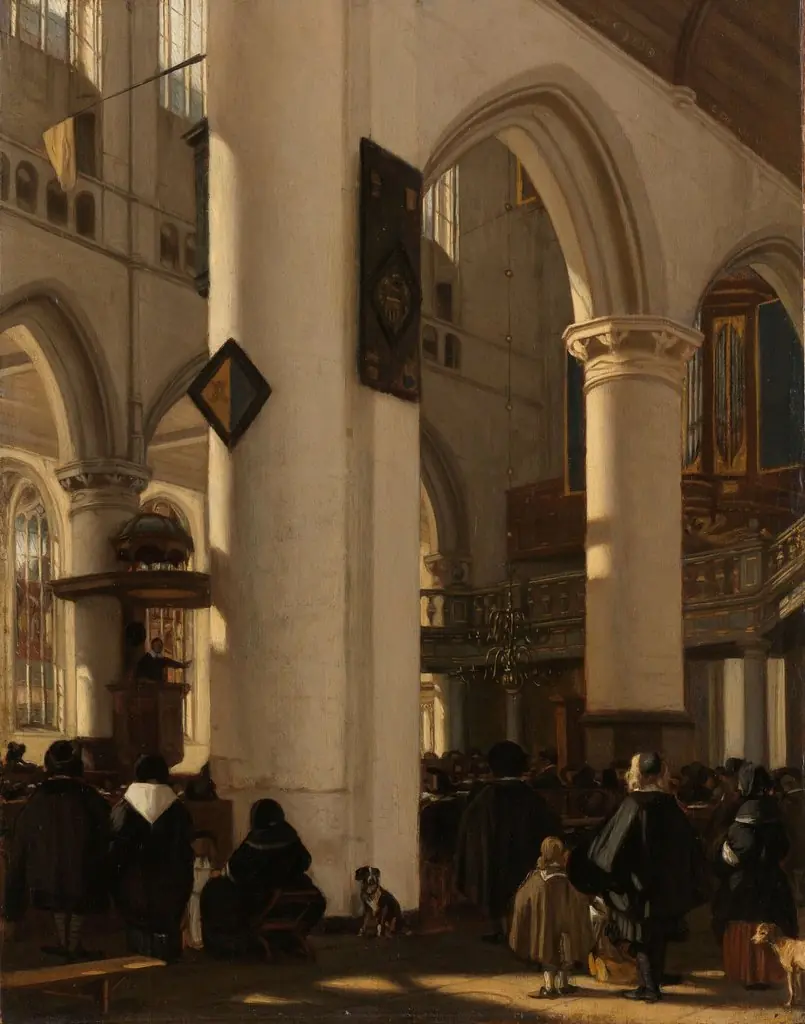 Interior of a Protestant, Gothic Church during a Service
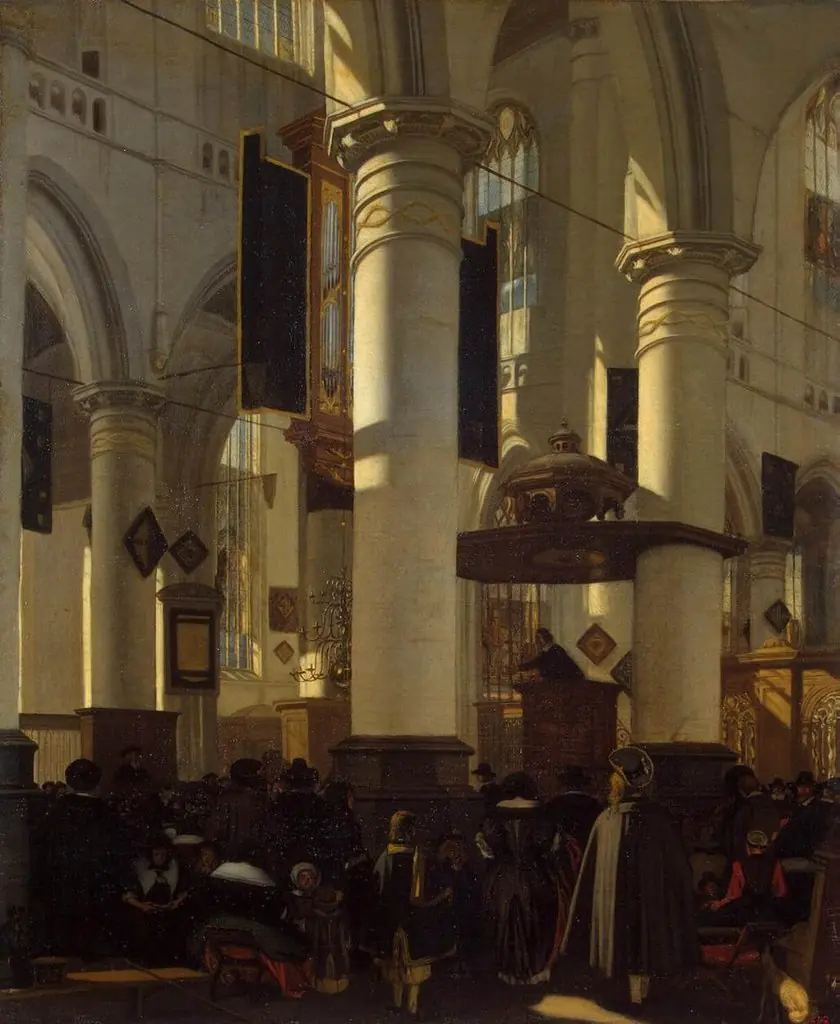 Interior of a Church
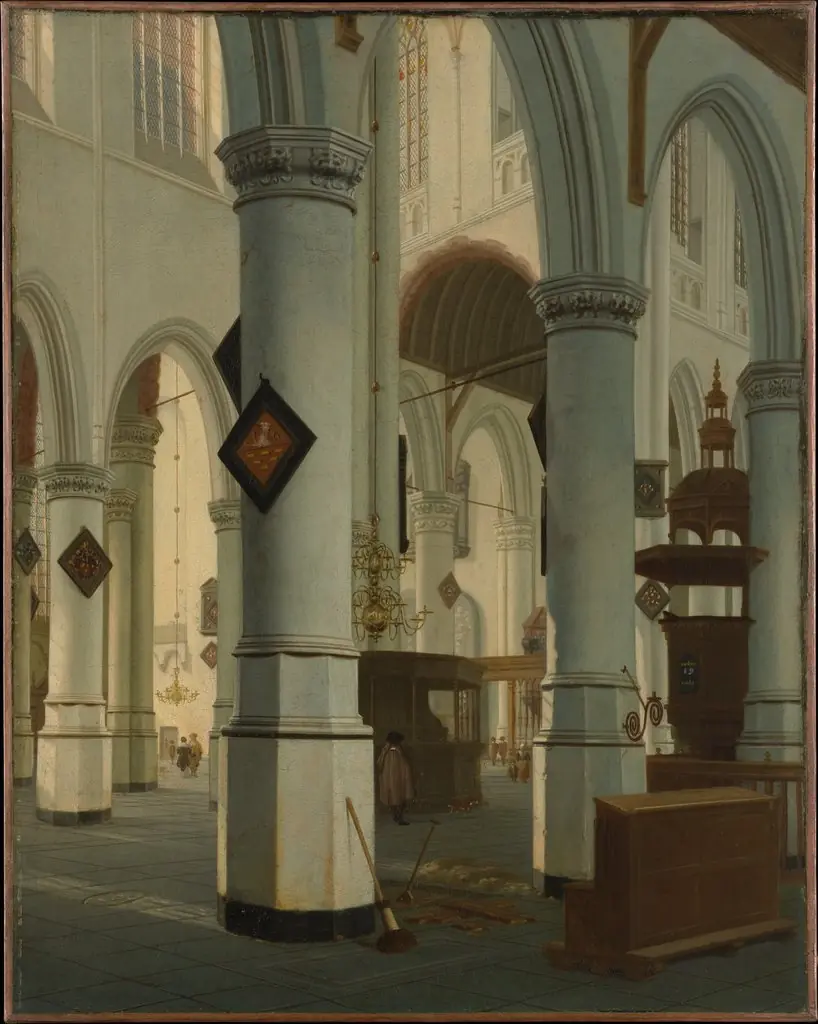
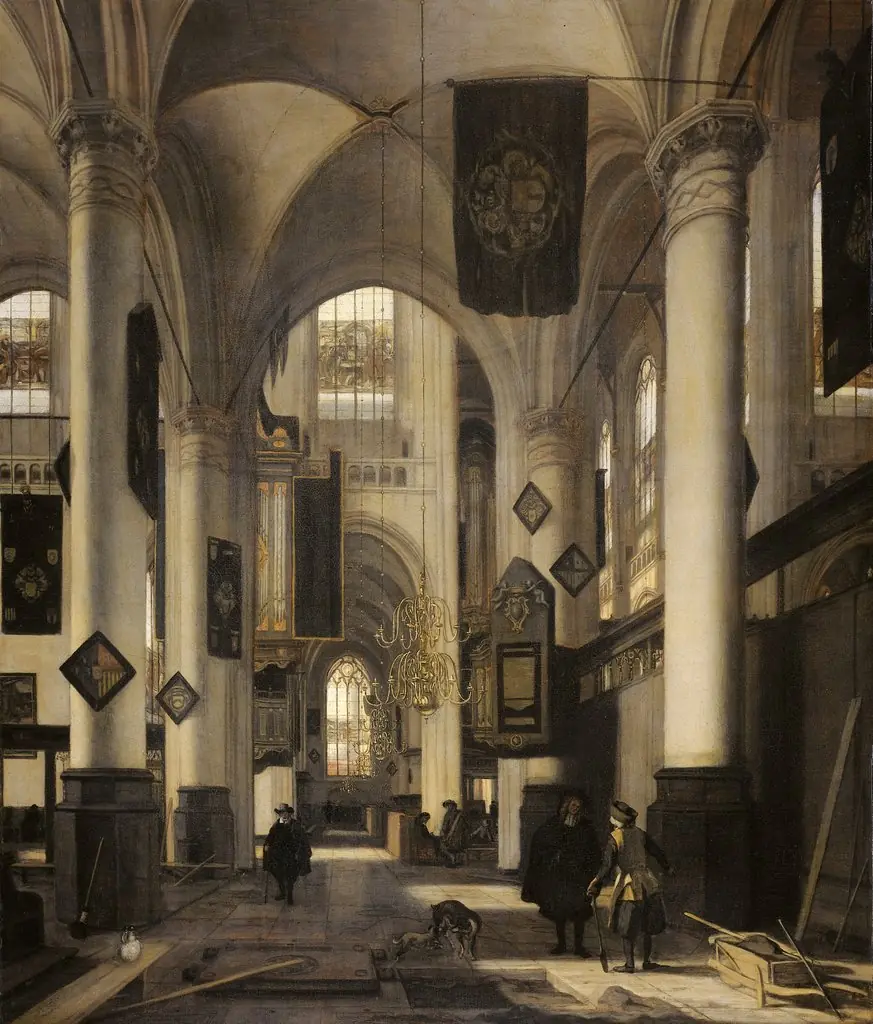 Interior of a Protestant Gothic Church
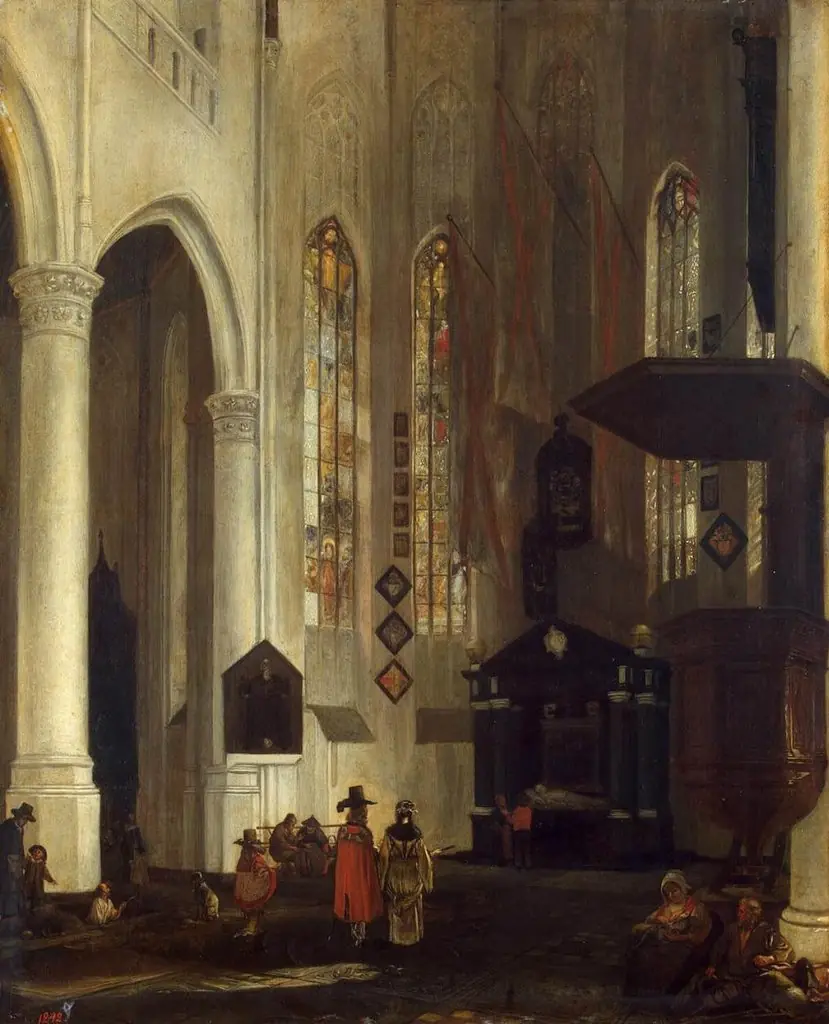 Old Church (Oudekerk) in Delft with the Tomb of Admiral Pieter Pieterszoon Hein (Heyn)
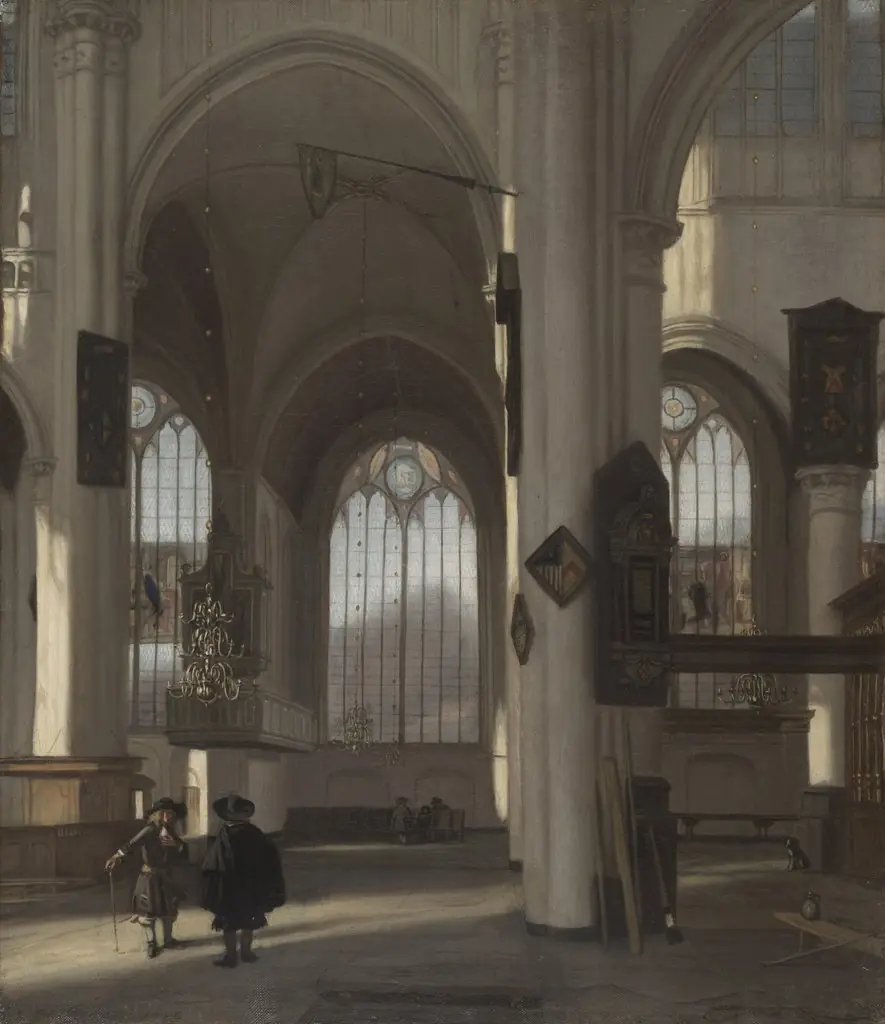 Interior of a Church