Artwork
The Nieuwe Kerk at Delft with the Tomb of Willem the Silent
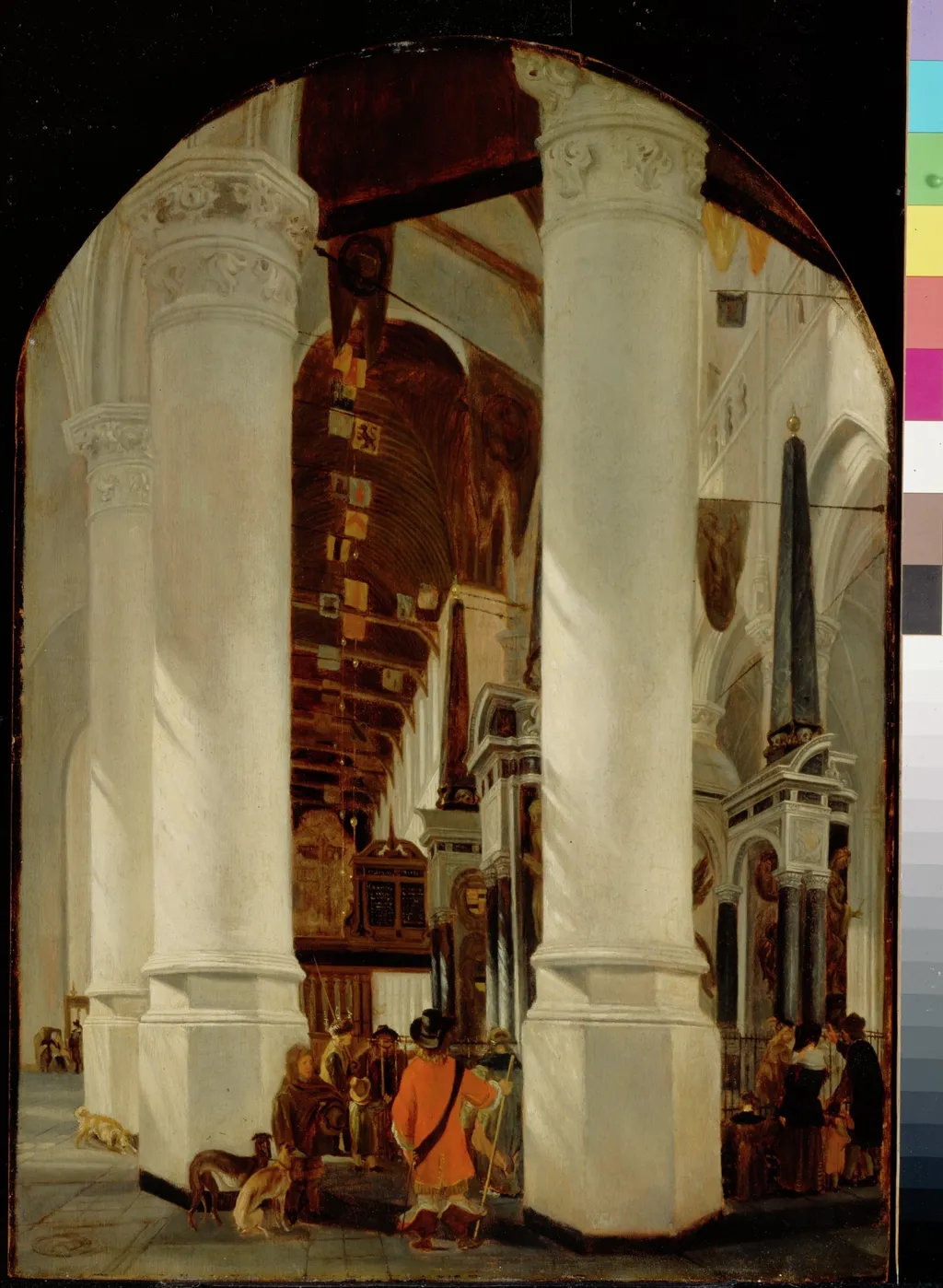
The Nieuwe Kerk at Delft with the Tomb of Willem the Silent is an oil painting by the Dutch Golden Age artist Emanuel de Witte. It dates from 1650 and is held in the collection of the Detroit Institute of Arts.
About this work
Overview
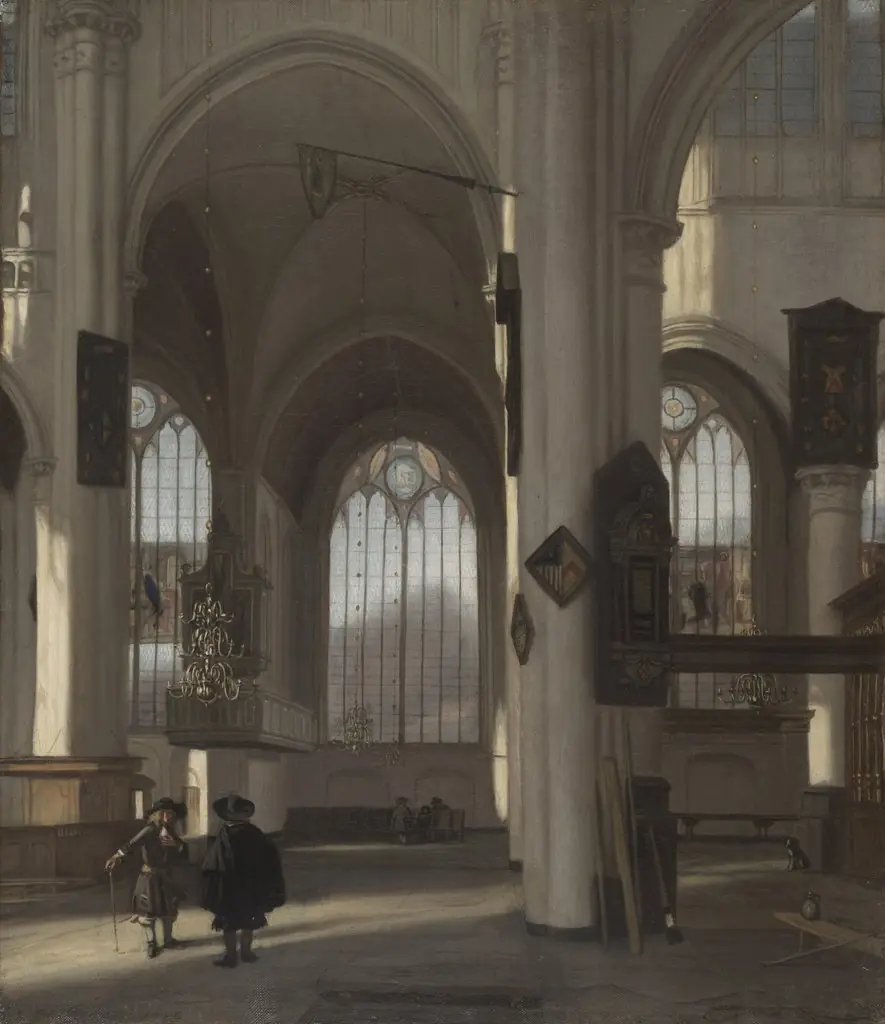
Emanuel de Witte’s oil painting, dated around 1650, presents an interior view of Delft’s Nieuwe Kerk. The composition centers on the stone nave, its lofty white columns and vaulted ceiling, while a dark wooden tomb bearing a sculpted effigy dominates the foreground. The work is part of the Detroit Institute of Arts collection.
Subject & Meaning
The focal point is the tomb of William the Silent, the 16th‑century Dutch statesman, surrounded by a small gathering of figures. Two dogs lie at the base of the monument, adding a domestic touch. Through the church’s arches, passers‑by and a slender obelisk are visible, linking the sacred interior to the bustling city beyond.
Technique & Style
De Witte employs a pronounced chiaroscuro, contrasting the bright illumination that filters from the high windows with deep shadows in the nave’s recesses. This handling of light creates a convincing spatial depth, while the meticulous rendering of architectural details and the reflective surfaces of stone and wood enhance the scene’s realism.
History & Provenance
Executed in the mid‑17th century, the painting reflects de Witte’s specialization in Dutch church interiors. After changing hands in private collections, it entered the Detroit Institute of Arts in the early 20th century, where it has remained on public display, contributing to the museum’s representation of Dutch Golden Age art.
Context
The Nieuwe Kerk houses the burial site of several members of the House of Orange, with William the Silent’s tomb being a focal point of Dutch national memory. De Witte’s depiction aligns with contemporary interests in civic architecture and commemorative monuments, offering viewers a glimpse of how religious and political symbolism coexisted in the Dutch Republic.
Artist & collection

Artist
Emanuel de Witte was born circa 1617 in Alkmaar, the son of Pieter de Wit, a local schoolmaster.

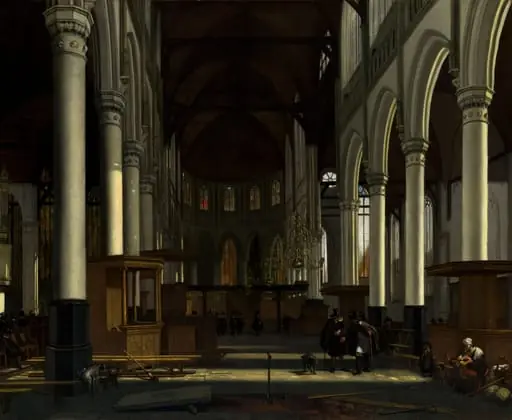 The Interior of the Oude Kerk, Amsterdam
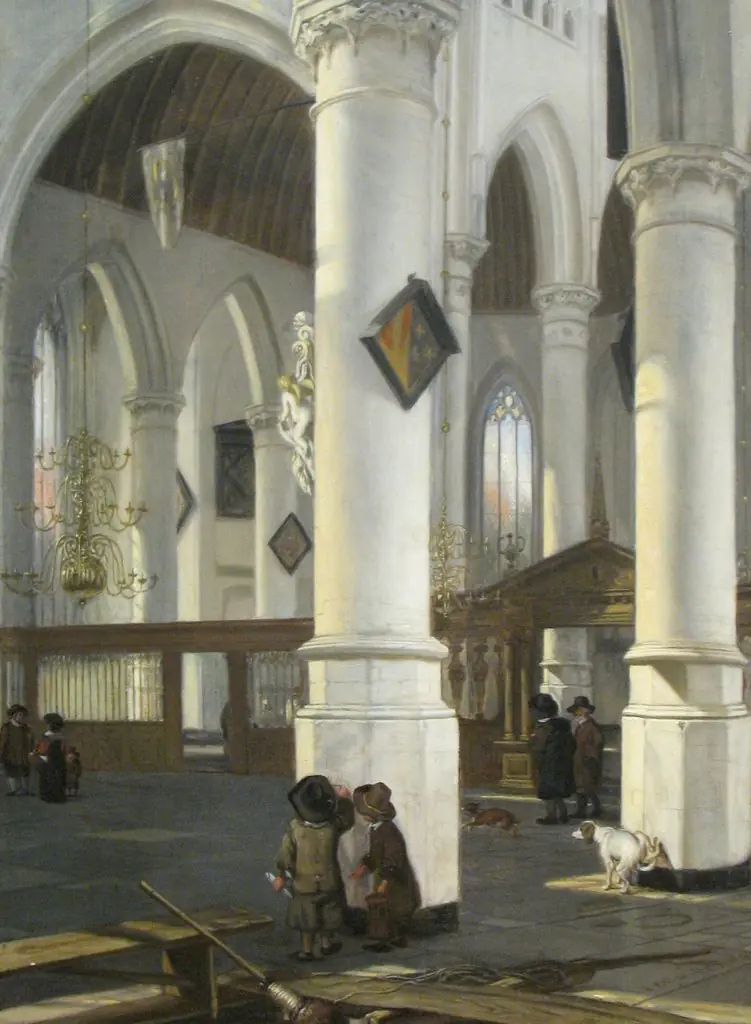 Interior of the Oude Kerk, Delft
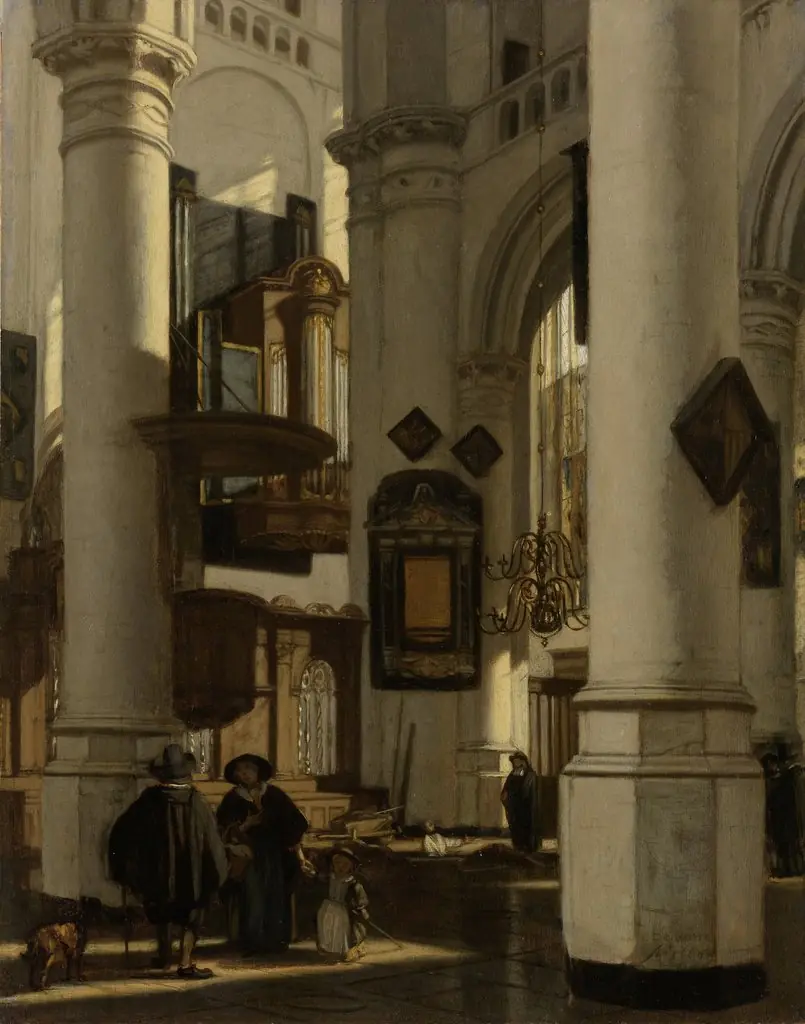 Interior of a Protestant, Gothic Church, with a Gravedigger in the Choir
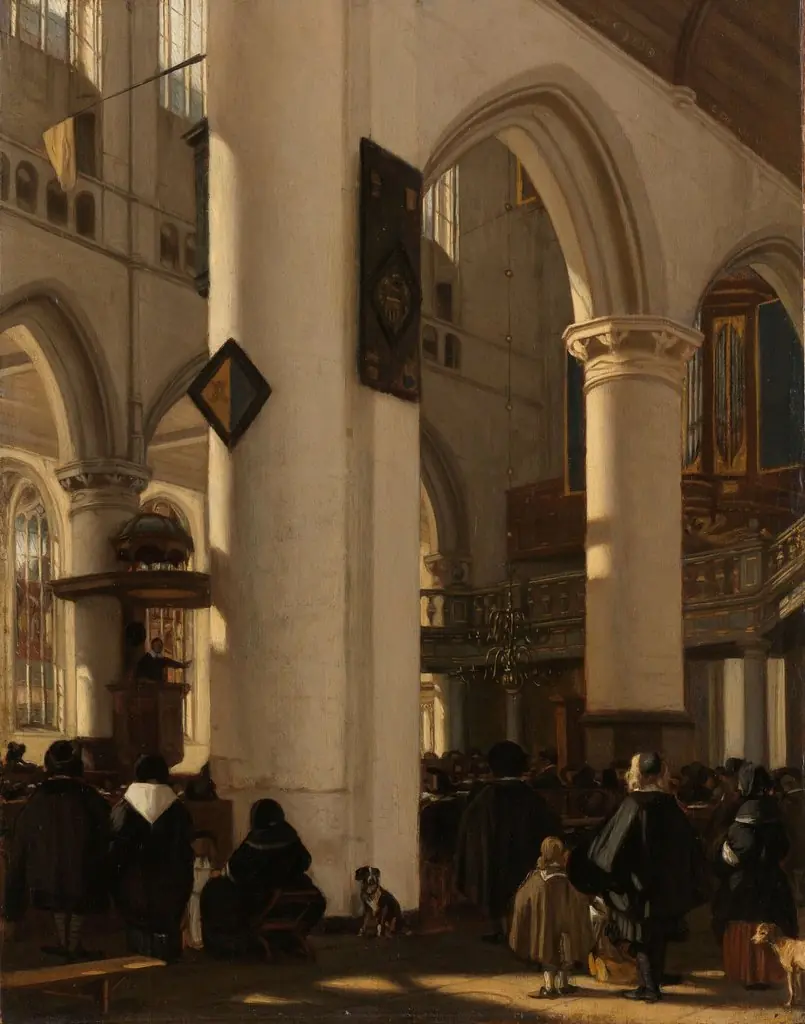 Interior of a Protestant, Gothic Church during a Service
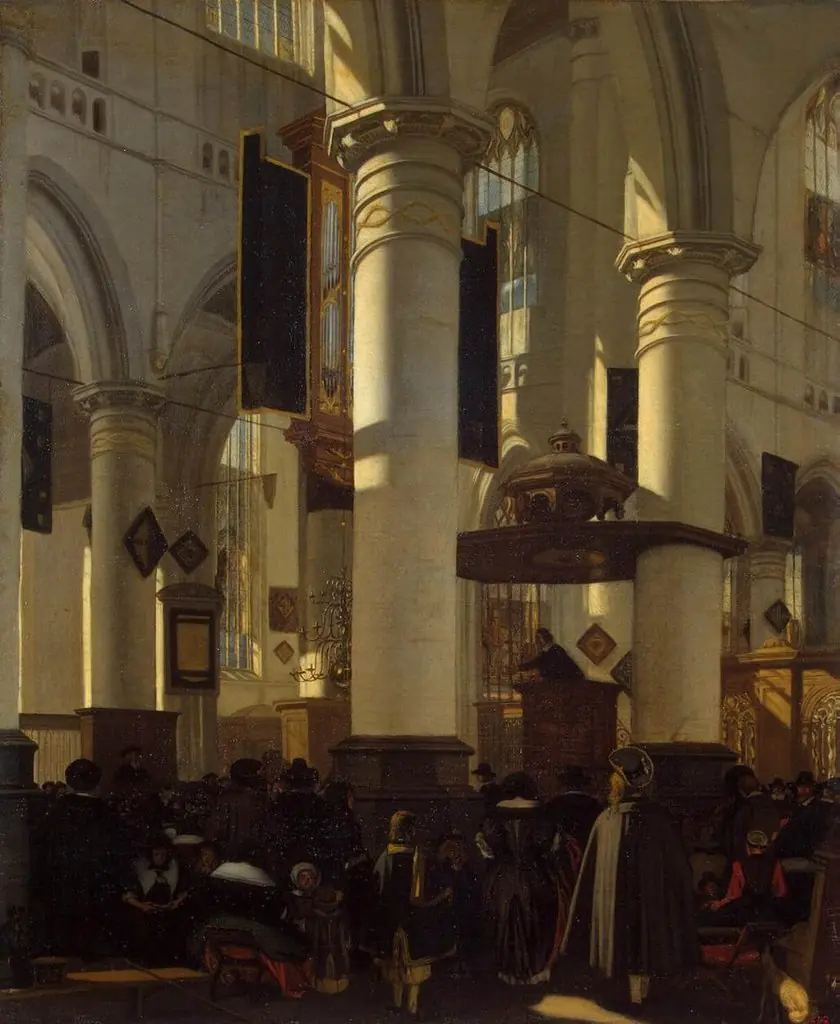 Interior of a Church
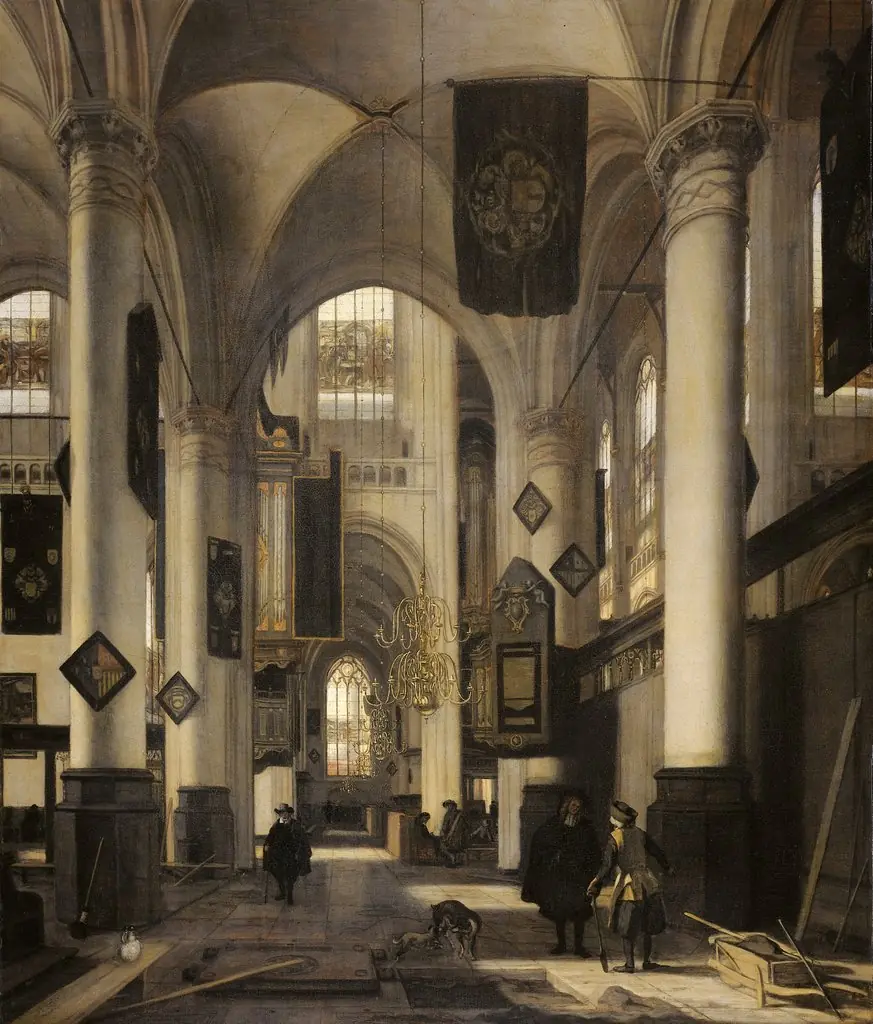 Interior of a Protestant Gothic Church
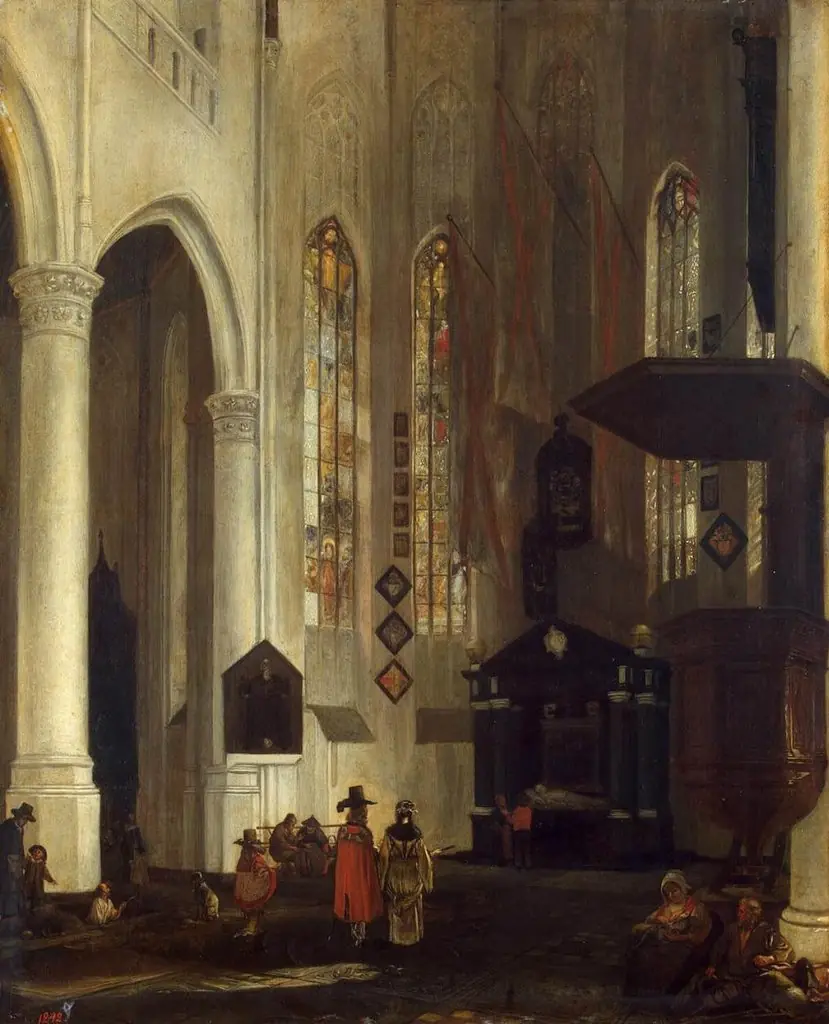 Old Church (Oudekerk) in Delft with the Tomb of Admiral Pieter Pieterszoon Hein (Heyn)
 Interior of a Church