Artwork
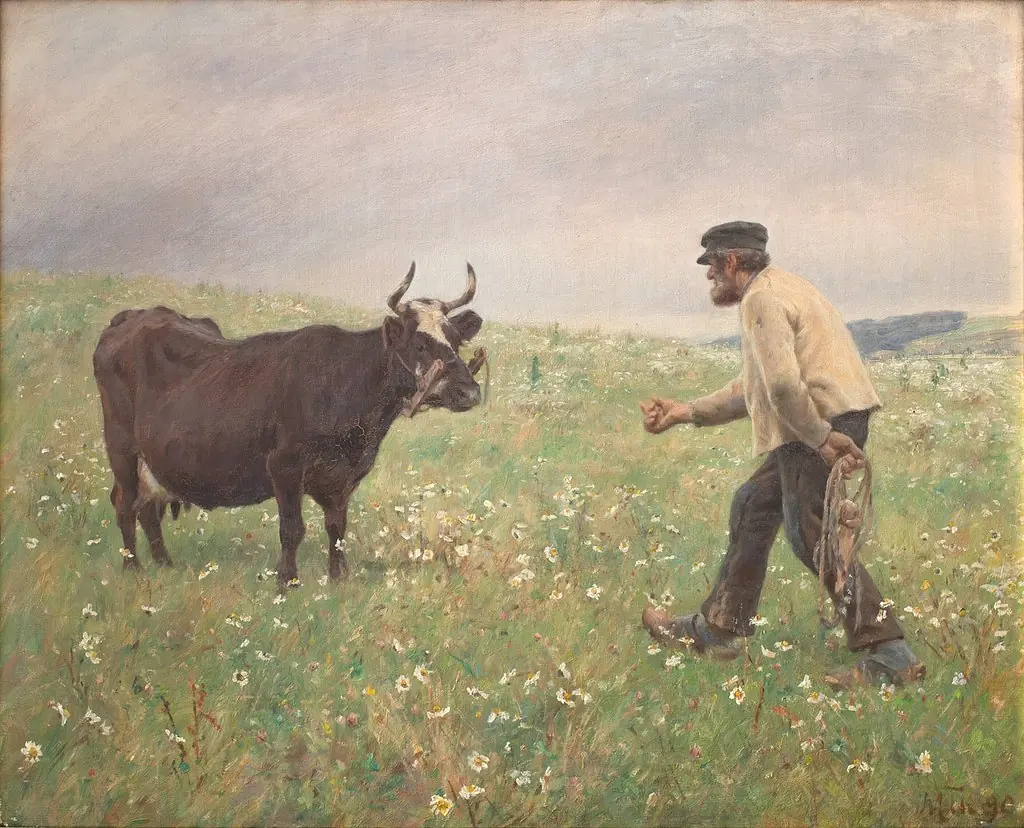
Der Halter kommt
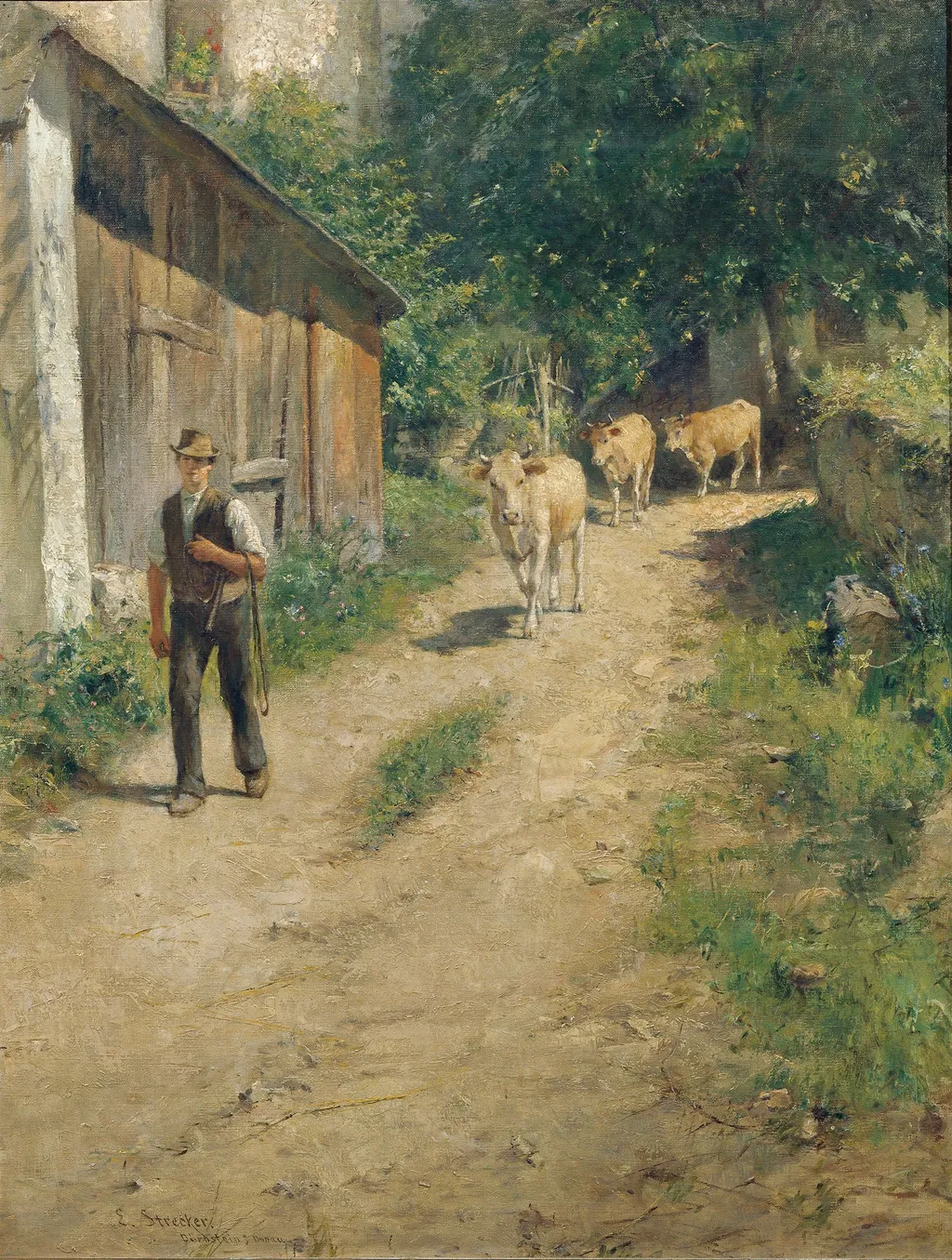
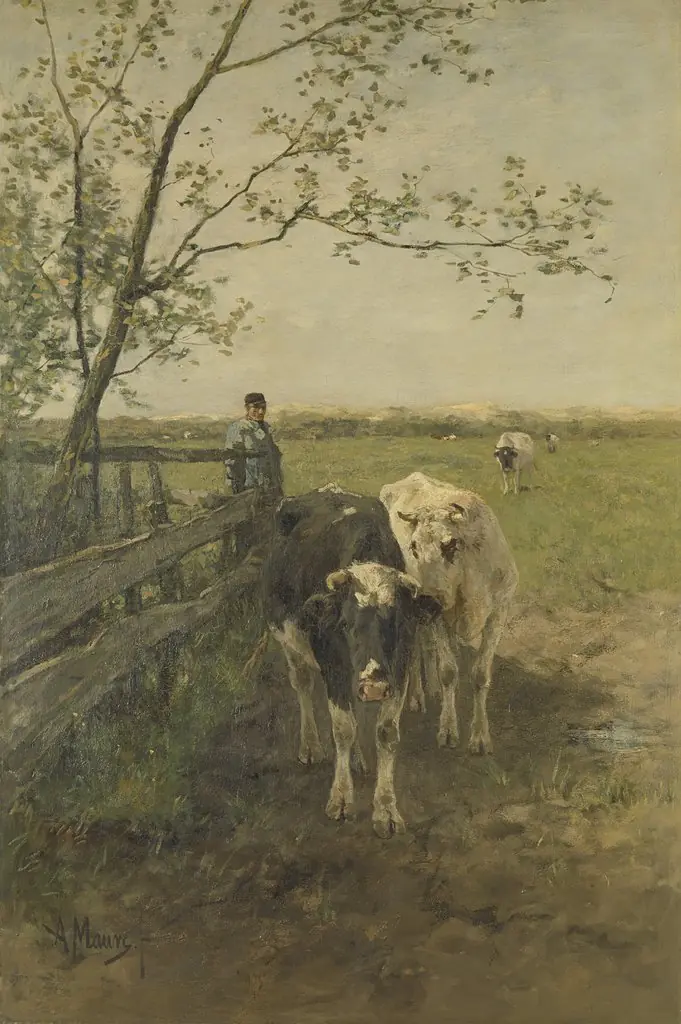
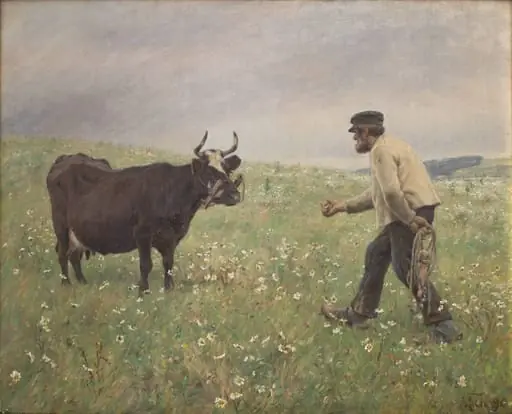
Der Halter kommt is an oil painting by Emil Strecker. It dates from 1891 and is held in the collection of the Kunsthistorisches Museum.
About this work
Overview
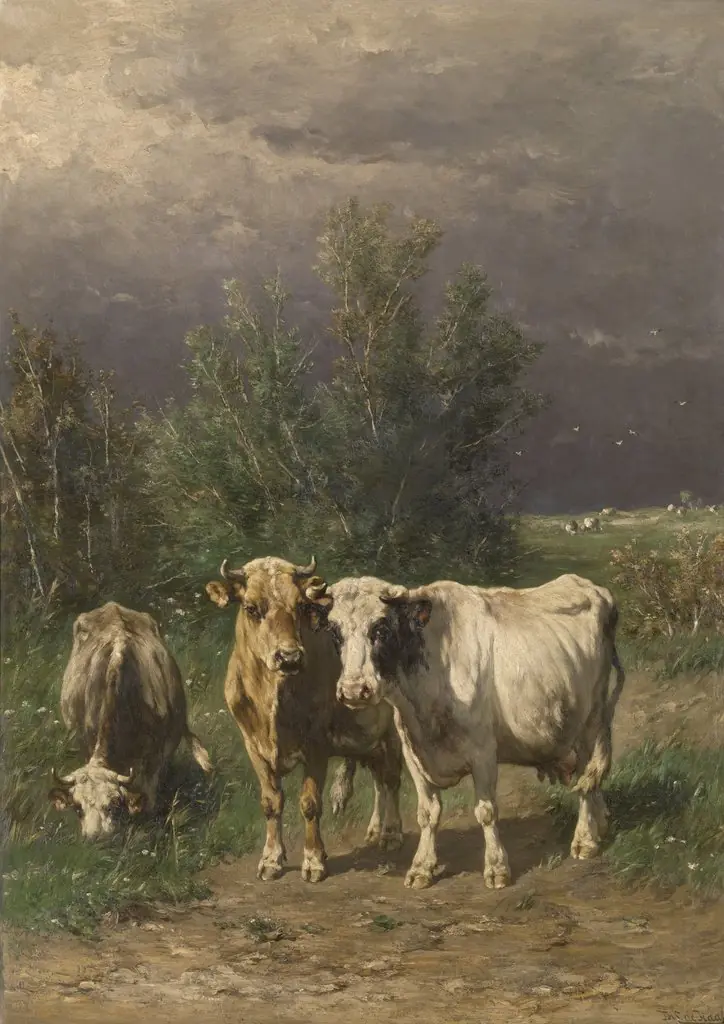
Its composition centers on a solitary figure and his livestock, rendered with careful attention to natural light and atmospheric detail.
Emil Strecker’s oil painting, dated around 1891, captures a quiet rural moment in the Austrian countryside. The work is part of the Kunsthistorisches Museum’s collection and reflects the artist’s interest in everyday rural life. Its composition centers on a solitary figure and his livestock, rendered with careful attention to natural light and atmospheric detail. The medium allows for subtle tonal shifts that enhance the scene’s stillness.
Subject & Meaning
The painting portrays a farmer in simple attire, standing calmly beside three cows along a dirt path near a modest wooden structure. The absence of dramatic action or narrative suggests an emphasis on quiet dignity in labor. The cows, gently grazing or resting, reinforce a sense of routine and harmony with the land. The scene avoids idealization, instead presenting rural existence as unembellished and grounded.
Technique & Style
Strecker employed oil paint to build layered textures in the foliage, earth, and fabric, creating a tactile sense of the environment. Brushwork is restrained but precise, particularly in the rendering of the man’s clothing and the cows’ fur. The palette favors muted greens, browns, and soft whites, harmonizing with the natural setting. Light falls evenly, avoiding strong contrasts, which contributes to the painting’s calm, observational tone.
History & Provenance
The painting entered the Kunsthistorisches Museum’s holdings in the late 19th or early 20th century, likely through acquisition or donation. No record of prior ownership or exhibition history is widely documented. Its inclusion in the museum’s collection suggests it was valued for its representation of regional life, though Strecker’s broader oeuvre remains relatively obscure in art historical discourse.
Context
Created during a period when European artists increasingly turned to rural subjects as industrialization reshaped society, Strecker’s work aligns with regional realist traditions. Unlike urban-focused movements, this painting reflects a quieter, localized aesthetic common in Austrian and German-speaking areas. It resonates with contemporaneous depictions of agrarian life, emphasizing continuity rather than change.
Legacy
Though Emil Strecker is not widely recognized beyond regional archives, this painting endures as a modest example of late 19th-century Austrian realism. It contributes to the museum’s representation of everyday life in the Habsburg territories. Its preservation underscores the value placed on documenting rural customs, even when the artist’s name did not achieve broader fame.
Own this work as a print
Artist & collection