Artwork
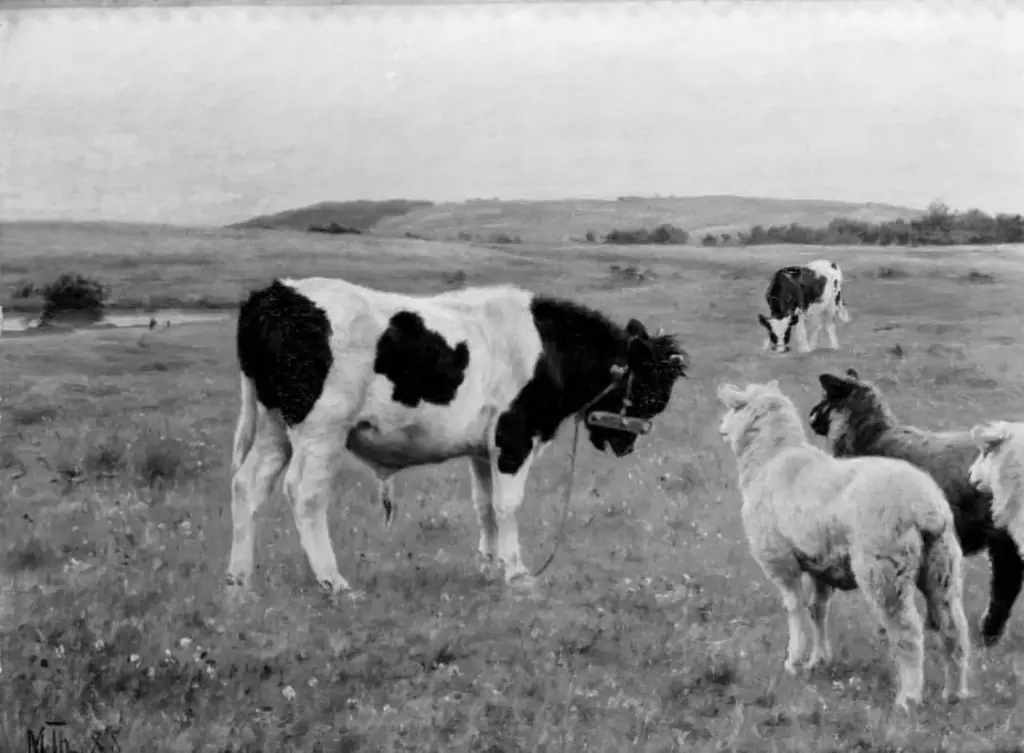
En ko løs
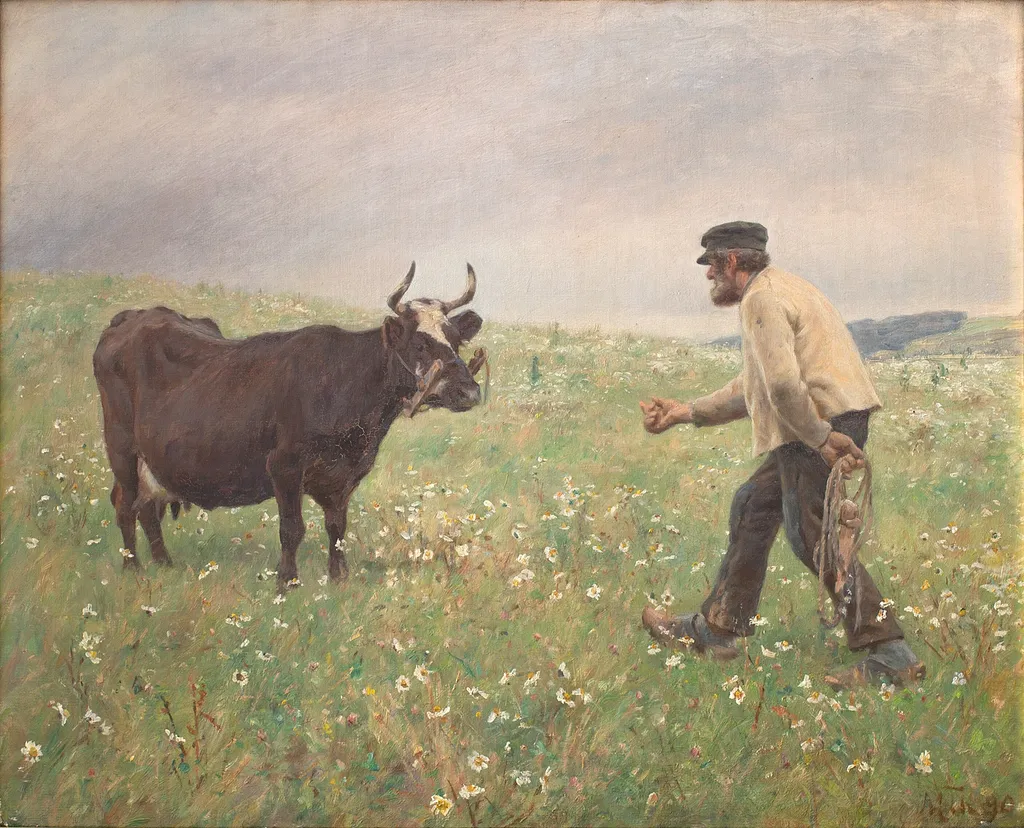
En ko løs is an oil painting by the Post-Impressionist artist Hans Michael Therkildsen. It dates from 1896 and is held in the collection of the Statens Museum for Kunst.
About this work
Overview
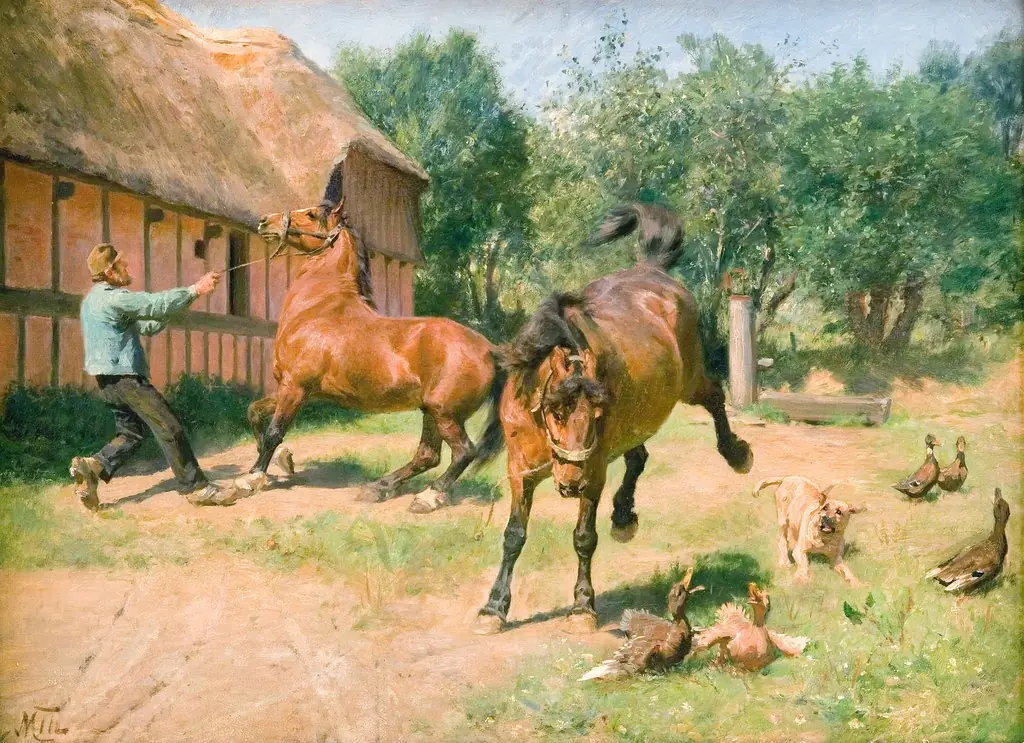
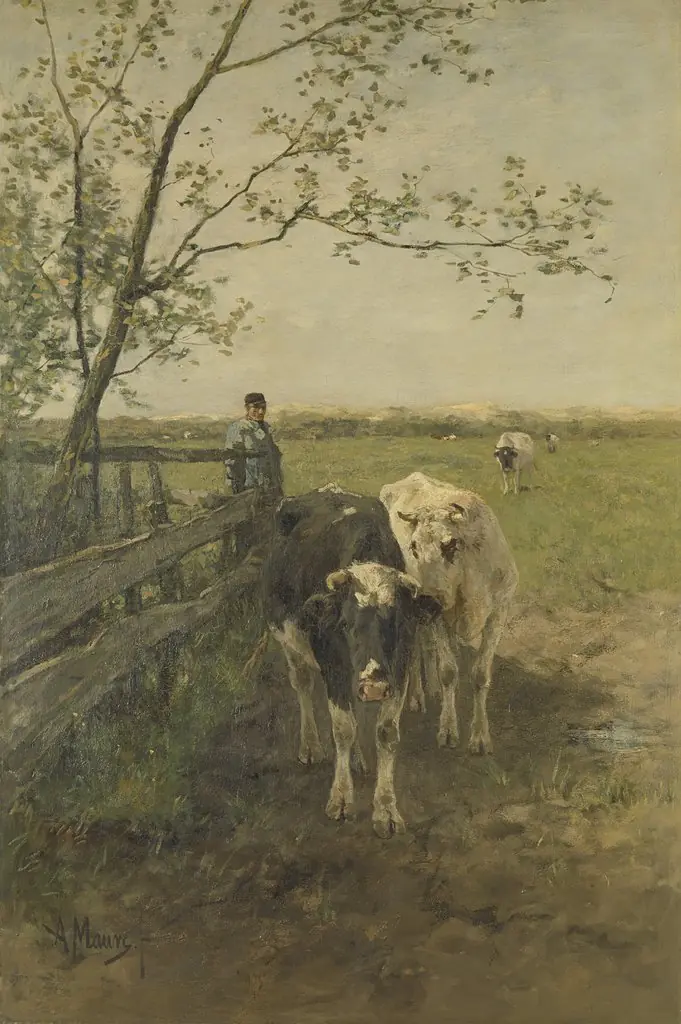
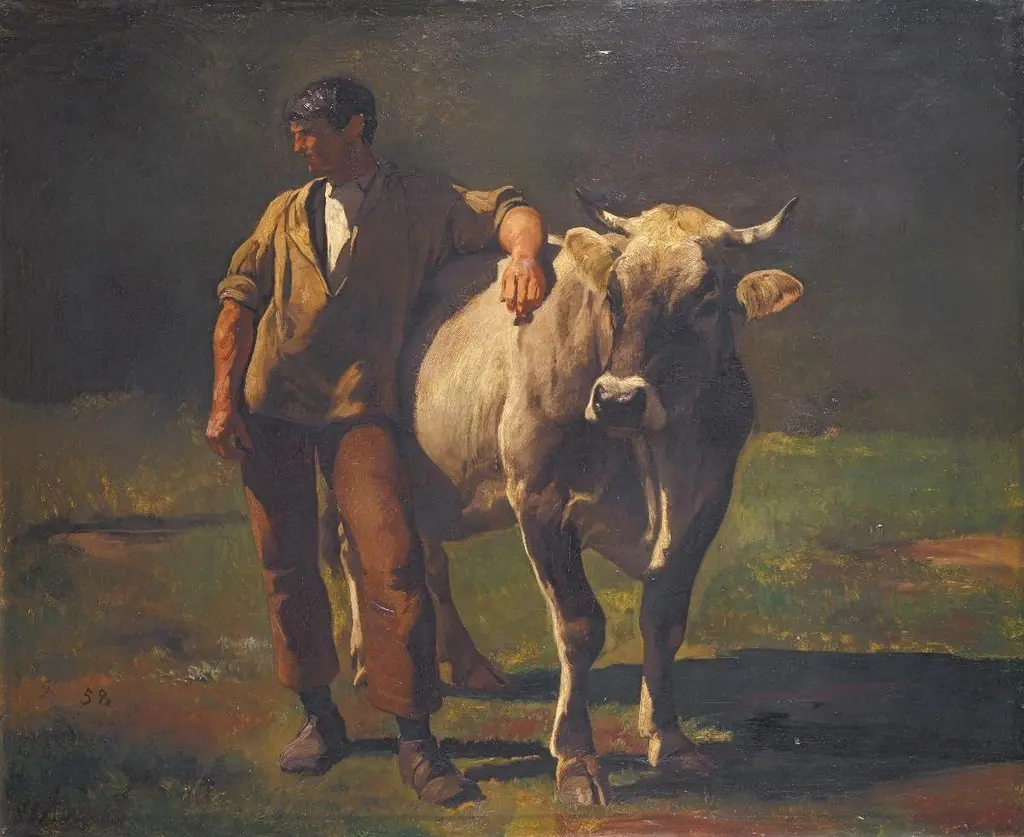
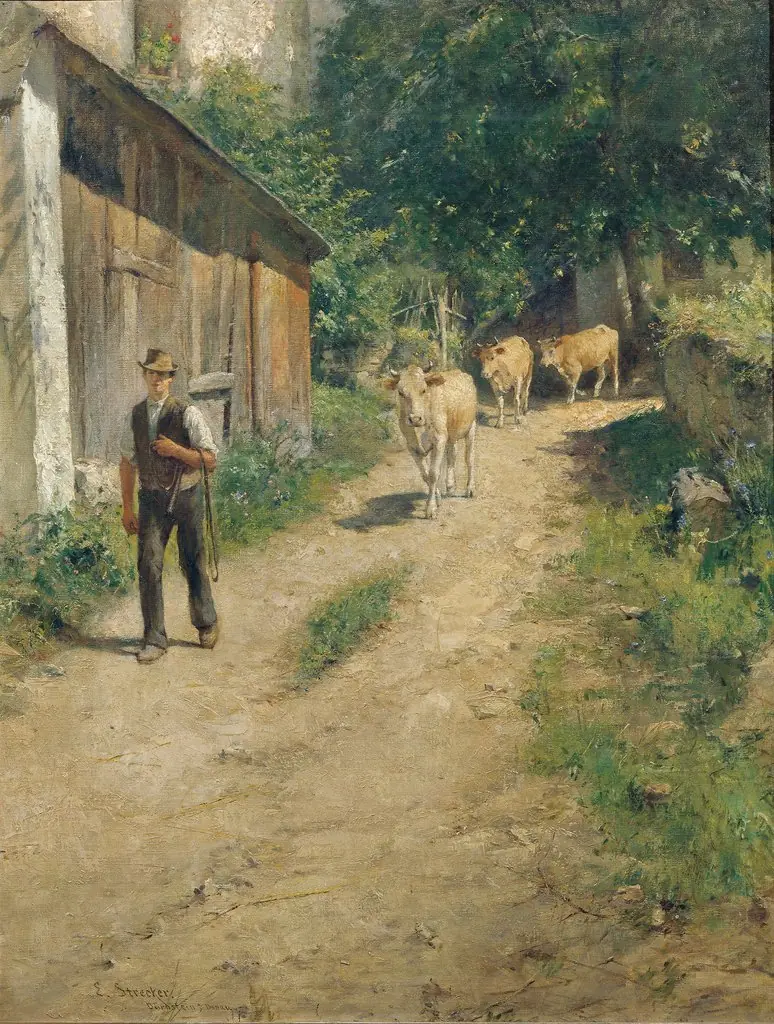
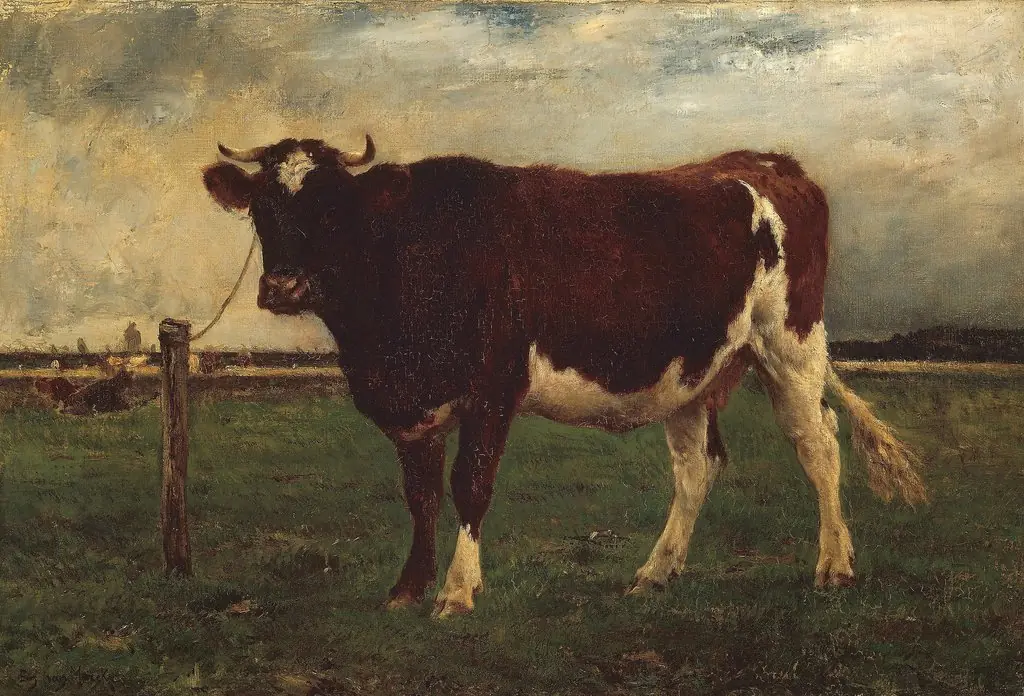
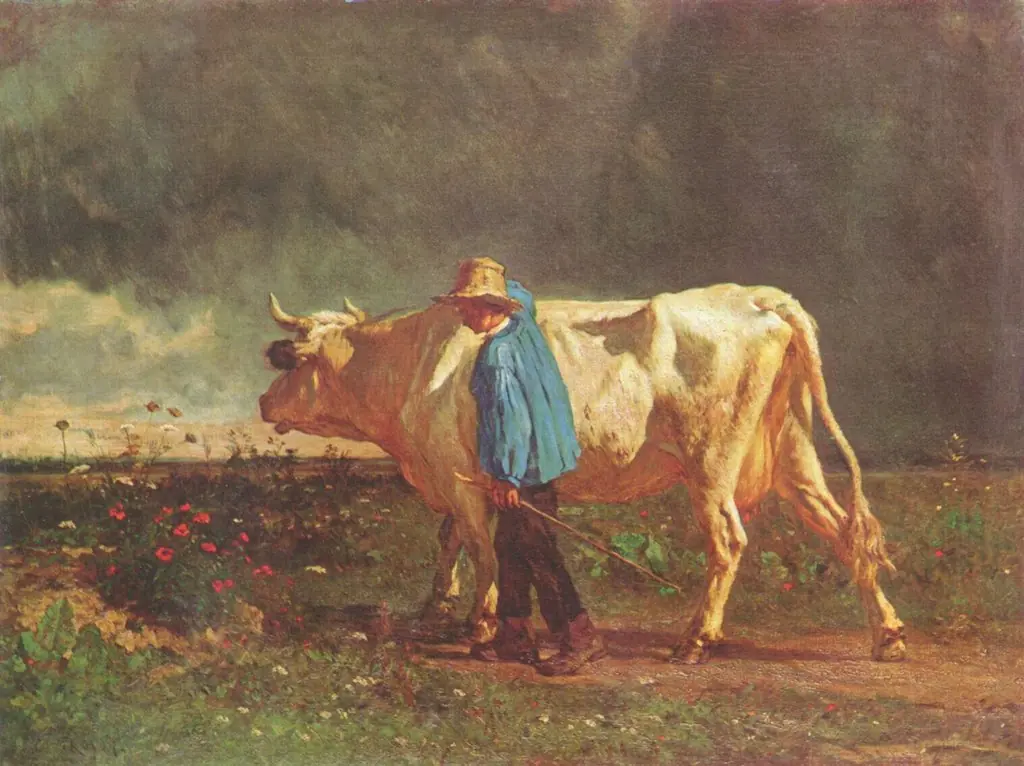
En ko løs is an 1896 oil painting by Danish artist Hans Michael Therkildsen. It depicts a rural scene featuring a man leading a cow through a grassy field under a cloudy sky. The work is part of the permanent collection at Statens Museum for Kunst in Copenhagen, representing Therkildsen’s interest in everyday rural life during the late 19th century.
Subject & Meaning
The painting captures a quiet moment of agricultural labor: a farmer in simple clothing guides a single cow across a field. The cow, marked by a white forehead patch and curved horns, moves calmly beside its handler. The absence of other figures or structures emphasizes solitude and routine, suggesting themes of quiet endurance and the rhythm of rural existence rather than narrative drama.
Technique & Style
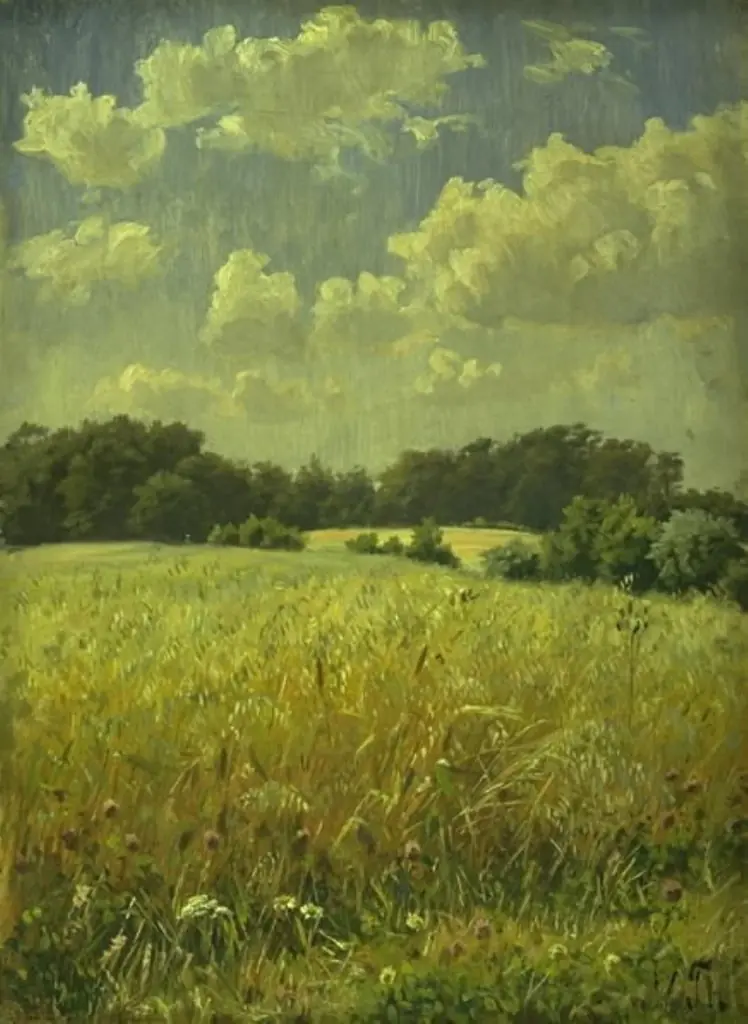
Therkildsen employs loose, textured brushwork to render the tall grass and swirling clouds, creating a sense of movement and atmosphere. The palette favors earthy browns and muted greens, contrasted by the bright white of wildflowers and the man’s shirt. Light filters diffusely through the overcast sky, unifying the scene in a soft, naturalistic tone characteristic of Danish realism.
History & Provenance
Painted in 1896, the work entered the collection of Statens Museum for Kunst shortly after its creation. It has remained in Danish public ownership since, with no record of significant exhibition or sale outside institutional contexts. Its preservation reflects early 20th-century Danish cultural policy favoring domestic artists depicting national life.
Context
Therkildsen worked during a period when Danish painters increasingly turned to rural subjects, distancing themselves from academic idealism. En ko løs aligns with the broader trend of naturalism in Nordic art, echoing contemporaries like P.S. Krøyer and Vilhelm Hammershøi in its focus on ordinary moments, subdued light, and emotional restraint.
Legacy
Though not widely reproduced, the painting is recognized in Danish art historiography as a representative example of late 19th-century rural realism. It contributes to the understanding of how Danish artists documented agricultural life without romanticization, preserving a visual record of labor and landscape at a time of rapid social change.
Artist & collection