Artwork
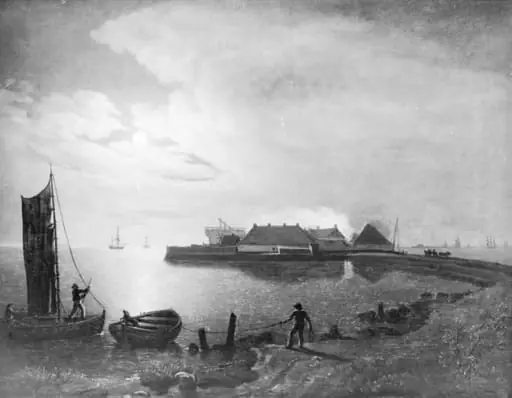
Lime Kiln in the Moonlight
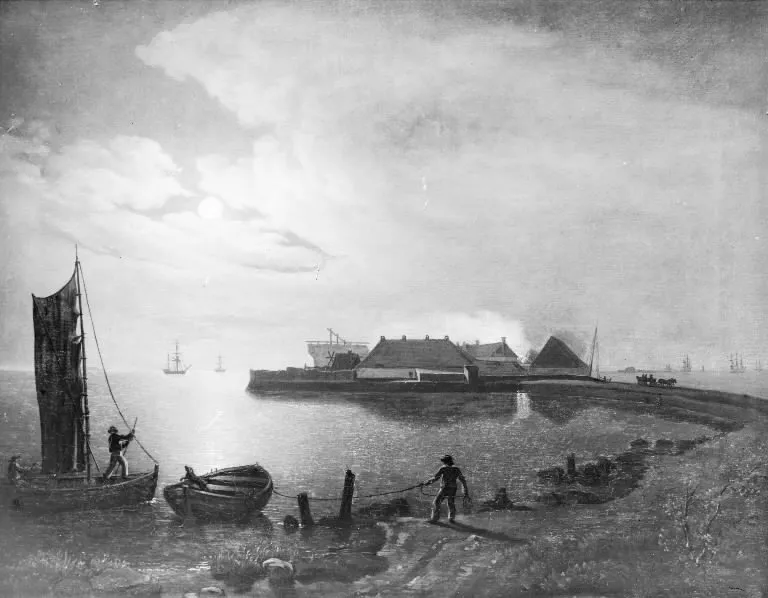
Lime Kiln in the Moonlight is an oil painting by the German Romanticist artist Emil Wolff. It dates from 1827 and is held in the collection of the Statens Museum for Kunst.
About this work
Overview
Emil Wolff, primarily known as a sculptor, produced this oil painting in 1827 during his brief engagement with landscape painting.
Emil Wolff, primarily known as a sculptor, produced this oil painting in 1827 during his brief engagement with landscape painting. Created within the German Romantic tradition, the work captures a quiet nocturnal scene centered on a lime kiln. Unlike his three-dimensional output, this piece reflects a contemplative engagement with natural light and industrial forms, suggesting a personal interest in the intersection of human labor and the nocturnal environment.
Subject & Meaning
The painting portrays a lime kiln—used for burning limestone—at night, surrounded by shadowed trees and distant structures. The kiln’s warm interior glow contrasts with the cool moonlight, emphasizing the tension between human industry and the quiet natural world. Rather than glorifying labor, the scene evokes solitude and stillness, aligning with Romantic themes of introspection and the sublime in ordinary, overlooked settings.
Technique & Style
Wolff employed subtle gradations of blue, violet, and gray to render the night sky, while the kiln’s embers are rendered in muted ochres and oranges that barely penetrate the surrounding darkness. Brushwork is restrained, favoring atmospheric blending over detail. The interplay of moonlit shadows and the kiln’s glow creates a sense of spatial depth, characteristic of Romantic landscape conventions that prioritized mood over topographical accuracy.
History & Provenance
Completed in 1827, the painting entered the collection of Statens Museum for Kunst in Copenhagen, where it remains today. Wolff’s limited output as a painter suggests this work was a personal exploration rather than a commercial endeavor. Its preservation in a major Nordic institution reflects early 19th-century European interest in German Romantic art, even beyond national borders.
Context
In the 1820s, German artists increasingly turned to nocturnal and rural scenes to express emotional depth and spiritual resonance. Lime kilns, though functional, were rarely depicted in art; Wolff’s choice to focus on one at night aligns with Romanticism’s fascination with marginal, twilight spaces. This work shares affinities with the moody landscapes of Caspar David Friedrich, though with less symbolic weight and more observational restraint.
Legacy
Though Wolff’s reputation rests chiefly on sculpture, this painting endures as a quiet example of Romanticism’s reach into industrial subjects. It offers insight into how artists of the period found poetic potential in utilitarian structures. Its presence in a public collection ensures continued access, though it remains a lesser-known work within the broader canon of 19th-century European painting.
Artist & collection
Artist
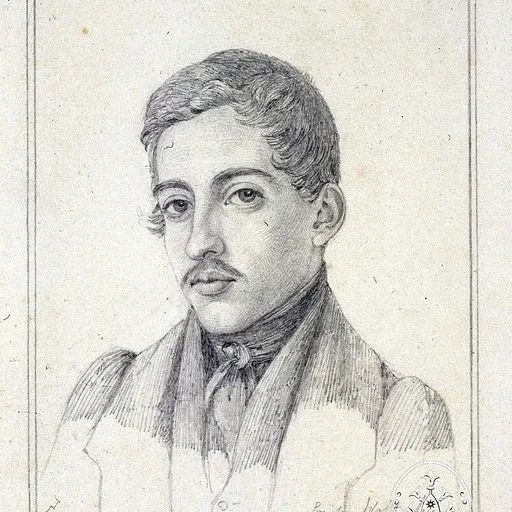
Emil Wolff (1802–1879) was a 19th-century German sculptor and occasional artist in oil paints. He is well-represented in galleries across Europe.