Artwork
River with Shipping
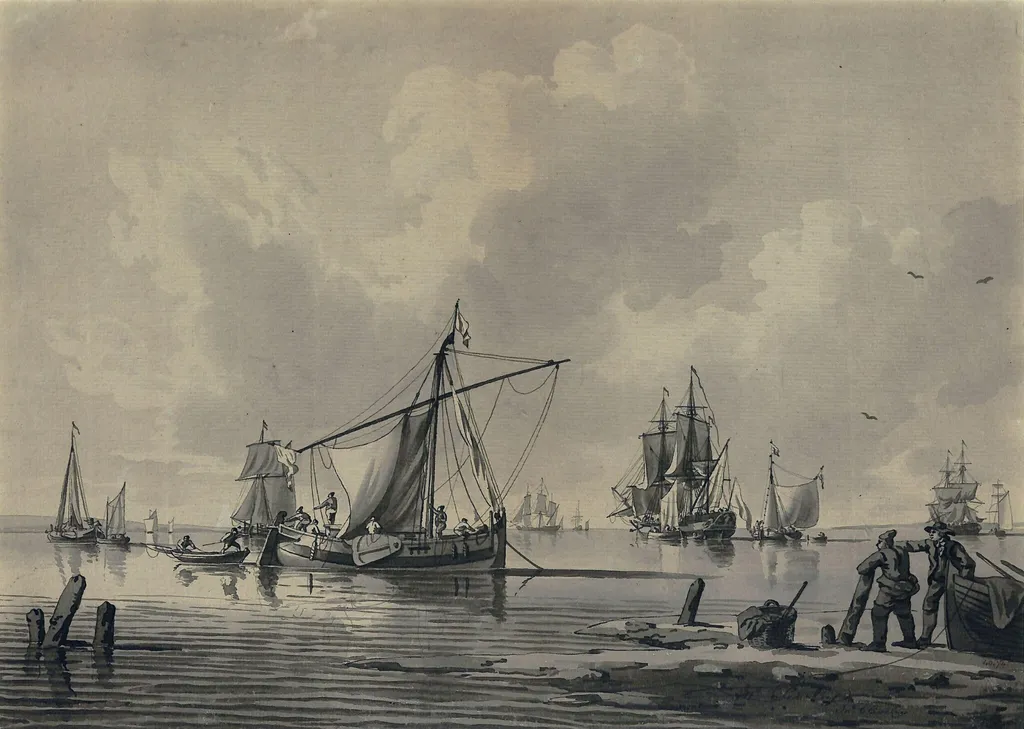
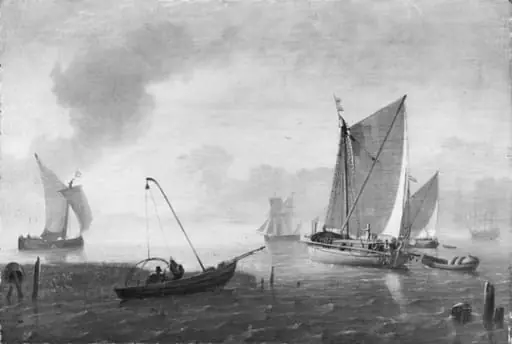
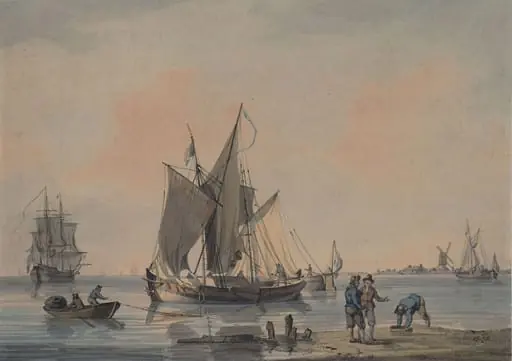
River with Shipping is a drawing by the Romanticist artist John the younger Cleveley. It dates from 1778 and is held in the collection of the Victoria and Albert Museum. John Cleveley the Younger’s 1778 Indian‑ink drawing captures a bustling river scene.
About this work
Overview
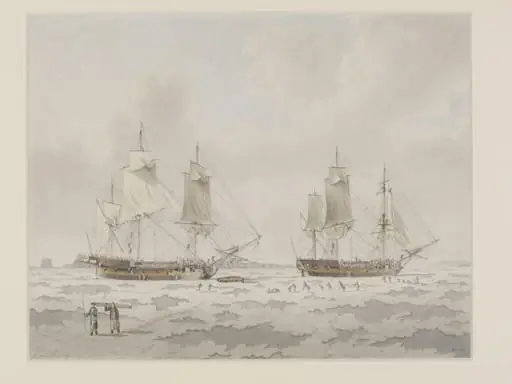
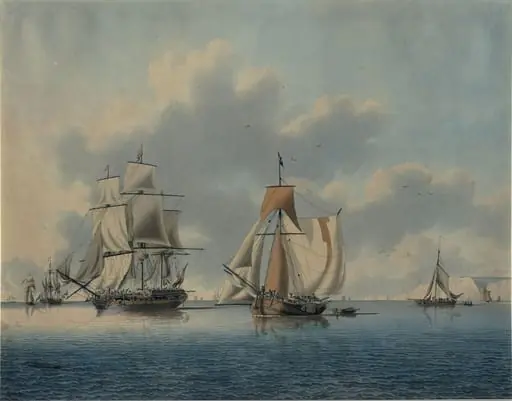
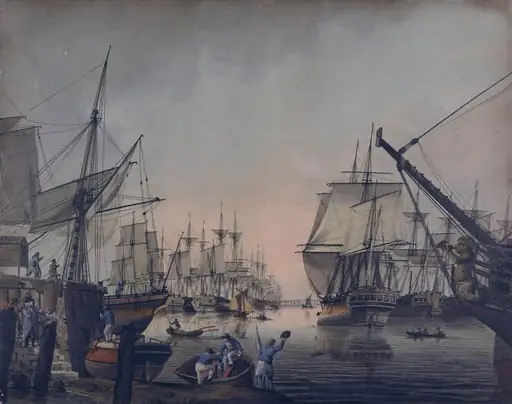
John Cleveley the Younger’s 1778 Indian‑ink drawing captures a bustling river scene. A central sailing vessel dominates the composition, flanked by smaller boats and a populated riverbank. The sky is overcast, lending a muted atmosphere to the lively activity along the water’s edge.
Subject & Meaning
The work records commercial and leisure traffic on an English river, illustrating the coexistence of large merchant ships with smaller craft and riverside observers. By juxtaposing the imposing vessel with everyday figures, the drawing reflects the economic vitality of river transport in the late eighteenth century.
Technique & Style
Executed in fine pen work, the drawing relies on varied line density and cross‑hatching to render textures of hulls, rigging, and rippling water. A broad tonal range, from delicate washes to deep shadows, creates spatial depth, while meticulous detailing emphasizes the structural complexity of the vessels.
History & Provenance
Signed by Cleveley, the piece dates to 1778, a period when the artist was documenting maritime subjects for patrons interested in naval and commercial scenes. Its provenance traces through several private collections before entering a public institution, where it serves as a visual record of period riverine activity.
Context
Created during a time of expanding British trade, the drawing aligns with contemporary interests in documenting industrial progress and the natural environment. It complements other works by Cleveley, who frequently depicted shipyards and naval engagements, contributing to a broader visual archive of eighteenth‑century maritime life.
Own this work as a print
Artist & collection
Artist
John the younger Cleveley painted ships, harbors, and Arctic ice the way others painted portraits, with careful lines and soft watercolors.