Artwork
Indian War Canoe
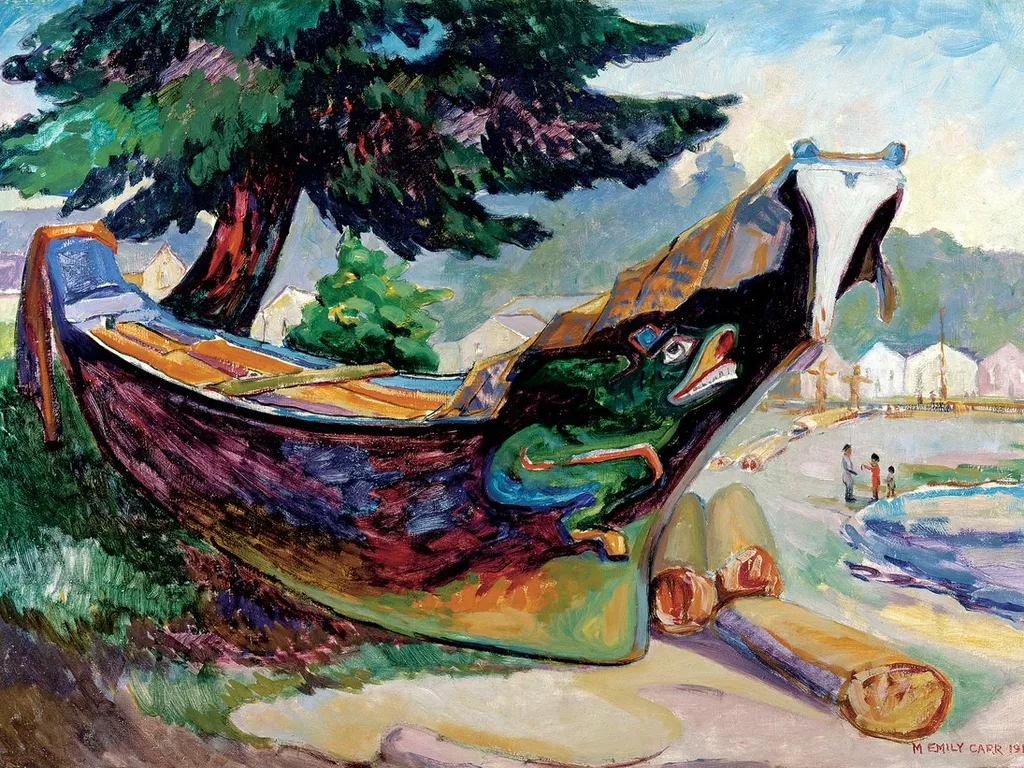
Indian War Canoe is an oil painting by Emily Carr. It dates from 1912 and is held in the collection of the Montreal Museum of Fine Arts.
About this work
Overview
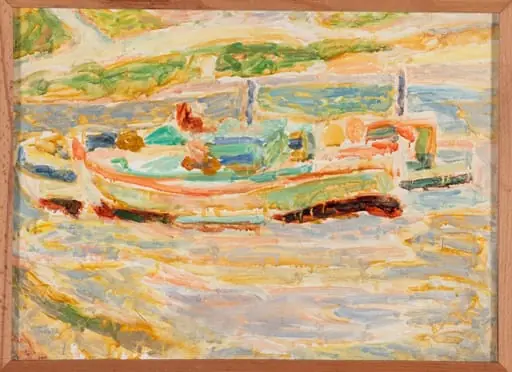
It depicts a ceremonial canoe resting on a shoreline, rendered with vivid color and careful attention to surface detail.
Painted in 1912, *Indian War Canoe* is an oil on canvas work by Canadian artist Emily Carr. It depicts a ceremonial canoe resting on a shoreline, rendered with vivid color and careful attention to surface detail. The painting belongs to Carr’s early period of engagement with Indigenous cultural artifacts in British Columbia, reflecting her interest in documenting forms she encountered during travels along the Pacific coast.
Subject & Meaning
The canoe, adorned with a carved frog head and a suspended white cloth, suggests ceremonial or ritual significance rather than utilitarian use. Its placement on a quiet beach, surrounded by faint outlines of buildings and trees, implies a moment of stillness amid changing cultural landscapes. Carr’s focus on the object, rather than its human context, invites reflection on the presence and persistence of Indigenous traditions in a modernizing environment.
Technique & Style
Carr employed thick, expressive brushwork to capture the texture of the canoe’s wood and the intricacy of its carving, particularly the frog motif. The foreground is rendered with sharp detail and saturated hues of green, blue, and yellow, while the background dissolves into looser, more atmospheric strokes. This contrast draws the viewer’s eye to the canoe as both object and symbol, blending realism with a nascent modernist sensibility.
History & Provenance
Created during Carr’s formative years of studying Indigenous art in coastal villages, the painting was later acquired by the Montreal Museum of Fine Arts, where it remains in the permanent collection. Its preservation reflects institutional recognition of Carr’s role in documenting Indigenous material culture, even as her interpretations were shaped by her own outsider perspective.
Context
In the early 20th century, many Indigenous ceremonial objects were being collected, displaced, or destroyed. Carr’s paintings, including this one, emerged amid growing public interest in Indigenous art, though often filtered through colonial frameworks. Her work captured these objects at a time when their cultural contexts were rapidly eroding, making them visual records of a fragile heritage.
Legacy
Though not widely exhibited during her lifetime, *Indian War Canoe* now stands as an early example of Carr’s commitment to portraying Indigenous cultural forms with reverence. It contributed to broader Canadian art discourse by bridging ethnographic observation and personal expression, influencing later generations of artists who sought to reconcile colonial history with Indigenous presence.
Artist & collection
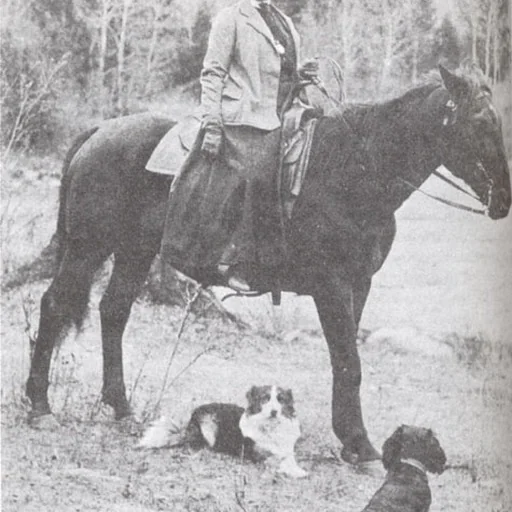
Artist
Emily Carr (December 13, 1871 – March 2, 1945) was a Canadian artist who was inspired by the monumental art and villages of the First Nations and the landscapes of British Columbia.