Artwork
Bărci cu plase la uscat
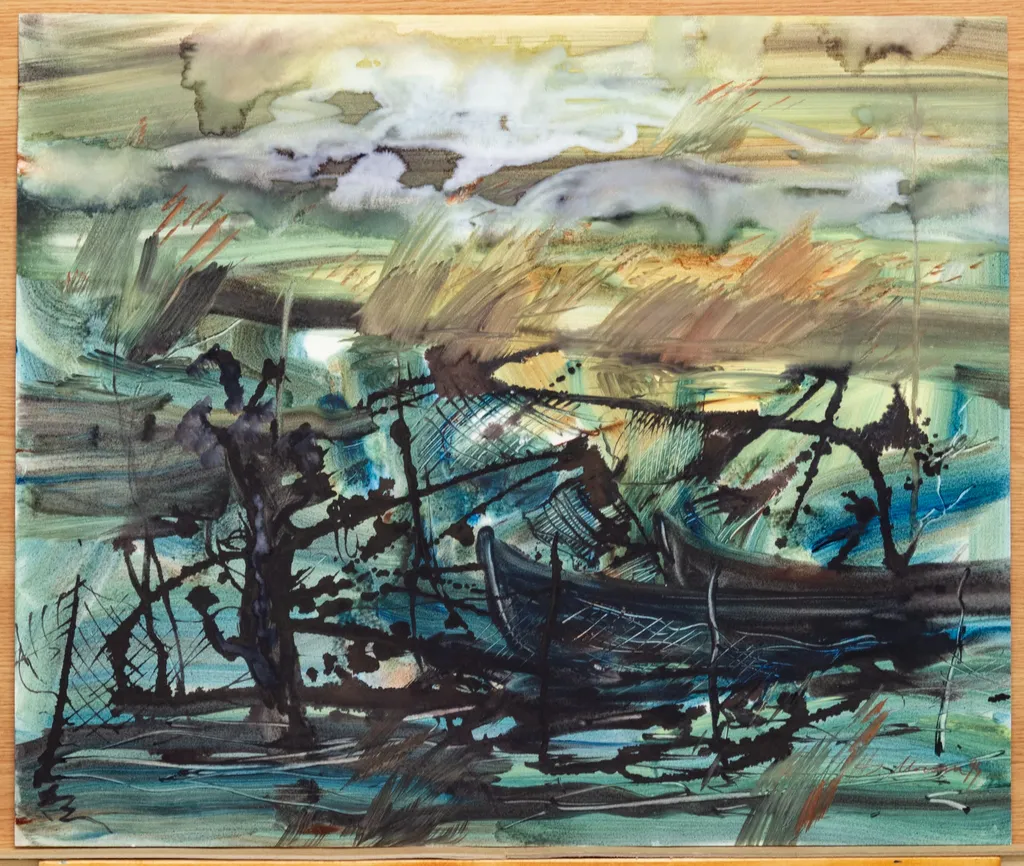
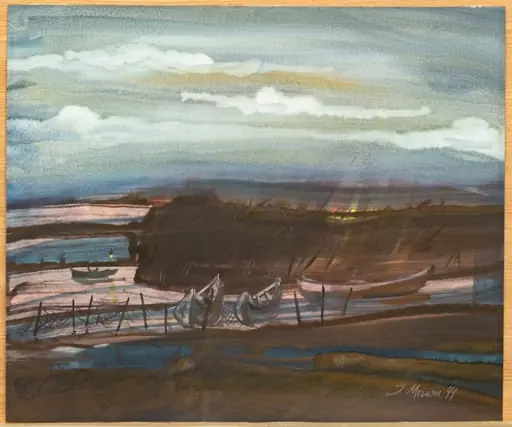
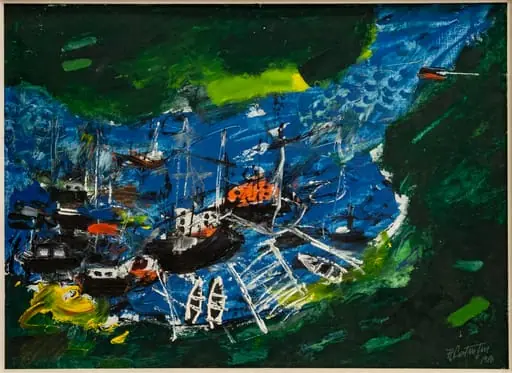
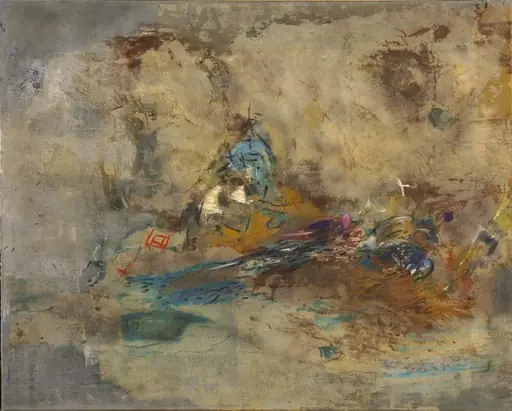
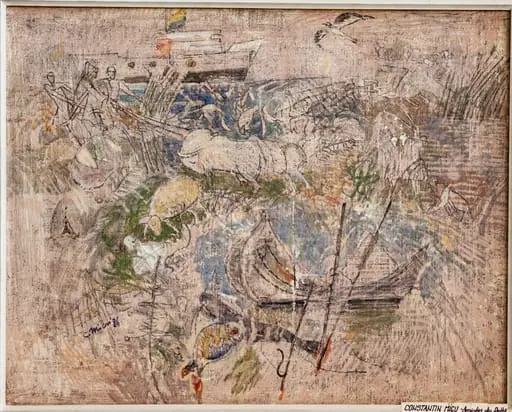
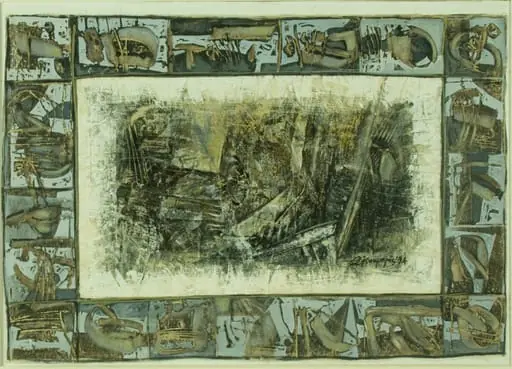
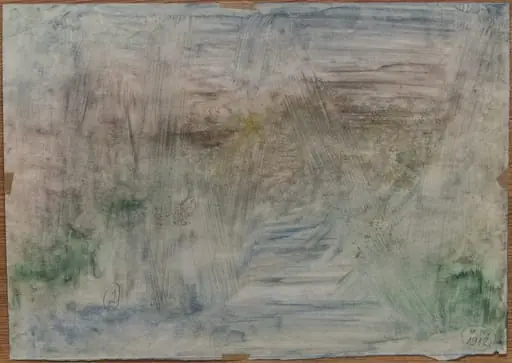
Bărci cu plase la uscat is an unspecified painting by Ion Moraru. It dates from 1979 and is held in the collection of the Gavrila Simion Eco-Museum Research Institute Tulcea.
About this work
Overview
The vessels, no longer in use, rest under a heavy sky, their presence suggesting a shift in livelihood and environment.
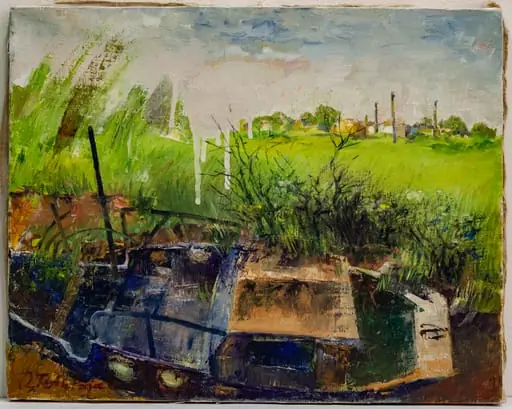
Painted around 1979 by Ion Moraru, Bărci cu plase la uscat depicts a group of fishing boats stranded on dry ground. The work is part of the Museum of Ethnography’s collection and reflects a quiet moment of rural decline. The vessels, no longer in use, rest under a heavy sky, their presence suggesting a shift in livelihood and environment. The composition avoids idealization, focusing instead on the physical weight of neglect.
Subject & Meaning
The painting portrays fishing boats left behind after their practical use has ended. Their cracked hulls and weathered surfaces imply years of exposure and abandonment. The stormy sky and streaks of rain reinforce a mood of isolation and decay. Rather than celebrating maritime tradition, the work suggests the quiet erosion of coastal economies and the fading of communal practices tied to the sea.
Technique & Style
Moraru employs thick, uneven brushwork to convey texture and emotional weight. The palette is dominated by muted blues, greens, and browns, creating a somber, earth-bound atmosphere. The paint is applied with deliberate roughness, avoiding smooth finishes to emphasize the boats’ deterioration. This tactile approach grounds the scene in physical reality, rejecting romanticized depictions of rural life.
History & Provenance
Created in the late 1970s, the painting entered the Museum of Ethnography’s holdings shortly after its completion. It was not widely exhibited outside institutional contexts, remaining within the sphere of Romanian cultural documentation. Its preservation reflects an institutional interest in recording the material traces of everyday life during a period of social and economic transition.
Context
In late socialist Romania, rural communities faced increasing pressures from state-led industrialization and urban migration. Fishing, once a vital coastal activity, declined as resources dwindled and infrastructure shifted. This painting captures a moment when traditional livelihoods were being left behind, not through dramatic upheaval, but through slow, unnoticed obsolescence.
Legacy
Bărci cu plase la uscat endures as a quiet record of rural transformation. It contributes to a visual archive of Romanian life that prioritizes observation over sentiment. While not widely known beyond national collections, it remains a significant example of how art can document the subtle, often invisible, changes in everyday existence.
Artist & collection
Artist
Ion Moraru was a Moldovan activist and author. He was a founder of the anti-Soviet group Sabia Dreptății and a political prisoner in the Soviet Union.
Museum
Gavrila Simion Eco-Museum Research Institute Tulcea
Continue through works from the same source collection.