Artwork
Untitled
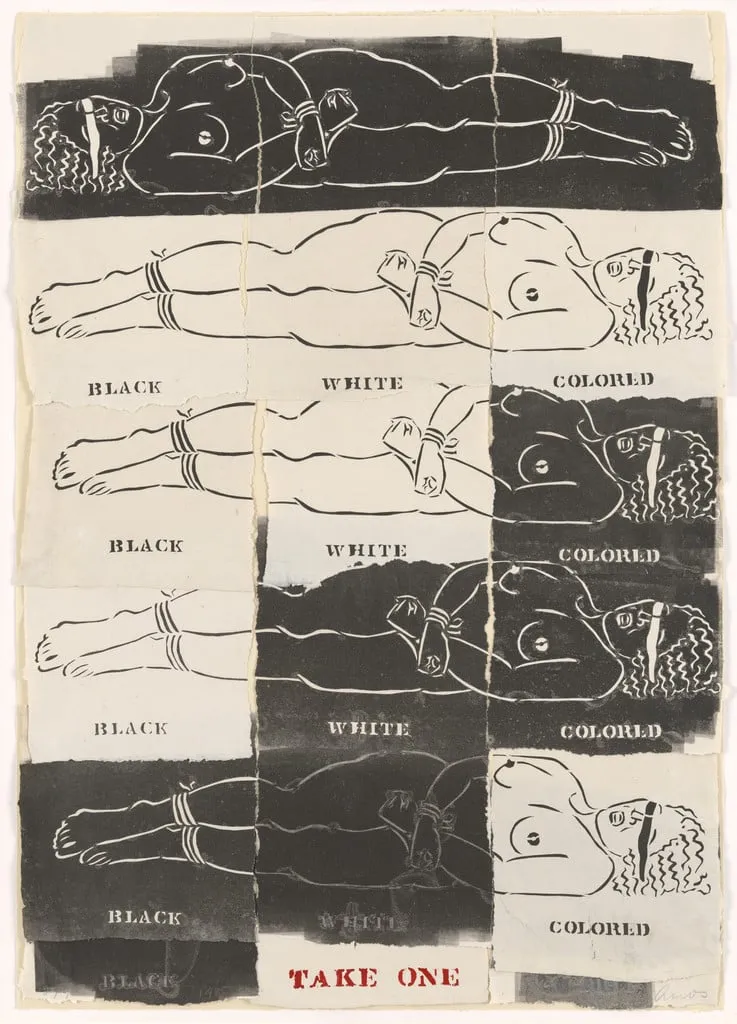
Untitled is a print by Emma Amos. It dates from 1986 and is held in the collection of the Museum of Modern Art.
About this work
Overview
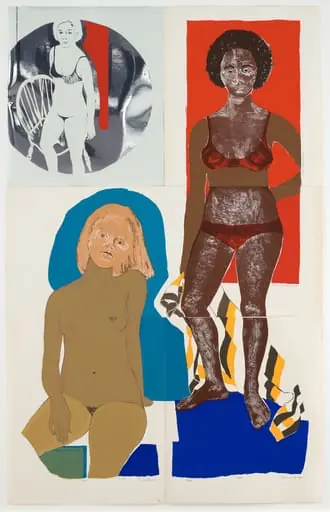
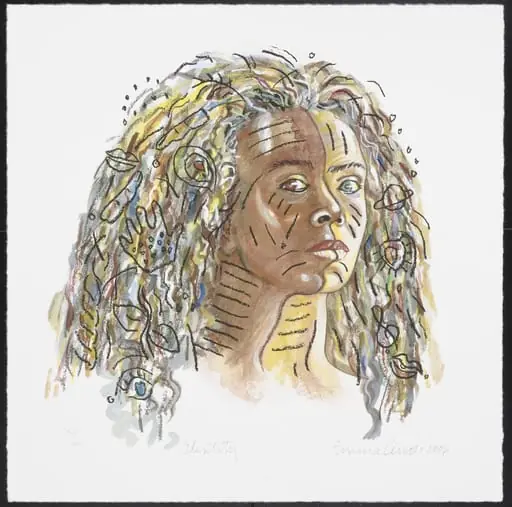
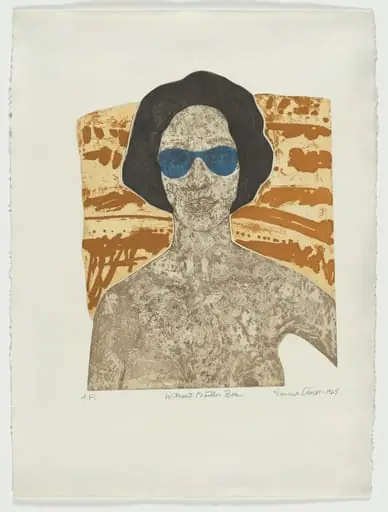
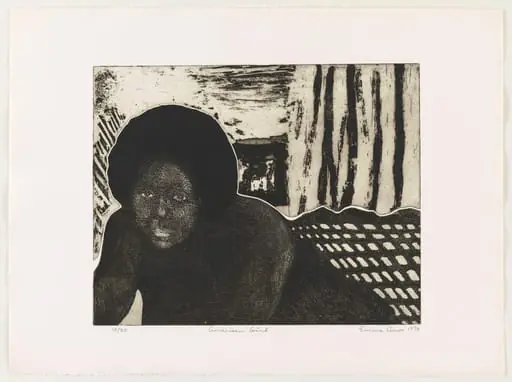
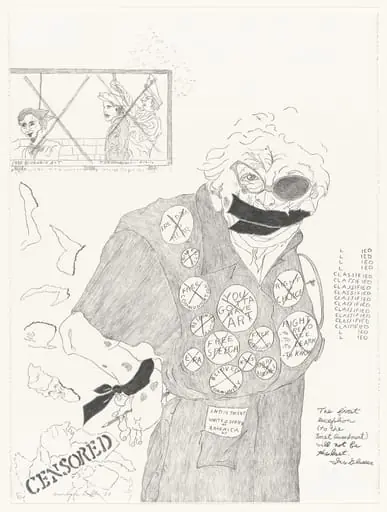
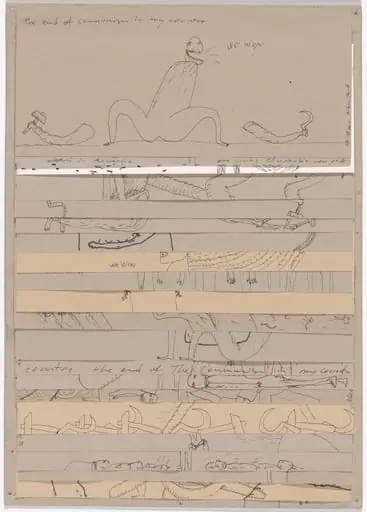
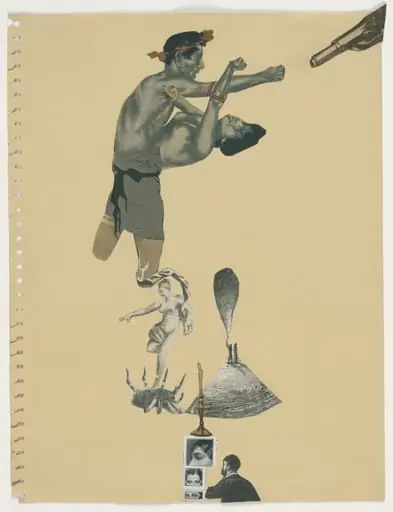
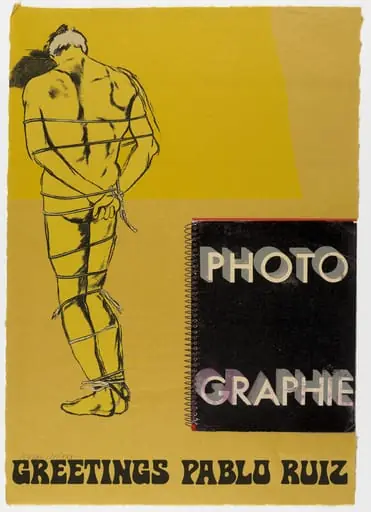
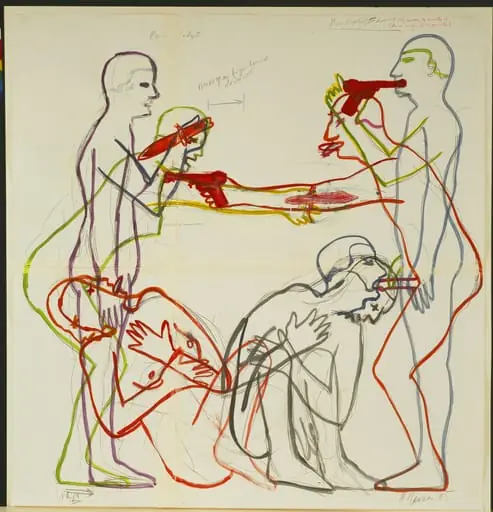
Created in 1986, this print by Emma Amos combines stencil techniques with layered, torn paper to form a composition of nude figures. The work is part of The Museum of Modern Art’s collection and reflects Amos’s interest in material experimentation and the interplay of form and surface. Its construction emphasizes physicality through collage-like layering and deliberate fragmentation.
Subject & Meaning
The figures, rendered in stark black and white, are arranged in varied poses that suggest movement and vulnerability. Their nudity is not idealized but presented as a direct, unembellished presence. The contrast between light and dark skin tones invites reflection on racial and gendered representation, while the fragmented composition underscores themes of identity as constructed and fractured.
Technique & Style
Amos employed stenciling to define the figures, then built the surface by tearing and reassembling paper, creating irregular edges and overlapping planes. The monochromatic palette—black and white—heightens tactile contrast, while the handmade texture resists mechanical uniformity. This method merges printmaking with collage, challenging traditional boundaries between mediums.
History & Provenance
The work entered The Museum of Modern Art’s collection in the late 1980s, following Amos’s growing recognition for her interdisciplinary approach.
The work entered The Museum of Modern Art’s collection in the late 1980s, following Amos’s growing recognition for her interdisciplinary approach. It was produced during a period when she was actively engaging with feminist and Black artistic movements, integrating personal and political concerns into her practice. Its acquisition reflects institutional acknowledgment of her innovative printmaking.
Context
Created during the height of identity-based art movements in the 1980s, the piece responds to debates around representation, the female body, and racial visibility. Amos’s use of collage echoes broader trends in postmodern art but is grounded in her lived experience as a Black woman artist. The work resists singular interpretation, instead offering layered, ambiguous narratives.
Legacy
This work contributes to Amos’s broader redefinition of printmaking as a space for personal and political expression. Its material complexity and unflinching subject matter have influenced subsequent generations of artists exploring race, gender, and medium. The piece remains a quiet but persistent example of how form can carry critical weight without overt rhetoric.
Artist & collection