Artwork
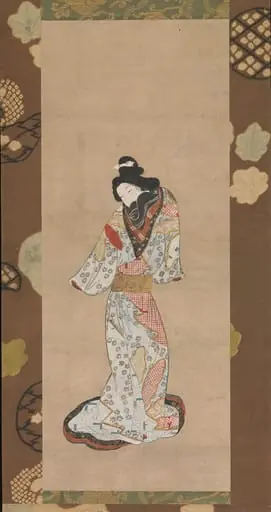
Courtesan and Attendants
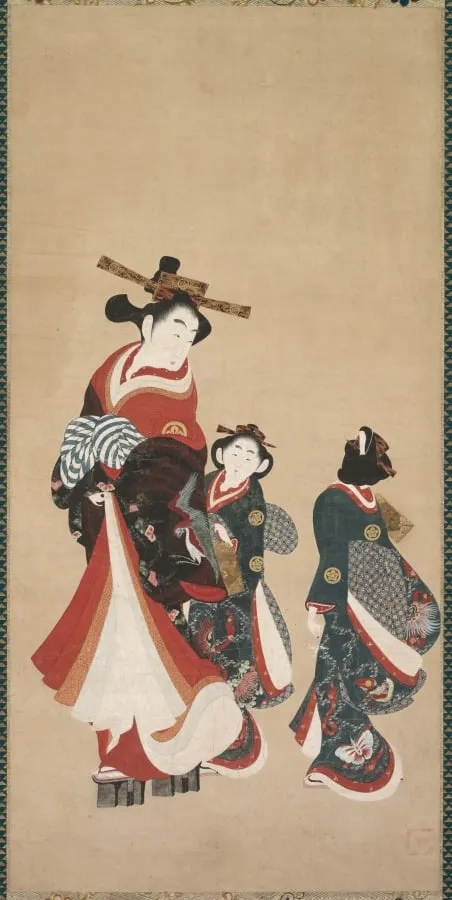
Courtesan and Attendants is an unspecified painting by the Baroque artist Engetsudō. It dates from 1750 and is held in the collection of the Cleveland Museum of Art.
About this work
Overview
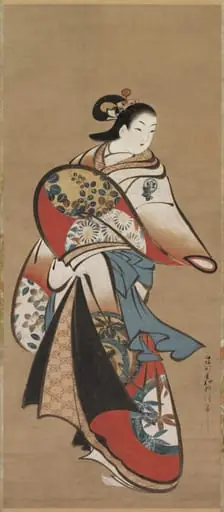
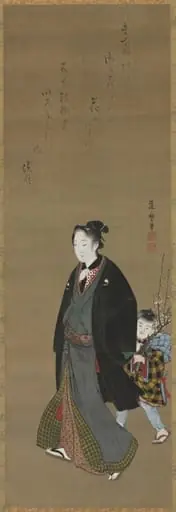
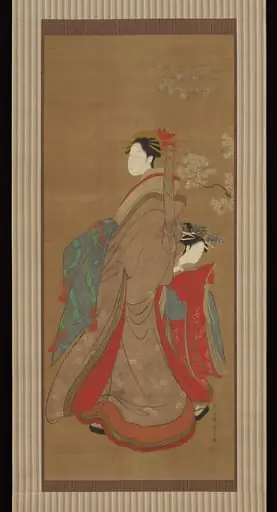
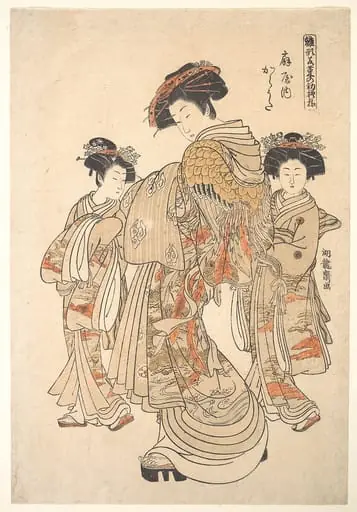
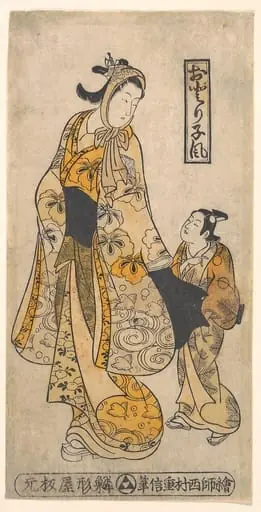
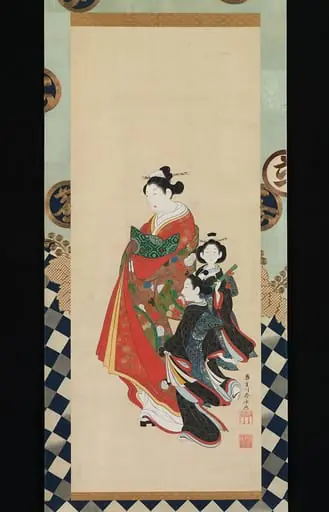
This painting depicts a high-ranking courtesan accompanied by two young attendants, capturing a moment of quiet formality within the pleasure quarters.
This painting depicts a high-ranking courtesan accompanied by two young attendants, capturing a moment of quiet formality within the pleasure quarters. The figures are arranged with deliberate spatial rhythm, their attire and accessories signaling status, season, and institutional affiliation. The scene reflects the visual language of ukiyo-e, where personal identity is encoded through dress and gesture rather than overt narrative.
Subject & Meaning
The courtesan’s elaborate winter attire—thick robes and lacquered clogs—indicates seasonal context, while her front-tied obi and ornate tortoiseshell comb mark her professional rank. The cherry blossom crest on her shoulder and the attendants’ garments identifies her brothel, reinforcing the hierarchical structure of the pleasure district. The shuttlecocks held by the attendants allude to New Year customs, subtly anchoring the scene in a temporal ritual.
Technique & Style
The composition employs flat planes of color and precise line work typical of ukiyo-e woodblock aesthetics, though rendered here in paint. The frontal gaze of one attendant breaks from conventional profile views, introducing a rare directness that draws the viewer into the scene. Details like the crest and comb are rendered with fine precision, emphasizing symbolic rather than naturalistic representation.
History & Provenance
The work is attributed to Engetsudō, an artist active in the late Edo period who specialized in depictions of courtesans and urban entertainers. Though few signed works survive, stylistic analysis links this piece to his oeuvre. Its survival suggests it was commissioned or collected by a patron familiar with the aesthetics of the Yoshiwara district, possibly for private contemplation rather than mass circulation.
Context
In Edo-period Japan, courtesans were both objects of desire and cultural icons, their appearance meticulously regulated by sumptuary laws. The presence of the brothel crest on all three figures underscores the institutional nature of their roles. The shuttlecocks, linked to New Year festivities, hint at the seasonal rhythms that structured life in the pleasure quarters, blending leisure with ritual.
Legacy
This painting contributes to a broader visual archive of Edo-era urban life, preserving the nuanced codes of status and identity within the pleasure districts. While later Western collectors often exoticized such images, Japanese contemporaries recognized them as documents of social structure. Engetsudō’s work, though less known than his peers, offers a quiet, detailed counterpoint to more flamboyant portrayals of courtesans.
Artist & collection

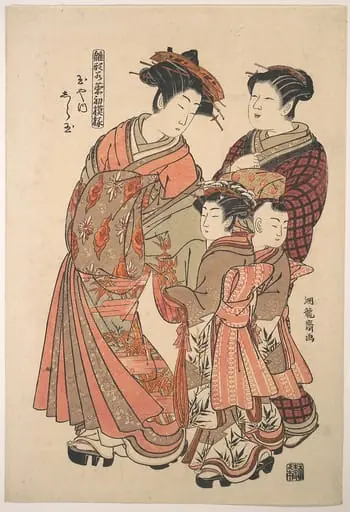 『雛形若菜初模様 玉や内 しら玉』|The Courtesan Shiratama of the Tamaya Brothel, from the series “A Pat-tern Book of the Year’s First Designs, Fresh as Spring Herbs” (“Hinagata wakana hatsu moyō”)
 Untitled
 Untitled
 Untitled
 『雛形若菜の初模様 扇屋内 からうた』|The Courtesan Karauta of the Ōgiya Brothel, from the series “A Pattern Book of the Year’s First Designs, Fresh as Spring Herbs” (“Hinagata wakana no hatsu moyō”)
 Odari Kafu|Style of the Dancer
 Untitled
 寛文美人図|Beauty of the Kanbun Era