Artwork
『雛形若菜の初模様 扇屋内 からうた』|The Courtesan Karauta of the Ōgiya Brothel, from the series “A Pattern Book of the Year’s First Designs, Fresh as Spring Herbs” (“Hinagata wakana no hatsu moyō”)
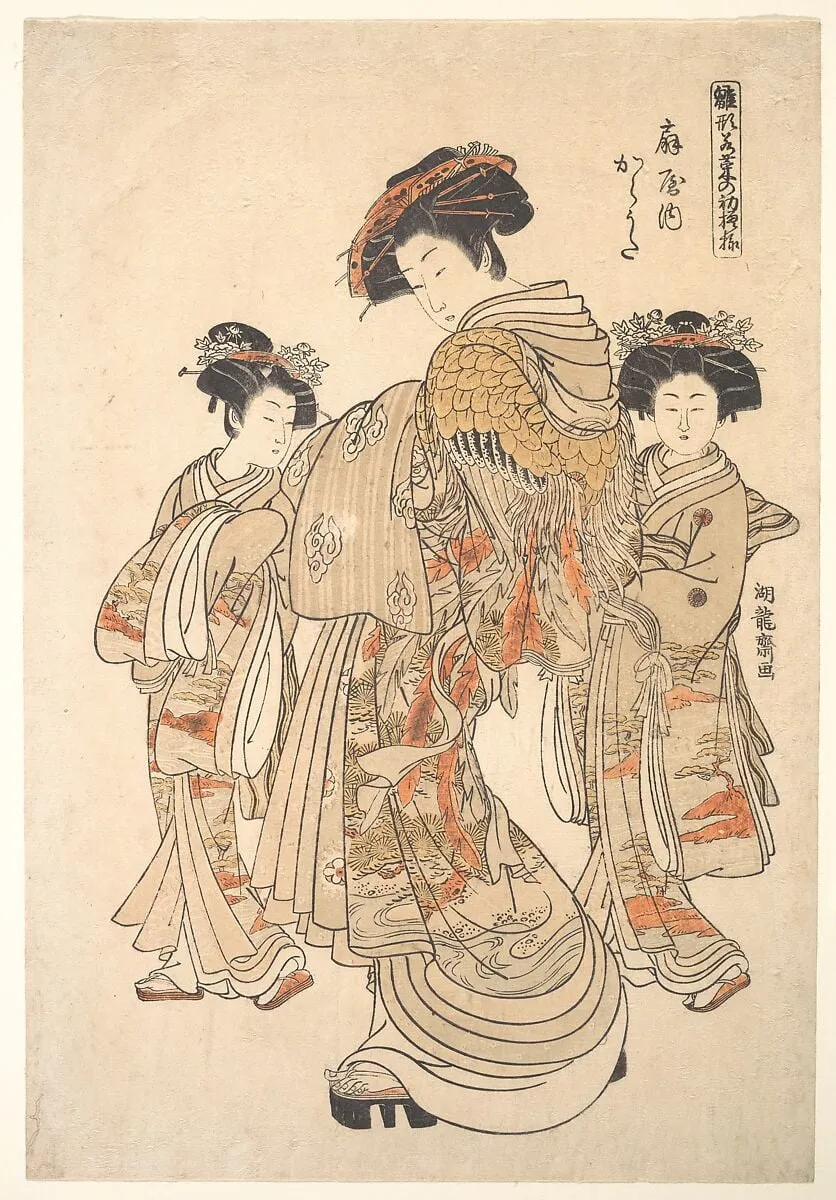
『雛形若菜の初模様 扇屋内 からうた』|The Courtesan Karauta of the Ōgiya Brothel, from the series “A Pattern Book of the Year’s First Designs, Fresh as Spring Herbs” (“Hinagata wakana no hatsu moyō”) is an ink print by the Romanticist artist Isoda Koryūsai. It dates from 1778 and is held in the collection of the Metropolitan Museum of Art.
About this work
Overview
Created in 1778 by the Edo‑period printmaker Isoda Koryūsai, this woodblock print belongs to the series titled “Hinagata wakana no hatsu moyō,” which translates as a pattern book of the year’s first designs, fresh as spring herbs. The work is part of the Metropolitan Museum of Art’s collection and depicts a scene from the Ōgiya brothel, focusing on the courtesan known as Karauta.
Subject & Meaning
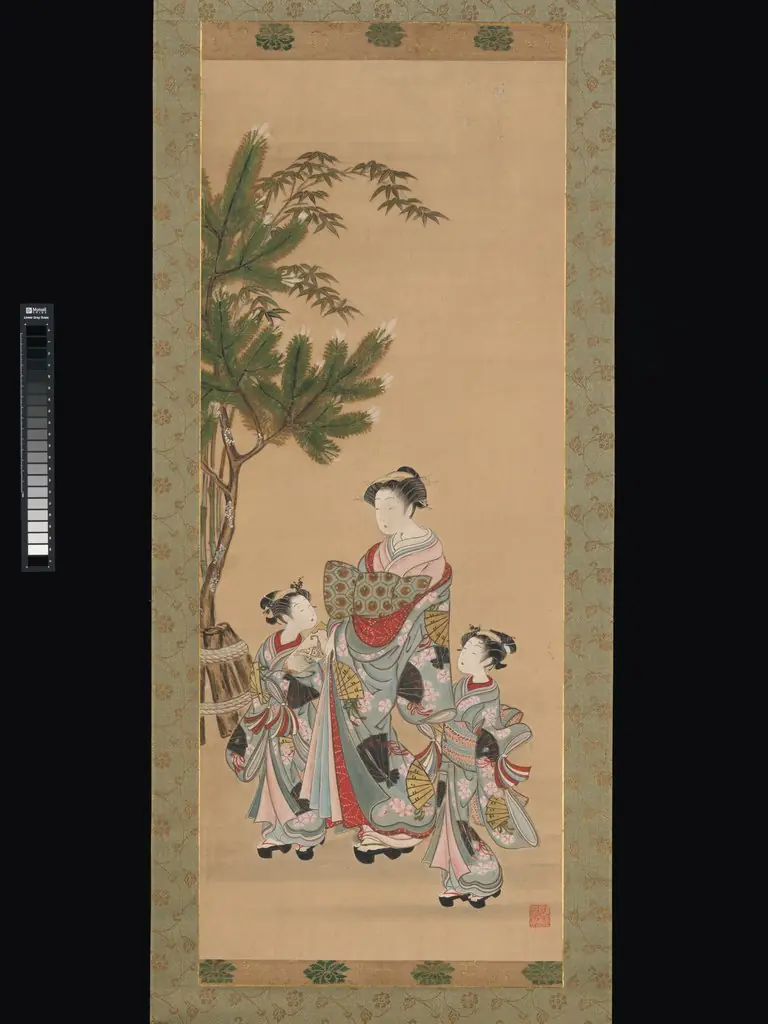
The image presents three elegantly dressed women walking side by side. The central figure, identified as the courtesan Karauta, wears a voluminous skirt patterned in orange and black, while the companions are clad in darker, more restrained garments. Their composed expressions and the presence of fans or scrolls suggest a formal presentation of beauty and poise within the pleasure quarters.
Technique & Style
Executed in ink and color on paper, the print demonstrates Koryūsai’s skillful use of subtle shading and layered coloration to suggest volume, especially in the central robe’s folds. A restrained palette of browns, greens, and reds creates a harmonious atmosphere, while delicate line work avoids harsh outlines, lending the figures a soft, three‑dimensional presence.
History & Provenance
The print was produced during the late eighteenth century, a prolific period for ukiyo‑e artists catering to urban audiences. It entered the Metropolitan Museum of Art’s collection through acquisition in the twentieth century, where it remains catalogued as an example of Koryūsai’s work for the Ōgiya brothel series.
Context
Ōgiya was one of the licensed pleasure districts of Edo, and its courtesans were frequent subjects of ukiyo‑e prints, which served both as advertisements and as visual records of contemporary fashion. Koryūsai’s series compiled seasonal designs and motifs, aligning the courtesans’ attire with the freshness of spring herbs, a symbolic reference to renewal and elegance.
Artist & collection
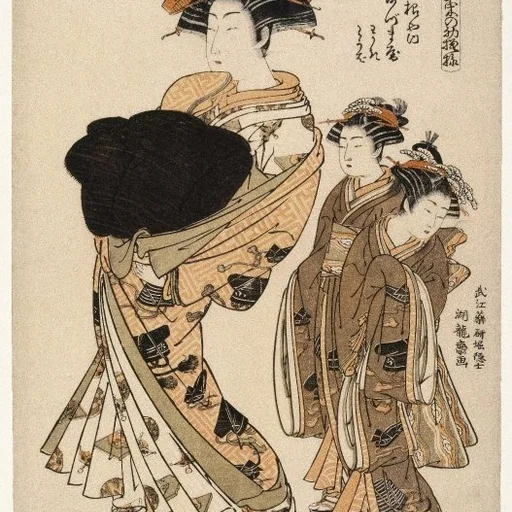

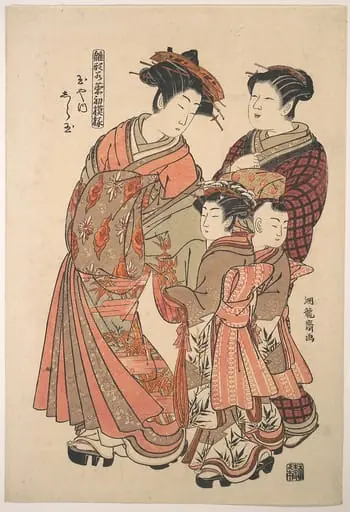 『雛形若菜初模様 玉や内 しら玉』|The Courtesan Shiratama of the Tamaya Brothel, from the series “A Pat-tern Book of the Year’s First Designs, Fresh as Spring Herbs” (“Hinagata wakana hatsu moyō”)
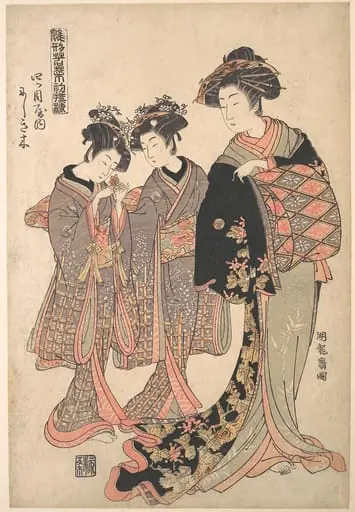 『雛形若菜初模様 四ツ目屋内 にしき木』|The Courtesan Nishikigi of the Yotsumeya Brothel, from the series “A Pattern Book of the Year’s First Designs, Fresh as Spring Herbs” (“Hinagata wakana hatsu moyō”)
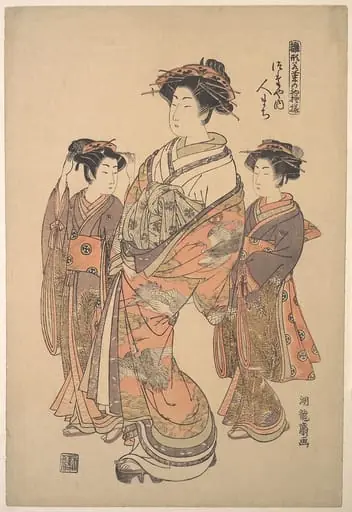 『雛形若菜の初模様 つたや内 人まち』|The Courtesan Hitomachi of the Tsutaya Brothel, from the series “A Pat-tern Book of the Year’s First Designs, Fresh as Spring Herbs” (“Hinagata wakana no hatsu moyō”)
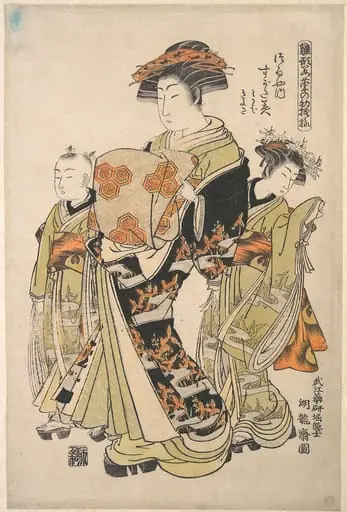 『雛形若菜の初模様 つるや内 すがたみ』|The Courtesan Sugatami of the Tsuruya Brothel, from the series “A Pat-tern Book of the Year’s First Designs, Fresh as Spring Herbs” (“Hinagata wakana no hatsu moyō”)
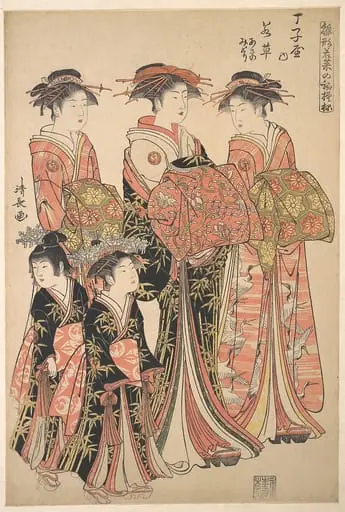 鳥居清長画 「雛形若菜の初模様 丁子屋の若草・ あさの・みどり」|The Courtesan Wakakusa of the Chōjiya Brothel, and Attendants Asano and Midori, from the series “A Pattern Book of the Year’s First Designs, Fresh as Spring Herbs” (Hinagata wakana no hatsumoyō)
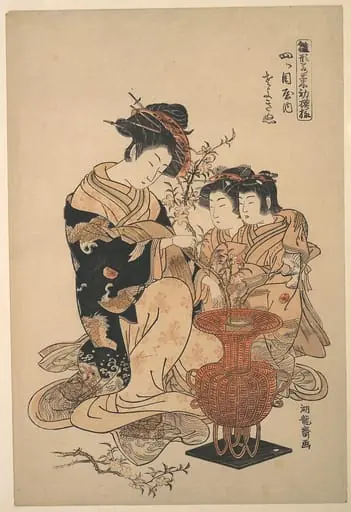 礒田湖竜斎画「雛形若菜初模様 四ツ目屋内 さよぎぬ」|The Courtesan Sayoginu of the Yotsumeya Brothel, from the series “A Pattern Book of the Year’s First Designs, Fresh as Spring Herbs” (Hinagata wakana hatsu moyō)
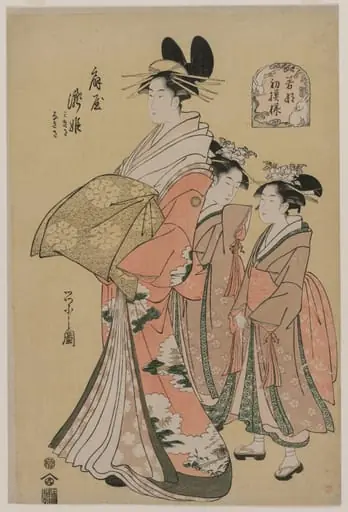 The Courtesan Takihime and Attendants (from the series New Patterns of Young Greens)
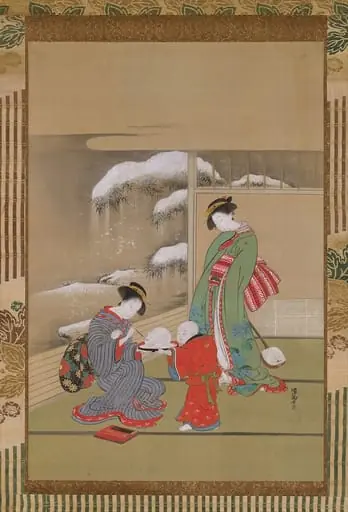
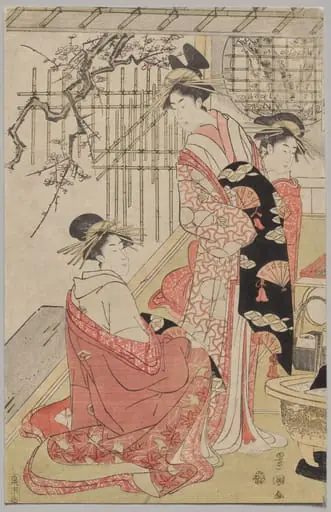 Courtesans of the Ōgiya on a Spring Outing
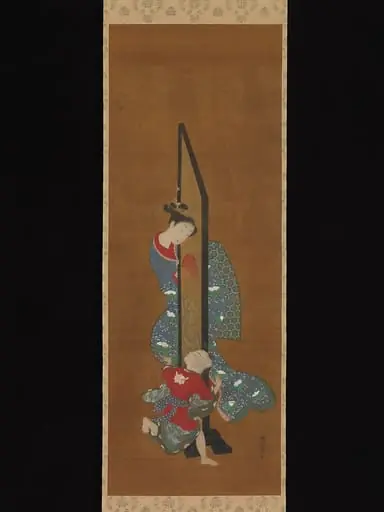
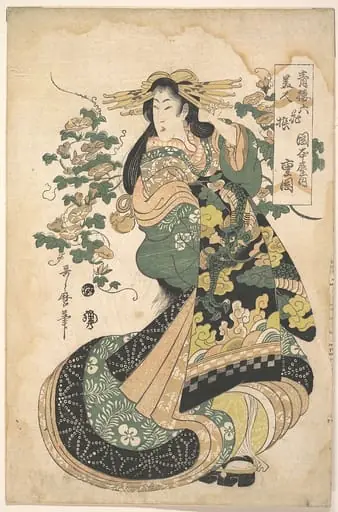 青楼美人 六花撰 岡本屋内 重岡|A Courtesan with Morning-glories on the Background