Artwork
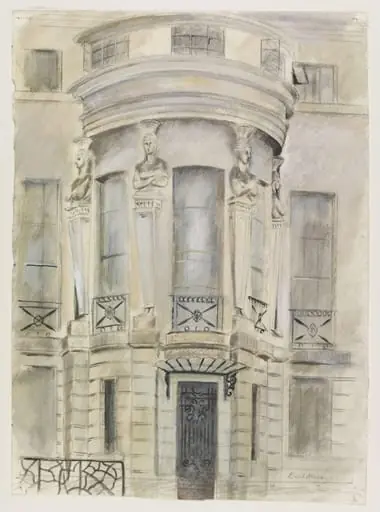
The Knights of St Johns Tavern, Queen's Terrace, St John's Wood, London
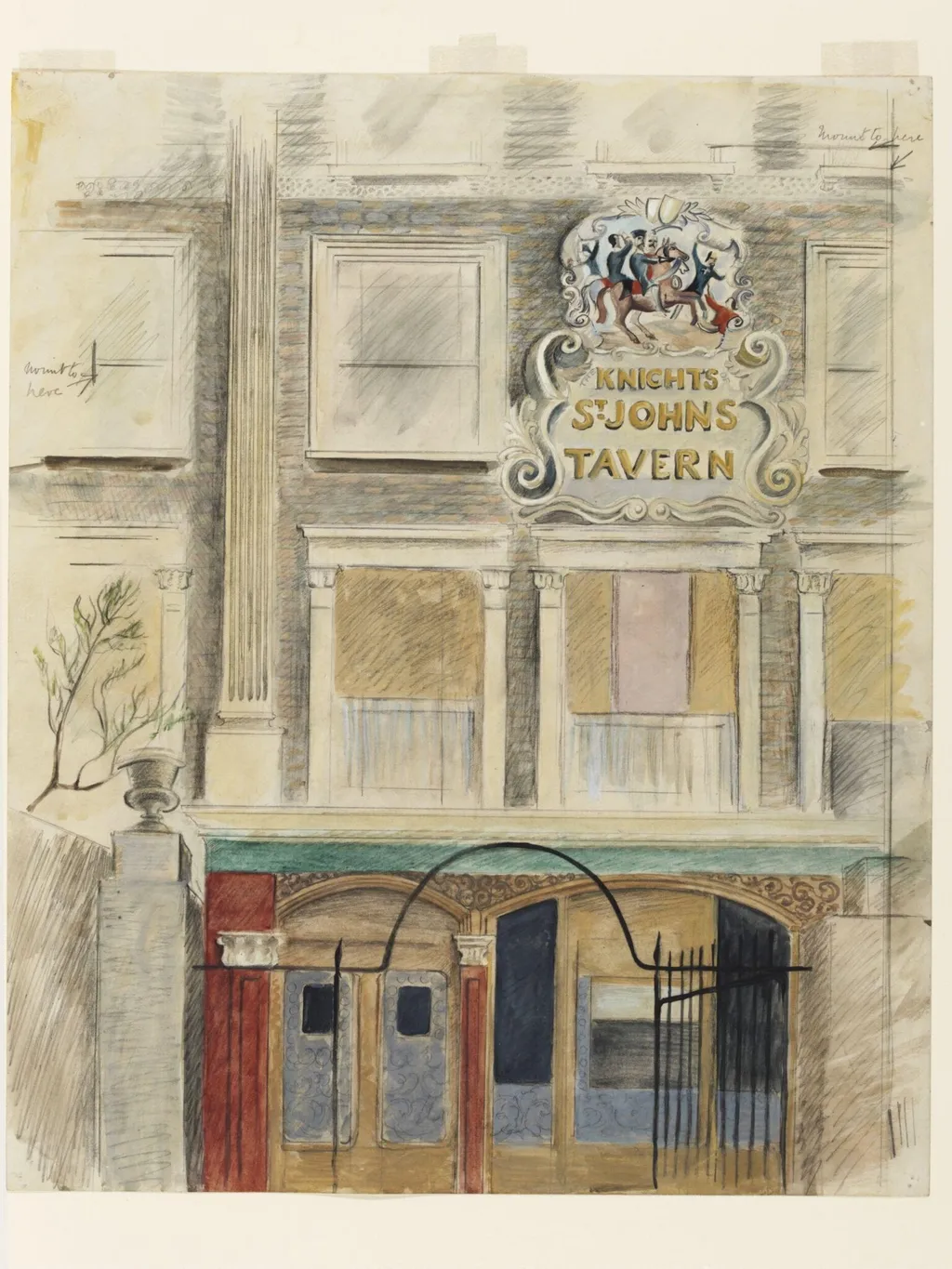
The Knights of St Johns Tavern, Queen's Terrace, St John's Wood, London is a watercolor work on paper by the Arts and Crafts movement artist Enid Marx. It dates from 1940 and is held in the collection of the Victoria and Albert Museum. Painted in 1940, this watercolour captures the exterior of a London tavern on Queen’s Terrace in St John’s Wood.
About this work
Overview
Painted in 1940, this watercolour captures the exterior of a London tavern on Queen’s Terrace in St John’s Wood. Created as part of the Recording Britain initiative, it documents a modest urban structure during wartime, when many traditional buildings faced threat from bombing or neglect. The work reflects a broader effort to preserve visual records of everyday architecture before it disappeared.
Subject & Meaning
The tavern’s painted sign, depicting a horse and rider within a scroll, is the central focus—a rare surviving example of pre-war commercial signage.
The tavern’s painted sign, depicting a horse and rider within a scroll, is the central focus—a rare surviving example of pre-war commercial signage. Below, three doors frame the entrance, one ajar to reveal shadowed interior space. A potted plant beside the wall suggests domestic life intruding on the public facade. The sign’s imagery and the building’s plainness together evoke a quiet, fading civic tradition.
Technique & Style
Executed in loose, fluid watercolour, the piece has the immediacy of a field study. Brushwork is unrefined, with minimal detail in the walls and moldings, emphasizing atmosphere over precision. The artist’s handwritten notes, such as 'corner to here,' reveal a working process focused on composition and spatial planning. The soft palette and open brushstrokes convey a sense of transient observation.
History & Provenance
Commissioned by the Committee for the Employment of Artists in Wartime under Sir Kenneth Clark, the work belongs to the Recording Britain collection, which gathered over 1,500 watercolours between 1939 and 1942. The project sought to archive vernacular architecture and local character at risk from war and modernization. This piece entered the collection as part of that systematic effort to preserve visual heritage.
Context
During the Second World War, Britain faced widespread destruction and social upheaval, prompting efforts to document its cultural landscape. The Recording Britain project targeted buildings, signs, and landscapes deemed vulnerable—not for their grandeur, but for their ordinary, lived-in quality. This tavern, with its hand-painted sign and unadorned façade, typified the unremarkable yet vanishing elements of urban life the project aimed to save.
Legacy
The painting remains part of the Recording Britain archive, now held in major institutions, as a quiet testament to wartime cultural preservation. It contributes to a broader understanding of how artists responded to national crisis through observation rather than heroism. The work also highlights the role of figures like Enid Marx, whose contributions to the project helped shape a lasting visual record of Britain’s everyday spaces.
Artist & collection
Artist
Enid Crystal Dorothy Marx, RDI (20 October 1902 – 18 May 1998), was an English painter and designer, best known for her industrial textile designs for the London Transport Board and the Utility furniture Scheme.

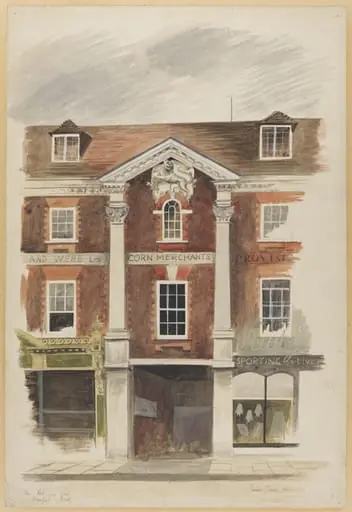 The Red Lion Hotel, Blandford
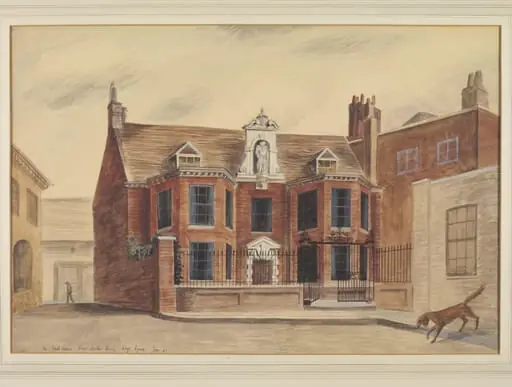 The Bank House, Kings Staithes Quay, Kings Lynn
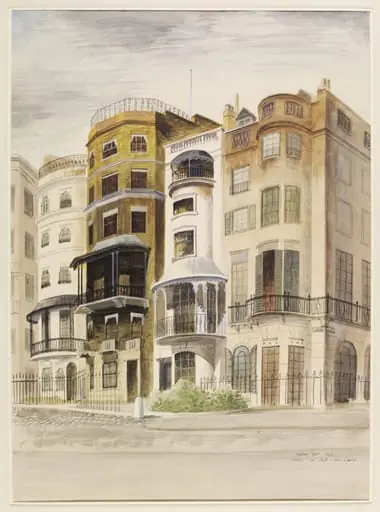 93 to 97 Park Lane, W.1.
 Buckingham Place, Westminster
 Royal Hotel, Falmouth
 Park Street, Windsor
 Market House, Winslow
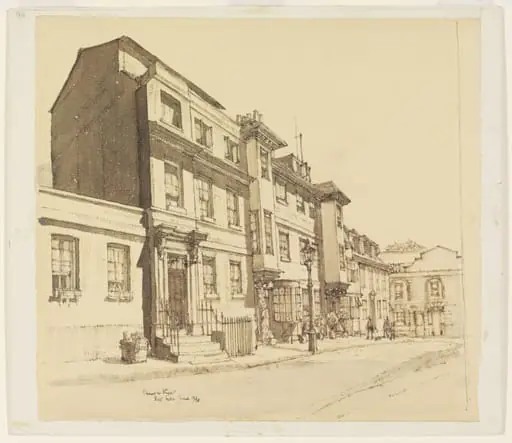 Church Street, (east side) Windsor
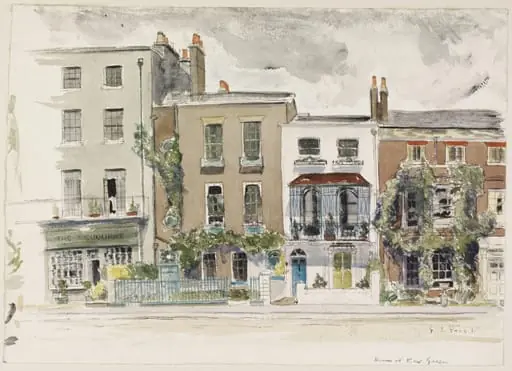 Houses on the Green, Kew
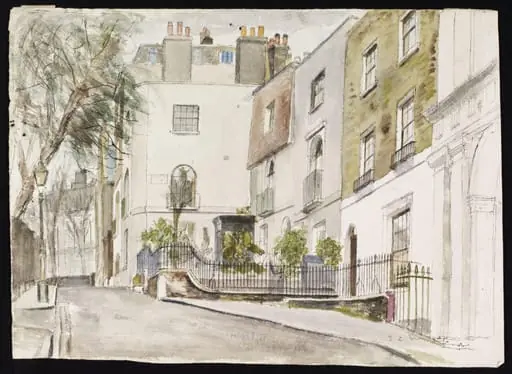 Hollyberry Walk, N.W.3.
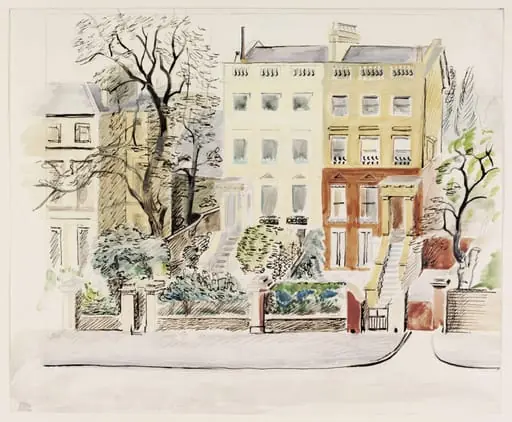 Houses in Marlborough Hill, St. John's Wood
 No.1, Cornwall Terrace, Regent's Park