Artwork
Buckingham Place, Westminster
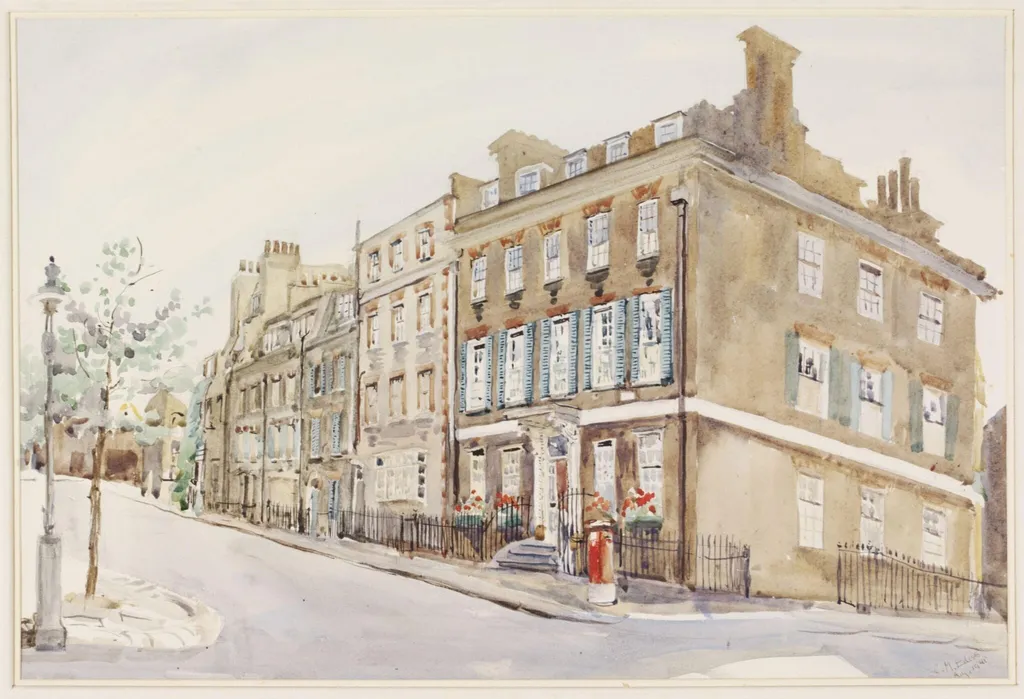
Buckingham Place, Westminster is a watercolor work on paper by Ediss. It dates from 1941 and is held in the collection of the Victoria and Albert Museum.
About this work
Overview
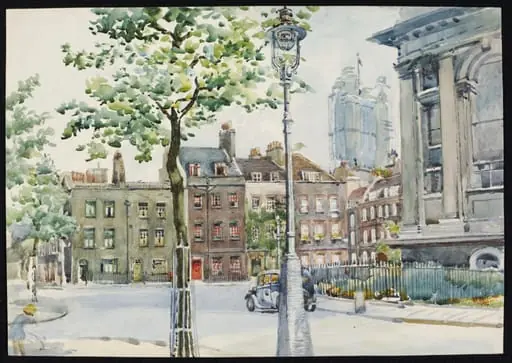
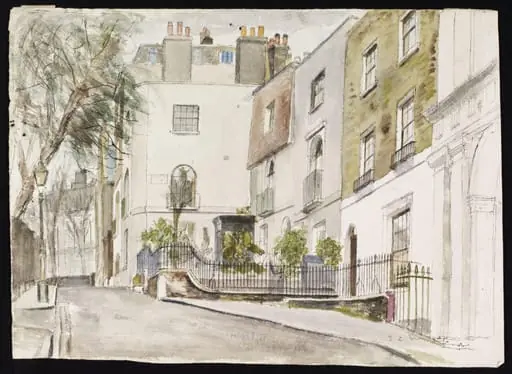
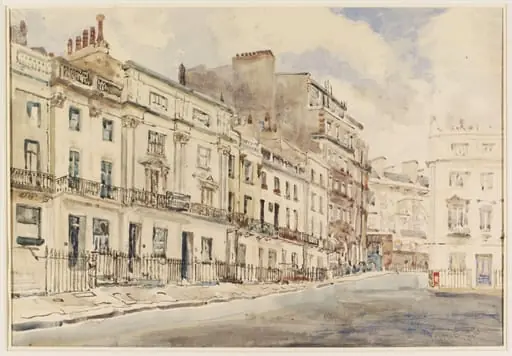
The composition is empty of figures, with a few trees framing the scene, and the muted palette of browns, greys and blues conveys a calm, still atmosphere.
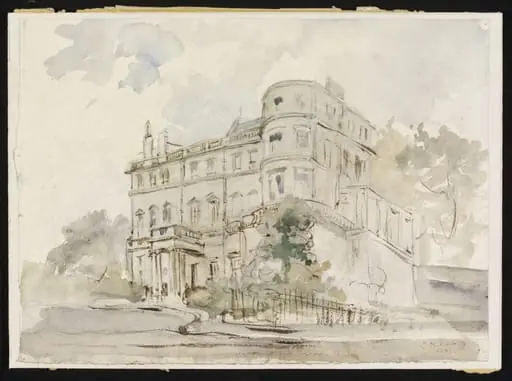
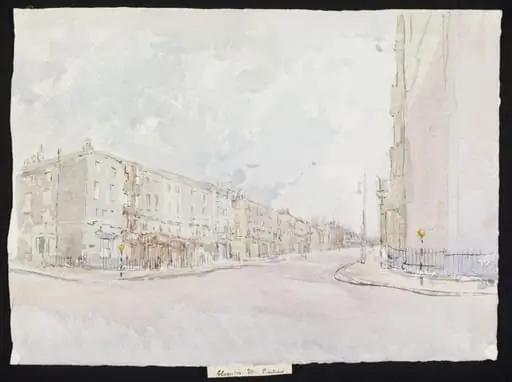
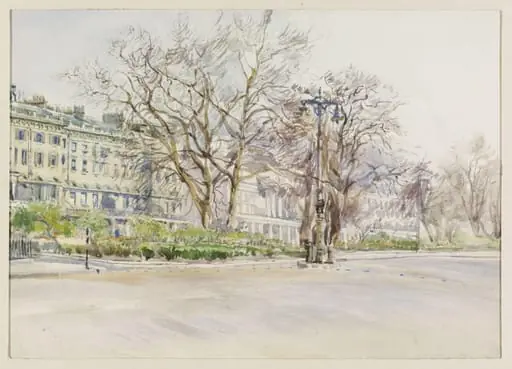
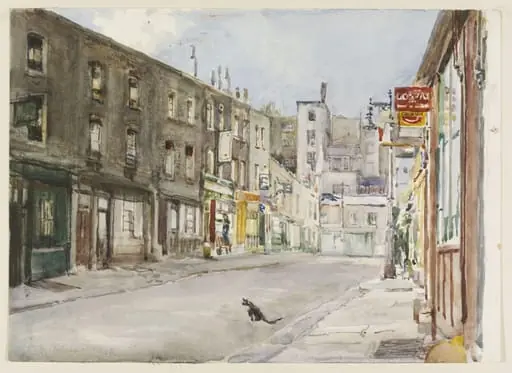
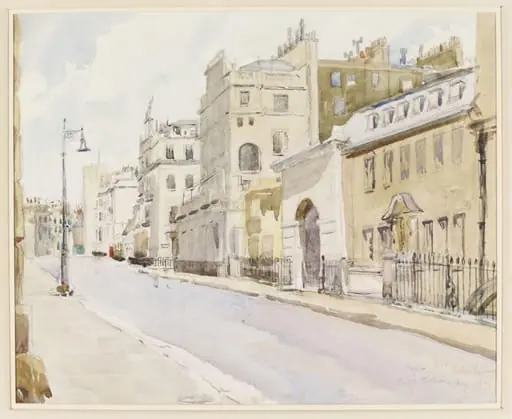
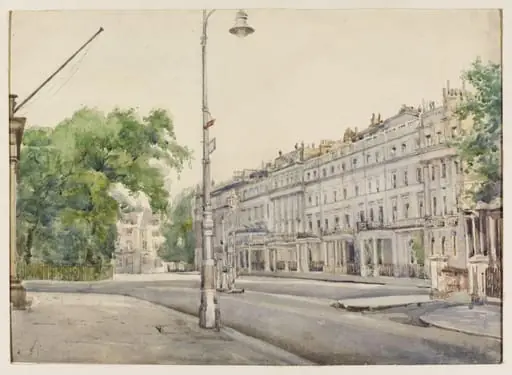
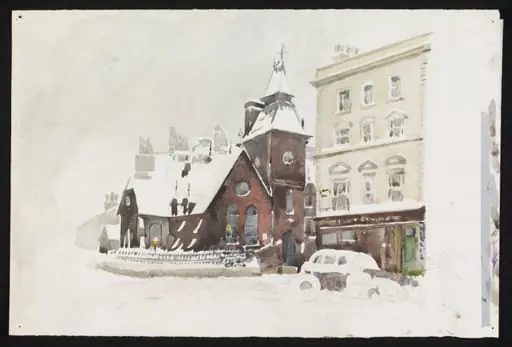
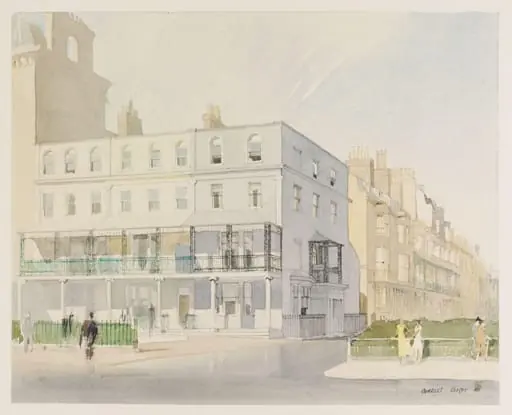
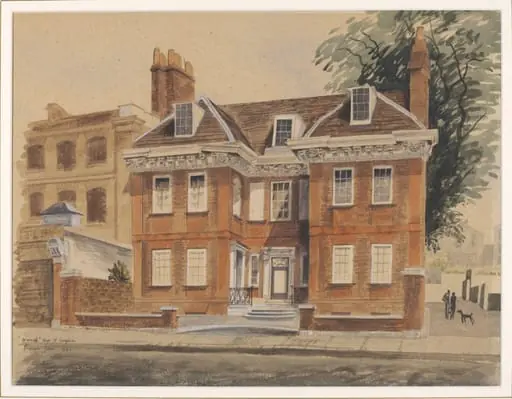
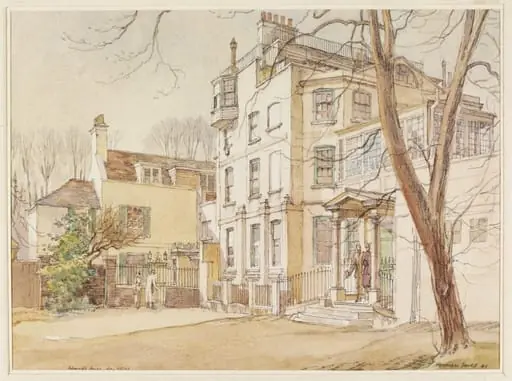
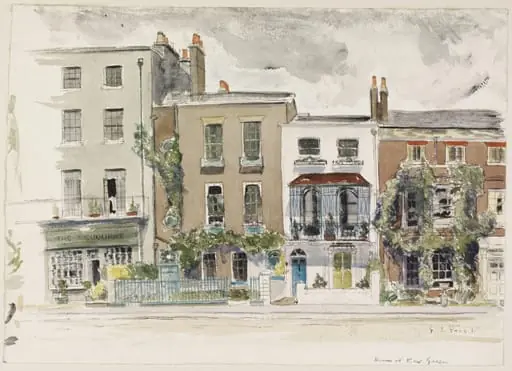
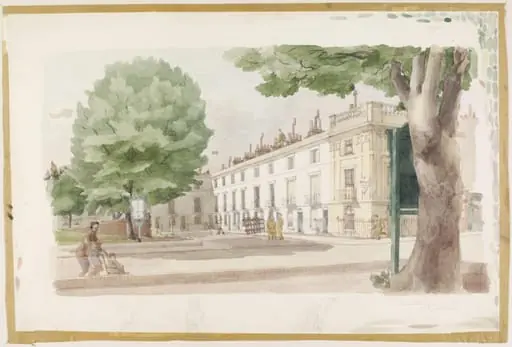
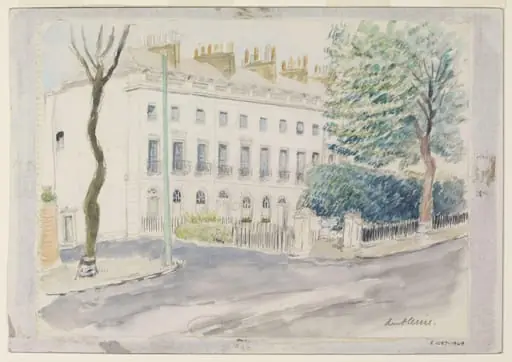
The work is a watercolour rendered in 1941 by the artist Ediss, depicting a quiet urban street in Westminster. A line of brown‑brick façades with modest windows, blue shutters and occasional chimneys occupies the left side, bordered by a black metal fence, a red postbox and a few potted plants. The composition is empty of figures, with a few trees framing the scene, and the muted palette of browns, greys and blues conveys a calm, still atmosphere.
Subject & Meaning
The painting records an ordinary Westminster street, emphasizing the everyday architecture rather than grand monuments. By focusing on the modest residential row, the image highlights the continuity of daily life amid the broader disruptions of wartime Britain, suggesting a sense of resilience and quiet persistence in the urban environment.
Technique & Style
Executed in watercolour, the piece employs restrained washes and delicate brushwork to render the brickwork, shutters and foliage. The limited colour range reinforces a subdued tonal harmony, while the precise rendering of architectural details reflects a documentary approach typical of wartime visual records.
History & Provenance
Created as part of the Recording Britain project, the work was commissioned by the Pilgrim Trust and supervised by Sir Kenneth Clark. The scheme gathered contributions from 97 artists between 1940 and 1943, producing over 1,500 pieces that aimed to safeguard visual evidence of sites considered at risk from wartime damage or post‑war change.
Context
Recording Britain was a government‑backed initiative launched during World War II to capture the nation’s built heritage before it could be altered by bombing or modernization. While the program primarily focused on English locales, it included notable urban settings such as Westminster, reflecting a desire to preserve a comprehensive picture of British cultural geography.
Artist & collection
Artist
Ediss painted London’s quiet streets and squares in delicate watercolours during the early 1940s.