Artwork
Alfonso XII
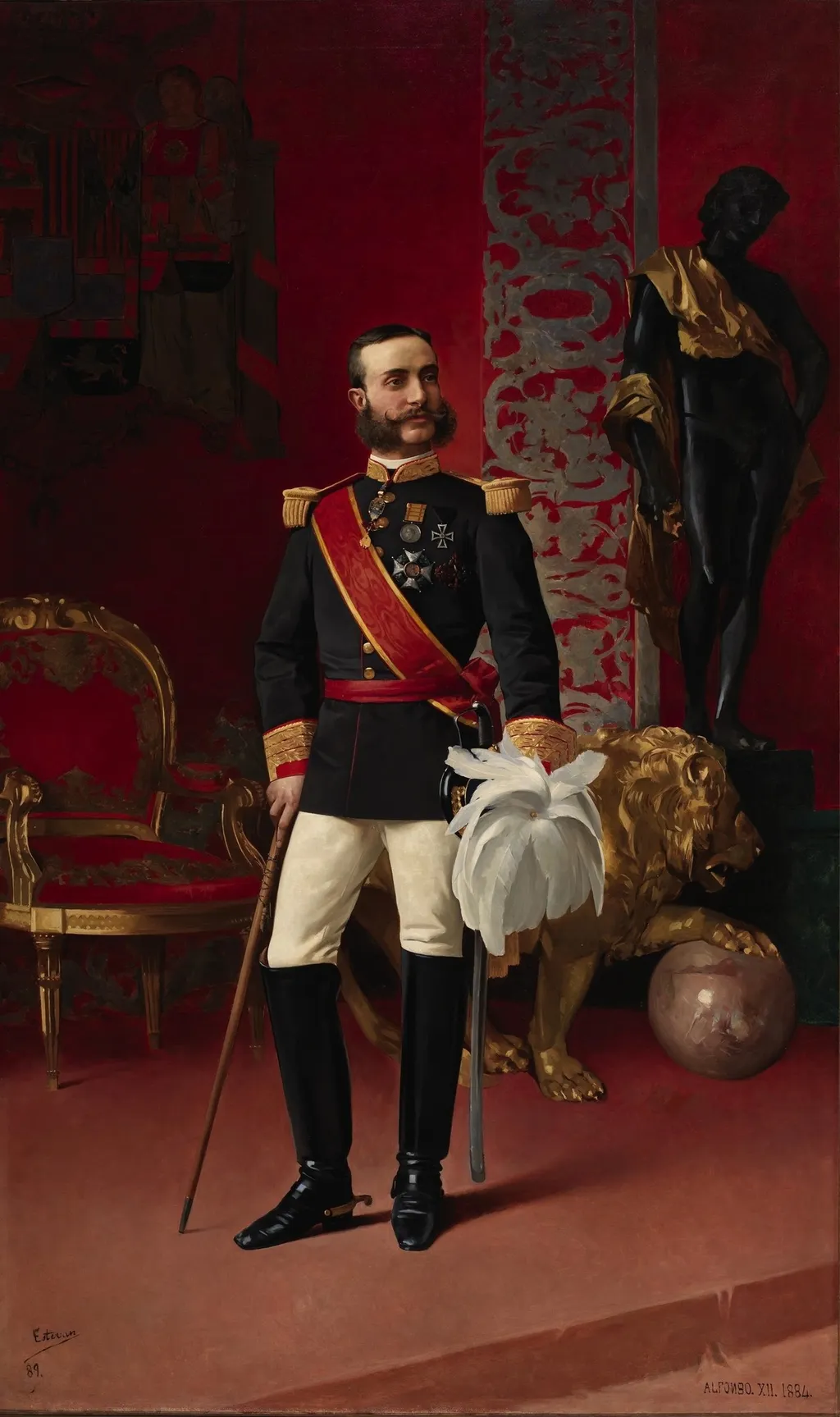
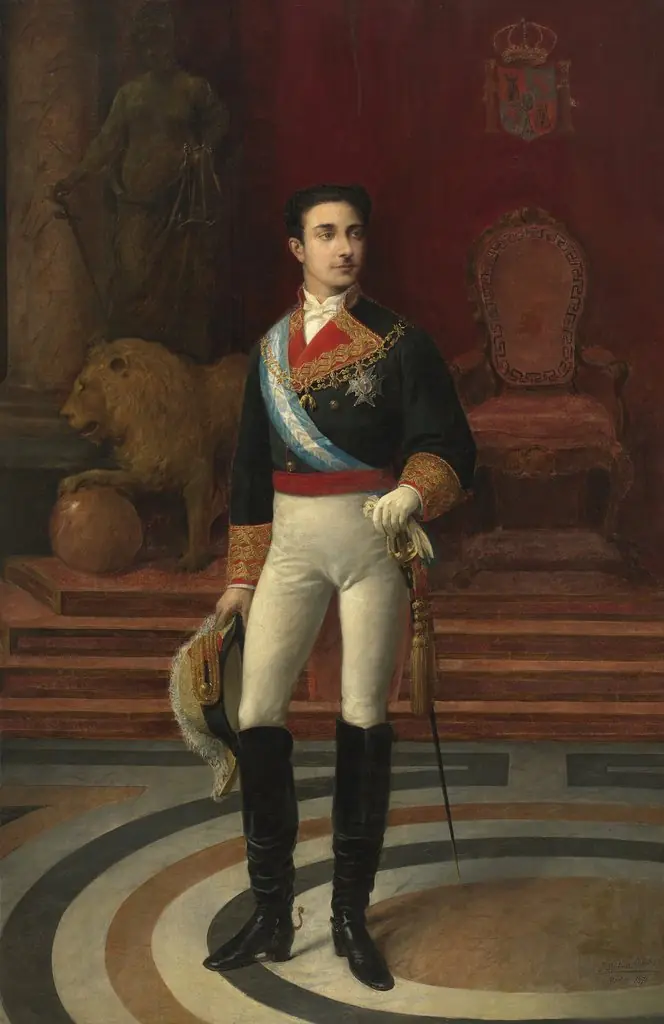
Alfonso XII is an oil painting by the Post-Impressionist artist Enrique Estevan y Vicente. It dates from 1895 and is held in the collection of the Museo del Prado.
About this work
Overview
Enrique Estevan y Vicente’s 1895 oil on canvas, titled Alfonso XII, presents a formally dressed figure within an opulent interior. The work is part of the Museo del Prado’s collection, where it remains on display as an example of late‑nineteenth‑century Spanish portraiture.
Subject & Meaning
The central figure is a man in a black military coat edged in red, white breeches, and an array of medals, holding a saber in one hand while resting a white hat against his side. A gilded lion sculpture and a deep red curtain frame him, underscoring themes of authority and ceremonial grandeur without overt emotional expression.
Technique & Style
Executed in oil, the painting demonstrates a smooth, polished finish typical of academic portraiture of the period. Precise brushwork renders the metallic sheen of the medals and the reflective surface of the sword, while the rich reds and golds are balanced by the subdued tones of the background, creating a controlled yet sumptuous visual effect.
History & Provenance
Created in 1895, the canvas entered the Prado’s holdings in the early twentieth century, though the exact acquisition path is not documented in public records. Its presence in the national museum reflects the institution’s commitment to preserving works by notable Spanish artists of the era.
Context
The portrait aligns with a broader trend in post‑Restoration Spain of depicting military and royal figures in elaborate settings, reinforcing the visual language of power. The inclusion of the lion—a traditional symbol of courage—alongside the formal attire situates the work within contemporary notions of patriotism and state authority.
Own this work as a print
Artist & collection
Artist
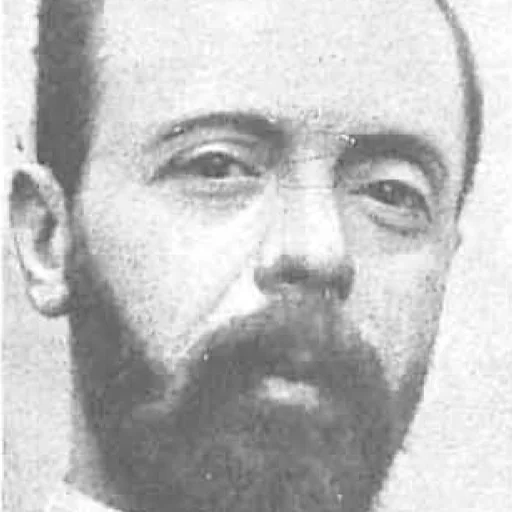
Enrique Estevan y Vicente (1849–1927) was an artist, born in Salamanca.