Artwork
Joseph Moore and His Family
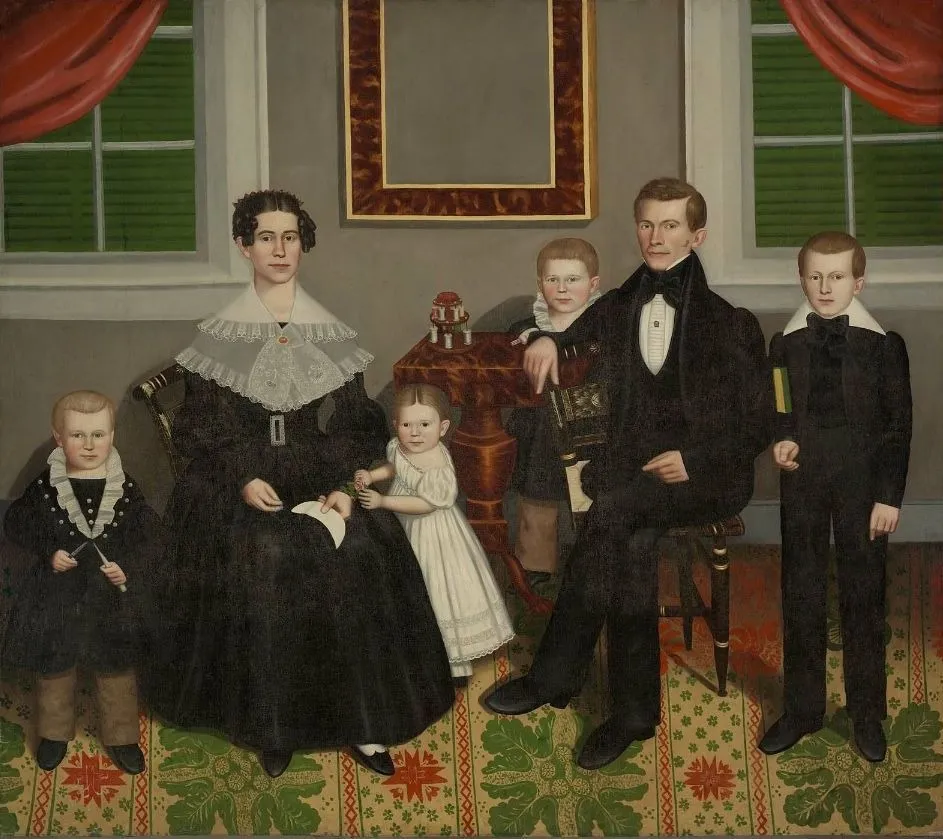
Joseph Moore and His Family is an oil painting by the American Folk Art artist Erastus Salisbury Field. It dates from 1839 and is held in the collection of the Museum of Fine Arts Boston.
About this work
Overview
A self-taught artist from Massachusetts, Field developed his style through brief training in New York and a deep engagement with regional portraiture.
Erastus Salisbury Field painted *Joseph Moore and His Family* in 1839, capturing a domestic scene with quiet precision. A self-taught artist from Massachusetts, Field developed his style through brief training in New York and a deep engagement with regional portraiture. The work exemplifies early American folk art, prioritizing clarity and symbolic order over naturalistic depth, and remains part of the Museum of Fine Arts, Boston’s permanent collection.
Subject & Meaning
The painting portrays Joseph Moore and six family members arranged in a formal group, suggesting social standing and familial unity. The adults, dressed in dark woolens with crisp white collars, convey respectability; the children, similarly attired but with lighter accents, reflect generational continuity. The woman holding paper may signify literacy or domestic record-keeping, while the empty frame above hints at absent relatives or unfulfilled aspirations, adding subtle narrative tension.
Technique & Style
Field employed flat planes of color and carefully rendered textures to define fabric, wood, and architecture. Facial features are simplified yet distinct, with attention to individual posture and gaze. The composition is symmetrical and tightly controlled, with no visible brushwork or atmospheric perspective. Background elements like the patterned rug and green shutters are rendered with decorative precision, characteristic of folk art’s emphasis on pattern over illusion.
History & Provenance
Commissioned by the Moore family in western Massachusetts, the painting remained in private hands until its acquisition by the Museum of Fine Arts, Boston. Field, active between the 1820s and 1860s, produced over 200 portraits, mostly for rural clients. This work is among the few surviving group portraits from his early period, offering rare insight into the visual culture of New England’s middle class during the antebellum era.
Context
In the 1830s, formal portraiture was a luxury accessible primarily to prosperous families in small towns. Field’s work reflects a growing demand for domestic imagery among non-elite communities, where art served as both status symbol and heirloom. Unlike urban academically trained artists, he worked independently, adapting conventional poses and props to local tastes, making his paintings valuable records of everyday life beyond elite circles.
Legacy
Field’s paintings, including this one, are now recognized for their role in documenting American social history through a vernacular lens. His restrained style, devoid of romanticism or theatricality, offers a sober counterpoint to the grand narratives of 19th-century art. Today, scholars value his work not for technical innovation, but for its honest representation of ordinary lives in a rapidly changing nation.
Artist & collection

 The Nellis Children of Sherburne, New York
 The Younger Generation
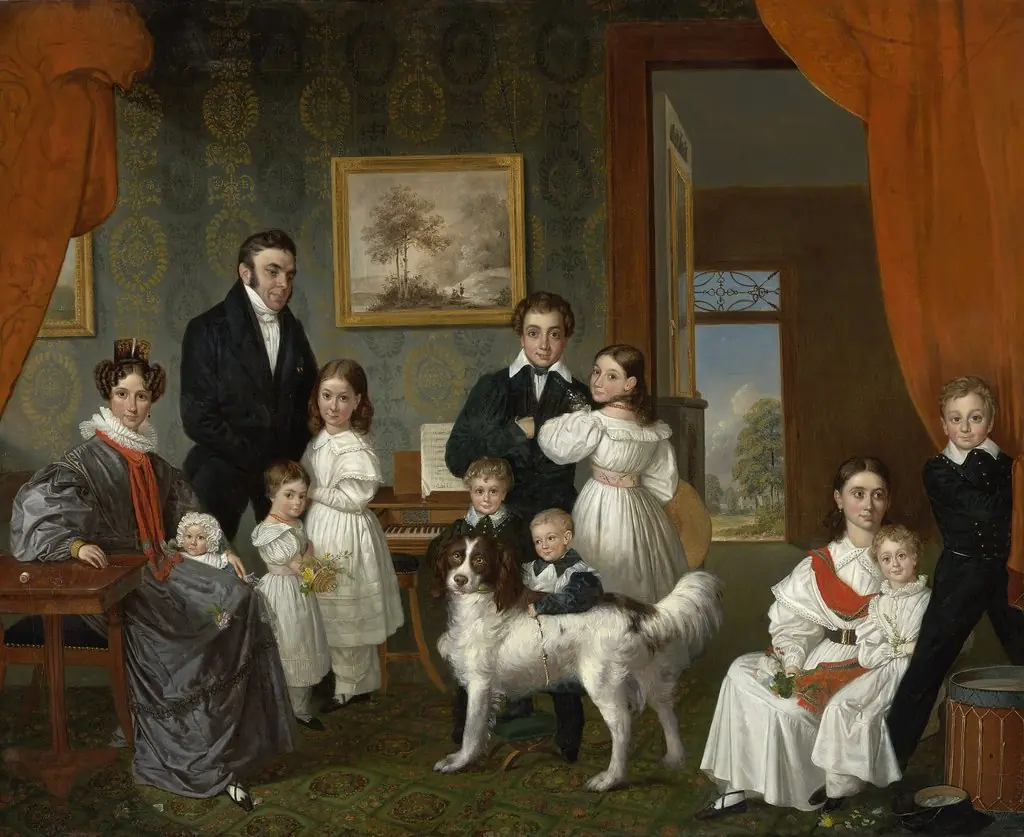 Portrait of the Baud family in their country house in Voorburg
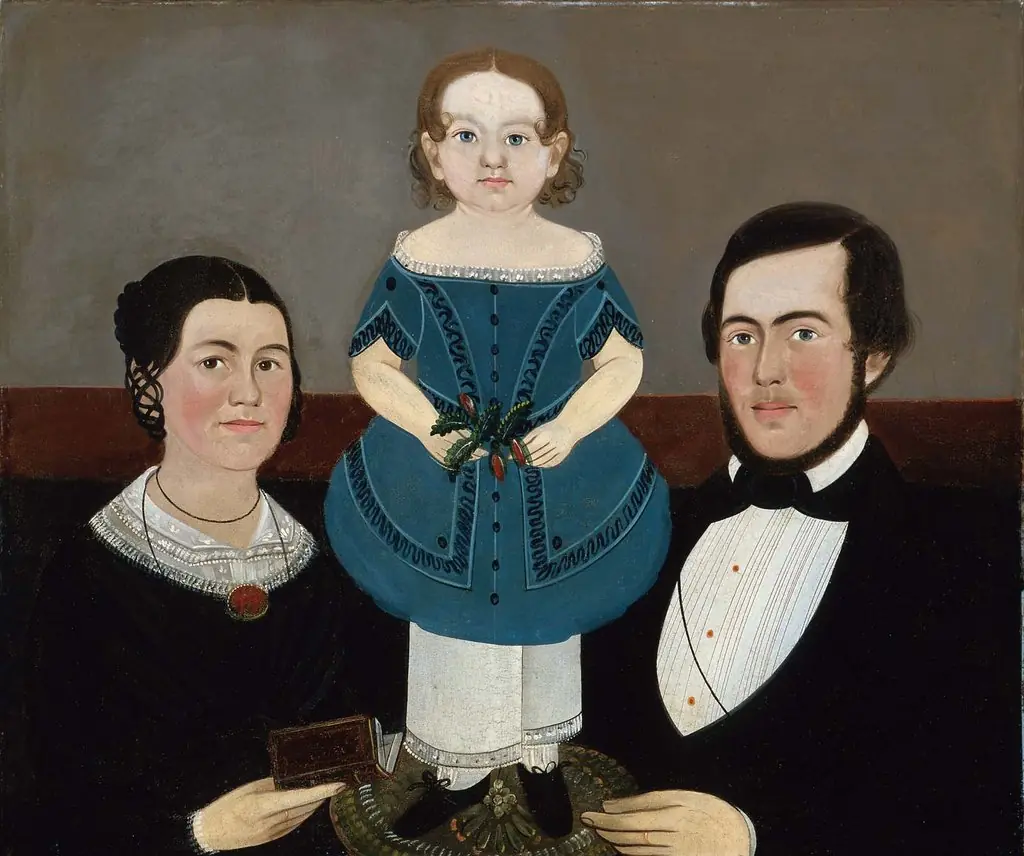 Family Group
 Family Group of Four on Sofa
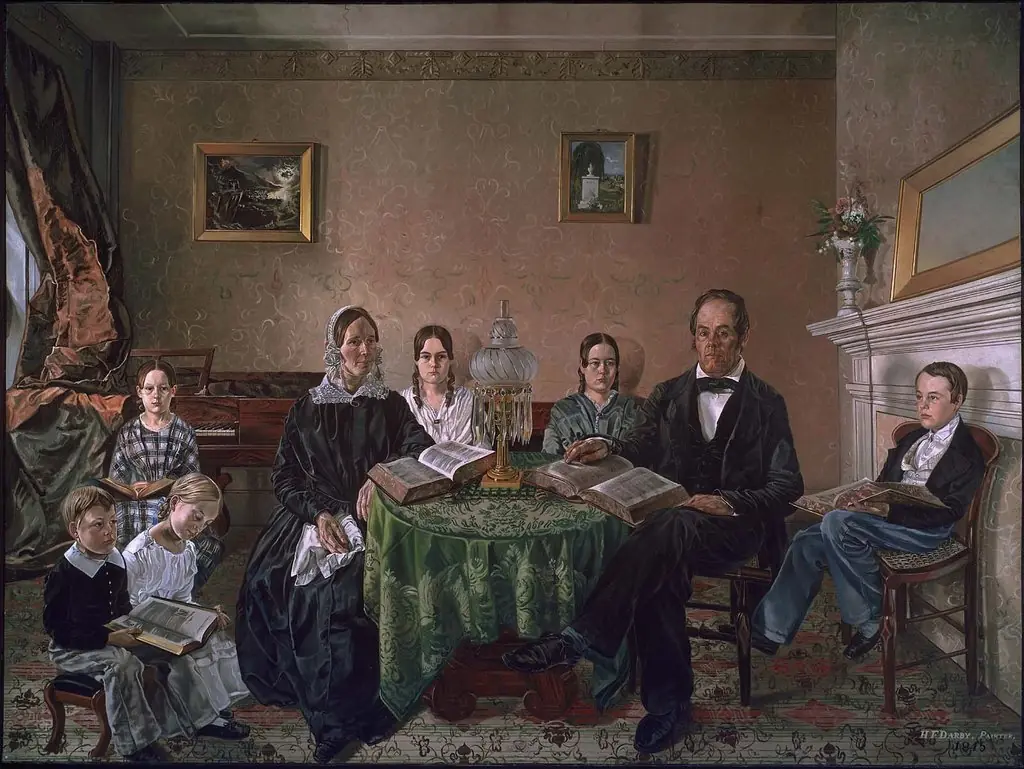 The Reverend John Atwood and His Family
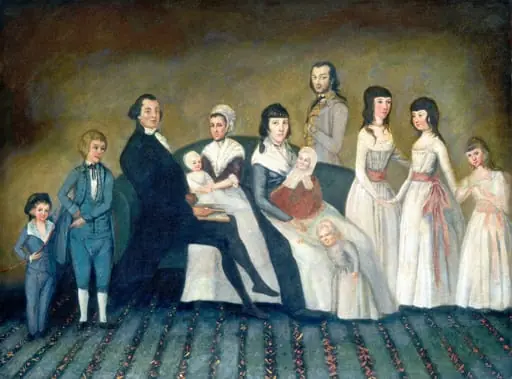 The Cheney Family
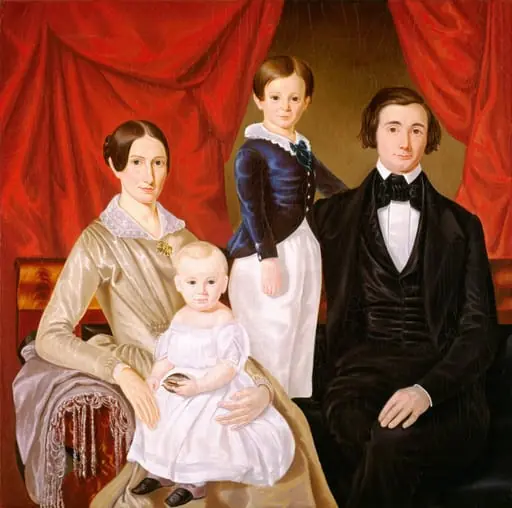 The Gage Family
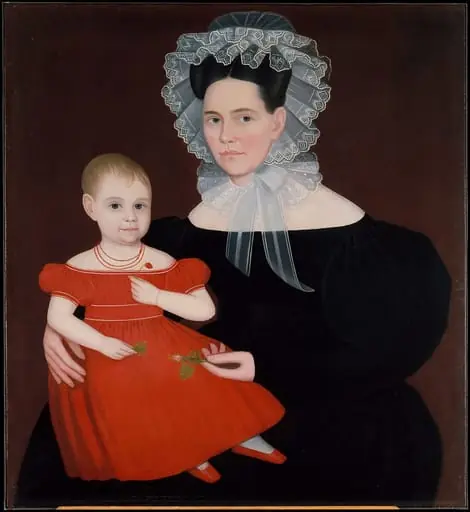 Mrs. Mayer and Daughter
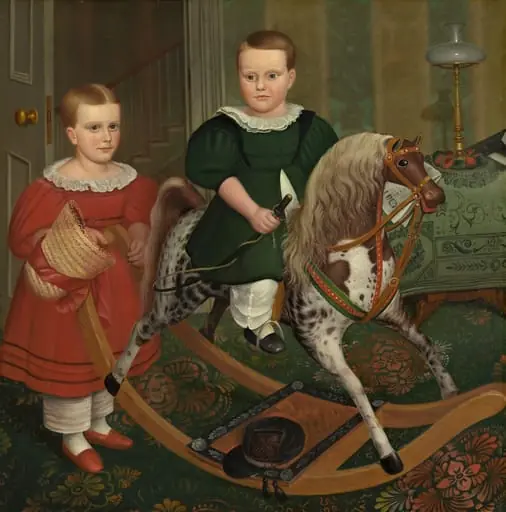 The Hobby Horse
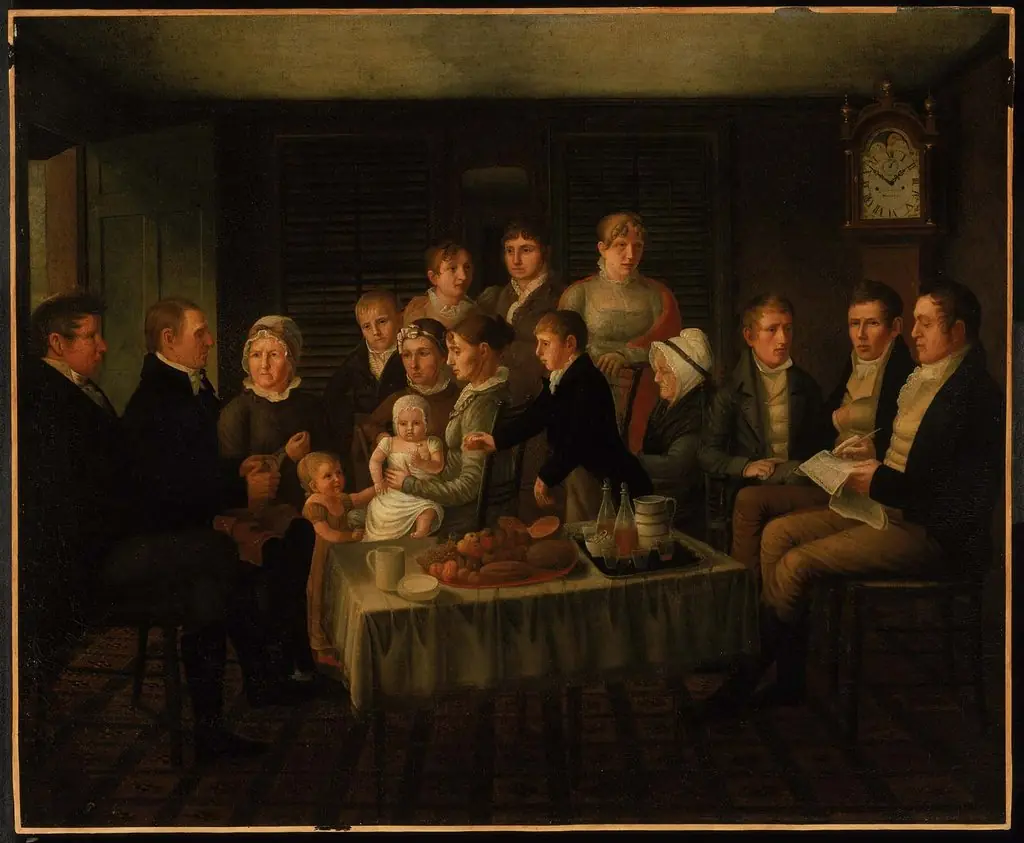 The Peckham-Sawyer Family